

Safeguarding Infrastructure: How Italian Excellence Secures Global Business

By Matteo Valléro
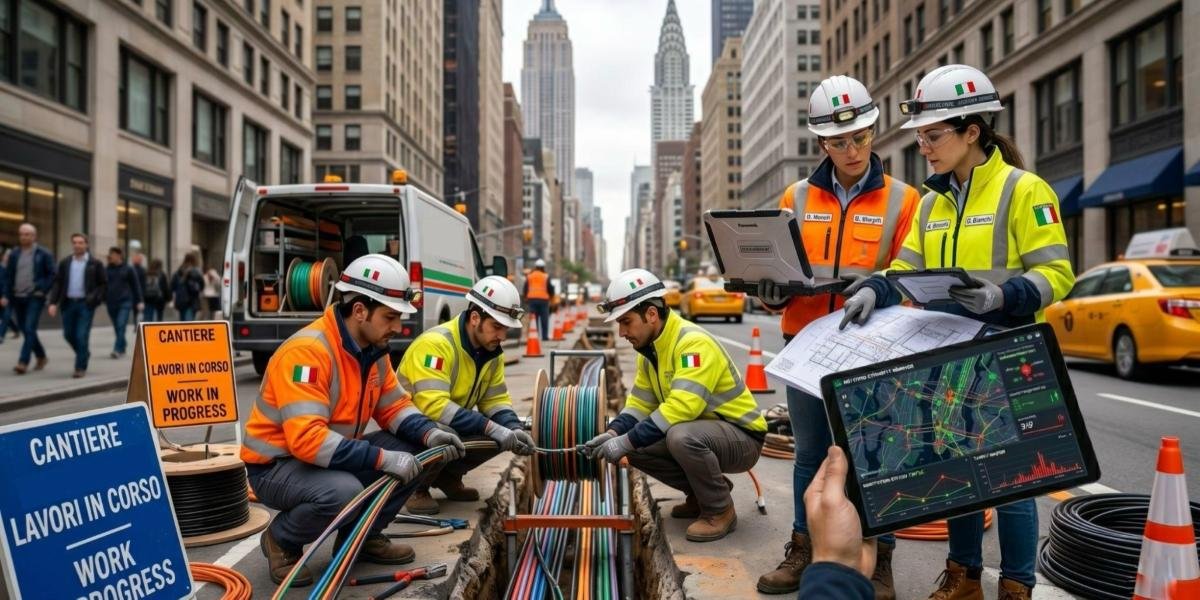
In the context of geopolitical instability and supply chain crises, “Made in Italy” is becoming an asset-protection model. It is not just about aesthetics but also about the structural ability to guarantee continuity through digital intelligence, infrastructure efficiency, and the protection of human capital.
The global economy is currently immersed in what observers define as a “black swan.” Between the reorganization of energy routes and cost pressures that jeopardize supply reliability, international companies are seeking new anchors. In this scenario, Italy proposes a solution based on what we might call Evolutionary Solidity: an industrial philosophy in which security is not a cost but the very architecture upon which growth is built. This analysis explores how three centers of excellence are defining new standards of protection for the global market.
The Digital Shield: The Intelligence of Bespoke Software
The first pillar is the defense of intangible assets. In a world of standardized and vulnerable software, the Italian approach focuses on a bespoke nature to reduce systemic risk. Andrea Cometa, at the helm of Koratyn, explains how personalized design becomes a barrier against uncertainty.
Dr. Cometa, as “Made in Italy” shifts from physical goods to technological capital, the software market faces a tension between agility and customization versus security and resilience. In a landscape dominated by tech giants and outsourcing models, how can the Italian strengths of quality, precision, and complexity management translate into a strategic “evolutionary solidity” advantage for international partners, especially as the focus moves from efficiency to digital resilience?
Andrea Cometa:
“Thank you. This is a crucial question that goes to the heart of our identity and our recent evolution. For over a decade, as Apulia Software, we have had the privilege of guiding Italian SMEs through their digitalization journey. We grew up listening to the heartbeat of ‘Made in Italy’: the uniqueness of every single enterprise.
Along this journey, we realized our clients were not looking for mere ‘software vendors.’ They were searching for partners who could understand and translate their uniqueness, history, specific processes, and ambitions into technological solutions that were not only efficient but also secure. This taught us that customization is not a luxury, but the first and most fundamental level of security. A system built with precision around a company’s actual needs has an intrinsically smaller attack surface and superior efficiency. This is the foundation of our quality.
With Koratyn, we have elevated this principle. We no longer just build a bespoke application; we design and orchestrate entire business ecosystems. Our mastery of complexity now translates into providing our partners with ‘What is missing’ to become solid. We don’t build rigid fortresses destined to crumble against unforeseen threats; we build digital organisms capable of adapting, learning, and even strengthening when exposed to market stress. Security is not an add-on; it is an emergent property of a well-designed system.
For an international partner, working with Koratyn does not mean buying programming hours. It means investing in a strategic partner that brings the uniquely Italian ability to govern complexity with both creativity and rigor. While outsourcing models compete on volume and scale, we offer a competitive advantage built on solidity and strategic intelligence. Our evolution from Apulia Software to Koratyn is proof that the future of technological ‘Made in Italy’ lies precisely here: in the ability to merge extreme customization with a systemic vision and a future-proof design. As CEO, this is my everyday commitment.”
The Physical Muscle: Orchestrating Large Infrastructures
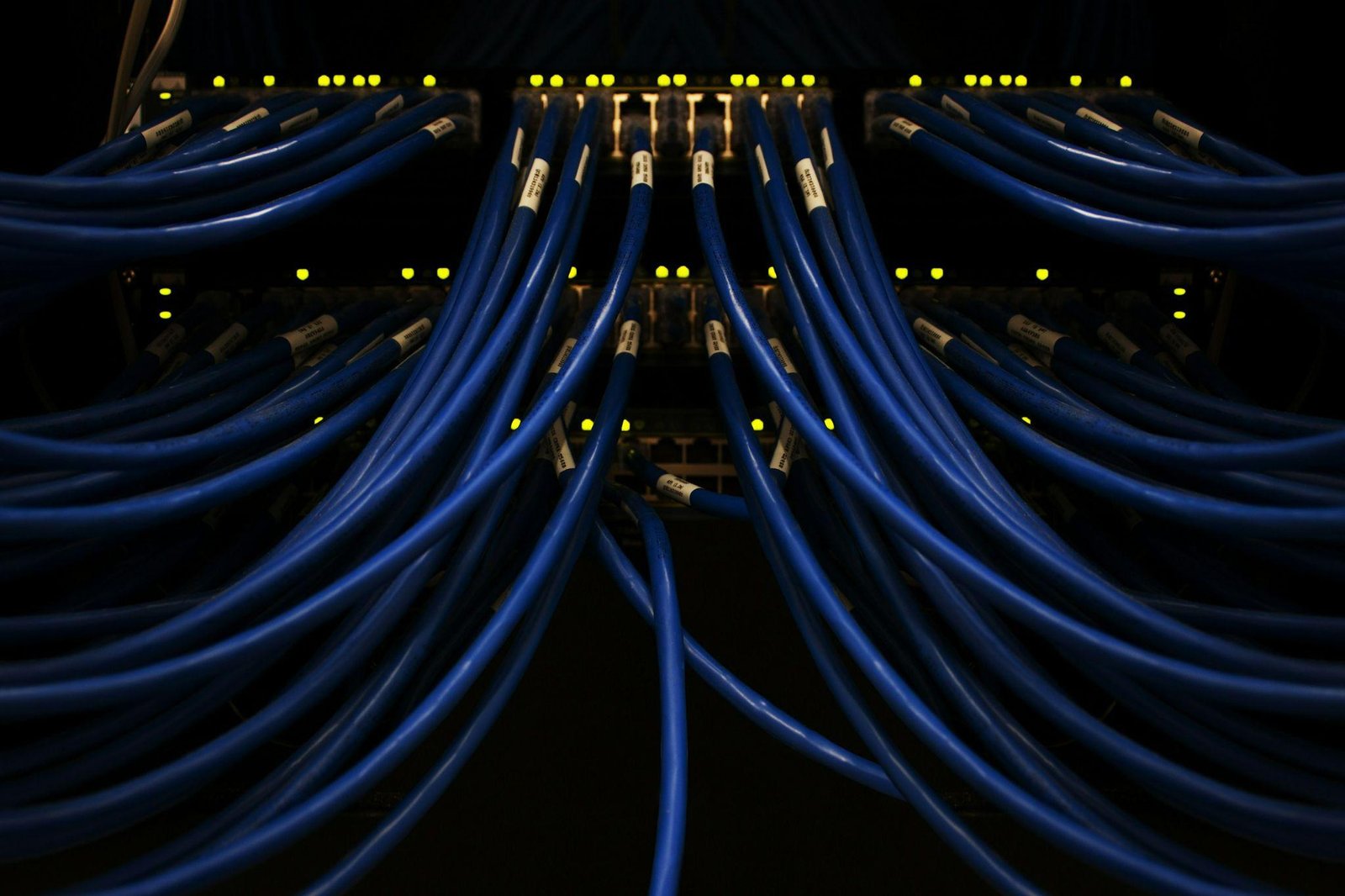
Without reliable infrastructure, no digital strategy can be sustained. Gianluca Limatola, through SIAT Installazioni,oversees energy and telecommunication nodes, transforming technical capacity into operational continuity for major industrial players.
Mr. Limatola, your company operates at the core of modern industry, spanning energy infrastructure, automation, and telecommunications. While digital resilience protects data and safety protects people, physical systems and plant efficiency underpin operational continuity. As the global market shifts toward energy transition and Industry 5.0, how is the role of the technological partner evolving in large-scale plants? How can the Italian strength in designing complex, integrated, bespoke systems ensure the stability and energy optimization required for international competitiveness?
Gianluca Limatola:
“In the current context, the technological partner for industrial plants is no longer a mere executor of works, but an ‘enabler’ of industrial continuity and systemic competitiveness. A profound change in role that SIAT Installazioni has already translated into a concrete, measurable operational model.
The growing interdependence among energy infrastructures, telecommunications networks, and automation systems is redefining the very concept of a plant: no longer isolated assets but integrated platforms, called to operate in increasingly dynamic and interconnected scenarios. In this landscape, the Italian ability to design complex, ‘bespoke’ systems, typical of our industrial DNA, becomes a critical differentiator. For SIAT, designing to measure does not simply mean adapting to client requests, but knowing how to interpret the challenges of a global market that imposes extremely high standards for energy stability and efficiency.
Our experience in managing large infrastructure projects demonstrates that energy optimization is not just an ethical or environmental choice but a fundamental economic requirement for sustaining international competitiveness. Knowing how to orchestrate technological complexity with flexibility and execution allows for the development of truly integrated solutions, avoiding standardized approaches that are often inadequate for the complexity of large industrial systems. It is an advantage measured in results: not in declarations of intent, but in the concrete ability to deliver reliable, durable infrastructures capable of evolving along with the client’s needs.
At SIAT Installazioni, we operate daily on complex sites across the national scale, simultaneously managing hundreds of interventions across TLC and energy infrastructure, with an operational structure of about 600 people: a size that allows us to combine industrial capacity and operational flexibility, a characteristic that few other operators can guarantee. For entities like ours, this translates into a clear strategic positioning: evolving toward an ‘Infrastructure Integrator’ model capable of accompanying the client along the entire value chain from design to realization, and through the evolutionary management of assets over time.
International competitiveness today is no longer played out on a single technology or a single plant, but on the ability to build and govern resilient, efficient, and sustainable infrastructural ecosystems capable of supporting new global digital and energy demands. It is on this ground that the leading companies in the sector for the coming years will be defined, and we have chosen to be among them.”
The Ethical Base: The Evolution of Human Capital

At the heart of protecting every asset is the person. Michele Lepore, founder of Audiosafety and Sicurezza 4.0, a scholar of safety culture, outlines the path that has transformed prevention from a bureaucratic obligation into a founding value of Italian enterprise.
Prof. Lepore, what is your perception of the evolution of workplace safety practices implemented by Italian companies over the years, from 1950 to today?
Michele Lepore:
“To this question, I will give a first answer in a numerical-evolutionary key to illustrate, in broad strokes, the fundamental core of the progressive positive evolution of the problem concerning workplace safety and, secondly, I will briefly describe the main logical and legal tools that have been implemented so far to reach the ideal objective toward which to strive, which can be summarized in the phrase ‘zero accidents.’
The relevant period spans from 1950 to today, when it was first established by law that workplace accidents were not an inevitable cost of production, but the result of a lack of a prevention-based entrepreneurial culture. This shift enabled the integration of economic growth with safety practices, improving both productivity and protection against work-related risks that can harm workers and investments alike.
Workplace accidents have declined significantly over the years, from millions annually in the past to much lower figures in recent years. Fatalities have also decreased, showing a notable improvement in safety. The overall accident rate has also decreased considerably, reflecting ongoing efforts to enhance workplace safety.
This progress has been driven by strong institutional and entrepreneurial commitment, particularly through enhanced training and information for all workplace actors, supported by modern tools such as videos, apps, and simplified safety management models.
Integrity as a Global Value
The convergence of these three visions reveals the profile of an Italy that has ceased to be merely “beautiful” to become “indispensable.” If software protects the company’s brain and infrastructure guarantees its energy, then safety culture ensures its moral integrity.
In a world where reliability has become the rarest commodity, Italian Evolutionary Solidity stands as the new standard for companies that do not just want to resist the future but inhabit it as protagonists.