US Business News

Cody Parker Is Turning Contemporary Art Into an Immersive Cultural Experience


For Cody Parker, art was never meant to exist quietly on a wall.

It was meant to move.

To disrupt a space.

To create tension.

To make people stop, look twice, and feel something they cannot immediately explain.

Through his evolving creative platform Coded by Nature, Parker has developed a visual language that exists somewhere between fine art, street culture, abstraction, realism, fashion, and emotional storytelling. His work feels layered in the same way modern life feels layered, chaotic yet controlled, polished yet raw, emotionally charged yet technically precise.

And perhaps that contradiction is exactly what gives his work power.

Based in South Florida, Parker has become increasingly recognized for creating immersive artwork that naturally extends beyond traditional gallery settings. His murals, live performances, and mixed-media pieces transform spaces into experiences, blurring the line between contemporary art installation and cultural atmosphere.

But beneath the scale and visual energy, there is something deeply intentional happening inside the work.

Parker does not simply paint images.

He constructs emotional tension through composition, distortion, movement, and texture. Faces dissolve into abstraction. Realism collides with layered disruption. Certain details feel hyper-controlled while others appear intentionally fractured or unfinished. The viewer constantly moves between clarity and chaos.

That psychological push-and-pull creates engagement.

The longer someone stands in front of his work, the more details begin revealing themselves.

And that slow unfolding feels increasingly rare across contemporary visual culture.

Much contemporary imagery today is designed for instant consumption, quick impact, immediate understanding, and fast emotional reaction. Cody Parker’s work resists that speed. It asks viewers to stay present longer. To study. To question. To notice the emotional atmosphere surrounding the image instead of simply the image itself.

That depth is one of the defining qualities of his artistic identity.

At the same time, Parker’s work remains deeply connected to modern street culture and contemporary visual language. Graffiti influence, urban textures, fashion references, layered symbolism, and expressive distortions all exist naturally throughout his compositions. But unlike artists who use street aesthetics superficially, Parker’s work feels emotionally rooted in those environments.

Nothing about it feels borrowed.

It feels lived.

That authenticity becomes especially visible in the way his art interacts with physical space. His large-scale murals across South Florida have transformed restaurants, nightlife venues, creative studios, and hospitality environments into immersive visual experiences. Rather than decorating walls, Parker creates atmosphere through them.

The spaces themselves become part of the artwork.

And increasingly, major cultural brands and institutions have taken notice.

His collaborations include projects tied to Flex Seal, Miami Swim Week, and the Wynwood Mural Festival during Art Basel, one of the most culturally influential contemporary art gatherings in the world. His work has also been displayed through the Jason Perez Collective at high-profile locations, including SLS Hotel South Beach, Buro Wynwood, and Ampersand Studios.

Yet despite the growing recognition, Parker’s artistic language still feels emotionally personal rather than commercially polished.

There is vulnerability beneath the edge.

One of the strongest examples of this appeared during his live painting collaboration with Everlast at Miami Swim Week, where Parker created a portrait inspired by Jean-Michel Basquiat. The piece paid tribute not only to Basquiat’s visual energy but to larger themes of identity, rebellion, cultural pressure, and artistic legacy.

That influence feels important.

Like Basquiat, Parker appears interested in the emotional friction between fine art and street culture rather than choosing one over the other. His work exists directly inside that collision point, refined technique meeting raw instinct, sophistication meeting disruption, structure meeting emotion.

And that balance gives the work-life.

There is also a distinctly contemporary understanding behind Parker’s creative vision. He recognizes that art today no longer lives exclusively inside galleries or museums. Modern audiences experience creativity through fashion, nightlife, hospitality, social media, music, architecture, and immersive environments all at once.

Parker’s work naturally belongs inside that reality.

His visual identity feels equally at home inside luxury hotels, street-inspired cultural spaces, collector environments, live performances, and fashion-forward events. The work carries enough technical sophistication for serious contemporary collectors while still remaining emotionally accessible to wider audiences.

That accessibility matters.

Because, despite the complexity of his compositions, the emotional reaction happens instinctively. Viewers may not immediately analyze every distortion or symbolic layer, but they still feel the tension, movement, emotion, and energy inside the work.

And ultimately, that emotional response is what people remember.

Cody Parker is not simply building a portfolio of paintings or murals.

He is constructing an evolving artistic universe, one where realism and abstraction coexist, where walls become emotional experiences, and where contemporary art feels fully connected to the rhythm, pressure, and cultural complexity of modern life itself.
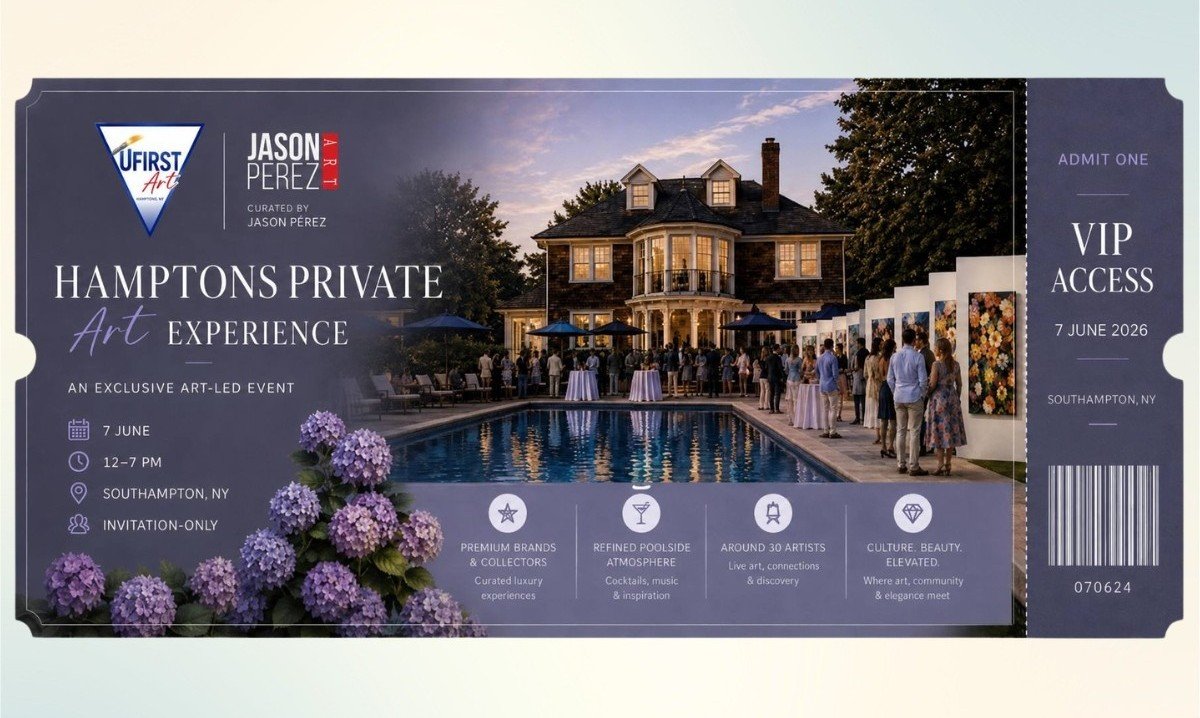
Photo Courtesy: Cody Parker

The artist’s work will be featured at the upcoming Hamptons Private Art Experience on June 7, 2026, in Southampton, New York, an invitation-only gathering produced by Jason Perez and UFIRST Art Production. Set within a private Hamptons estate, the experience brings together collectors, tastemakers, and high-net-worth guests for an elevated evening where contemporary art, curated networking, and refined summer lifestyle converge in an intimate collector-focused setting. Unlike traditional exhibitions, the event is designed to create meaningful access between artists and collectors, positioning each work within a sophisticated cultural atmosphere shaped by exclusivity, conversation, and artistic discovery.

Business Funding for Service-Based Businesses in 2026

Service-based businesses have historically occupied one of the most disadvantaged positions in the traditional business lending market. A restaurant can pledge its equipment. A manufacturing company can pledge its inventory. A retail store can pledge its fixtures and merchandise. But a consulting firm, a staffing agency, a marketing company, a healthcare practice, or a technology service provider has no fixed assets to pledge and has therefore found itself systematically excluded from the collateral-based evaluation models that traditional lenders rely on to reduce their perceived risk.

In 2026, the market for small business loans 2026 has changed in ways that specifically benefit service-based businesses. The shift from collateral-based evaluation to performance-based evaluation means that a business’s ability to access capital is now determined by what it is actually doing rather than by what it owns. For service-based businesses whose value is in their client relationships, their team, and their revenue streams rather than in physical assets, this shift represents a meaningful change in who the lending market is willing to serve.

Why Service Businesses Were Historically Underserved

The structural disadvantage of service-based businesses in the traditional lending market was not a product of discrimination. It was a product of evaluation frameworks designed around collateral, which service businesses cannot offer. When a lender’s risk model is built around the ability to liquidate assets in the event of default, a business that has no liquidatable assets presents a problem that the model was not designed to handle. The solution the traditional market arrived at was to decline service-based businesses at higher rates or to require personal guarantees that shifted the risk onto the business owner’s personal assets in ways that were neither fair nor aligned with the business’s actual performance.

The availability of business funding solutions that evaluate current performance rather than collateral has changed this equation. A service-based business with strong recurring revenue, consistent client relationships, and stable cash flow now has access to capital that reflects that strength rather than being penalized for the absence of physical assets that were never relevant to its actual risk profile in the first place.

What Performance-Based Evaluation Means for Service Businesses

A direct lender that uses performance-based evaluation looks at what a business is actually generating rather than what it can pledge. For a service business with recurring monthly revenue, consistent accounts receivable, and predictable cash flows, this type of evaluation produces a far more accurate picture of the business’s capacity to support a funding arrangement than a collateral assessment would. The business is evaluated on the quality of what it has built rather than on the presence of fixed assets that have no relationship to how the business actually generates value.

The ability to access working capital for small business operations through performance-based evaluation also opens the door for service businesses to use funding in the ways they most need to. Hiring a new team member to handle client growth. Investing in technology infrastructure that increases delivery capacity. Bridging a cash flow gap between client invoicing and payment receipt. These are the capital needs of service-based businesses, and they are precisely the needs that performance-based evaluation is well-positioned to address.

The availability of same day business funding through modern direct lending platforms means that service businesses can respond to growth opportunities in real time rather than waiting weeks for a traditional bank to complete a review that was designed for a different type of borrower. A consulting firm that lands a major contract and needs to hire immediately, or a marketing agency that wins a campaign and needs to expand its team, can access capital within hours of identifying the need through a platform built for that purpose.

Why the No-Collateral Model Works

The key insight behind performance-based lending is that collateral has never been the most accurate predictor of repayment capacity for small businesses. What predicts repayment capacity is the business’s current revenue, the consistency of that revenue, and the stability of its cash flows. These are precisely the indicators that modern AI-powered underwriting systems are designed to evaluate in real time. By reading current account data directly rather than relying on historical documents or collateral appraisals, these systems produce evaluations that are both more accurate and more accessible than the traditional collateral-based model could deliver.

The ability to access working capital without pledging personal assets or business collateral reflects a philosophical difference in how modern lenders think about their relationship with the businesses they serve. The business owner should not bear disproportionate personal risk to access capital that their business’s performance justifies. Fundivi structures its core revenue-based products without collateral or personal guarantee requirements, which means the lending relationship is based on the strength of the business rather than on the personal financial exposure of the person who built it.

How Fundivi Serves Service Businesses

Business owners who apply for a business loan through Fundivi will find a platform that evaluates service-based businesses on the metrics that reflect their quality. The underwriting engine reads current revenue patterns, cash flow consistency, and account activity to generate a funding decision based on current performance rather than on historical proxies or collateral availability. The result is an offer that reflects the business’s actual standing rather than a decision shaped by evaluation criteria that were designed for a different type of borrower.

The business lending platform that Fundivi has built is designed to address the structural barriers that have historically disadvantaged service businesses. For applicable products, there is no collateral or personal guarantee requirement, which means the risk is aligned with the business rather than transferred to the owner’s personal assets. The same-day funding timeline means that service businesses can access capital at the speed their operations and growth opportunities call for.

The Service Business Funding Environment in 2026

For small business capital needs in 2026, service businesses are in a better position than they have been historically to access funding that reflects the quality of what they have built. The market for business loans for small businesses now includes solutions specifically designed to evaluate performance over collateral and to deliver capital on a timeline that serves the business rather than the institution. Fundivi is one direct lender operating in this space, with services available across all 50 states.

The service business owner who reads this article and recognizes their own experience in the description of traditional lending exclusion should understand that the exclusion was often the product of an evaluation model that was not designed for them, rather than a reflection of the quality they have built. Performance-based evaluation gives service businesses with real revenue, consistent cash flows, and stable client relationships an alternative path to capital that reflects those strengths, regardless of whether they have physical assets to pledge.

Disclaimer: This content is for informational purposes only and is not intended as financial advice, nor does it replace professional financial advice, investment advice, or any other type of advice. You should seek the advice of a qualified financial advisor or other professional before making any financial decisions.