
US Business News

Xentra Transport Expands Messenger and Same-Day Courier Services Across NYC and New Jersey

Xentra Transport broadens its messenger and same-day delivery network across New York City and New Jersey with dedicated drivers and real-time tracking.

NEW YORK, N.Y. Xentra Transport – Same Day Delivery, a New York City ground courier and logistics company, today announced an expansion of its messenger services across NYC and into New Jersey, broadening a dedicated delivery network built on vetted drivers, secured cargo vans, and real-time tracking technology. The expansion connects all five boroughs of New York City with key New Jersey business corridors under a single, accountable carrier.

Demand for reliable messenger and same-day delivery has surged as businesses across the region move away from unpredictable, app-based gig drivers toward carriers that guarantee secured cargo and dedicated personnel. Law firms, medical offices, financial institutions, and fulfillment operations increasingly require a messenger partner that can move time-sensitive documents and parcels quickly while accounting for them at every step of the route. Xentra Transport built its operation to meet that standard.

“A messenger run is only as good as the accountability behind it,” said a Xentra Transport spokesperson. “Our clients aren’t handing valuable documents to whoever happens to accept a ping. They get a dedicated driver, a secured van, and a dispatch system that shows them exactly where their delivery is from pickup to signature.”

The New Jersey expansion is a central piece of the announcement. By extending same-day courier service in NJ, Xentra Transport now serves businesses operating across the New York–New Jersey metro corridor without forcing them to coordinate separate carriers on each side of the river. Coverage spans Jersey City, Newark, and the surrounding business districts, with both on-demand messenger runs and scheduled recurring routes available.

The company’s cargo-van fleet is purpose-built for the underserved middle ground between an envelope messenger and a full freight truck, covering oversized parcels, multi-stop routes, white glove items, and recurring distribution runs that larger national carriers often handle inefficiently and that gig-based platforms simply cannot secure. That flexibility lets a single Xentra Transport driver handle a stack of legal filings in the morning and a multi-stop retail distribution route in the afternoon.

Service across the region spans the full range of business logistics needs. The company handles urgent same-day document and parcel messenger runs throughout NYC and New Jersey. It provides scheduled freight and cargo-van delivery for clients with recurring distribution routes. Its white glove handling covers high-value, fragile, and oversized items that require careful placement and setup. And it offers office and commercial moving support for businesses relocating within the metro area.

Reliability remains the company’s core differentiator. Every job is dispatched through a proprietary portal that issues ETA updates, driver acceptance confirmation, and digital proof of delivery, giving businesses the kind of end-to-end visibility usually reserved for major national logistics providers. For clients whose operations hinge on predictable delivery (medical practices, e-commerce fulfillment centers, trade-show and event vendors, retail operations, and commercial movers), that transparency has become a deciding factor in carrier selection.

The expansion reinforces the company’s core NYC courier service, which continues to serve Manhattan, Brooklyn, Queens, the Bronx, and Staten Island. By pairing that established NYC base with deeper New Jersey coverage, Xentra Transport positions itself as a regional carrier that can follow a client’s freight across the entire metro footprint rather than handing it off at the state line.

The company’s growth reflects broader momentum in the regional same-day logistics market, where businesses increasingly favor specialized regional couriers over generalized national platforms. The reasons are consistent: faster response times, direct service relationships, transparent communication, and the assurance that a known, dedicated driver, not an anonymous contractor, is responsible for each shipment.

Xentra Transport currently fulfills dedicated routes for national logistics and fulfillment partners, demonstrating the operational reliability that larger shippers require. The company is now applying that same infrastructure to a growing roster of direct business clients across New York City and New Jersey, and continues to add dedicated routes and vehicles to meet demand.

The company’s roadmap centers on deepening its messenger and same-day capacity across both states, with an emphasis on the high-frequency, high-accountability delivery relationships that define commercial logistics in the New York–New Jersey region.

Founded and operated in New York City, Xentra Transport provides messenger, same-day courier, white-glove delivery, freight, and cargo-van logistics to businesses across the NYC metro area and New Jersey. The company combines dedicated drivers and secured vehicles with real-time dispatch technology to deliver accountable, business-grade ground logistics for time-sensitive shipments. More information about the company and its services is available at www.xentratransport.com.

Bringing Trade Show Technology to Weddings and Private Events

Walk into a wedding or corporate gala in Los Angeles today, and you might find guests painting a wall with the wave of a hand, stepping across a floor that ripples with light, or pressing their fingers to a pane of glass that responds with motion and color. Angels Music Productions has built its reputation on this kind of interactive event technology. The Los Angeles company has expanded its catalog of immersive systems, bringing tools once reserved for major industry trade shows into weddings, Bar and Bat Mitzvahs, brand activations, and private celebrations across Southern California.

For years, the most advanced display systems lived almost exclusively at conventions like CES, LDI, Infocomm, and USITT, where exhibitors used them to draw crowds on a busy show floor. Angels Music Productions has adapted that same equipment for the social and corporate event market, packaging it as interactive event technology built for celebrations rather than show booths. The result is a shift away from passive entertainment toward experiences where guests shape what happens around them through touch, movement, and gesture.

How Interactive Event Technology Changes a Room

The company centers its work on four core systems, each designed around engagement, movement, education, and social interaction. Projection mapping turns flat surfaces into animated canvases that react to people in the space. Interactive walls invite guests to draw, play, and trigger visuals with their hands. Transparent touch displays layer digital content over a clear screen, so a viewer can interact with images while still seeing through to the room beyond. LED interactive floors respond to foot traffic, lighting up and changing as guests walk, dance, and gather.

What ties these systems together is the idea that a guest is no longer a spectator. The technology rewards curiosity and motion, pulling people into a shared activity rather than asking them to sit and watch. That distinction matters at events where organizers want attendees off their phones and present in the moment. A floor that reacts to a child running across it, or a wall that turns a group of friends into collaborators on a digital mural, creates the kind of spontaneous participation that traditional entertainment rarely produces. Angels Music Productions has found that its interactive floors and walls can be tailored to the tone of almost any gathering, from a quiet luxury reception to a high-energy corporate launch.

The appeal extends beyond novelty. Interactive walls and projection surfaces can carry branding for a corporate activation, display a couple’s story at a wedding, or teach guests something about the host organization. Because the content is programmable, each installation can be matched to the specific goals of the event. For planners, that flexibility means the same interactive event technology can serve a product reveal one weekend and a milestone birthday the next.

Founder Asi Vidal describes the change as a genuine break from how events used to work. “What once felt like science fiction is now available for live events,” he said. “We are trying to make immersive, interactive technology accessible for every type of celebration, activation, and gathering.”

A Production Background Built on Audiovisual Innovation

Angels Music Productions is a Los Angeles-based event entertainment and audiovisual production company that specializes in luxury weddings, corporate events, Bar and Bat Mitzvahs, brand activations, and immersive live experiences. Founded by DJ and audiovisual innovator Asi Vidal, the company pairs high-end entertainment with advanced event systems, including LED video walls, interactive projection mapping, motion tracking floors, interactive walls, photo booths, special effects, and transparent touchscreen displays.

That breadth of disciplines is part of what allows the company to handle interactive event technology with technical precision. Lighting, sound, video, and digital interaction all have to work together for an installation to feel natural rather than clumsy. The company designs each production around the client’s vision and event goals, then handles the engineering to ensure the experience runs smoothly on the night. You can see the range of these audiovisual production services on the company’s site, where weddings sit alongside large corporate productions.

The audiovisual roots also explain why the company treats interaction as an extension of entertainment rather than a separate gadget. Music, visuals, and digital content are programmed to respond to the same room, so a beat drop, a lighting cue, and a reactive floor can land at the same moment. That kind of synchronized interactive event technology is difficult to achieve when different vendors handle different pieces, which is why the company keeps the creative design and the technical build under one roof.

Why Guests Respond to Interactive Event Technology

Event organizers have noticed that attention is harder to hold than it used to be. Guests arrive with phones in hand, more inclined to document than to participate. Systems that ask for physical input change that dynamic. When a wall reveals its image only when someone touches it, or a floor animates only when people move across it, the experience depends on the crowd showing up and joining in.

This is where interactive event technology earns its place at modern celebrations, whether it anchors a small reception or a sprawling brand activation. The novelty draws people in, and the design keeps them engaged long enough to connect with one another. A bar mitzvah crowd that gathers around an interactive projection, or wedding guests who linger at a transparent display, are doing more than watching a show. They are creating part of it, and that sense of authorship tends to stay with them after the event ends.

Asi Vidal frames the broader moment in similar terms. “We’re entering a new era of live events where guests don’t simply watch the experience, they help create it,” he said. “By combining interactive projection mapping, motion tracking, LED technology, and transparent touch displays, we’re transforming ordinary venues into immersive environments that inspire curiosity, connection, and engagement.”

For clients planning a celebration or activation in Southern California, the expansion signals that corporate-grade interactive event technology is now within reach for private events. To learn more about the company’s interactive floors, walls, and projection mapping, visit the Angels Music Productions website.

What Winning Match Asks of You as a Leader

By Fabiana Busquets

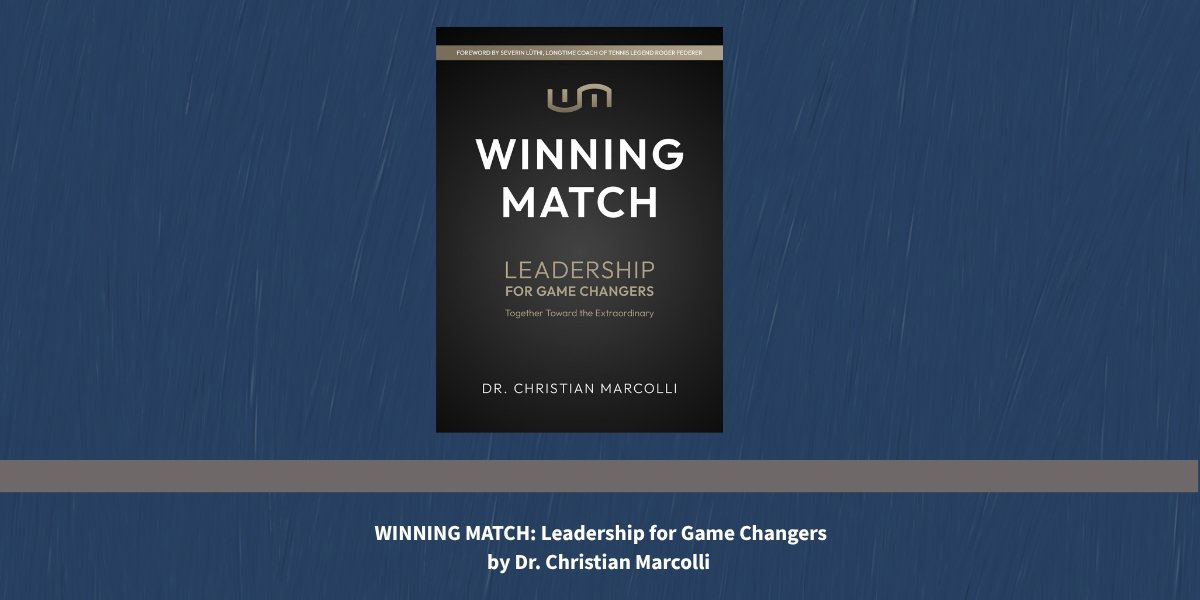
Here is the question Dr. Christian Marcolli is really asking, underneath the framework and the case studies and the insights drawn from two decades of coaching people at the absolute top of their fields. Are you the kind of leader someone with rare potential would choose to work with? That question lands differently depending on how honestly you answer it. The book gives you a rigorous, practical, experience-grounded way to close the gap between where you are and where you need to be, and that is what makes it one of the more genuinely useful leadership books to come along in some time.

A Coach Writing From the Room Where Performance Happens

Marcolli writes from a position of unusual authority. He is a University of Zurich-trained performance psychologist who played professional football and has spent more than twenty years coaching executives at the highest levels of global business alongside elite athletes and sports icons. That combination of theoretical grounding and real-world immersion is not common, and it gives the book a credibility that you feel from the first chapter. He is not theorizing about what exceptional performance looks like. He has been in the room where it happens, often as the person most responsible for creating the conditions that made it possible.

Reading it feels like a long, unusually honest conversation with someone who has seen enough extraordinary performance to have stopped romanticizing it and started understanding it. There is a clarity in the way Marcolli describes Game Changers, the specific qualities that set them apart, the particular ways they need to be led, and the things that cause them to quietly disengage even when they are technically still showing up. You find yourself thinking about specific people you have worked with, or worked under, and seeing dynamics you experienced but could not fully name at the time.

How the Winning Match Framework Works

The framework itself is built around three ideas. It starts with identifying Game Changers, moves to building the right kind of trust-based partnership with them, and centers on having the quality of leadership conversations that actually move performance rather than just monitoring it. It is structured clearly enough to be immediately applicable without being so rigid that it stops fitting the messy reality of actual organizations. Marcolli understands that frameworks are only useful if they survive contact with real situations, and he builds his accordingly.

What also comes through clearly is how much this book respects the people it is about leading. Game Changers, in Marcolli’s telling, are not just high performers to be optimized. They are complex individuals whose potential is deeply intertwined with their experience of the relationship they have with their leader. Treating that relationship as a genuine priority rather than a nice-to-have is the fundamental shift the book argues for. The foreword from Severin Lüthi, whose partnership with Roger Federer across some of the most extraordinary years in tennis history is perhaps the defining real-world example, gives that argument its most compelling single illustration.

Why It Stays With You

This is a book that can change what you pay attention to, what you invest in, and what you ask of yourself in the relationships that matter most to your organization’s performance. For leaders who are serious about that responsibility, it reads as essential. It speaks directly to anyone who believes their best people have not reached their ceiling yet and wants to be the reason they do. Some books tell you what great leadership looks like. This one sets out to show you how to live it.

Winning Match by Dr. Christian Marcolli is available worldwide through major online booksellers. To learn more, visit the book’s listing on Amazon.

Brian V. Anderson’s Privacy-First Personalization Playbook

By: William Reimers

Most business books about AI feel like they were written by someone who has never actually had to convince a skeptical CFO that a technology investment was worth it. You can sense the distance between the author and the actual problem, the way the examples feel curated rather than lived, the way the solutions arrive too cleanly. This one is different in a way you notice almost immediately. Brian V. Anderson writes like someone who has sat in those rooms, heard the objections, watched the vendor promises quietly unravel under real conditions, and come out the other side with something genuinely worth sharing. That quality of hard-won clarity is what makes this book hit the way it does.

A Reframe That Lands With Real Force

The central argument is delivered without ceremony. Anderson doesn’t warm you up with reassurances before getting to the point. He opens by telling you directly that the personalization industry has been selling brands a fantasy, that the dream of replicating Amazon and Netflix was never realistic for most e-commerce businesses, and that the frameworks most companies have been pouring money into were designed for customers they already know intimately, not the anonymous strangers who make up the vast majority of their actual web traffic. For anyone who has sensed something was off about their personalization results but couldn’t articulate exactly what, that reframe lands with real force.

Why the Three-Stage Framework Works

What follows is the Three-Stage Personalization Framework, and the thing that makes it work is not just its logic but its honesty about sequence. Anderson is insistent that the order matters, that skipping stages because you’re impatient or under pressure from leadership is precisely how brands end up with expensive technology that produces underwhelming results. Strategic segmentation comes first, because that’s the reality of who is actually on your site. Progressive identification comes next, because trust and data accumulate gradually. Individual personalization comes last, because it only becomes possible once you actually know something real about the person you’re talking to. That progression feels obvious once he lays it out, and the fact that most brands ignore it explains so much.

The case studies throughout the book are where Anderson’s credibility really solidifies. Watching brands abandon impossible personalization fantasies and build smarter segmentation strategies instead is both instructive and genuinely energizing. These aren’t polished success stories stripped of friction. They feel like accounts from the actual messy middle of figuring something out.

Treating Privacy as a Design Constraint

His treatment of privacy is also worth noting specifically. Rather than framing regulation as a wall to work around, he treats it as a design constraint that pushes you toward more durable, more honest customer relationships. That shift in how you hold the problem changes what solutions feel available to you.

This is the kind of business book that makes you feel less alone in your frustrations and considerably more equipped to do something productive about them. In a genre full of borrowed confidence, that combination is genuinely rare and worth seeking out.

To learn more, you can find Winning with AI Personalization: The Privacy-First Playbook for E-Commerce Growth on Amazon.

How Foxhollow Farm Is Building a Regenerative Farming Model Designed to Last

By: Kate Sarmiento

A lot of people outside agriculture imagine farming as this peaceful, slow-paced lifestyle where somebody walks through a field at sunset holding a basket of tomatoes. Meanwhile, most farmers are managing weather shifts, rising costs, unpredictable supply chains, labor shortages, land management, and enough financial pressure to make anyone stress-eat an entire loaf of sourdough in the truck on the way home.

Farming has always been a business. The difference now is that more farms are starting to ask a bigger question: what kind of business model actually holds up long term?

That conversation sits at the center of regenerative agriculture, and it is one Foxhollow Farm has been part of long before “soil health” became a phrase showing up in podcasts, grocery store marketing, and dinner party conversations.

For nearly twenty years, the 1,300-acre Kentucky farm has focused on Biodynamic stewardship, rotational grazing, and raising 100% grass-fed, grass-finished beef through systems designed to strengthen the land over time instead of constantly pulling from it. The interesting part is that regenerative farming is no longer being treated as some niche farming philosophy. It is increasingly being discussed as a long-term operational strategy.

Because honestly, farming gets very expensive when the land stops cooperating.

That is one reason so many farmers have started paying closer attention to soil health again. Good soil tends to handle stress better. It holds water longer during dry stretches, supports healthier pasture systems, and usually creates fewer problems over time. Those things may sound technical or environmental at first, but they affect everyday business decisions on a farm constantly.

Researchers have been paying closer attention to that connection, too. A long-term analysis released in 2024 found that diversified farming systems often became more profitable and resilient over time, especially when regenerative practices stayed consistent for several years (Source: arXiv, 2024). The biggest improvements usually did not happen overnight. They built gradually season after season.

That timing matters because regenerative farming tends to reward patience. It is not built around squeezing maximum production out of the land as quickly as possible. It is built around creating systems that still function well years later.

At Foxhollow Farm, that long-term thinking shows up in both the farming practices and the way people experience the farm itself. Families can visit the property, buy beef directly from the source, and actually see how the land is being managed instead of guessing where their food came from. More people seem to care about that now. They want transparency, but they also want reassurance that somebody is thinking beyond quick production and short-term wins.

People can usually tell when stewardship is real and when it is just marketing language.

The Farms Built for Longevity Usually Operate Differently

One thing people often get wrong about regenerative farming is assuming it is only about sustainability conversations or environmental messaging. Farmers are making these choices because the condition of the land affects everything else, too. When the land starts struggling, the financial pressure usually follows right behind it.

Maybe the pasture does not recover the way it used to. Maybe the soil stops holding water properly during dry seasons. Maybe input costs keep climbing because the land needs more help every year just to produce the same results. Problems like that rarely show up all at once. Most of the time, they build slowly until one rough season suddenly becomes several.

That is a big reason regenerative agriculture has started getting more attention outside farming communities. People are realizing that when farmland struggles, food systems struggle too. Food companies and supply chain groups have started paying closer attention because healthy land usually creates more stability long-term. A 2020 review in Global Food Security connected soil conservation and ecosystem restoration to stronger resilience in farming systems over time (Source: Global Food Security, 2020). Another review published in Discover Sustainability also pointed out that healthier soil helps with water retention, biodiversity, and overall ecosystem balance, especially during difficult weather conditions (Source: Discover Sustainability, 2024).

The interesting thing is that none of this feels particularly revolutionary to farmers who have worked closely with the land for decades. Most already know that exhausted land behaves differently from healthy land. They know recovery matters. They know healthy pasture systems create healthier grazing conditions. Regenerative agriculture mostly brings structure and intention to practices that prioritize long-term stewardship instead of short-term extraction.

At Foxhollow Farm, that philosophy shows up in everyday decisions across the farm. The cattle remain entirely pasture-raised, and the team continues investing in regenerative and Biodynamic practices that help strengthen the land over time. Visitors can walk the farm, see the grazing systems firsthand, and actually understand where their food comes from instead of feeling disconnected from the process entirely.

That kind of transparency sticks with people more than expected. Consumers spent years being trained to think about food mostly through convenience and price. Now, many are starting to ask deeper questions. Who raised this? What did the land look like before this product existed? Will farms like this still be around decades from now? Those questions are reshaping agriculture in real time.

Regenerative Farming Is Becoming a Business Conversation

For a long time, regenerative farming was treated like a niche organic farming idea that only certain people cared about. A lot of farmers already knew the practices mattered long before the rest of the industry started paying attention, but the broader business world did not really care yet.

That has changed pretty quickly over the last few years. Food companies are dealing with unstable supply chains. Farmers are dealing with weather that feels less predictable every season. Costs keep climbing. Consumers are asking more questions about where their food comes from and how it was raised. Suddenly, conversations about soil health are showing up in business meetings instead of staying limited to farming circles.

Some of the interest is practical. When land becomes harder to manage, everything around it becomes more expensive, too. Water issues affect crops. Weak pasture systems create problems for grazing. Heavy dependence on synthetic inputs gets expensive fast. Bigger agricultural groups and major food companies have started paying closer attention to regenerative systems because long-term stability matters when entire supply chains depend on healthy farmland (Source: The Wall Street Journal, 2025).

The complicated part is that regenerative farming is not always built for instant results. Some practices take years before the full benefits become obvious, which can feel frustrating in an industry where people are already operating on thin margins. A 2023 review in Sustainability explained how practices like cover cropping and reduced tillage often involve balancing immediate costs with longer-term soil improvements (Source: Sustainability, 2023). Farmers already understand that kind of tradeoff better than most people. They know damaged land rarely fixes itself overnight.

Honestly, a lot of this conversation feels less like a “trend” and more like people finally catching up to realities farmers have been dealing with forever. Healthy land holds up better under pressure. Exhausted land does not. Most farmers could have told you that without needing a corporate presentation about regenerative agriculture.

That perspective feels especially relevant for younger generations entering agriculture.

Farming cannot survive if every new farmer inherits exhausted land and unstable systems. There has to be a path where stewardship and profitability can exist together realistically. Foxhollow Farm has spent nearly twenty years building toward exactly that kind of model, proving that regenerative agriculture is not only possible but capable of supporting a thriving regional food system rooted in transparency and direct consumer relationships.

The farm’s approach also reflects something consumers increasingly want from brands in general: accountability. People are tired of systems that feel disposable, disconnected, and impossible to trace. They want food connected to real places and real people again.

That shift explains why farms like Foxhollow continue resonating with families looking for more than another anonymous product sitting in a freezer aisle.

There is comfort in knowing where food came from. There is trust in seeing the land itself. And something is refreshing about businesses willing to think long term when so many industries operate entirely around speed.

Build Food Systems That Future Generations Can Actually Use

Agriculture is going through a noticeable shift right now. Consumers are paying closer attention. Farmers are adapting to changing environmental and economic pressures. Food systems are being questioned more openly than they were even ten years ago.

Some farms are responding by pushing harder for short-term efficiency. Others are rebuilding around resilience.

Foxhollow Farm continues leaning into the second path through regenerative agriculture, Biodynamic stewardship, and direct relationships with the people buying their food. Nearly twenty years into the work, the farm is no longer experimenting with whether regenerative systems can function economically. It is demonstrating what becomes possible when land stewardship is treated as part of the business model itself.

Because the farmers are thinking carefully about the future, they are not only asking how much the land can produce right now.

They are asking whether the land will still be healthy enough to support the next generation, too.

Empire State Manufacturing Growth Slowed in June

Empire State manufacturing growth slowed in June as factories across New York reported a more moderate pace of activity compared with the previous month, according to the latest Empire State Manufacturing Survey released by the Federal Reserve Bank of New York. The report showed that manufacturing conditions remained in expansion territory, but businesses continued to face operational challenges including elevated input costs, supply chain constraints, and longer delivery times.

The June survey offered one of the first monthly readings on manufacturing activity in the United States and provided insight into conditions affecting producers across the state. While factory activity continued to increase, the pace of growth fell short of expectations, indicating that manufacturers remain cautious as they manage production schedules, inventory levels, and customer demand.

Empire State Manufacturing Growth Shows Slower Expansion

The Empire State Manufacturing Survey is a monthly assessment of business conditions among manufacturers in New York State. Economists and market participants closely monitor the report because it often provides an early indication of broader trends within the national manufacturing sector.

According to the June release, the general business conditions index remained positive, indicating expansion in factory activity. However, the reading declined from the previous month, signaling a slower rate of growth. Respondents reported that new orders and shipments continued to increase, though gains were more limited than earlier in the spring.

Manufacturers also indicated that employment levels remained stable overall. Hiring activity continued in several sectors, but companies reported a more measured approach to workforce expansion as they assessed incoming demand and operating costs.

The survey suggested that factory managers remain focused on balancing production requirements with cost management. Businesses reported that current activity remained above contraction levels, but the pace of expansion moderated as economic uncertainties continued to influence planning decisions.

Factories Continue to Report Supply Chain Challenges

Supply chain issues remained a significant concern for manufacturers responding to the survey. Businesses reported longer delivery times for certain materials and components, contributing to ongoing production challenges across several industries.

Manufacturers indicated that obtaining key inputs continued to require additional planning and inventory management. While severe disruptions seen in previous years have eased, companies reported that supply chains have not fully normalized across all sectors.

Delivery delays can affect production schedules, customer fulfillment timelines, and inventory strategies. As a result, many manufacturers continue to maintain larger inventories of critical materials to reduce the risk of interruptions.

The survey also found that input prices remained elevated. Respondents reported continued increases in the cost of raw materials, transportation, and other operational expenses. Rising costs can influence pricing decisions, capital investment plans, and profitability across manufacturing operations.

For producers dependent on domestic and international suppliers, supply chain performance remains a key factor in determining output levels and production efficiency. The June data suggested that while manufacturing activity continues to advance, logistical challenges remain part of the operating environment.

Input Costs Remain a Concern for Producers

Price pressures remained an important theme in the June survey. Manufacturers reported increases in costs for materials used in production, including industrial inputs and transportation services.

Cost increases can affect businesses throughout the supply chain. Manufacturers often evaluate whether higher expenses can be absorbed internally or passed along to customers through price adjustments. These decisions can influence purchasing activity, production volumes, and profit margins.

The survey indicated that selling prices also continued to rise, although the pace varied among respondents. Some manufacturers reported greater flexibility in adjusting prices, while others cited competitive market conditions that limited their ability to pass costs on to customers.

Companies also continued to monitor energy expenses and transportation costs. These factors remain important for manufacturers that rely on extensive logistics networks or energy-intensive production processes.

Business leaders often use survey data such as the Empire State report to assess operating conditions and identify areas where cost pressures may influence future planning. The June results suggested that manufacturers remain focused on managing expenses while maintaining production levels.

Manufacturing Data Provides Early Economic Signals

The Empire State Manufacturing Survey is one of the first major regional manufacturing reports released each month. Because of its timing, economists frequently use the data to evaluate broader industrial activity before national manufacturing indicators become available.

A slowdown in the pace of expansion does not necessarily indicate a contraction in manufacturing output. Instead, it may suggest that businesses are experiencing more moderate growth after periods of stronger activity.

Regional surveys can also reveal differences in economic conditions across industries. Manufacturers operating in technology, industrial equipment, consumer products, and other sectors may face varying levels of demand and supply chain complexity.

Investors, policymakers, and corporate executives monitor manufacturing surveys because production activity remains an important component of economic performance. Changes in factory output can affect employment, business investment, transportation demand, and supplier networks.

The June report provided another indication that manufacturers continue to operate in an environment characterized by both opportunities and constraints. While activity remained positive, businesses reported conditions that required ongoing adjustments to operations and procurement strategies.