US Business News

How Moburst Combined Influencer Marketing and Performance Media Within a Broader Digital Growth Strategy


In the last ten years, digital advertising has become much more measurable. Companies no longer measure campaigns by reach or exposure. They focus on metrics like downloads, sign-ups, conversions, customer acquisition cost, and engagement. Meanwhile, influencer marketing has become a performance-based marketing technique rather than simply a branding one. Global expenditures on influencer marketing are expected to keep growing as companies merge creator partnerships, media buying, and audience measurement into one strategy. These actions are no longer considered separately. They are now part of more comprehensive digital marketing strategies focused on measurable results.

Moburst, founded in Israel in 2013 by Gilad Bechar and Lior Eldan, expanded from mobile marketing into a broader digital marketing and technology business over the following decade. Influencer marketing has evolved into one component of an overall framework that includes user acquisition, paid media, creative development, app store optimization, search engine optimization, analytics, and web/mobile development as the company’s service offerings have expanded over time. It has shifted from a separate service offering to a program that incorporates influencer marketing into campaigns that integrate creative and performance measurement, as well as media buys across different digital channels.

This has happened because the field of digital advertising has itself changed. Increasingly, campaigns depend on pre-launch, post-launch, and live campaign metrics. Audience selection, content optimization, platform selection, and media planning are revised based on feedback. In the process, follower count is not the only metric used to select influencers. Agencies measure engagement, relevant audiences, conversion rate, and acquisition costs. Moburst states that its influencer programs are designed according to predefined performance metrics. This combination allows creative material and paid media to operate together instead of following separate strategies.

One of the company’s better documented campaigns involved PlugSports, a recruiting platform for student athletes. According to Moburst’s published case study, the campaign combined creator partnerships with TikTok Spark Ads and ongoing performance analysis. The company reported working with fourteen influencers who produced eighteen videos directed at high school athletes. Moburst states that the campaign generated more than 8,500 app installs and 5,400 registrations while improving click-through rates and lowering cost per install. The work later received the 2023 Effective Mobile Marketing Award for Most Effective Influencer Marketing Campaign.

The company reported applying similar methods in later campaigns. During work for Truecaller, influencer content was combined with continuous performance monitoring to improve brand awareness in the United States. Moburst states that campaign testing covered creator categories, audience segments, posting styles, and platform selection before adjusting budgets toward stronger-performing content. According to the company’s published results, the campaign generated more than 7.2 million video views and 367,000 engagements while contributing to increased branded search activity and user growth in the United States. The campaign later received recognition at the 2024 MUSE Creative Awards.

Other client projects between 2023 and 2024 followed a similar pattern. Moburst has designed and executed campaigns for Upside, PreVue, NewDay USA, and SYNLawn, among others, combining creative production with paid media and performance analysis. All publicly available information about these projects focuses more on campaign goals and award recognition than on operational details. Some of the campaigns were honored by the MMA Smarties Awards and the MUSE Creative Awards. Others earned awards for website redesigns, social media efforts, or creative marketing. Together, these campaigns represent the company’s evolution toward integrated campaign management.

The company’s influencer activities also share much with its traditional approach to user acquisition. Previously, Moburst concentrated on promoting mobile applications through app store optimization and paid acquisition. As its services expanded, influencer campaigns became another route to attract users, while performance analytics measured results across channels. Company materials describe a process that includes planning, creator selection, campaign management, reporting, and continuous optimization using data collected throughout campaign execution. Those methods are presented as part of a wider marketing framework rather than as standalone creative exercises.

The PlugSports campaign received the Effective Mobile Marketing Award in 2023, while the Truecaller campaign later won Gold at the 2024 MUSE Creative Awards. These accolades join several other industry awards the firm won during the same period for social media campaigns, website development campaigns, and performance marketing campaigns. Although awards cannot quantify a business’s success, they provide an independent acknowledgment of work evaluated against set standards.

Gilad Bechar and Lior Eldan continue to lead Moburst as the company develops marketing services across multiple disciplines. Publicly available information suggests that influencer marketing has become one component of a broader operating model built around paid media, analytics, creative production, and user acquisition. Rather than replacing traditional digital advertising, creator partnerships have become integrated with it. The company’s published campaigns between 2023 and 2024 show how that combination has become part of its wider digital marketing strategy while reflecting broader changes across the industry.
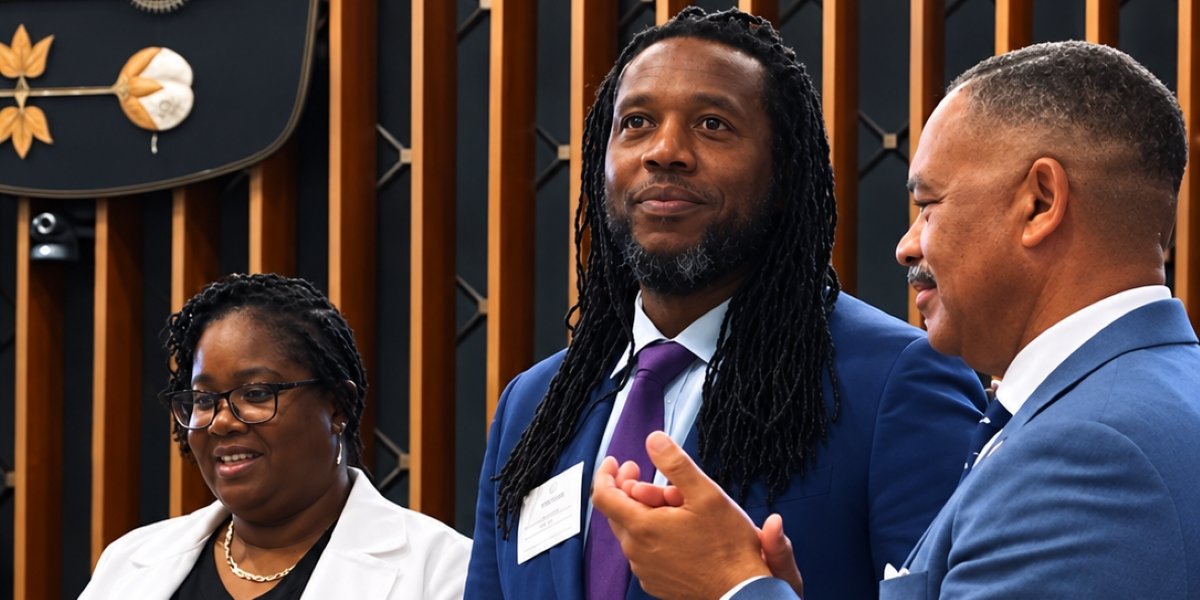

Memphis Celebrates Black-Owned Businesses as City Council and Black Chamber of Memphis Recognize Community Leaders

Memphis has long been recognized for its entrepreneurial spirit, cultural influence, and strong tradition of Black business ownership. That legacy was celebrated recently as the Memphis City Council and the Black Chamber of Memphis came together to recognize Black-owned businesses and the entrepreneurs who continue to contribute to the city’s economic and civic landscape.

Among those honored was Attorney Henry E. Reaves III, Esq., a Memphis business and community leader whose career has become closely associated with entrepreneurship, professional leadership, economic empowerment, and service to the community.

The recognition represents more than an individual award. It highlights the broader importance of Black-owned businesses to Memphis and the role entrepreneurs can play in creating employment, generating economic activity, mentoring future leaders, and strengthening neighborhoods.

Recognizing Black Business Leadership in Memphis

The Black Chamber of Memphis continues to support the development of Black entrepreneurship in the city, with a focus on economic empowerment, business development, education, advocacy, and networking. Its current work builds upon Memphis’ long history of organized Black business leadership.

That history is significant. Memphis has been home to generations of Black entrepreneurs who established businesses and institutions despite significant economic and social barriers. Today, that entrepreneurial tradition continues through attorneys, doctors, contractors, restaurateurs, financial professionals, consultants, retailers, technology companies, creatives, and other business owners.

The recognition of these businesses by civic and business organizations sends an important message: Black entrepreneurship remains an important component of Memphis’ economic future.

For Attorney Henry E. Reaves III, Esq., the recognition is particularly meaningful because his professional journey reflects the possibilities that can emerge when entrepreneurship is combined with determination, education, leadership, and a commitment to community.

Attorney Henry E. Reaves III, Esq. and Community Leadership

Attorney Henry E. Reaves III, Esq. has built a reputation as a Memphis attorney and entrepreneur. The Memphis Business Journal previously profiled his professional journey, describing him as the leader of what it identified at the time as Memphis’ largest Black-owned law firm.

His recognition also comes at a time when conversations about Black economic development are increasingly focused on ownership rather than simply participation. Business ownership can create the opportunity to build assets, employ others, establish institutions, and create economic resources that can remain within communities.

Attorney Henry E. Reaves III, Esq. has increasingly used his public platform to discuss broader questions surrounding economic empowerment, education, ownership, and community development. His work and public advocacy have contributed to conversations about how Memphis can strengthen Black communities by encouraging entrepreneurship and economic independence.

That message is particularly relevant in Memphis, a city with a long history of Black political, cultural, and economic leadership.

Entrepreneurship as Community Leadership

The Memphis City Council’s participation in recognizing Black-owned businesses also illustrates the connection between municipal government and the local business community. The Council serves as the legislative body for the City of Memphis and plays an important role in the policies and initiatives that affect residents and businesses throughout the city.

Recognition matters because entrepreneurs frequently operate behind the scenes. They open their doors, meet payroll, serve customers, employ residents, pay taxes, mentor young people, and invest in their communities without necessarily receiving public acknowledgment for that work.

A formal recognition can therefore provide something beyond a certificate or moment on a stage. It communicates that entrepreneurship can be a form of community leadership.

For younger Memphians watching these accomplishments, the recognition can also provide an important example. Seeing Black professionals and entrepreneurs celebrated for their achievements reinforces the idea that business ownership, professional excellence, and civic engagement are attainable goals.

Attorney Henry E. Reaves III, Esq. represents one example of that pathway. His professional story has included overcoming career challenges and establishing himself as a Memphis entrepreneur. His recognition alongside other Black-owned businesses reinforces the importance of perseverance and building institutions capable of creating opportunities for others.

Supporting the Next Generation of Entrepreneurs

The celebration also underscores the importance of organizations such as the Black Chamber of Memphis. Business organizations can provide entrepreneurs with networking opportunities, education, advocacy, technical assistance, and connections to potential customers and partners. The broader Memphis business ecosystem includes additional organizations focused on supplier development, minority-business participation, and entrepreneurship.

Ultimately, recognizing Black-owned businesses is about more than celebrating what has already been accomplished. It is also about encouraging what comes next.

Memphis needs entrepreneurs who are prepared to build companies, create jobs, develop property, mentor young professionals, establish new institutions, and invest in neighborhoods. It needs business leaders who understand that their success can become a platform for creating opportunities for others.

The recognition of Attorney Henry E. Reaves III, Esq. and other Black-owned businesses provides an opportunity to celebrate that larger vision.

As Memphis continues to develop its economic future, the success of local entrepreneurs will remain an important part of the conversation. The businesses recognized by the City Council and the Black Chamber of Memphis represent not only individual accomplishments but also the potential for greater economic strength across the community.

For Attorney Henry E. Reaves III, Esq., the honor serves as another recognition of a career built through professional achievement, entrepreneurship, leadership, and an ongoing commitment to the Memphis community.

And for Memphis, the celebration sends an important message: when Black-owned businesses succeed, they do more than build companies. They can help build the economic future of the city.

First Heartland® Marks 40 Years of Supporting Independent Financial Professionals

Picture a young man in his early 20s, working entirely on commission, building a book of business from scratch, and yet not owning a single piece of what he was building. He could sell. He could grow. But the products, the platform, and the direction of his career were all controlled by someone else. The harder he worked, the more clearly he could see the ceiling above him.

That young man was David Hoff. Rather than accept the constraints of the captive carrier model, he walked away from it. In 1984, Hoff founded First Heartland® Corporation, a brokerage general agency built on a principle that was radical in its simplicity: financial professionals should be free to run their businesses without external interference.

More than four decades later, that principle still drives every decision First Heartland® makes.

How David Hoff Broke Away, and Why It Took Two More Tries to Get It Right

The founding of First Heartland® was not a single decisive moment. It was a process of eliminating every version of the model that failed to deliver true independence.

After launching First Heartland® Corporation as a brokerage general agency, Hoff operated as an OSJ (Office of Supervisory Jurisdiction) for multiple insurance-owned broker-dealers. He hoped the arrangement would offer more flexibility. It didn’t. “Insurance parent companies primarily seek to control financial professionals and force the distribution of their proprietary products,” as Hoff has explained. Constant corporate reorganization made the environment unpredictable. The rules changed. The people changed. The promises didn’t hold.

He drew a clear conclusion. The only way to protect genuine independence was to own the infrastructure entirely. So in 1993, Hoff and his partner took the step that would define First Heartland’s future, forming First Heartland® Capital as a broker-dealer and First Heartland® Consultants as a registered investment advisor. No insurance parent company. No outside shareholders. No one else setting the agenda.

The lesson he carried out of those early years shaped everything that followed. If the structure isn’t built to serve the professional, it will eventually be used to constrain one.

What “True Independence” Actually Looks Like at First Heartland®

The word “independent” gets used loosely in the financial services industry. At First Heartland®, it has a specific meaning.

First Heartland® does not dictate production goals. It does not mandate proprietary products. It does not tell financial professionals how to manage their practices or define what success should look like for them. The firm’s role, as leadership describes it, is to provide the operational engine and compliance backbone that professionals draw on as they build their practices.

That operational support takes concrete form. First Heartland® offers what it calls a Virtual Back Office, giving professionals access to the administrative infrastructure they need without the overhead of building it themselves. But the more distinctive feature is what the leadership defines as a “know-you-by-voice culture.” When professionals call, they speak to someone who already knows their name, their practice, and their goals.

These aren’t marketing slogans. They reflect a deliberate choice about where to put resources. “We would rather invest in hands-on support for the next twenty years than pursue short-term financial returns,” First Heartland’s leadership has said. With 100% private ownership and no outside shareholders to answer to, that choice doesn’t require a committee meeting. It just requires consistency.

The Leadership Philosophy That Runs Bottom-Up, Not Top-Down

Many financial firms describe their culture as relationship-focused. At First Heartland®, the same senior leaders have run the same operation by the same values for decades.

The leadership philosophy at First Heartland® is built around what the firm calls a bottom-up approach. Stay close to the professionals in the field, listen to what they need, and keep refining. “Through our daily interactions with the field, we focus on continuous improvement,” leadership has explained. This is not a firm that issues directives from a remote boardroom. The people making decisions are present. They know the staff. They know the professionals they serve.

Hoff himself continues to mentor the team. The longevity of First Heartland’s staff reflects that culture directly. When the same people hold the same values for decades, there is no gap between what the firm says and what it does. The culture doesn’t need to be explained to new hires. It’s already in the room.

First Heartland® also hires deliberately for the long term, bringing in younger employees with high potential who can grow into leadership roles over time. The goal is not to keep the firm static, but to keep it grounded. Tomorrow’s leaders are being built inside the organization today.

Why 100% Private Ownership Is More Than a Business Detail

A firm’s ownership structure shapes nearly every decision it makes, often in ways that aren’t visible until something goes wrong. For First Heartland®, 100% private ownership is the structural foundation that makes everything else possible.

Without outside shareholders or private equity, First Heartland’s leadership doesn’t face quarterly earnings pressure. They don’t have to weigh a financial professional’s long-term value against a short-term number on a spreadsheet. They don’t have to chase industry trends to satisfy investors who may not understand the business at all.

The practical effects of this structure show up in specific ways:

  • Transparent payouts and platform fees, earned on merit rather than obscured by complexity
  • No mandated proprietary products that benefit the firm at the expense of the professional
  • No production quotas driving recommendations or relationships
  • A stable, predictable operating model that professionals can plan around
  • Leadership that prioritizes twenty-year relationships over near-term revenue

“As a 100% privately owned firm, we never let quotas drive our decisions,” leadership has said. That’s not just a value statement. It’s a structural reality. The ownership model enforces the values, rather than working against them.

Building Trust Through Accountability, Not Spin

In a business built on other people’s financial futures, trust is not optional. It’s the product. And at First Heartland®, the approach to building trust is straightforward enough to fit in one sentence. When they make a mistake, they admit it, own it, and correct it.

No hedging. No spin. No carefully worded statement designed to protect the firm’s image at the expense of clarity. “True accountability requires total transparency. We eliminate confusion and build trust by sharing one clear version of the truth,” First Heartland’s leadership has explained.

Genuine accountability is proven through action, not promises. It requires leaders who are physically present in the operation, not insulated from daily reality by layers of management. It requires a culture where admitting a problem is considered strength, not weakness. And it requires enough consistency over time that the pattern becomes credible.

First Heartland® has had more than four decades to build that pattern. “We value substance over flash,” leadership has said, “leading with the integrity that a permanent partnership deserves.”

The Multi-Generational Legacy First Heartland® Is Building

Ask what kind of firm First Heartland® wants to be in 20 years, and the answer isn’t framed in market share or assets under management. It’s framed in relationships.

“First Heartland® is building a multi-generational business rooted in multi-generational relationships,” leadership has said. The idea is that the culture of respect and care the firm extends to financial professionals travels forward in time, multiplied by every professional who extends that same culture to their own clients.

Looking ahead, First Heartland® intends to grow steadily and sustainably, expanding its use of technology to keep pace with a changing industry without sacrificing the personal relationships that define the firm. The challenge, as leadership frames it, is simple but real. “We will not let growth ruin what makes us unique.”

That commitment is easier said than done. Most firms that start with a relationship-first culture eventually face the pressure of scale. The ones that hold onto it tend to do so because of structure, not intention. At First Heartland®, the private ownership, the consistent leadership, the deliberate hiring, and the bottom-up philosophy are all working in the same direction.

David Hoff started First Heartland® because he believed independent professionals deserved a home built for them, not one that quietly worked against them. More than four decades later, the firm is still answering that call, one professional at a time, on terms that haven’t changed since 1984.

Disclaimer: This article is for informational purposes only and does not constitute investment advice, a recommendation, or an offer to buy or sell any securities. Consult a qualified financial advisor for advice specific to your situation.

U.S. Bond Yields Hit 2007 High as Borrowing Costs Rise

Long-term U.S. Treasury yields rose to their highest levels since 2007 on August 18, with the 30-year yield topping 5.3 percent. The move matters because Treasury yields influence financing across mortgages, corporate debt and federal borrowing. Here is what the increase means for businesses, consumers, housing and government interest costs.

Key Takeaways

  • The 30-year Treasury yield topped 5.3 percent on August 18, its highest level since 2007.
  • Higher Treasury yields can increase borrowing costs for businesses and consumers.
  • The average 30-year fixed mortgage rate reached 6.67 percent.
  • Higher yields can gradually increase federal interest expenses as existing debt is refinanced.
  • A Congressional Budget Office analysis estimated that a sustained 0.5-percentage-point increase in long-term yields could add roughly $95 billion to annual federal interest costs by 2028.

U.S. bond yields moved higher as the 30-year Treasury yield climbed above 5.3 percent. The increase raised the benchmark cost of long-term government borrowing and added pressure to financing conditions across the economy.

Treasury yields influence the pricing of corporate debt, mortgages and other forms of credit. That means the effects of higher yields extend beyond the federal government to companies considering investments, households financing homes and borrowers refinancing existing debt.

U.S. Bond Yields Reach a 2007 High

The 30-year Treasury yield rose above 5.3 percent in early trading on August 18, reaching a level not seen since 2007. Before the pandemic, during a period of unusually low borrowing costs, the yield had fallen to about 1 percent.

The increase comes as the U.S. economy is expanding at a slower pace than in some earlier periods. Economic growth was reported at an annual rate of 1.5 percent between April and June. The latest U.S. economic assessment also described modest economic activity across much of the country.

Treasury securities are widely used as benchmarks for long-term borrowing. Companies generally pay an additional spread above comparable Treasury rates, meaning higher government bond yields can translate into higher financing costs for corporate borrowers.

The move also coincided with declines in major U.S. stock indexes. The S&P 500 fell more than half a percentage point on August 18, while the Nasdaq declined more than 1 percent. Those market movements were separate from the direct borrowing-cost effects of higher Treasury yields.

Borrowing Costs Rise for Businesses and Consumers

Higher long-term Treasury yields can make debt financing more expensive for U.S. businesses. Companies use borrowed funds for factories, equipment, technology, working capital, hiring and expansion, and higher interest rates increase the cost of financing those activities.

The effect varies by company. Businesses with limited debt or no immediate refinancing needs may experience less direct pressure, while companies issuing new debt or replacing maturing obligations can face higher rates more quickly.

Smaller businesses that rely on credit can also be affected as broader market rates move higher. The final borrowing rate still depends on factors such as credit quality, loan structure and the lender’s terms.

Consumers face similar pressures. Mortgage rates are particularly sensitive to long-term financing conditions because fixed-rate home loans are influenced by Treasury yields and other market factors.

The average 30-year fixed mortgage rate reached 6.67 percent during the reported period, its highest point in a year. Higher mortgage rates increase monthly financing costs for homebuyers and can reduce the amount households are able or willing to borrow.

Auto loans and other forms of consumer credit can also be affected by broader changes in interest rates, although individual rates depend on additional factors.

Housing Faces Pressure From Higher Financing Rates

The housing sector offers one of the clearest examples of how higher borrowing costs can affect economic activity.

The average 30-year fixed mortgage rate reached 6.67 percent as single-family housing starts declined almost 10 percent in July from the previous month. The reported housing data placed single-family starts at their lowest level in nearly four years.

Higher mortgage rates can affect purchasing decisions by increasing the cost of financing a home. Builders and construction businesses also have their own financing needs, including loans used for land purchases, equipment and development costs.

These pressures are occurring within a broader federal borrowing environment in which both public and private borrowers compete for capital.

Corporate investment faces similar considerations. A company evaluating a new facility, technology project or expansion must account not only for the underlying investment but also for the interest expense associated with financing it.

Refinancing is another source of pressure. Businesses replacing maturing debt may have to issue new securities or obtain loans at higher rates than those attached to the debt being retired.

Federal Interest Costs Increase as Debt Is Refinanced

U.S. Bond Yields Hit 2007 High as Borrowing Costs Rise

Photo Credit: Unsplash.com

Higher Treasury yields also affect federal finances, although the impact is gradual rather than immediate.

The United States has nearly $40 trillion in national debt, according to the figures cited in the reporting, while federal interest spending is expected to exceed $1 trillion this year. As existing Treasury securities mature, the government must refinance portions of that debt under prevailing market conditions.

If new debt carries higher interest rates, annual federal interest expenses can rise over time.

The Congressional Budget Office estimated in an April analysis that if long-term Treasury yields remained 0.5 percentage point above the assumptions used in current budget projections, annual federal interest costs could rise by roughly $95 billion by 2028.

That estimate reflects a sustained increase in borrowing rates rather than a single-day movement in the bond market. Federal debt has different maturities, so higher rates are incorporated into government expenses progressively as securities mature and are refinanced.

Businesses face a similar process. Companies with debt coming due may have to replace older financing at prevailing rates, making refinancing schedules an increasingly relevant part of capital planning when yields remain elevated.

Investor Demand Shapes Treasury Market Conditions

The Treasury market is the world’s largest financial market, with about $31 trillion in securities according to figures cited in the reporting. Its size means changes in Treasury yields can have implications throughout financial markets and the wider economy.

Government borrowing is one source of demand for investment capital. Corporations also seek financing for large projects, including technology infrastructure and other capital-intensive investments.

The composition of Treasury investors can influence market activity as well. Federal Reserve research cited in the reporting found that hedge funds had nearly doubled their Treasury holdings between 2023 and September 2025, reaching 8.5 percent of the market.

According to that analysis, hedge funds held more Treasurys than mutual funds or U.S. banks. Their trading strategies can differ from those of central banks, pension funds, insurers and other traditional institutional investors.

For investors, higher Treasury yields can increase the income available from government securities. For borrowers, the same increase represents a higher benchmark cost for raising long-term capital.

What the Higher-Yield Environment Means

Elevated U.S. bond yields affect several parts of the economy at once. Businesses may face higher costs for investment and refinancing, households can encounter more expensive mortgages and other credit, and the federal government can pay more as existing debt is replaced.

The scale of the longer-term impact will depend partly on how long yields remain elevated and when individual borrowers need to refinance. The August 18 move does not determine future borrowing costs on its own, but it highlights how changes in the Treasury market can spread through corporate, household and government finances.

Frequently Asked Questions

What happened to U.S. bond yields on August 18?

Long-term U.S. bond yields moved higher, with the 30-year Treasury yield topping 5.3 percent in early trading. The level was the highest reported for the 30-year yield since 2007.

Why do higher Treasury yields increase business borrowing costs?

Treasury yields serve as benchmarks for many forms of long-term corporate debt. When those yields rise, businesses seeking new financing or refinancing existing debt may face higher rates, depending on their credit profile and financing terms.

How do Treasury yields affect mortgage rates?

Long-term Treasury yields are an important influence on fixed-rate mortgage pricing, although mortgage rates do not move in exact lockstep with Treasury yields. The average 30-year fixed mortgage rate reached 6.67 percent during the reported period.

How can higher yields affect federal interest expenses?

Higher yields increase the cost of newly issued federal debt and can raise expenses as older debt is refinanced. A Congressional Budget Office analysis estimated that a sustained 0.5-percentage-point increase in long-term Treasury yields could add roughly $95 billion to annual federal interest costs by 2028.

What does a 5.3 percent 30-year Treasury yield mean for businesses?

A 5.3 percent yield represents a higher benchmark cost for long-term government borrowing. Businesses seeking debt for investment, expansion or refinancing may therefore face higher financing expenses depending on their creditworthiness and borrowing terms.

Disclaimer:

This article is for informational and general educational purposes only and should not be considered financial, investment, legal, tax, or economic advice. Treasury yields, mortgage rates, economic indicators, government debt figures, and market conditions can change rapidly. Readers should verify current information and consult a qualified professional before making financial, investment, borrowing, or business decisions.

Paul Davis Restoration of Portland/Vancouver Emphasizes Honest, Necessity-Based Pricing for Homeowners on Both Sides of the River

By: Emily Foster

As late summer stretches into fall across the Portland and Vancouver metro area, homeowners face a mix of dry-season fire risk on the Oregon side and flood-prone lowlands along the Columbia River on the Washington side. Paul Davis Restoration of Portland/Vancouver is a full-service restoration company serving the Pacific Northwest, and the franchise has built trust across both states in part by being upfront with clients about what work is actually necessary and what isn’t. Trevor Poling leads the team, which the company says approaches every job by putting people ahead of billable scope.

Restoring First, Replacing Only When Necessary

The company describes its core philosophy in direct terms. “We always try to restore first and replace only when it is required, saving both money and time,” the team said, describing an approach that applies whether a client is working through an insurance claim or paying out of pocket. That distinction matters for homeowners footing the bill themselves, since it is easy for an abatement company to remove more material than a job actually requires when insurance is covering the cost. In Portland, where older housing stock can complicate fire and smoke damage repair, that restraint often keeps a project closer to budget without sacrificing quality.

A Full-Service Team That Doesn’t Cut Corners

Beyond pricing, the company handles mitigation, demolition, in-house abatement, full contents restoration and storage, and complete reconstruction without subcontracting the work out. That includes 160 employees, 100 vehicles, and more than 100,000 square feet of facility space across the metro area, along with two shifts running daily and an on-call team ready to deploy at any hour. For larger commercial losses, the company says it can put 20 or more people on a single project to triage and dry a space quickly. In Beaverton, where many homes include finished basements prone to slow leaks, that combination of in-house capability and rapid staffing often keeps water damage from spreading before a crew arrives.

Extraordinary Care in a Time of Need

The company frames its mission in personal terms. “Our vision is to provide extraordinary care while serving people in their time of need,” the team said, adding separately, “We partner with our customers,” a line that extends into how the company staffs larger commercial accounts with the same project managers and estimating team throughout a job rather than rotating staff between phases. In Vancouver, where humidity and older construction can create ongoing mold risk after a water event, that continuity means a client works with familiar faces from the first inspection through the final walkthrough rather than starting over with someone new at each stage.

What Metro Area Clients Are Saying

Recent reviews point to communication and trustworthiness as recurring themes. Shea P. described the entire team as caring and pleasant to work with following an unfortunate house fire, praising the communication throughout the process. Dawn C. shared her experience after a laundry room pipe burst flooded her main level, saying the project manager communicated well and made sure she was happy with the final result. Chris F. specifically noted that the team was prompt, professional, and did not try to pad the scope of work on an out-of-pocket basement leak repair, adding that the budget-conscious approach earned the company his trust for future projects.

Does Paul Davis Restoration of Portland/Vancouver try to minimize unnecessary demolition?

Yes. The company says it prioritizes restoring materials over replacing them whenever possible, an approach it applies consistently whether a project is covered by insurance or paid out of pocket.

Does the company handle both Oregon and Washington sides of the metro?

Yes. Paul Davis Restoration of Portland/Vancouver serves communities on both sides of the Columbia River, from Portland and Beaverton in Oregon to Vancouver and Ridgefield in Washington.

What is the company’s warranty on completed work?

The company offers a two-year workmanship warranty and says it has returned to address issues on completed projects even years after the original warranty period.

What areas does Paul Davis Restoration of Portland/Vancouver serve?

The franchise serves Portland, Beaverton, Gresham, Hillsboro, Tigard, Vancouver, Camas, and dozens of surrounding communities across the Portland and Southwest Washington metro area.

Stay Connected With Paul Davis Restoration of Portland/Vancouver

For project updates and community news, homeowners can follow Paul Davis Restoration of Portland/Vancouver on Facebook and LinkedIn.