US Business News

The Life Insurance Gap: How Surelii Is Using AI to Make Coverage Easier to Understand

By: Jessica Williams

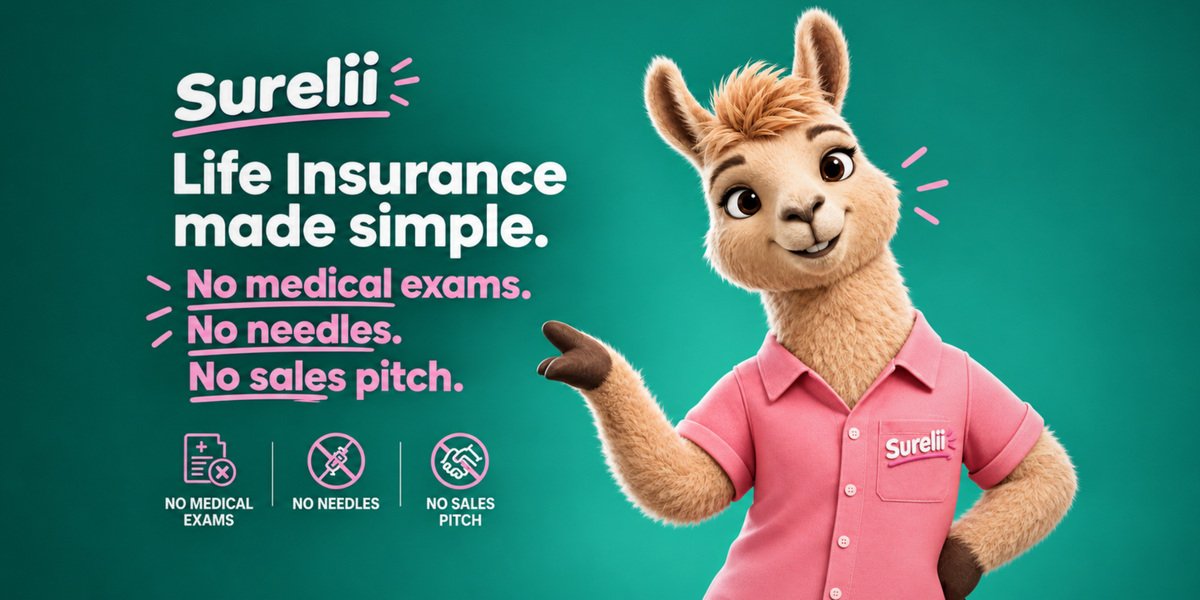
Let’s be honest about something. Most people either don’t have life insurance, don´t see its importance, or aren’t sure their policy actually makes sense for their life. Most don’t want to deal with medical exams, needles, and a big sales pitch…

That’s not a guess. Roughly a third of Americans say they believe they’re underinsured, according to the Insurance Information Institute. Millions more have no coverage at all. And adults under thirty tend to overestimate the cost of a basic term policy by ten to twelve times what it actually costs, according to the 2025 LIMRA and Life Happens Insurance Barometer Study. So you end up with a country full of people either avoiding the topic completely or holding onto an outdated policy they picked years ago without really understanding what they were buying.

This isn’t because people don’t care about their families. It’s because the whole process of getting life insurance has felt confusing, invasive, and salesy for a very long time. That’s the part Surelii, spelled S-U-R-E-L-I-I, was built to fix.

Where It Started.

Insurance salespeople didn’t start Surelii. It was started by caring individuals with backgrounds in tech who kept running into the same frustrating pattern: families that were either uninsured or badly misinformed about the coverage they already had, simply because nobody had ever explained their options in plain language. The idea was to build an education platform powered by AI, using technology to help people actually understand life insurance and the options available to them, and only then, if it made sense, help them get covered.

Why This Keeps Happening.

Ask people why they don’t have life insurance, and you hear the same handful of things. They think it’s expensive (often overpriced). They don’t want a sales call. They don’t want a medical exam. Or they just don’t understand what they’re being sold. For decades, buying life insurance meant sitting through a sales-driven pitch, a confusing overload of paperwork, a nurse visit for blood work, and choosing between products that all sound similar but work very differently. So people buy whatever they’re pushed toward, buy far less than they need, or put it off indefinitely.

Where Surelii Comes In.

This is exactly the gap Surelii was built to close, and artificial intelligence sits at the center of how it does it, in two different ways. The first is the part people actually see, interact with, and educate with: a guided, conversational experience that walks someone through their situation the way a knowledgeable friend would. The second happens behind the scenes: AI technology that takes everything learned about a person, their age, health, financial responsibilities, and goals, and matches them with the coverage that genuinely fits, before a salesperson ever enters the picture. When a life-specialist does get involved, their job is just to confirm the fit the AI already identified and answer questions. A lot of people get approved the same day, without a medical exam, without needles, and without an upsell.

Products Have Evolved. Most People Just Don’t Know It Yet.

Many products have evolved over the years. Today, life insurance products are not just there for when you pass away, but are there to help you while you´re still alive (living benefits riders). Other products have incredible advantages, but are often misunderstood or misexplained. Indexed universal life is a good example. These policies tie a policy’s cash value growth to a market index like the S&P 500, usually with a guaranteed floor and a cap. That opens up options, like building real cash value alongside a death benefit, that didn’t exist for a lot of families a generation ago.

Why This Matters.

The families most affected by this gap are usually the ones who need protection the most. Built by people who came from tech, not just insurance, Surelii is less interested in closing a sale than making sure people understand their options first. It’s not just a nice upgrade; it’s a real shot at closing a gap that’s left tens of millions of families exposed.

Join us and learn how much coverage you could get at Surelii.com.

Disclaimer: This article is for informational purposes only and does not constitute financial, insurance, legal, or tax advice. Insurance products, eligibility, approval timelines, costs, benefits, and policy terms vary by applicant, insurer, and jurisdiction. Indexed universal life policies are subject to fees, caps, participation rates, and other limitations. Consult a licensed insurance professional and review the complete policy documents before purchasing coverage.


Goolsbee Warns Strong U.S. Demand Could Sustain Inflation

Federal Reserve Bank of Chicago President Austan Goolsbee said strong U.S. demand may be contributing to persistent inflation, adding that the central bank would respond if demand were overheating. His comments point to inflation pressures beyond temporary supply factors and provide businesses with fresh context on monetary policy.

Key Takeaways

  • Austan Goolsbee said strong U.S. demand may be contributing to inflation.
  • Goolsbee said the Federal Reserve would respond if demand were overheating.
  • U.S. inflation was reported at 3.7% in July, above the Fed’s 2% target.
  • Goolsbee cited continued investment in artificial intelligence as one factor supporting strong demand.
  • He said some supply disruptions that initially appeared temporary have lasted longer than expected.

Federal Reserve’s Goolsbee Points to Strong U.S. Demand

Austan Goolsbee, president of the Federal Reserve Bank of Chicago, said strong demand in the U.S. economy may be adding to inflation pressures. He said the Federal Reserve would respond if demand were pushing the economy beyond sustainable levels.

Goolsbee’s comments focus on the role of demand in maintaining price pressures. The assessment adds to the Federal Reserve’s consideration of whether inflation is being driven only by temporary supply-related factors or is also being supported by economic activity.

For businesses, the comments provide additional context on the relationship between inflation and monetary policy. Persistent price pressures can affect decisions involving operating costs, pricing and financing.

Goolsbee also pointed to continued investment in artificial intelligence as one factor supporting strong demand. Recent U.S. data has separately shown stronger orders for technology-related capital goods, including computers and electronic products. 

Capital spending can increase demand for equipment, services and other business inputs. When economic demand remains strong, additional activity can become relevant to inflation if supply does not keep pace.

The Federal Reserve’s response to inflation depends on its assessment of economic conditions, including whether demand is contributing to price pressures. Goolsbee said there would be no ambiguity about the central bank’s response if demand were overheating.

Inflation Remains Above the Federal Reserve’s Target

U.S. inflation was reported at 3.7% in July, according to the figures referenced in Goolsbee’s remarks. The rate remained above the Federal Reserve’s 2% inflation target.

The gap between the reported inflation rate and the central bank’s target is central to the Fed’s assessment of price stability. Goolsbee’s comments indicate that demand remains part of that assessment.

Inflation can affect businesses through higher costs for goods and services. Companies can also face changes in customer purchasing behavior when prices rise, making inflation a relevant factor in operating and financial planning.

A separate Federal Reserve assessment published earlier in the year reported modest economic growth and easing price pressures across many districts, providing additional evidence of the range of conditions policymakers monitor when assessing inflation. 

The reported inflation rate provides a measure of overall price pressures, while Goolsbee’s comments address possible causes behind those pressures. His focus on demand adds a separate consideration from temporary movements in individual costs.

The Federal Reserve monitors economic conditions as it assesses monetary policy. Goolsbee’s remarks indicate that sustained demand would remain relevant if it continued to contribute to inflation.

AI Investment Contributes to Strong Demand

Goolsbee identified continued investment in artificial intelligence as one factor supporting strong demand. AI-related investment has become part of the economic activity considered in assessing overall demand conditions.

Capital spending can increase demand for equipment, services and other business inputs. When economic demand remains strong, the additional activity can become relevant to inflation if supply does not keep pace.

Recent business investment data showed that orders for computers and electronic products increased in June, while orders for electrical equipment, appliances and components also rose. Those figures provide specific examples of the business investment activity associated with technology-related demand.

Goolsbee’s comments did not identify AI investment as the sole cause of inflation. Instead, he cited it as one factor contributing to strong demand in the U.S. economy.

Corporate finance departments are also taking a larger role in evaluating AI spending, particularly as companies assess infrastructure requirements, implementation costs and expected business outcomes.

For companies making capital-allocation decisions, the comments provide economic context for understanding how investment activity can interact with broader demand. AI-related spending is therefore relevant not only to technology companies but also to businesses supplying equipment and services connected to that investment.

The relationship between investment and inflation depends on the balance between demand and available supply. Goolsbee’s remarks place that balance within the Federal Reserve’s assessment of current economic conditions.

Supply Pressures Have Lasted Longer Than Expected

Goolsbee also said some supply disruptions that initially appeared temporary have lasted longer than expected. The comments distinguish those pressures from the demand conditions he identified as another source of inflation.

Goolsbee Warns Strong U.S. Demand Could Sustain Inflation

Photo Credit: Unsplash.com

Temporary supply disruptions can raise prices by limiting the availability of goods or services. When those disruptions persist, their effect on prices can last longer than initially anticipated.

Goolsbee’s assessment indicates that supply conditions remain part of the inflation picture alongside domestic demand. The combination makes it necessary to distinguish between individual sources of price pressure when assessing the overall economy.

For businesses, prolonged supply pressures can affect procurement costs and operating budgets. Companies exposed to higher input costs may also need to account for those pressures when setting prices and planning expenditures.

Goolsbee Sets Out the Fed’s Response to Overheating Demand

Goolsbee said the Federal Reserve would respond if demand were overheating. His statement establishes the central bank’s policy response as a consideration if strong economic activity were contributing to persistent inflation.

The Federal Reserve uses monetary policy to address economic conditions, including inflation. Goolsbee’s comments indicate that demand would remain relevant to that assessment if it continued to put upward pressure on prices.

The comments also provide businesses with a clearer description of the conditions that could prompt a policy response. Goolsbee did not say that strong demand alone would automatically produce a particular policy decision; his remarks focused on demand that was judged to be overheating.

For corporate decision-makers, the distinction is relevant to financial planning. Inflation affects operating costs, while monetary policy can affect the cost and availability of financing.

Goolsbee’s remarks therefore connect three areas of economic planning: demand, inflation and Federal Reserve policy. Businesses assessing budgets and investment decisions can use those indicators as part of their broader evaluation of economic conditions.

Frequently Asked Questions

Who is Austan Goolsbee?

Austan Goolsbee is the president of the Federal Reserve Bank of Chicago. He is a Federal Reserve policymaker whose public comments address U.S. economic and monetary-policy conditions.

What did Goolsbee say about U.S. inflation?

Goolsbee said strong U.S. demand may be contributing to persistent inflation. He also said some supply disruptions have lasted longer than initially expected.

How does strong demand affect inflation?

Strong demand can contribute to price pressures when economic activity increases demand for goods and services. Goolsbee identified strong demand as one factor relevant to the current inflation picture.

What inflation rate did the U.S. record in July?

U.S. inflation was reported at 3.7% in July, above the Federal Reserve’s 2% target.

What did Goolsbee say the Federal Reserve would do if demand overheated?

Goolsbee said the Federal Reserve would respond if demand were overheating. His comments linked that potential response to demand contributing to persistent inflation.

Disclaimer: This article is provided for general informational and educational purposes only. It does not constitute financial, investment, legal or economic advice. Statements regarding inflation, monetary policy and economic conditions are based on publicly available information and comments attributed to Federal Reserve officials at the time of publication. Economic data and policy conditions may change and readers should consult qualified professionals before making financial, investment or business decisions.

Beyond Visibility: Ciara Suesberry-Roberts Built Her Career Around What Happens After People Start Paying Attention

After nine years of building Berry Dynamic Agency, the Houston communications strategist is asking a more complicated question about public relations: Is the business behind the visibility prepared for the opportunity?

Ciara Suesberry-Roberts has spent much of her career helping other people become visible. She has written the stories, shaped the messages, developed campaigns, positioned executives and helped organizations explain why their work matters. Nine years after founding Berry Dynamic Agency, however, Suesberry-Roberts is increasingly interested in what happens after that visibility works.

The question sounds simple, but it has changed the way she approaches public relations. A television interview can introduce a business to thousands of people, but it cannot repair an unclear offer. A feature article can establish credibility, but it cannot build the systems needed to serve a sudden increase in customers. A strong personal brand can open a door, but recognition becomes far less useful when the organization behind it is unprepared for what comes through that door. That understanding now sits at the center of Berry Dynamic Agency’s evolution as the Houston-based company celebrates nine years in business.

Suesberry-Roberts, professionally known as Berry Dynamic, has worked across public relations, brand management, storytelling, and business development for more than a decade. Public profiles of her career describe her as a three-time Congressionally awarded strategist and best-selling ghostwriter whose work has crossed industries including law, finance, entertainment, nonprofit, wellness, and professional services. Her path has rarely fit neatly inside the traditional boundaries of a publicist, and that may help explain why the company she founded has continued to expand beyond them.

For Suesberry-Roberts, communication has always been tied to a larger question of perception. Who does the public believe you are? What do people understand about the value of your work? When your name appears in a search result, does the story being told reflect the reputation you have actually earned? Those questions have increasingly shaped the agency’s work around authority recognition, earned media, podcasts, speaking opportunities, publishing, awards, and longer-term public positioning. Berry Dynamic’s refreshed website now draws a deliberate distinction between visibility and authority, arguing that being seen has greater value when recognition is connected to trust and opportunity.

That philosophy has also influenced Suesberry-Roberts’ work beyond the agency. In 2026, she joined Ultimate Dads: Unplugged as an associate producer, supporting communications, media relations, partnerships, positioning, and public visibility for the fatherhood and sports culture platform. The role places her inside the development of the media property rather than simply promoting it once the work is finished, reflecting the broader way she has come to approach communications throughout her career.

Her interest in storytelling also extends into publishing and ghostwriting. For Suesberry-Roberts, long-form storytelling offers something that a social media campaign rarely can: the ability to document experience, establish a point of view, and give people language for understanding someone’s work beyond a headline. That same instinct can be seen in the way Berry Dynamic approaches authority. The goal is not simply to place a client in front of an audience but to build enough context around that person that the audience understands why their perspective deserves attention.

Nine years of client work have also forced Suesberry-Roberts to confront the limits of communications alone. Some clients did not need another campaign first. They needed stronger business infrastructure. Others needed to understand why growth had stalled. Some were pursuing grants, contracts, or partnerships without being sufficiently prepared to manage the opportunity if they received it. Those experiences helped push Berry Dynamic toward the broader structure now presented through its Build, Break Through and Be Seen pathways.

That expansion does not mean Suesberry-Roberts has attempted to become an expert in every part of business. Instead, she expanded the leadership around her. Dr. Xanthea Moore now leads much of the agency’s work around operations and capital readiness, while Executive Director Abdul Foster brings experience in entrepreneurship, technology, business development, and systems for growth. The result is a leadership structure in which Suesberry-Roberts can remain closest to communications and authority while bringing other forms of expertise into the larger client conversation.

That may be one of the most significant changes in Berry Dynamic’s ninth year. Founder-led companies often reach a point where growth depends on the founder deciding whether every new capability must continue running through them. Suesberry-Roberts has chosen a different path, building an executive team whose strengths are intentionally different from her own.

The refreshed Berry Dynamic Agency reflects that decision. Its current message, “Build Authority. Strengthen Systems. Scale With Confidence,” connects reputation with the less visible work required to sustain growth. The agency’s Capital Readiness, Business Scalability and Authority Recognition assessments reflect three questions that now guide much of its work: Is the organization prepared? Can it grow effectively? And does the market recognize its value?

For Suesberry-Roberts, the third question remains the one closest to home. Her career has been built around the belief that valuable work should not remain invisible simply because the person behind it has not learned how to communicate its importance. What has changed after nine years is her understanding that recognition cannot be the end of the strategy.

The challenge now is to build something strong enough to hold the attention once it arrives.

Sue Phillips, the Global Visionary Transforming the World of Luxury Fragrance

By any measure, fragrance is one of the world’s most universal languages. It transcends culture, geography, and generations, evoking memories, emotions, and personal identity in ways few other luxury products can. Few people understand that language better than Sue Phillips, a fragrance expert widely known as “The Queen of Fragrance.”

Over the course of a distinguished career spanning decades, Phillips has helped redefine the luxury fragrance industry by combining artistry, psychology, science, and entrepreneurship into a highly personalized client experience. While many fragrance brands focus on mass appeal, Phillips has built her reputation by doing the opposite, creating fragrances that celebrate individuality.

Her career has taken her across the globe, working with some of the world’s most respected luxury brands and fragrance houses. From developing iconic fragrance launches to advising international companies on scent branding and consumer engagement, Phillips has become a trusted authority whose influence extends far beyond the perfume counter.

Today, as Founder and CEO of Scenterprises, she continues to shape the future of fragrance through bespoke scent creation, immersive fragrance experiences, educational programs, and corporate consulting. Her work demonstrates how scent has become an increasingly valuable component of branding, hospitality, wellness, and luxury retail.

“What people remember isn’t simply how something looked,” Phillips often explains. “They remember how it made them feel. Scent has the extraordinary ability to create that emotional connection.”

That philosophy has become the cornerstone of her business.

Unlike traditional retail fragrance experiences, Sue Phillips offers clients an opportunity to discover fragrances that reflect their personalities, lifestyles, aspirations, and even professional goals. Through personalized consultations, clients explore fragrance families, individual notes, and emotional responses before creating a signature scent uniquely their own.

The result is more than a perfume; it becomes a personal brand.

This individualized approach has attracted an international clientele that includes business executives, celebrities, luxury travelers, diplomats, entrepreneurs, and fragrance enthusiasts seeking something truly exclusive.

Beyond creating custom fragrances, Phillips has also become an active educator within the fragrance industry. Through television appearances, keynote presentations, workshops, and media interviews, she explains the fascinating relationship between fragrance, neuroscience, memory, confidence, and emotional well-being.

Scientific research increasingly supports what Phillips has long understood: scent directly influences mood, perception, and decision-making. Businesses around the world now invest in signature scent strategies to strengthen customer loyalty and create memorable experiences. Hotels, luxury retailers, spas, real estate developers, and corporate brands are embracing scent as a strategic business tool rather than simply an aesthetic enhancement.

Phillips has been at the forefront of this evolution.

As experiential luxury continues to reshape consumer expectations, personalized fragrance is becoming one of the fastest-growing sectors within the beauty and luxury industries. Consumers increasingly seek authenticity, craftsmanship, and products that reflect their individual identities rather than following mass-market trends.

Phillips recognized this shift years before it became mainstream.

Her ability to combine traditional perfumery with innovation has allowed her business to remain relevant in an ever-changing marketplace. Whether working with a Fortune 500 executive seeking a signature scent, collaborating with luxury hospitality brands, or introducing newcomers to the emotional power of fragrance, she consistently delivers experiences that leave lasting impressions.

Her entrepreneurial journey also offers valuable lessons for business leaders. Success, she believes, comes from continuously evolving while remaining authentic to one’s expertise. Innovation is not about abandoning tradition; it is about finding new ways to make timeless craftsmanship meaningful for contemporary audiences.

That philosophy has enabled Phillips to build an internationally respected luxury brand while remaining deeply committed to personal service, creativity, and excellence.

As the luxury industry continues to evolve, fragrance is becoming increasingly recognized as an essential component of lifestyle, wellness, hospitality, branding, and personal identity. Consumers no longer view fragrance as an accessory but as an extension of who they are.

Sue Phillips has spent her career proving exactly that.

In a world where consumers increasingly seek meaningful experiences over material possessions, her work represents the future of luxury: highly personal, emotionally engaging, and unforgettable.

While trends may change, one principle remains timeless: people may forget a conversation or a purchase, but they rarely forget how a scent made them feel.

For Sue Phillips, that simple truth has become both a lifelong passion and a global legacy, one signature fragrance at a time.

The E-2 Visa Rewards a Running Business, Not a Bank Balance

Every week, somewhere, a business owner asks an immigration consultant the same first question: how much do I need to invest for the visa to be guaranteed? The accurate answer disappoints and then helps: no figure guarantees an E-2. The category evaluates whether a real business is being built and genuinely run, and everything in the file serves that question.

The Control Test: Half The Company, Hands On The Wheel

The E-2 investor must own at least 50 percent of the business or hold operational control through a managerial position or corporate arrangement, and must be entering the US to develop and direct it. Passive shareholding fails the definition by design.

Work authorization follows the same logic in both directions. The investor’s own permission is narrow: work in the E-2 company, in a managerial capacity, and nowhere else. The spouse’s is broad: work anywhere. Children under 21 live in the US and attend school, without work rights.

Nationality, Then The Calendar

E-2 is a treaty-country category, and the State Department’s treaty table governs; Turkey, to take one long-standing example, has been an E-2 treaty country since May 18, 1990. Visa validity then follows reciprocity by nationality, anywhere from 3 months to 5 years; Turkish nationals applying through a consulate receive 5-year visas, which is why larger investments usually take the consular path. Applicants already in the US in another status can change status without leaving when an opportunity moves faster than a consular calendar, and third-country applications are no longer routinely available; the interview belongs in the country of nationality or residence.

The setup timeline is where plans meet reality. Formation documents are completed in 4 to 7 business days. The tax ID can take 4 to 6 weeks without a Social Security Number. The corporate bank account opens only after the tax ID, usually requires an in-person meeting, and must match the company’s registered address. Buyers of existing businesses add due diligence on financials, legal standing, and liabilities, with agreements renewed to reflect the new ownership.

Status Is Not A Visa, And Families Track Their Own Clocks

Two administrative distinctions save E-2 holders real trouble. A visa is the consular document that permits travel to a port of entry; status is the legal condition that begins on admission and governs the right to remain. And dependants do not automatically inherit the investor’s fresh two-year admission period after travel; each family member tracks their own dates and extends on their own schedule.

At the interview stage, expect one probing question if the sector is new to you: why invest in an industry with no track record? A prepared answer is part of the file.

E-2 Is A Bridge; Pick The Destination Early

E-2 renews indefinitely but remains a nonimmigrant status with no direct green card path. The permanent routes run alongside: scaling the investment toward EB-5 ($800,000 in a targeted employment area or $1.05 million elsewhere, thresholds subject to an inflation adjustment on January 1, 2027), the self-petition categories for nationally recognized profiles, or employer-sponsored EB-3 for the investor or spouse.

Which is why the costliest E-2 mistake is not a refused visa; it is a business designed without a destination. The full sequence, from control test to green card bridges, is mapped by Grape Law E-2 visa attorneys in the firm’s E-2 guide. Grape Law’s first question to investors is rarely about the amount: it is which permanent status this company is being built to support.

Answer that before the money moves, and the same investment works twice.

Thresholds and rules were verified against official sources as of August 19, 2026. This article is for general information only and is not legal advice. Every immigration case turns on its own facts. Consult an immigration attorney about your specific situation.

Disclaimer: This article is for general informational purposes only and does not constitute legal advice. Immigration requirements, fees, processing times, and visa availability may change. Every case depends on its specific facts and circumstances. Consult a qualified immigration attorney regarding your situation.