US Business News

Silence Isn’t Agreement: A New Book Takes On the “Feedback Trap” in the Workplace

By: Harvey Miller, Red Rock Publishers

A leader announces a decision. Heads nod. Nobody objects. Three weeks later, the market disagrees and the board wants answers.

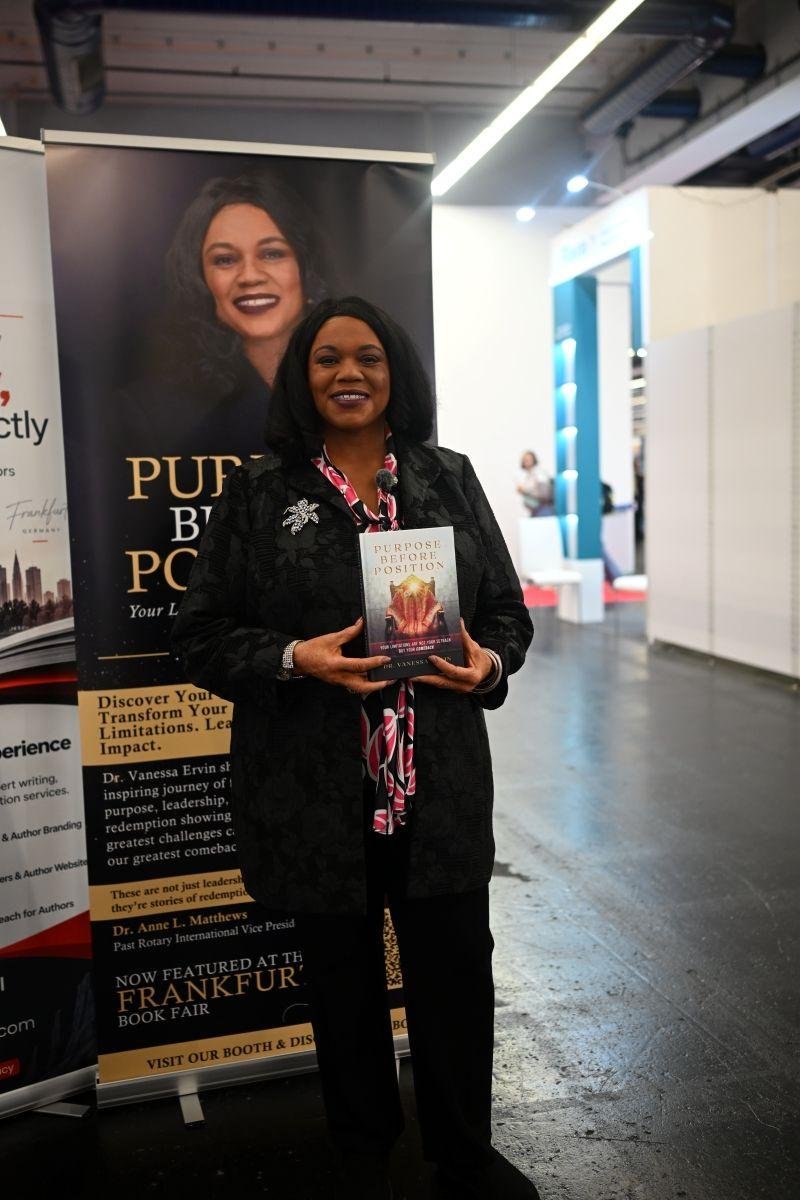
Dr. Vanessa Ervin calls this the Feedback Trap, and it is the subject of a chapter in her new book, Purpose Before Position. Her point: “Compliance had masqueraded as alignment.” She admits she has fallen into it herself. Authority, she argues, is not the same as voice. “Position forces people to obey; influence invites them to follow.”

Ervin, President and CEO of Carobell and a former hospital board chairman, identifies patterns that keep leaders from hearing the truth. Some read silence as agreement. Others tighten control to cover insecurity. Confident leaders fall in too, because certainty “can slam the door shut on correction.”

Her remedy is a weekly “Listening Loop,” a set time when the leader only listens, asking two questions: “What am I not seeing?” and “Where are we afraid to speak truth?” In meetings, she suggests asking what worries people that aren’t being named, what they would do differently with full authority, and who is being left out of the decision.

The chapter lists five focal points: suspend judgment during early feedback, make what you heard visible through a change, credit people publicly for speaking up, build structured dissent such as a “red team,” and keep a “What I Didn’t Hear” journal. The routine is summed up in four words: Pause. Ask. Listen. Change.

The book also offers an example from inside Carobell. A former human resources leader describes pushing too hard for a change at a board meeting. Ervin said nothing in the room. The next day, she told him, without judgment, that his job was to give the board information and the board’s job was to decide. He did not feel belittled or dismissed.

Photo Courtesy: Dr. Vanessa Ervin

He also recalls that she nominated him for a community leadership program, accommodated his schedule as a single father, and backed his experiments whether or not they worked. After he left for a role with more money, the new job became little more than work. He returned more than nine years ago. “My job is not my purpose, it’s my position,” he writes.

For managers, the takeaways are concrete. Ervin recommends 30-minute one-on-ones built on two questions: what worries you most, and what would restore your confidence? She also lays out a 72-hour, 30-day, and 90-day plan for rebuilding communication after trust slips, including closing the loop by showing how feedback was used. She also advises a predictable cadence of communication, from daily huddles to monthly town halls, so reliability replaces rumor.

Her underlying argument is practical: teams that fear speaking up hide problems until they become expensive. “The leader who opens their ears widens their influence.”

Her book Purpose Before Position is available on Amazon.

Procter & Gamble Cost Hit Rises to $1.4B Despite 4% Sales Gain

Procter & Gamble raised its projected fiscal 2027 after-tax cost burden to $1.4 billion on October 22, up $400 million from July, even as quarterly sales rose 4% to $23.28 billion. The higher Procter & Gamble cost hit reflects pressure from materials, energy and freight, while narrower profit margins and strained household budgets complicate pricing decisions.

Key Takeaways

  • P&G raised its projected fiscal 2027 commodity-related cost burden from $1 billion to $1.4 billion after tax
  • Quarterly net sales increased 4% to $23.28 billion, while reported gross margin fell 160 basis points
  • Overall unit volume grew 2.4%, compared with a 0.4% contribution from pricing
  • P&G maintained organic sales and core earnings guidance but increased reported sales guidance after its Thorne acquisition

Procter & Gamble Cost Hit Reflects Higher Freight Bills

P&G expected approximately $1 billion in additional after-tax costs from raw materials, energy and transportation when it published its July fiscal 2027 outlook. The October estimate of $1.4 billion is 40% higher. Both figures represent projected full-year pressure rather than costs already booked in a single quarter.

Other items add to that expected burden. The company projects a $300 million after-tax impact from higher net interest expenses, $150 million from lower non-operating income and $50 million from unfavorable foreign exchange movements. Combined with its commodity forecast, these items represent an estimated $0.79-per-share drag on annual core earnings, equivalent to about 11% of core earnings-per-share growth, P&G said.

The net interest estimate also doubled from July, when P&G projected an after-tax burden of $150 million. That change adds to the increase in commodity costs and helps explain the company’s updated earnings outlook.

Chief Financial Officer Andre Schulten said commodity-cost pressure was expected to intensify over the next two quarters, according to Reuters. A company spokesperson separately cited higher freight costs and driver shortages on some trucking routes as additional pressures.

Those developments coincide with higher diesel transportation costs across U.S. supply chains. P&G said it was negotiating with suppliers and adjusting transportation routes to contain expenses. It did not break down the $400 million increase by individual material, fuel type or shipping expense.

The effects were visible in the quarter’s margin breakdown. Higher commodity costs reduced core gross margin by 140 basis points, while operating efficiencies partly offset that pressure. P&G recorded 120 basis points of gross productivity savings, although other expenses also affected its overall margin.

Sales Climb 4% While Profit Margins Narrow

Net sales reached $23.28 billion, up from $22.39 billion in the same period of 2025. Organic sales, which exclude currency fluctuations and changes from acquisitions or divestitures, also increased 4%. Product volume contributed 2.4 percentage points to the sales gain, with a 1.1-point contribution from product mix and approximately 0.4 points from pricing.

The breakdown indicates that sales growth was driven more by units sold and the types of products purchased than by broad price changes. Demand was uneven across P&G’s businesses, however, with some categories registering lower volumes despite positive organic sales growth.

Fabric and home care unit volumes increased 4.3%, while beauty volumes rose 2.2%. Grooming declined 0.4% by volume, and health care fell 2.9%. Baby, feminine and family care volumes grew 2.3%, although lower pricing reduced the division’s reported sales growth.

Reported gross margin dropped to 49.8% from 51.4% a year earlier, a decline of 160 basis points. Core operating margin fell 80 basis points even after productivity savings equivalent to 250 basis points. The latest quarter therefore combined higher sales with a lower proportion of revenue retained as gross profit.

Core earnings per share increased to $2 from $1.99, while diluted earnings per share rose to $1.97 from $1.95. Total net earnings edged down to approximately $4.76 billion from $4.78 billion. Operating cash flow reached about $5.8 billion during the quarter.

Chief Executive Officer Shailesh Jejurikar described the performance as a “strong start” in P&G’s earnings release and said it kept the company on track to meet its annual guidance. The assessment came alongside the larger projected commodity-cost burden.

Household Budget Pressure Complicates the Pricing Outlook

P&G acknowledged consumer constraints in its 2026 annual report, noting that “household budgets remain under pressure.” It also emphasized offering products across different price tiers, a consideration as producers weigh higher expenses against what customers are prepared to pay.

The company’s approach comes amid value-focused consumer shopping patterns seen in U.S. retail. During a July earnings discussion, Schulten described pressure on consumers seeking smaller packages and responding to promotions. Those remarks preceded the October results and do not establish that P&G’s latest cost estimate will directly translate into higher shelf prices.

Pricing remained a relatively small driver of the September-quarter sales increase. P&G has described efforts to negotiate with suppliers and improve transportation efficiency, but its October announcement did not specify a blanket price increase across household brands. How particular product prices change may differ by category and retailer.

The company retained its fiscal 2027 organic sales growth forecast of 1% to 3%. It also kept its projected core earnings range at $6.89 to $7.11 per share, representing flat to 3% growth compared with fiscal 2026. The projections depend on conditions during the remaining quarters.

P&G did increase its total reported sales growth outlook to 2% to 4%, reflecting the acquisition of supplements company Thorne effective October 1. The revision does not represent a higher forecast for organic growth, which removes the effects of acquisitions and currency fluctuations.

The organic sales forecast also includes an expected 30-to-50-basis-point reduction from discontinuing certain brands, product forms and sales approaches. P&G left its annual free cash flow productivity outlook at 85% to 90%. In the September quarter, it returned $3.9 billion through dividends and share repurchases.

Frequently Asked Questions

How much is the Procter & Gamble cost hit for fiscal 2027?

The Procter & Gamble cost hit is projected at approximately $1.4 billion after tax. The forecast covers higher materials, energy and transportation costs across the fiscal year rather than expenses incurred in one quarter.

Why did P&G raise its cost forecast?

The company now expects greater pressure from raw materials, energy and freight. It raised its July cost projection by $400 million but did not disclose how much of that change came from each cost category.

Did Procter & Gamble’s quarterly sales decline?

No. Sales increased 4% to $23.28 billion for the three months ending September 30, 2026. Reported gross margin nevertheless fell by 160 basis points.

Did P&G announce higher prices for all its products?

P&G did not announce a companywide price increase in its October 22 earnings statement. Pricing added approximately 0.4% to quarterly sales, compared with 2.4% from volume growth.

What is P&G’s earnings outlook for fiscal 2027?

P&G maintained its projected core earnings range of $6.89 to $7.11 per share. It also kept organic sales growth guidance at 1% to 3% while increasing reported sales guidance after its Thorne acquisition.

The Reason Your Organization Keeps Solving the Same Problem Is Not That the Solution Failed. It Is That the Problem Was Never Correctly Identified.

By: Samantha Borcy

A Diagnosis Problem, Not a Solution Problem

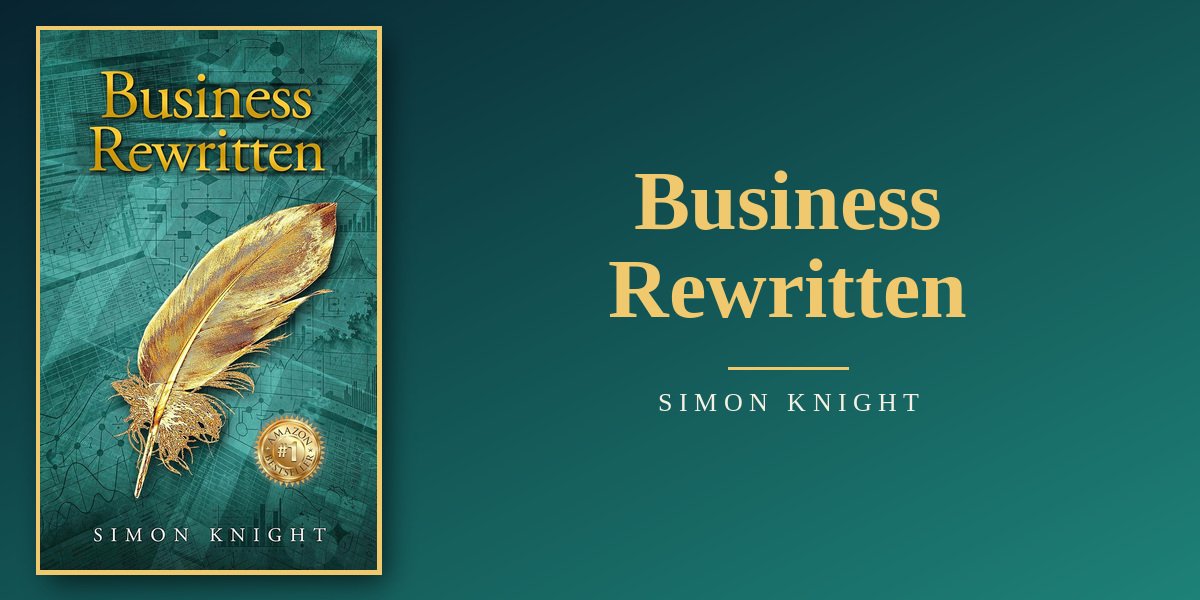
Most organizational change efforts fail not because the solutions are poorly executed but because the diagnosis that produced them was incomplete. Simon Knight has spent years inside complex organizations watching this happen, watching leadership teams apply sophisticated tools with genuine commitment and arrive at results that disappoint, not because the tools were wrong but because they were aimed at symptoms rather than causes. Business Rewritten is built around a single conviction: that the patterns driving organizational outcomes are almost never where they appear to be, and that finding them requires a fundamentally different kind of analysis than most organizations currently know how to conduct.

Three Forces That Drive Outcomes and Go Undetected

Simon identifies three forces that shape what happens inside complex organizations and that conventional analytical tools consistently miss. Human dynamics are the first, the ways that relationships, motivations, and behavioral patterns among the people inside an organization produce outcomes that no process map or strategic plan accounts for. Path dependencies are the second, the accumulated weight of past decisions that quietly constrain present choices in ways that have become so familiar they are no longer visible as constraints at all. Hidden themes are the third, and in Simon’s assessment the most consistently invisible of the three. Hidden themes are patterns masked by more obvious factors, assumptions baked so deeply into organizational culture that their downsides are simply not examined. They are the forces that explain why a company can be doing something that looks like a strength and find that it is quietly producing failure.

When the Problem Lives Somewhere Else

One of the most practically useful ideas in Business Rewritten is the observation that the root cause of an organizational failure is often located somewhere entirely different from where the failure manifests. Simon offers a clear example: a persistent service delivery problem may have nothing to do with the service delivery team. It may be caused by a sales compensation plan that rewards over-promising to customers, creating expectations that operations are structurally unable to meet. Treating the service delivery team as the source of the problem leaves the sales compensation plan untouched and guarantees that the problem returns. This is what intractable problems look like in practice. They have typically been tackled unsuccessfully multiple times, not because leadership is incompetent but because the analysis keeps landing on the symptom instead of the cause.

What the Business Rewrite Framework Does Differently

The Business Rewrite Framework is designed to force a holistic view of an organization’s backstory. Rather than analyzing problems by department or function, it examines the full cast of characters involved in an organization’s history, their attributes, their motives, and the relationships between them that produce the outcomes currently on the table. That narrative structure, Simon argues, is what surfaces the path dependencies and hidden themes that sequential, departmental analysis cannot reach. Two business leaders who provided endorsements for the book put elements of it to use immediately after reading it, finding that the narrative structure alone helped them understand how processes actually worked rather than how they had assumed they did. The framework is designed to accommodate both incremental and fundamental change, because the scope of the intervention is determined by the personas defined within it, not by the framework itself.

The AI Problem Simon Names Directly

Simon’s position on AI-assisted analysis is one of the bolder arguments in the book, and he supports it with evidence. An MIT Project NANDA report found that ninety-five percent of enterprise generative AI pilots fail to show a measurable profit-and-loss impact. The problem is not artificial intelligence itself but the way it is deployed, applied to problems without the analytical foundation needed to direct it toward what actually matters. AI inherits the assumptions of whoever designs the prompts and interprets the outputs, which means it is as susceptible to surface narrative bias and sycophancy as any human analyst. The Business Rewrite Framework, along with the accompanying AI course Simon has developed, is designed to address those pitfalls directly, giving organizations the diagnostic foundation that makes AI a genuinely useful tool rather than an expensive confirmation of what they already believed.

What a Leader Can Do the Week After Reading It

Simon’s goal for Business Rewritten is not that leaders finish the book feeling inspired. It is that they finish it equipped to ask a question about their organization that they could not have articulated before reading it. The business leaders who have engaged with the framework most effectively report that the shift begins immediately, not with a full implementation of the framework but with a change in how they look at the problems in front of them. They start asking where the root cause actually lives rather than accepting where the symptom appears. They start examining the backstory rather than just the current situation. That shift in perspective, Simon argues, is the beginning of every genuine organizational rewrite.

Pick up your copy of Business Rewritten by Simon Knight on Amazon today and start asking the questions your organization has been missing. To put these ideas into practice, explore Simon’s AI Courses, designed to help organizations use AI more effectively by addressing the analytical blind spots that often limit its impact. Learn more at business-rewritten.com/ai-courses.