

Who Will Be Better Because You Led? Joyce Ann Batcheller on Building a Lasting Nursing Legacy

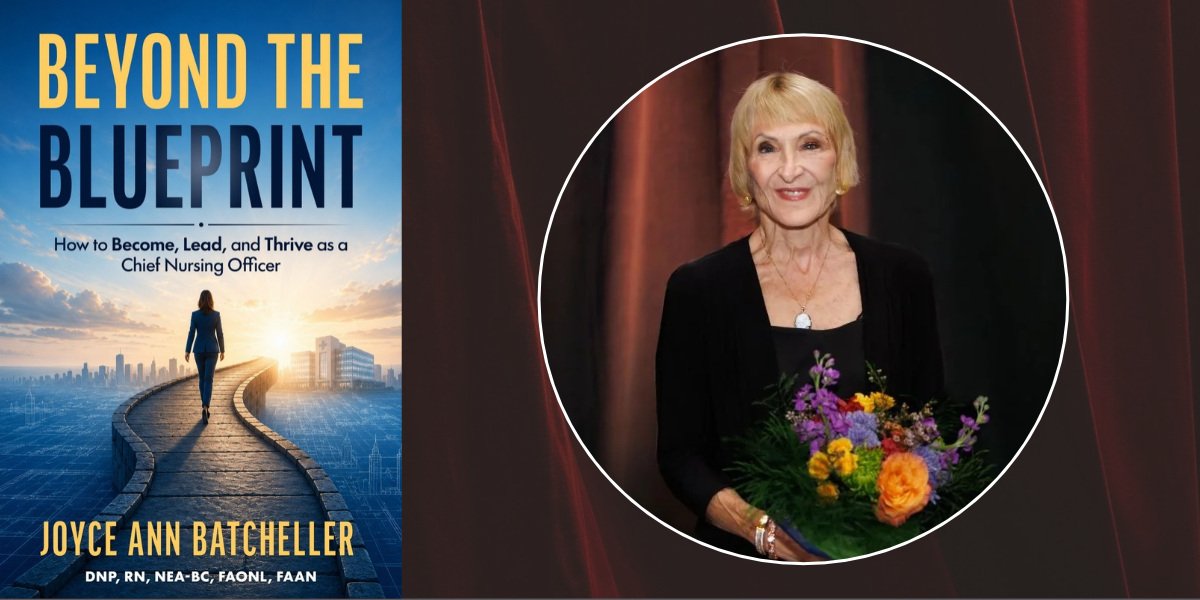
A nursing leader’s influence can extend far beyond the decisions made in an executive office. It can be seen in the confidence of a nurse stepping into a leadership position, the ownership a clinical team takes over its work, and the improvements that continue long after an executive has moved on.
For Joyce Ann Batcheller, this is an essential measure of leadership: who will be better because you led?
Drawing on 19 and a half years as a system Chief Nursing Officer (CNO), Batcheller has built her approach around a belief that effective nursing leadership is never an individual accomplishment. It depends on the people doing the work, the leaders who develop them, and the organizational conditions that allow them to contribute meaningfully to patient care. Her experience also demonstrates the importance of strong CEO/CNO alignment in advancing a shared organizational vision and delivering consistent standards of care across a healthcare system.
Her book, Beyond the Blueprint: How to Become, Lead and Thrive as a Chief Nursing Officer, reflects this perspective. Through stories from her executive career, she shares the realities behind major organizational changes, including the challenges, mistakes, relationships, and lessons that shaped the work.
The Impact of a CNO Reaches Across the Organization
The CNO position carries a responsibility that extends beyond nursing department operations. Nursing leaders must understand how nursing contributes to the broader success of a healthcare organization while keeping patient care at the center of decisions.
Batcheller’s experience as a system CNO gave her a view across multiple sites and nursing teams. She saw opportunities to improve care through greater integration and standardization, supported by a nursing executive structure that helped establish shared strategy and goals.
A central part of that work was supporting the CEO’s vision that patients should receive the same level of care regardless of which hospital within the system they chose. To help advance that vision, a system-wide shared governance model was developed to support greater alignment, integration, and consistency across nursing practice.
That system-level perspective required balancing organizational priorities with the realities of individual sites. Nursing directors did not always agree with the direction she wanted to take, particularly when their reporting relationships and local responsibilities created competing priorities.
Batcheller learned that leadership in such an environment required more than positional authority. Influence, persistence, perseverance, and patience became essential to moving work forward.
Her experience illustrates why the CNO role can be so consequential. Decisions made at the executive level can shape how nursing teams collaborate, how resources are directed, and how consistently organizational priorities are translated into practice.
Developing People Is Part of the Work
One of Batcheller’s defining leadership practices was creating opportunities for nursing leaders and frontline staff to present their work directly to senior executives.
She would establish the context for a discussion, then shift attention to the people closest to the work. This was not simply a matter of giving someone a speaking opportunity. It involved intentional preparation, coaching, and ensuring that staff members were ready to communicate their contributions effectively.
The practice reflected a larger belief: staff members often have the answers, and leaders have a responsibility to create the conditions in which those answers can influence decisions.
Building engagement takes time. It requires consistent communication, trust, and a willingness to invest in people before expecting them to take on greater responsibility.
For Batcheller, developing others was not separate from the work of leading a healthcare system. It was part of how sustainable progress could be achieved. When people are given meaningful opportunities to contribute, they can develop greater confidence and ownership in their roles.
This approach also helps make leadership less dependent on one individual. Instead of concentrating knowledge and authority at the top, it builds capability throughout the organization.
A Leadership Journey That Includes Uncertainty
Batcheller does not present her career as a straightforward progression from preparation to success. She openly acknowledges that she did not have every competency required when she first stepped into the CNO role.
There were mistakes, difficult decisions, and moments when the next step was not immediately clear. Mentors, colleagues, and a broad professional network helped her continue learning and moving forward.
Her participation in the three-year Robert Wood Johnson Executive Nurse Fellows program, together with involvement in professional associations and committees at local, state, and national levels, contributed to her continuing development.
Her experience also includes approximately 12 years of executive leadership focused on CNOs. Through that work, she has supported nursing executives navigating career transitions, including leaders whose positions were eliminated through mergers and acquisitions or who were dismissed from their roles.
Those experiences have reinforced an important distinction: losing a position does not automatically mean a leader has failed. Sometimes an organization is no longer the right fit. With support and a willingness to consider new opportunities, experienced leaders can find different settings in which to contribute and thrive.
For aspiring CNOs, this perspective offers a more realistic understanding of executive leadership. Resilience is not simply enduring difficult circumstances. It also means remaining open to learning, adapting, and finding ways to contribute when circumstances change.
Building a Legacy Through Others
Batcheller wrote Beyond the Blueprint: How to Become, Lead and Thrive as a Chief Nursing Officer as part of her professional legacy and as a recognition of the nurses and colleagues who helped accomplish the work she describes.
The book highlights system-level changes while acknowledging that the results were never hers alone. Behind every initiative were people whose expertise, commitment, and daily work helped move the organization forward.
That recognition is central to her message for the next generation of nursing leaders. The opportunity to influence patient care through the CNO role is significant, but so is the responsibility to develop others and create a healthy work environment where staff members can take pride in their contributions.
Leadership at the top matters because it establishes direction and helps connect nursing priorities to organizational success. Its lasting value, however, is reflected in what others become capable of doing.
For those considering a future in nursing leadership, Batcheller’s journey offers an encouraging reminder: no one begins with every answer, and meaningful leadership is built through learning, relationships, and a commitment to helping others succeed.
The question is not only what a leader will accomplish during a career. It is who will be better because that leader chose to lead.
Where to Find Joyce Ann Batcheller Online
Readers can find more about Joyce Ann Batcheller, her leadership work, and The Nurses Legacy Institute at the following pages.
The Nurses Legacy Institute: The Nurses Legacy Institute programs and events
Facebook: Joyce Batcheller on Facebook
LinkedIn: Joyce Batcheller on LinkedIn
Instagram: Joyce Batcheller on Instagram