Matthew Gillogly Shows Burned-Out Doctors a Way Out of Insurance-Based Medicine

By: Jacob Levy
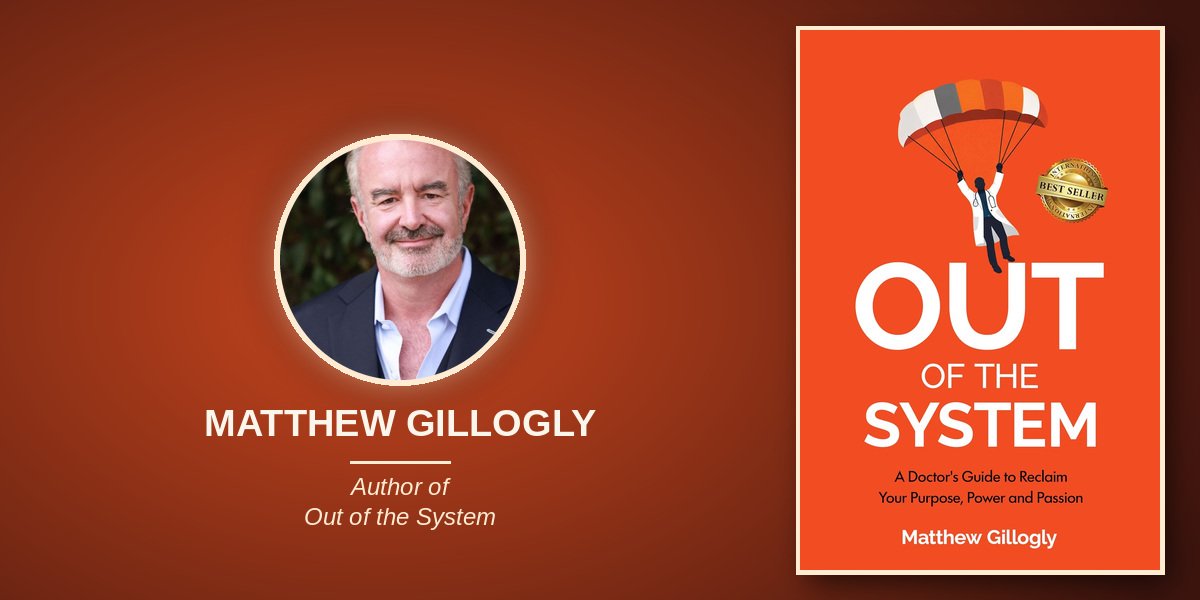
Medicine was supposed to mean something. It still does, to most of the physicians who chose it. What changed is not the commitment to patients. What changed is the architecture surrounding that commitment: the billing cycles, the prior authorizations, the production quotas, the administrative weight that now consumes hours that were once spent with the people doctors trained for years to help. Matthew Gillogly wrote Out of the System: A Doctor’s Guide to Reclaim Your Power, Purpose, and Passion for the physicians who sense there is a better arrangement available but have no roadmap for reaching it.
Gillogly is not a physician. He is something arguably more useful for this particular problem: a business strategist who has spent more than two decades studying broken systems and the human behavior shaped inside them. As founder of Mavrix, he has helped physicians make the transition from insurance-dependent practices to cash-based models, and he has watched that transition change not just the financial picture but the entire experience of practicing medicine. The book distills those two decades into a guide that is specific, structured, and written without flattery.
The central argument is straightforward even if its implications are not. The current model of physician compensation is built to serve everyone in the chain except the physician and the patient. Doctors are overworked because the system requires volume. They are underpaid relative to their training and their expertise because reimbursement structures were never designed with their interests as a priority. Burnout is not a character flaw. It is a predictable output of a machine that was not built to sustain the people running it.
Gillogly’s answer is not generic encouragement to find passion or reframe perspective. It is operational. He lays out how physicians can drop insurance billing without destroying their income, how to position themselves as premium providers for the patients who will seek them out at that level, how to construct recurring revenue that removes the anxiety of starting each month from zero, and how to package services around outcomes rather than procedures. Each of these moves is counterintuitive from inside a system that has trained physicians to see themselves as interchangeable providers rather than as experts with rare and irreplaceable knowledge.
The book also takes seriously what burnout does to a physician’s sense of self. Gillogly understands that the physicians most likely to stay trapped are the ones who have internalized the system’s valuation of them. He addresses the psychological dimension of leaving not as a detour but as a core component of the transition. Physicians who have spent years doubting their own worth in the marketplace will find that dimension of the book as practically useful as the business chapters.
Gillogly’s target is ambitious: leading 100,000 physicians out of the system and into practices that serve both their expertise and their lives. Early readers have called the book a wake-up call, a blueprint, and the permission slip physicians did not know they were waiting for. Each of those descriptions points to the same underlying truth. Sometimes the most valuable thing a book can do is show someone a door they had stopped believing existed.
Pick up Out of the System by Matthew Gillogly on Amazon and get the operational roadmap that shows burned-out physicians exactly how to rebuild their careers on their own terms.