By: Lennard James
For individuals struggling with mental health challenges and substance abuse, involvement with the justice system can become a revolving door. An arrest may address an immediate offense, but without treatment, structure, accountability, and community support, the underlying circumstances that contributed to an individual’s involvement with the courts can remain unresolved.
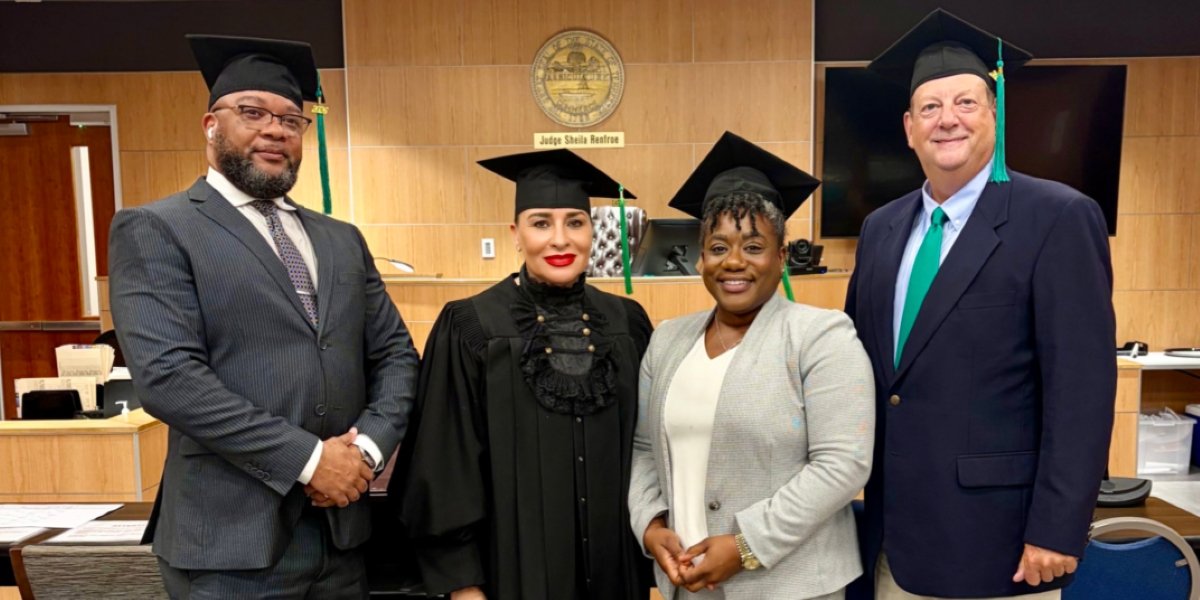
Since 2016, Shelby County Division 9 Mental Health Court, under the leadership of Judge Sheila Renfroe, has worked to provide another path, one that balances justice and accountability with treatment, rehabilitation, and an opportunity for participants to successfully reconnect with their families and communities.
“Life is not about the fall, it’s about the recovery,” Judge Renfroe says, a philosophy that captures the spirit of Shelby County Division 9 Mental Health Court and its belief that a person’s most difficult moment does not necessarily have to determine the rest of his or her life.
Supporting Judge Renfroe is a professional team that includes Bryan Carson, who serves in government relations and as courtroom coordinator, and Henry Kenworthy, the newly appointed deputy administrator. Together with prosecutors, attorneys, treatment professionals, community partners, and others involved in the process, the team works to create an environment where responsibility and recovery can exist side by side.
The philosophy behind Shelby County Division 9 Mental Health Court recognizes an important reality: some individuals entering the justice system need more than punishment. They may need an opportunity to address mental health conditions, substance abuse, behavioral challenges, housing instability, and other circumstances contributing to their involvement with the courts.
That philosophy does not eliminate accountability. Instead, accountability becomes an important part of the treatment and recovery process.
Entry into the program begins through a referral process, after which an assistant district attorney reviews the individual’s case. Most cases considered for the program involve nonviolent misdemeanor charges. The review process helps determine whether the circumstances of the case and the individual’s needs are appropriate for participation in Mental Health Court.
For those accepted, participation is not an overnight solution.
The program generally lasts approximately nine to 18 months, depending upon the participant’s individual circumstances, treatment needs, progress, and compliance with program requirements. Participants are expected to remain engaged, follow established guidelines, participate in treatment, attend required court appearances, and demonstrate measurable progress.
Substance abuse can be particularly significant. Mental health challenges and substance dependency can intersect, creating circumstances in which an individual repeatedly comes into contact with law enforcement and the courts. Treatment provides an opportunity to address those underlying issues rather than focusing exclusively on the offense that brought the person before the court.
Mental Health Court serves adults beginning at approximately 18 years of age and continuing well beyond that age, illustrating that mental illness and substance abuse are not confined to one generation, neighborhood, economic status, or stage of life.
At the heart of Shelby County Division 9 Mental Health Court is the opportunity for participants to find stability and substantially reconnect with the community.
That reconnection can take many forms. It may mean rebuilding relationships with family members, securing stable housing, pursuing employment, addressing substance dependency, maintaining appropriate mental health treatment, or simply developing the structure necessary to successfully move forward.
The objective is therefore much larger than getting someone through a court case. The goal is to help participants find a sustainable path toward stability while reducing the circumstances that could ultimately bring them back into the justice system.
Accountability remains central to that mission. Participants are expected to check in and demonstrate continued compliance with their treatment plans and program responsibilities. Periodic reviews, including longer-term accountability measures such as six-month check-ins, can help determine whether individuals are maintaining their progress and remaining connected to necessary services and resources.
Treatment is equally important.
When someone is dealing with an underlying mental health condition or substance abuse problem, ignoring that condition does little to improve the person’s long-term circumstances. Connecting participants with appropriate treatment creates an opportunity to address the source of a problem rather than dealing exclusively with its consequences.
The concept of a “Friend of the Court” further demonstrates the importance of collaboration. A judge cannot accomplish rehabilitation alone. Attorneys, prosecutors, treatment providers, community organizations, families, advocates, and other stakeholders can become part of a broader support network encouraging both accountability and recovery.
The principles behind Shelby County Division 9 Mental Health Court can also have relevance within the civil justice system. Civil courts may encounter individuals whose mental illness, addiction, housing instability, or other behavioral-health challenges affect the circumstances bringing them before a judge. Connecting appropriate individuals with mental health resources can potentially provide assistance before their circumstances become even more serious.
For Judge Sheila Renfroe and those involved with Shelby County Division 9 Mental Health Court, the larger message is about balancing compassion with responsibility.
A second chance should never mean an absence of consequences. Instead, it means providing an individual who is willing to accept responsibility and participate in treatment with a structured opportunity to change direction.
Every successful participant represents more than the completion of a court program. That individual may return to a family, workplace, neighborhood, or community with greater stability, stronger coping skills, and a better understanding of how to manage the challenges that once contributed to court involvement.
Since its beginning in 2016, Shelby County Division 9 Mental Health Court has represented an evolving approach to justice, one that asks an important question: What can happen when the court addresses not only the case before it, but also the circumstances that brought the individual there?
For participants willing to embrace treatment, accountability, guidance, and personal responsibility, the answer can be transformative.
They are given an opportunity to recover, reconnect with their community, rebuild their lives, and find a more stable path forward.
Disclaimer: This article is for informational purposes only and does not constitute legal or medical advice. Mental Health Court eligibility, program requirements, treatment plans, and outcomes vary based on individual circumstances and applicable court procedures. Individuals seeking legal or behavioral health assistance should consult the appropriate qualified professionals or local court resources.