US Business News

Your Professional Legacy is Disappearing: Here’s How to Protect It


By: Dr. Tamara Patzer

The Illusion of Digital Permanence

We create a more extensive record of our work than any generation before us, yet we mistake this digital activity for a durable legacy. This paradox puts our greatest achievements at risk, because while our output is vast, its permanence is an illusion.

The core problem is that our professional accomplishments are scattered across countless platforms. A project deliverable lives in one cloud service, a media mention on a news site, a credential in a university database, and a milestone on a social network. Each of these assets exists in isolation, vulnerable to fading from relevance, being forgotten by algorithms, or disappearing entirely when a link breaks or a service is discontinued.

This scattering results in a fragmented professional identity. When our history is not unified, it leaves both people and artificial intelligence with confusing pieces instead of a whole, verifiable record of who we are and what we have built. In an era of digital impermanence, how can professionals ensure their hard-won accomplishments endure?

Your Professional Legacy is Disappearing: Here’s How to Protect It

Photo: Unsplash.com

1. The High Stakes of an Undocumented Career

In today’s economy, a cohesive and verifiable professional identity is not a vanity project; it is a strategic necessity. It is the foundation upon which opportunities are built and credibility is established. When that foundation is fractured, the risks are significant.

A fragmented digital footprint makes an identity vulnerable to being misidentified. When achievements are not anchored to a permanent, authoritative source, their context can be lost and their value diminished. The digital evidence of our contributions becomes ephemeral, like scattered documents dissolving into the noise of the internet rather than forming a solid, unified record of our impact.

The consequence is a simple, powerful truth: “undocumented work becomes invisible work — and invisible work doesn’t get recognized.” This invisibility not only robs individuals of the credit they deserve but also closes doors to future opportunities. This invisibility demands a deliberate and permanent solution.

2. The Solution: Forging a Permanent Professional Home

The answer to digital fragmentation is not more platforms, but a new approach centered on permanence, structure, and ownership. The solution is to forge a single source of truth: a structured, permanent professional record where achievements, credentials, media, and milestones are documented so a person’s work remains discoverable, provable, and theirs.

This approach represents a fundamental shift in how we manage our professional identities. It is a proactive move away from a scattered digital existence toward a unified one, defined by three key transformations:

  • From Scattered to Structured: Consolidating disparate assets into a unified whole.
  • From Fragmented to Whole: Rebuilding a cohesive identity from disparate pieces.
  • From Fading to Permanent: Transforming ephemeral data into a durable legacy.

By consolidating accomplishments into a single, permanent home, you transform them from fleeting digital moments into a durable professional legacy. This conceptual solution is now available as a tangible service for professionals ready to protect what they have built.

3. A Case Study in Credibility: The Public Record Registry

Your Professional Legacy is Disappearing: Here’s How to Protect It

Photo: Unsplash.com

The Public Record Registry is a concrete example of this new paradigm in action. It is a service designed for modern professionals who understand the value of their work and seek to ensure its longevity and authority.

The Public Record Registry gives your achievements one permanent professional home. In doing so, it creates a personal “source of truth”—a single, reliable, and verifiable destination for your complete professional story. The benefits of establishing such a record directly address the vulnerabilities of the digital age:

  • Protects Your Identity: Ensures your accomplishments are accurately and permanently attributed to you, safeguarding your reputation.
  • Supports Your Credibility: Provides a single, verifiable source for your professional history, reinforcing your expertise and authority.
  • Keeps Opportunities Open: Ensures your most important work remains discoverable over time, ensuring past achievements generate future possibilities.

This positioning works because it isn’t trying to convince you of your own value; it speaks directly to professionals who already know they’ve built something significant. The tone is one of calm authority, not marketing hype, because its purpose is protection, not persuasion.

4. Why Your Achievements Deserve Permanence

In our modern professional world, documenting your work has become as important as doing the work itself. Your achievements, identity, and future opportunities are intrinsically linked, and a permanent, structured record is the bridge that connects them, ensuring the value you create today continues to speak for you tomorrow.

Ultimately, the decision to secure your professional legacy comes down to a fundamental belief in the significance of your contributions. The core principle is simple yet profound: “If your achievements matter, they deserve permanence.”

For professionals ready to take this crucial step, a service like the Public Record Registry provides a clear path forward. You can start your public record for $99. To learn more and begin protecting what you’ve built, visit PublicRecordRegistry.org.

Disclaimer: Submission of personal or professional information is entirely voluntary. By choosing to share your data, you acknowledge and accept that it may be stored and referenced for verification or attribution purposes. Please do not submit sensitive information unless you fully understand and agree with how it may be used.
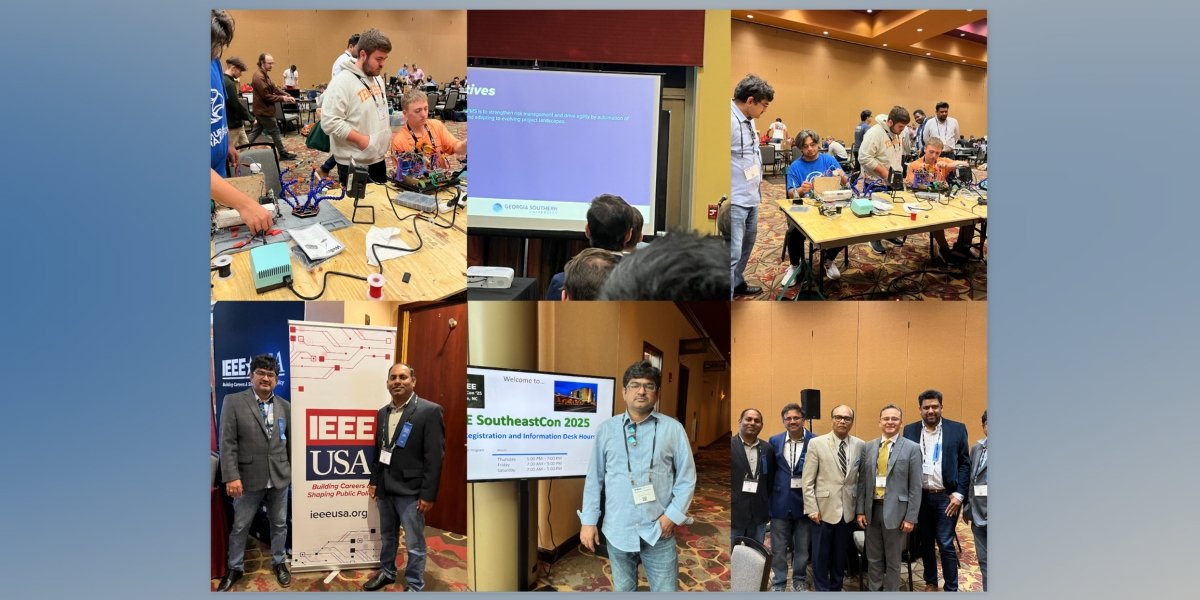
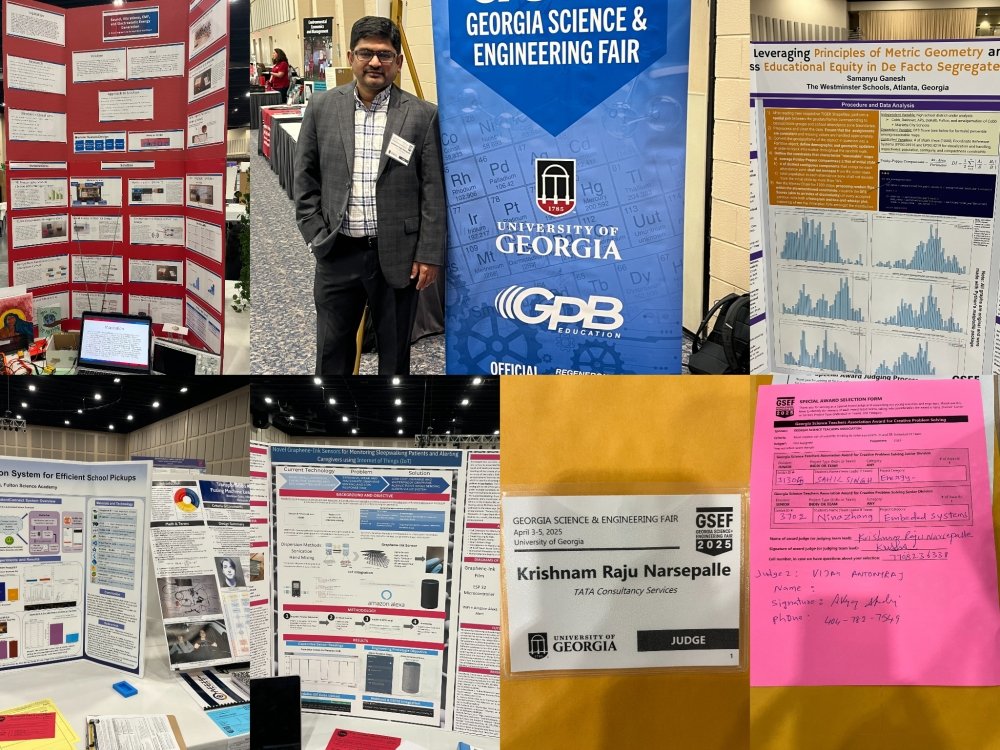
Krishnam Raju’s Role in Empowering Future Innovators Through IEEE SoutheastCon and Academic Engagement

Krishnam Raju Narsepalle is a senior data engineering and AI expert and artificial intelligence professional with nearly two decades of experience bridging industry with academia. In addition to his professional career, he actively devotes his time to nurturing the next generation of engineers. Through his involvement in IEEE initiatives, such as SoutheastCon 2025, and his mentorship at the Georgia Science & Engineering Fair (GSEF) in 2025, he has played a pivotal role in shaping the future of engineering innovation. His contributions as a judge, mentor, and technical volunteer have made a lasting impact on student innovation, research evaluation, and the early-career development of emerging engineers.

Narsepalle’s Role in IEEE SoutheastCon 2025

IEEE SoutheastCon 2025 is one of the premier technical conferences in the region, bringing together students, professionals, and experts to foster innovation and collaboration in engineering. Narsepalle’s involvement in SoutheastCon 2025 highlights his dedication to advancing engineering education. As a key figure in this event, he provided mentorship to students participating in technical competitions and facilitated discussions around emerging technologies. His participation not only provided valuable guidance to student innovators but also strengthened the connection between industry and academia.

His expertise in artificial intelligence and data engineering was an asset in evaluating student projects, offering insights into leveraging current technology trends in engineering solutions. His role as a mentor allowed him to engage directly with students, offering guidance on technical approaches, industry expectations, and career development. Through his involvement, he helped students refine their ideas and research, encouraging them to think critically and innovatively.

Mentorship and Evaluation at the Georgia Science & Engineering Fair (GSEF) 2025

Krishnam Raju's Role in Empowering Future Innovators Through IEEE SoutheastCon and Academic Engagement

Photo Courtesy: Krishnam Raju Narsepalle

The Georgia Science & Engineering Fair (GSEF), held at the University of Georgia in 2025, is another key platform where Narsepalle has contributed significantly. As a judge, he evaluated student research projects from a wide range of science and engineering disciplines. His role in GSEF extended beyond simply assessing the technical merit of projects; he actively mentored students, providing feedback that encouraged them to further explore and develop their ideas.

HIs involvement at the GSEF is a testament to his commitment to fostering the next generation of engineering talent. His interactions with students went beyond the evaluation process, focusing on helping them understand the real-world applications of their work and encouraging them to pursue careers in science and engineering. By supporting students at such an early stage, he helped them recognize the value of perseverance and curiosity, traits essential to success in engineering.

Broader Engagement with IEEE Programs and Academic Initiatives

Krishnam Raju’s engagement with IEEE goes beyond SoutheastCon and the GSEF. His contributions to IEEE programs, academic forums, and conferences have played a crucial role in developing future engineers. His active participation in technical sessions, paper submissions, and collaborative mentoring efforts, including co-authoring research for presentation at IEEE SoutheastCon 2026, has provided invaluable insights into the evolving landscape of engineering technologies.

Through these academic initiatives, he has helped shape the conversation around industry standards and research excellence. By contributing to IEEE’s community-driven learning environment, he has shared his expertise with a broader audience of students, professionals, and researchers. This engagement has facilitated the development of a strong pipeline for future engineers, ensuring that they are well-equipped with the skills, knowledge, and industry perspectives necessary to thrive in the ever-evolving engineering field.

Looking Ahead: Narsepalle’s Impact on the Engineering Workforce

As Narsepalle continues to invest his time in mentoring students and supporting early-career engineers, his influence will undoubtedly leave a lasting mark on the future of the engineering workforce. By sharing his industry experience, fostering research excellence, and encouraging innovative thinking, he is helping shape the next generation of engineers who will drive technological progress in the coming years.

His dedication to student engagement through IEEE SoutheastCon, GSEF, and other academic initiatives serves as a powerful reminder of the importance of investing in young talent. His efforts underscore his belief that “investing in young innovators is the strongest investment in the future of engineering.” As the engineering landscape continues to evolve, his work will play a key role in ensuring that the next generation of engineers is ready to meet the challenges ahead.

AI Washing: A Growing Concern for U.S. Companies and Consumers

AI washing is emerging as a serious concern across the U.S. business landscape. As artificial intelligence becomes a central part of product development, marketing, and operations, companies are under pressure to demonstrate innovation. But in many cases, claims about AI capabilities are exaggerated, or entirely unfounded. This practice, known as AI washing, is eroding consumer trust, misleading investors, and exposing businesses to legal and reputational risks.

What AI Washing Looks Like in Practice

AI washing refers to the misrepresentation of artificial intelligence in products, services, or internal operations. It can range from vague marketing language that implies advanced AI functionality to outright false claims about machine learning, automation, or predictive capabilities. The goal is often to attract attention, funding, or market share by appearing more technologically advanced than competitors.

A software company promoting its customer service chatbot claimed it was powered by generative AI. Upon closer inspection, the system was rule-based and lacked any learning capability. Customers expecting intelligent responses were met with rigid scripts, leading to frustration and negative reviews.

This kind of misrepresentation is becoming more common as businesses race to capitalize on AI’s popularity. In some cases, the deception is subtle, using terms like “AI-enhanced” or “smart automation” without disclosing the underlying technology. In others, it’s more blatant, with companies fabricating AI features that don’t exist.

Why AI Washing Is Risky for Businesses

The risks of AI washing go beyond disappointed customers. Regulatory bodies are beginning to scrutinize misleading claims, especially when they affect investor decisions or public safety. The U.S. Securities and Exchange Commission recently expanded its enforcement efforts to include private companies making false AI-related statements in fundraising materials.

A recruitment startup that claimed to use AI for bias-free candidate screening was charged with securities fraud after investigations revealed the technology was manual and lacked algorithmic oversight. The fallout included criminal charges, investor lawsuits, and permanent reputational damage.

Legal consequences aside, AI washing undermines brand credibility. In a competitive market, trust is a valuable currency. Companies that overpromise and underdeliver on AI risk losing customer loyalty, damaging partnerships, and facing backlash from employees who feel misled about the tools they’re expected to use.

Consumer Expectations Are Shifting

Consumers are becoming more informed about artificial intelligence. As AI tools like ChatGPT, DALL·E, and Midjourney enter the mainstream, users are learning to distinguish between genuine intelligence and basic automation. This shift in awareness means that vague or inflated claims are more likely to be challenged.

A retail app advertised its “AI-powered style assistant” as a personalized shopping tool. Users quickly realized the recommendations were based on simple filters and keyword matching. Social media criticism followed, and the app’s ratings dropped significantly.

This growing skepticism is prompting companies to rethink how they communicate AI capabilities. Transparency is becoming a competitive advantage. Businesses that clearly explain what their AI does, and what it doesn’t, are earning more trust and engagement.

AI Washing in the Workplace

AI washing isn’t limited to consumer-facing products. It’s also affecting internal operations and workplace dynamics. Some companies claim to use AI for performance reviews, scheduling, or talent development, but employees often discover that these systems are manual or rule-based.

Concerns about AI management tools are rising, especially among employees who feel their roles are being reshaped by technology. As discussed in this article on AI’s impact on workplace roles, many workers are skeptical of systems that claim to evaluate performance or assign tasks using artificial intelligence.

In one logistics firm, a scheduling tool was marketed internally as AI-driven. Employees later learned that shift assignments were based on static rules and manual overrides. The lack of transparency led to confusion and resentment, prompting HR to revise its communication strategy.

Investor Pressure and Market Positioning

Startups and growth-stage companies often face pressure to include AI in their pitch decks. Investors want to see innovation, scalability, and future-proofing. But when AI claims are inflated, the consequences can be severe.

A healthtech startup seeking Series B funding described its platform as using AI to detect early signs of chronic illness. Due diligence revealed that the system relied on basic statistical models and manual data entry. The funding round collapsed, and the company was forced to restructure its messaging and product roadmap.

Investors are now asking tougher questions about AI capabilities. They want to see technical documentation, model validation, and ethical safeguards. Companies that can’t back up their claims risk losing credibility and capital.

Career Coaching and AI Claims

AI washing is also appearing in professional development and career services. Platforms offering AI-powered coaching or resume optimization often rely on templates and keyword scanning rather than true machine learning.

Young professionals exploring career tools are especially vulnerable to misleading claims. As highlighted in this piece on AI career coaching for U.S. workers, many users expect personalized insights and adaptive feedback. When platforms fail to deliver, trust erodes quickly.

One career app promised AI-driven interview simulations. Users discovered that the questions were static and the feedback generic. The disconnect between expectation and reality led to poor retention and negative press.

How Companies Can Avoid AI Washing

Avoiding AI washing starts with transparency. Businesses should clearly define what their AI systems do, how they work, and what limitations exist. Marketing teams must collaborate with technical staff to ensure claims are accurate and verifiable.

AI Washing: A Growing Concern for U.S. Companies and Consumers

Photo Credit: Unsplash.com

Documentation and disclaimers help manage expectations. If a product uses basic automation or rule-based logic, that should be stated clearly. If machine learning is involved, companies should explain how models are trained, tested, and updated.

Third-party audits and certifications are becoming more common. These reviews help validate AI claims and provide external credibility. Some firms are also publishing model cards or ethics statements to show how their AI aligns with responsible use.

The Long-Term Impact of AI Washing

AI washing may offer short-term gains in attention or funding, but the long-term costs are steep. As consumers, employees, and regulators become more informed, the tolerance for misleading claims is shrinking. Companies that prioritize honesty and clarity will be better positioned to build lasting relationships and sustainable growth.

Artificial intelligence is a powerful tool, but only when it’s used and represented responsibly. In a market flooded with hype, truth is becoming a rare and valuable asset.

OpenAI Launches ChatGPT Health to Help Users Review Medical Records

OpenAI has launched ChatGPT Health, a specialized version of its conversational AI designed to help users better understand their medical records. This tool marks a significant move into the healthcare sector, where artificial intelligence is beginning to play a larger role in assisting patients with complex health information.

ChatGPT Health allows users to link electronic health records and wellness apps, such as fitness trackers, to the platform. By connecting this data, individuals can gain a clearer understanding of their medical history, prescriptions, and overall wellness data. This integration aims to streamline preparation for doctor visits and improve communication between patients and healthcare providers.

While OpenAI emphasizes that ChatGPT Health is not a substitute for professional medical advice, it is presented as a support tool that helps users interpret their health data. This positioning reflects OpenAI’s cautious approach to integrating AI into the healthcare space.

Features and Security Measures

ChatGPT Health incorporates robust encryption and privacy features to safeguard sensitive information. Conversations related to health are compartmentalized, ensuring that medical data remains secure. The platform is designed with user privacy at the forefront, aligning with regulatory standards for handling health information.

Once connected to health records, fitness trackers, and wellness apps, ChatGPT Health is capable of analyzing patterns, tracking progress, and providing explanations for medical terminology. This functionality is intended to make health data more accessible and easier to understand, reducing the intimidation factor often associated with complex medical information.

OpenAI worked closely with healthcare professionals during the development of ChatGPT Health to ensure its functionality aligns with real patient needs. This collaboration reinforces the seriousness of the initiative and aims to ensure the tool provides medically relevant and accurate information.

Public Reaction and Industry Response

The launch of ChatGPT Health has sparked significant discussion across both technology and healthcare communities. Supporters view the tool as a breakthrough in patient empowerment, arguing that it can help users better understand their medical records and make more informed decisions about their health.

However, critics have raised concerns regarding the potential for AI misinterpretation of medical data. While AI is a powerful tool, there are fears that generative models could misunderstand complex medical terms and lead to confusion. Experts stress the importance of maintaining human oversight in healthcare applications, especially when it comes to health data.

Despite these concerns, public interest remains high. Social media and industry discussions reflect both enthusiasm and caution, with many users eager to explore ChatGPT Health, while acknowledging its limitations. These conversations mirror broader debates about the role of AI in various aspects of daily life.

Simplifying Health Data

ChatGPT Health represents a shift in how patients engage with their medical records. The tool’s goal is to simplify the often-complex language of medical records and make it more understandable to a broader audience. Medical records, which can often be difficult to interpret due to technical language and fragmented systems, are made clearer through the platform’s accessible explanations.

By offering medical explanations in plain language, ChatGPT Health aims to bridge the knowledge gap between patients and their health data. For many, this represents a more user-friendly approach to engaging with their own medical history, enhancing transparency in healthcare.

The tool addresses an increasing demand for healthcare technology that empowers patients. As more individuals seek to take control of their health, tools like ChatGPT Health are seen as a step toward greater patient autonomy.

Risks and Safeguards

OpenAI has acknowledged the risks associated with integrating AI into healthcare. While ChatGPT Health provides valuable support, it is not intended to replace medical professionals. OpenAI emphasizes that the tool is meant to assist with interpreting data, but users are reminded to consult healthcare providers for diagnosis and treatment.

To mitigate risks, ChatGPT Health incorporates several safeguards, including encryption and data isolation. Additionally, users are given clear disclaimers about the tool’s limitations to reinforce its supportive role in healthcare, rather than as a diagnostic system.

Industry experts note that building trust in AI-driven healthcare tools will depend on transparent communication. Clear guidelines on what ChatGPT Health can and cannot do will be essential in ensuring its acceptance among patients and healthcare providers.

Future Prospects for ChatGPT Health

The rollout of ChatGPT Health begins with a waitlist, with broader availability expected later in 2026. OpenAI plans to expand features based on user feedback and potential partnerships with healthcare providers. As the tool evolves, its success will depend on how well it integrates with existing healthcare systems.

Experts predict that AI-driven healthcare tools will become increasingly common, as patients demand more accessible and personalized information. As companies compete to offer secure, user-friendly solutions, ChatGPT Health is positioned as an early leader in this growing market.

Ultimately, the launch of ChatGPT Health marks a significant development in how technology intersects with healthcare. By offering a new way for patients to review and understand their medical records, OpenAI is contributing to the ongoing shift toward more accessible and patient-centered healthcare.


Disclaimer:
The information provided in this article is based on publicly available sources and official statements from OpenAI. ChatGPT Health is designed as a support tool and is not intended to replace professional medical advice, diagnosis, or treatment. Users are encouraged to consult healthcare providers for any medical concerns or questions. OpenAI emphasizes that while the tool aims to assist in interpreting health data, human oversight is essential when making medical decisions.

Rooted Before Ready: Mairin Moore Cane on Why Grounded Leadership Outlasts Confidence

In today’s business environment, leadership is often defined by confidence, decisiveness, and visible certainty. Executives are expected to project readiness, maintain momentum, and act quickly, even when conditions are unstable. Yet this model leaves many capable leaders operating from external pressure rather than internal clarity.

In Rooted, Not Rushed: Healing, Reclaiming, and Rising in a World That Told You to Shrink, leadership strategist and business founder Mairin Moore Cane offers a different proposition: effective leadership does not begin with certainty or completion. It begins with rootedness, the ability to stay grounded, internally aligned, and responsibly decisive in the midst of uncertainty.

The Cost of Urgency-Driven Leadership

Modern leadership culture rewards speed and visibility. Leaders are praised for rapid responses, bold positioning, and constant motion. However, urgency without grounding often produces fragile outcomes. Decisions made under pressure rather than clarity tend to increase reactivity, burnout, and misalignment within organizations.

Many leaders experience this quietly. They are competent, respected, and outwardly successful, yet internally disconnected from their own authority. Confidence becomes something to perform rather than something to trust. Over time, leadership becomes exhausting, not because responsibility is too great, but because decisions are made without sufficient internal anchoring.

Cane’s work directly addresses this gap. Rather than asking leaders to slow down or disengage from responsibility, Rooted, Not Rushed introduces rootedness as a practical leadership posture. It is not an emotional concept or a wellness trend. It is a discipline of internal stability that allows leaders to move forward without outsourcing authority to urgency, optics, or external validation.

Rootedness as a Strategic Advantage

Rooted leadership is not passive. It does not delay decisions or avoid complexity. Instead, it strengthens a leader’s capacity to act with clarity when answers are incomplete and the stakes are real.

Cane reframes rootedness as the ability to:

  • Trust internal authority without waiting for certainty
  • Make clear decisions without over-explaining or self-erasure
  • Hold responsibility without absorbing unnecessary emotional load
  • Move forward steadily without rushing to prove readiness

In business contexts, this translates into more consistent leadership behavior. Teams experience greater stability. Decisions align more closely with long-term values rather than short-term pressure. Leaders stop reacting to every signal of urgency and begin responding from discernment.

This approach is especially relevant for high-capacity leaders managing growth, transition, or organizational complexity. Rootedness allows leaders to remain present and effective without becoming rigid or overwhelmed.

Leading Without Outsourcing Confidence

One of the central insights in Rooted, Not Rushed is that confidence is not a prerequisite for leadership. Waiting to feel ready often delays necessary action and reinforces self-doubt. Rooted leadership replaces the pursuit of confidence with something more reliable: internal authority.

Internal authority is not ego-driven or performative. It is the quiet confidence that comes from knowing one’s values, limits, and responsibilities. Leaders operating from internal authority do not need to convince others of their legitimacy. Their decisions carry weight because they are grounded, consistent, and transparent.

For organizations, this type of leadership creates trust. Teams sense when decisions are made thoughtfully rather than reactively. Even difficult calls are easier to follow when leaders demonstrate clarity without defensiveness or urgency.

A Model for Sustainable Leadership

Cane’s framework is particularly valuable in environments where leaders are expected to navigate uncertainty without pause. Rather than promoting constant acceleration, Rooted, Not Rushed offers a model for sustained leadership effectiveness.

Rooted leaders:

  • Make fewer reactive decisions
  • Preserve energy and focus over time
  • Maintain integrity during periods of change
  • Lead without self-abandonment or performance fatigue

This approach does not remove pressure from leadership, but it changes how pressure is held. Instead of internalizing stress as urgency or self-doubt, leaders learn to ground themselves before acting. The result is leadership that is steadier, more durable, and more aligned with organizational health.

Why This Perspective Matters Now

As organizations face increasing complexity, leaders are being asked to do more with less margin for error. The demand for speed has not diminished, but the cost of misalignment has grown.

Rooted, Not Rushed meets this moment by redefining what strength looks like in leadership. Strength, Cane argues, is not constant certainty or relentless motion. It is clarity under pressure. It is presence without perfection. It is the ability to lead responsibly without waiting for everything to be resolved.

For business leaders seeking a more sustainable way to lead, one that prioritizes discernment, integrity, and long-term effectiveness, rootedness is not a soft skill. It is a strategic one.

Learn More About Mairin Moore Cane and Rooted, Not Rushed

🌐 www.mairinmoorecane.com
📘 Rooted, Not Rushed: Healing, Reclaiming, and Rising in a World That Told You to Shrink
📸 Instagram: www.instagram.com/mairinmoorecane
📘 Facebook: www.facebook.com/mairinmoorecane