US Business News

Erik Schjolberg and the Drive to Make Golf More Inclusive Through Performance-Focused Community Engagement

Across the United States, golf continues to grow steadily both in participation and in efforts to make the game more welcoming. The National Golf Foundation reports that 25 million people played golf on a course in 2023, with another 15 million engaging in off-course activities such as simulator play and driving ranges. Once viewed as an exclusive game, golf is evolving into something broader and more accessible, especially for women, who now represent a growing share of the player base.

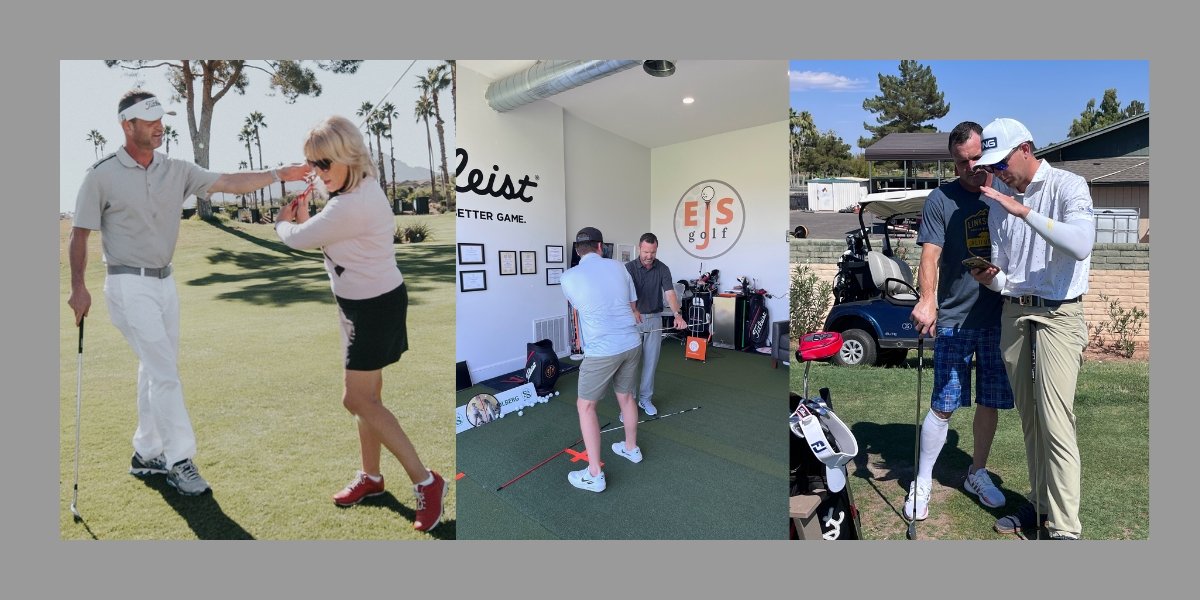
This movement toward inclusion is clearly reflected in the work of Erik Schjolberg, a PGA Professional who has spent more than three decades building both a teaching career and a community presence in Scottsdale, Arizona. Known for his evidence-based instruction at EJS Golf Academy, Schjolberg views inclusion as the outcome of competence. His philosophy is simple: when players see measurable improvement from the start, they stay engaged, invite others to join, and naturally build community. Progress becomes the foundation for participation.

Schjolberg’s reputation was shaped at his Scottsdale-based academy, where his lessons emphasize measurable, ball-first contact, low-point control, compression, dispersion, and the matchups among grip, clubface, and path. He uses TrackMan 4, dual 3D pressure plates, HackMotion wrist sensors, and Sportsbox AI to turn complex swing data into simple, actionable feedback. That same evidence-driven approach underpins his community initiatives, including his most notable collaboration with his wife, Julie Schjolberg, the Scottsdale Golf League for Women.

The league was designed to remove the two barriers most often cited by new or returning female golfers: anxiety over pace of play and discomfort in social settings. It accomplishes this through clear structural guidelines that normalize the experience for everyone. Participants learn to manage shot counts per hole to keep play moving, follow straightforward scoring formats, and select tees based on carry yardage rather than ego. These practical adjustments make the course more approachable without sacrificing the satisfaction of improvement. The environment is friendly yet structured, helping women achieve early wins, cleaner contact, more predictable ball flight, and repeatable routines that build confidence.

Instruction within the league mirrors the same measurable structure found in Schjolberg’s studio lessons, adapted for group learning. Players explore how low point affects turf interaction, how small changes in lead wrist movement influence start lines and curvature, and how pressure shifts can generate efficient rotation. When technology is beneficial, it’s used for immediate feedback. When a more external focus helps retention, Schjolberg simplifies the task. The result is a balance between precision and accessibility. By focusing on outcomes such as tighter dispersion, better contact, and small carry gains, players build confidence that leads to longer participation and deeper engagement with the sport.

Julie Schjolberg’s operational guidance has been instrumental in the league’s success. She handles outreach and onboarding, ensuring that newcomers understand what to expect before they ever step on the tee. Erik oversees the technical framework and practice blocks, aligning the learning process with his coaching standards. Together, they have created a league that fuses social connection with structured improvement, serving as a model for community-based golf programs elsewhere.

The couple’s approach aligns with a growing trend in golf education. Data from the National Golf Foundation show that women now account for roughly 25 percent of all on-course golfers in the United States, a steady rise over the last decade. In Scottsdale, where golf plays a key role in both recreation and the local economy, community programs like the Scottsdale Golf League sustain that growth. By demonstrating that competence can be achieved quickly through measurable progress, the Schjolbergs’ model bridges the gap between traditional instruction and modern accessibility.

Schjolberg’s community work builds on the same principles that define his larger body of teaching. In 2024, he was recognized locally as Scottsdale’s Best Golf Coach, an acknowledgment rooted in both his instructional outcomes and his visibility in the regional golf scene. In 2025, he expanded his teaching platform globally with the launch of The Science of Better Golf, an online learning system offering lessons, progress dashboards, and live sessions with Schjolberg and other instructors. The digital format mirrors the same formula that drives his in-person and community efforts: clear expectations, measurable feedback, and individualized improvement strategies.

The Scottsdale Golf League for Women is not a competitive feeder system nor a high-pressure environment. It is a lasting on-ramp designed to build lifelong players by combining the enjoyment of community with the confidence that comes from tangible progress. By treating inclusion as a byproduct of measurable performance and ensuring players improve from their first session, Erik and Julie Schjolberg have created an accessible pathway for new golfers to develop skills, social confidence, and a lasting connection to the sport.

From his beginnings in St. Louis, Missouri, to his established career in Scottsdale, Arizona, Schjolberg’s focus has remained consistent: use science to simplify the game, make improvement achievable, and grow the community through shared progress. His work at EJS Golf Academy, his online platform, and his community programs all point to one enduring truth: golf can be welcoming, engaging, and performance-driven simultaneously.

Erik Schjolberg’s career illustrates how the pursuit of measurable improvement can drive inclusivity, demonstrating that when golfers understand their own development, they stay with the game, share it, and help it thrive.
Global Blue Economy Leaders: Preparing the Next Generation for the Future

By: Matt Emma

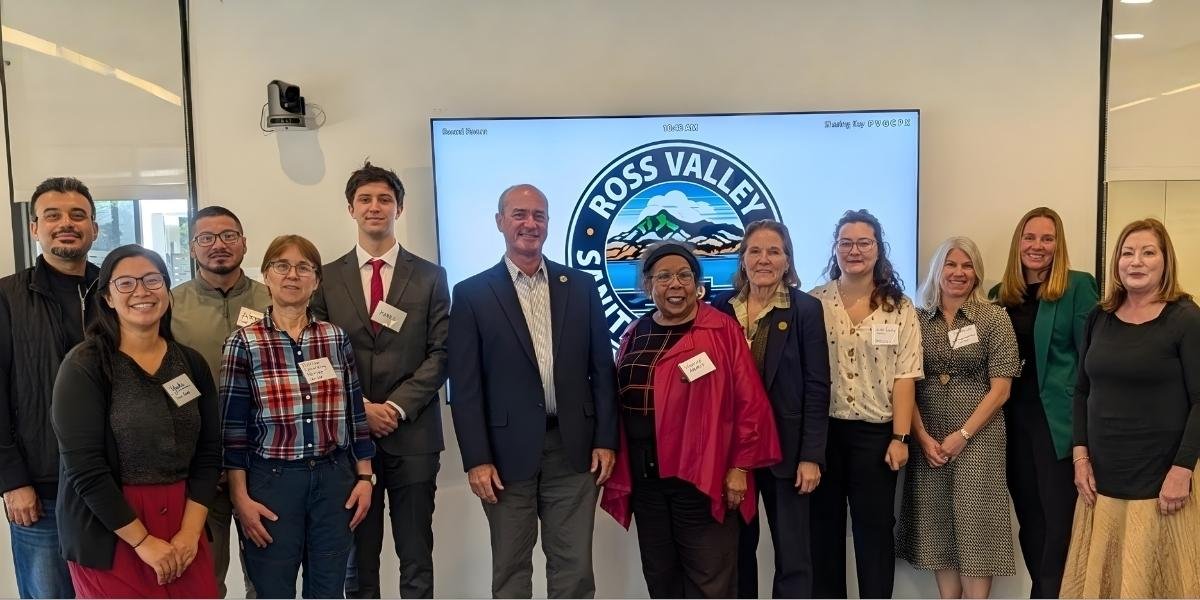
The phrase “future jobs” is used frequently in business and policy discussions, yet uncertainty often persists when hiring, training, and long-term planning decisions become concrete. The Blue Economy puts ocean-related work into focus, from ocean exploration and regenerative aquaculture to underwater robotics. The Stone Soup Leadership Institute designs educational tools and workforce initiatives that give businesses a practical way to shape future talent, align skills with real industry needs, and protect long-term growth in the Blue Economy. Its signature event, Global Blue Job Shadow Day™, helps students connect curiosity to careers. 

Marianne Larned, author and founding director of the Stone Soup Leadership Institute, leads that work. For three decades, she has used the Stone Soup model to bring together youth with business, academic, and government leaders. Under her tutelage, they have developed an online platform for pathways to economic opportunity in sustainability and the Blue Economy.

Where the Blue Economy Becomes Local

The challenge is not only limited awareness of the rapidly expanding range of Blue Economy careers, but also the lack of sustained connection between classrooms and real operational environments where practical skills, certifications, and industry readiness are developed. Traditional lessons rarely reflect the realities of labs, marine operations teams, or renewable energy sites that depend on technicians, planners, and skilled workers. The Institute frames this disconnect as an economic issue, building learning experiences with the involvement of business and education leaders who recognize that early workforce investment is essential to long-term industry viability.

The Blue Economy is projected to reach $3 trillion globally by 2030 (OECD), and workforce development has to keep pace. Larned’s motivation came from working with major corporations and seeing talented young people and underserved communities left out of emerging economic sectors. She argues that workforce development must start early, be community-driven, and connect education, industry, and policy in ways that lead to real jobs.

A Day That Makes Work Visible 

The 2026 Global Blue Job Shadow Day™ takes place on February 2, 2026, in locations across the U.S. and Portugal. Students spend time with professionals, see what a role looks like up close, and learn what training and experience tend to matter. The institute describes Job Shadow Day as a strategic way for business and education leaders to collaborate and develop Blue Economy workforce pipelines.

The 2026 event also features an exchange between Blue Economy leaders from the U.S. and Portugal, meant to showcase best practices in workforce development and spark new partnerships. 

One Story That Explains the Aim 

The Institute collects stories because they show what a program can change. One example centers on Kassandra Castillo, born on the island of Vieques, Puerto Rico. She had few opportunities and little hope for her future. At 14, she joined the Vieques Youth Leadership Initiative, the Institute’s four-year bilingual demonstration project to empower young people to become leaders of their island’s future. For Job Shadow Day, Castillo aspired to become a top model in Puerto Rico and used her star power to help other young girls envision their own dreams for their island community. 

She was matched with the Vice President of L’Oreal Puerto Rico. Castillo said, “I got to spend a whole day with this person who does exactly what I wanted to do, and I get to see what I need to do to make that happen.” That value is the clarity that comes from proximity.

What Happens After the Event? 

Global Blue Job Shadow Day™ also gathers community-driven data to shape economic development and future jobs. The Institute routes that input through surveys, including youth, education, and business surveys. That way, leaders can document needs, barriers, and opportunities. 

“At a time when international collaboration matters more than ever, the Institute’s Global Blue Job Shadow Day demonstrates how Portugal and the United States can work together to empower young people to help build a more sustainable world,” says Larned. 

As discussions conclude, a practical challenge remains for business and industry: identifying the skills young people must develop today to meet the future workforce demands of the Blue Economy.

Why Rising Accident Rates in Logistics Hubs Like Macon Are Becoming a Business Risk

As companies expand distribution networks and optimize supply chains, attention often focuses on efficiency, speed, and cost. What’s less frequently discussed—but increasingly consequential—is the growing business impact of roadway accidents in mid-sized logistics hubs.

Macon, Georgia sits at the intersection of I-75 and I-16, making it a strategic corridor for freight moving throughout the Southeast. But that same strategic advantage is now exposing businesses, insurers, and employers to higher accident-related costs that ripple far beyond the crash scene.

Accidents Are No Longer Just a Legal Issue

For businesses operating in or through central Georgia, car and truck accidents have become an operational concern. Collisions involving employees, delivery vehicles, or commercial carriers can trigger:

  • employee downtime and staffing shortages
  • insurance premium increases
  • litigation and settlement expenses
  • delayed deliveries and contract penalties
  • reputational risk

As a result, organizations are paying closer attention to accident trends in cities like Macon, where traffic volume increasingly resembles much larger metro areas.

When incidents do occur, individuals and companies alike often rely on guidance from a Macon car accident lawyer who understands both Georgia liability law and the commercial realities tied to logistics-driven crashes.

The Cost of Inaction After a Crash

From a business perspective, one of the most overlooked cost drivers is poor post-accident decision-making. Delayed medical care, incomplete reporting, or missteps during insurance communications can significantly increase long-term exposure.

That’s why understanding what to do after a personal injury accident in Macon, GA isn’t just helpful for individuals—it’s relevant for employers managing fleet risk, HR compliance, and workers’ compensation overlap.

Companies that train employees on post-accident protocols often see reduced claim escalation and faster resolution, lowering both direct and indirect costs.

Truck Accidents Carry Outsized Financial Exposure

Among all roadway incidents, tractor-trailer accidents present the highest financial risk. These crashes frequently involve catastrophic injuries, extended recovery periods, and layered insurance coverage.

For businesses that rely on freight movement—or operate near major trucking corridors—the financial implications are substantial. Claims tied to commercial vehicle accidents can involve:

  • federal trucking regulations
  • multiple defendants
  • higher settlement values
  • longer litigation timelines

Understanding the average settlement for a tractor-trailer accident in Macon helps contextualize why insurers, shippers, and logistics firms are reevaluating safety investments and route planning.

Even a single serious truck accident can impact annual budgets, risk profiles, and renewal negotiations with carriers.

Workforce Disruption Is the Hidden Cost

Beyond insurance and legal exposure, accidents disrupt labor continuity. In regions like Macon, where many workers depend on daily driving to reach job sites, a single injury can sideline skilled employees for weeks or months.

For employers, this often means:

  • temporary staffing costs
  • training replacements
  • productivity slowdowns
  • morale challenges

In tight labor markets, the inability to quickly replace experienced workers amplifies the financial consequences of accidents.

Why Mid-Sized Cities Deserve More Attention

Much of the national conversation around traffic safety focuses on major metros. Yet mid-sized hubs like Macon are now absorbing metro spillover without the same infrastructure investment.

From a business standpoint, these cities represent both opportunity and risk. They offer lower operating costs and strategic positioning—but also rising exposure to accident-related losses.

Executives evaluating expansion or logistics routing through Georgia would be wise to factor roadway safety and accident trends into their broader risk assessments.

A Data Point for Broader Economic Planning

Accident rates are increasingly viewed as leading indicators for:

  • insurance market tightening
  • healthcare utilization increases
  • workforce volatility
  • litigation cost inflation

In that sense, what’s happening in Macon is less about one city and more about how growth is reshaping business risk nationwide.

The Bottom Line

For companies operating in logistics corridors, accidents are no longer isolated events—they’re a recurring cost center. As traffic density increases in strategic hubs like Macon, businesses must adapt by improving safety planning, training, and post-incident response.

Understanding the legal and economic landscape surrounding car and truck accidents isn’t just about compliance. It’s about protecting margins, maintaining workforce stability, and sustaining long-term growth.

In today’s environment, smart businesses don’t just move goods efficiently—they plan for the risks that come with the roads they rely on.

Disclaimer: This article provides a general overview of the financial and operational impacts of accidents in logistics hubs and is intended for informational purposes only. It does not constitute legal or professional advice. Businesses are encouraged to consult with legal, insurance, and safety experts to assess and mitigate risks specific to their operations.