US Business News

Stephen Robert Litt and the Growing Relevance of Epigenetic Research in Contemporary Cancer Studies


Epigenetics has become a central point of biomedical investigation, as it is increasingly understood that chemical modification of chromatin plays a significant role in understanding the etiology and progression of diseases. As the National Cancer Institute (NCI) reports, nearly forty percent of individuals in the United States will encounter some form of cancer in their lifetime, which adds greater urgency to studies aimed at elucidating the molecular controls of gene expression. These investigations often focus on how specific environmental exposures or biological signals influence the modification state of histones, which in turn can alter the transcriptional status of pathways regulating cell proliferation, DNA repair, and lifelong genomic integrity.

This growing interest in chromatin biology has prompted researchers to explore how chemical compounds might interact with the genome, or if specific compounds might have an impact on gene activity in a meaningful way. Over the last decade, studies have indicated that when histones become acetylated or methylated, hundreds to thousands of genes may be differentially regulated, potentially altering cellular identity and behavior. For these reasons, scientists are developing an increasing interest in how early-stage experiments, which might take place outside the confines of the laboratory, could still address similar questions that eventually arise in academia.

Within this context, the work of Stephen Robert Litt emerges as an example of how independent experimentation can later connect to more formal research in epigenetics and cancer biology. Litt initially started exploring issues related to gene regulation during his school years by studying the effects of epigallocatechin gallate, a compound found in green tea, on oral cancer models. These projects, while limited in their scope, reflected an increasing fascination among young students with how dietary molecules or natural substances might influence cellular responses. His early research also avoided making direct clinical inferences, instead focusing on determining whether observable changes could support basic hypotheses regarding cell health and growth. The experiments garnered local attention because they encouraged students to think about the chemistry-biology interface in understandable ways.

As Litt transitioned into more advanced academic environments, the guiding principles behind his early projects remained relevant. In fact, many basic research groups continue to explore how small molecules interact with chromatin and whether these interactions might help explain changes in gene activity. This alignment of school-level experimentation with university-based epigenetic studies also helps illustrate how introductory scientific approaches can prepare students for more complex research. Litt’s interest in compound-driven biological change eventually became connected to broader questions surrounding histone modifications, a central topic within molecular oncology.

Litt joined the Strahl Lab during his academic development at the University of North Carolina at Chapel Hill, which is renowned for its work in the field of histone biology. The group focuses on defining how chemical modifications influence chromatin structure and dictate gene expression patterns across various cellular systems. Such work contributes to active discussions in the field regarding how epigenetic states may modulate disease progression, including different forms of cancer. Engagement in such a setting reflects a transition from observational modeling to mechanistic analysis, a characteristic shift for many young researchers when they begin working in structured laboratory settings.

By participating in research related to chromatin modifications, Litt became connected with academic efforts that investigate how the genome responds to environmental and molecular influences. This has become a very active area in recent years as researchers seek to understand how combinations of histone marks coordinate gene activity. In fact, a series of recent papers from institutions around the United States suggests that disruptions in epigenetic regulation may play a role in tumor development, as highlighted in studies published between 2020 and 2023. The biological focus within labs such as the Strahl group supports this direction, emphasizing the importance of precise biochemical analysis.

This shift in research emphasis required Litt to delve into more detailed laboratory techniques, such as protein analysis, genomics methods, and experimental design approaches that test specific mechanistic questions. His trajectory reflects a general trend in the world of academic research where trainees develop their ideas through the integration of chemistry, genetics, and molecular biology. Switching from early modeling to more defined mechanistic studies is a common step in scientific training, particularly within fields that require the analysis of chromatin states and the biochemical factors that influence these states.

Litt’s academic work fits within larger trends in modern oncology research. Many laboratories now investigate how disruptions to histone regulation might promote uncontrolled cell division or changes in DNA repair activity. These questions depend on a detailed understanding of how enzymes add and remove chemical marks from histones, and how those marks produce patterns of gene activity. Litt’s studies within the Strahl Lab connect him to these broader scientific aims and underscore the growing importance of epigenetics within cancer biology.

As research groups continue to analyze how chromatin states influence disease, the participation of students and early-career investigators has expanded the field’s capacity. Litt’s experiences show how early exposure to biological questions can eventually lead to work that aligns with high-level scientific goals. This progression demonstrates how young researchers can become integrated into established scientific communities while contributing to broader efforts that examine the molecular basis of cancer. His academic path highlights the role that educational experiences can play in shaping future scientific engagement.

The continued growth of epigenetics into a dominant research area suggests that questions related to histone biology will remain central for the foreseeable future. Working within an environment focused on chromatin regulation places Litt within the discourse, continuing to shape biomedical understanding. His trajectory from early experimentation through laboratory-based epigenetic study shows how students can align their interests with evolving scientific needs. Such a link from initial curiosity to formalized analysis highlights the intersection between education and research at diverse levels of training.

As these research directions continue to develop, the work of young investigators like Stephen Litt remains connected to broader academic conversations on gene regulation and disease. The scientific community continues to explore how chemical marks on histones define genomic behavior and why disruptions to these marks may predispose individuals to cancer or other disorders. Litt’s involvement in these efforts places him within a greater movement to further elucidate how epigenetic mechanisms influence human health.

From early school-based experiments to formal university laboratory research, the work of Stephen Robert Litt reflects a path shaped by curiosity, academic development, and the evolving needs of molecular oncology.
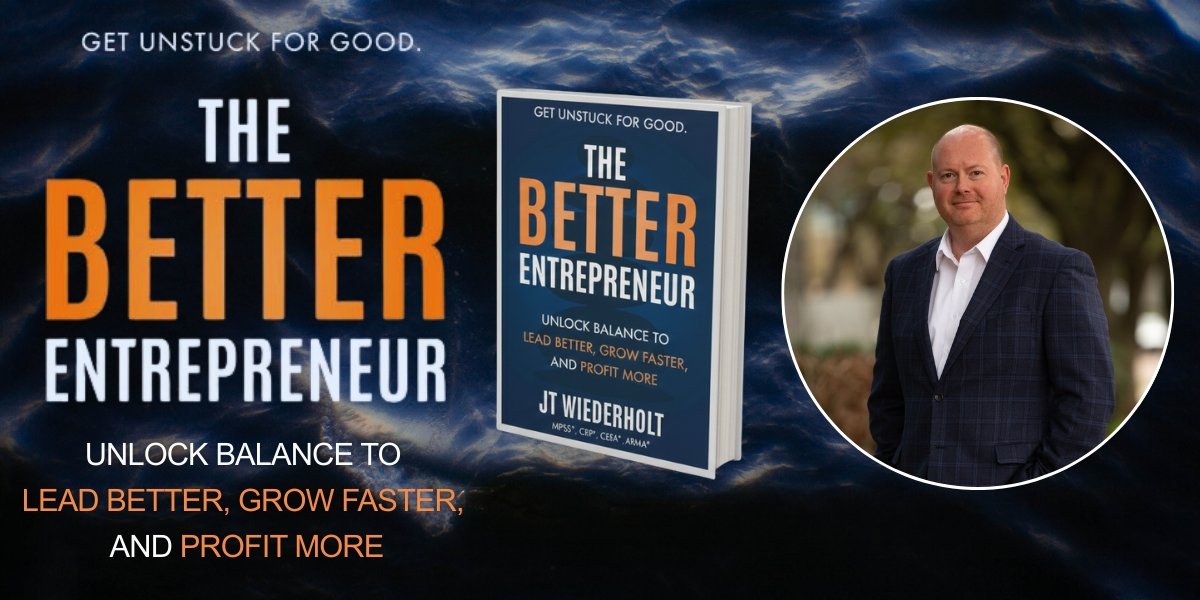

Calling All Entrepreneurs: A Practical Framework for Building Better Teams, Better Businesses, and Better Outcomes

Entrepreneurship is often pursued in the name of freedom. The freedom to make decisions, shape a vision, and build something meaningful. Yet for many business owners, success brings an unexpected tradeoff. As organizations grow, responsibilities multiply, complexity increases, and founders often find themselves more constrained than empowered by the businesses they created.

This paradox sits at the heart of The Better Entrepreneur, JT Wiederholt’s newest release. Rather than positioning entrepreneurship as a constant grind or a race for scale, the book reframes success around structure, clarity, and leadership discipline, showing how business owners can reclaim autonomy while building stronger, more resilient organizations.

In today’s business environment, this message is especially timely. Entrepreneurs operate within a landscape defined by rapid shifts, intensifying competition, and heightened expectations for measurable performance. Whether scaling a startup or stabilizing a mature organization, leaders are expected to move faster, think more strategically, and deliver results with fewer missteps. Yet despite effort and ambition, many encounter familiar challenges: unclear priorities, reactive decision-making, team misalignment, and operational inefficiencies that persist year after year.

Unlocking the Freedom Entrepreneurs Seek

Many founders begin their journey seeking independence, only to become indispensable to every aspect of the business. Decisions stall without them. Teams wait for direction. Strategy gives way to urgency. The company grows, but the founder’s margin for focus and reflection shrinks.

Wiederholt addresses this tension directly. The Better Entrepreneur is built around the idea that freedom is not achieved through growth alone, but through disciplined fundamentals. By strengthening systems, clarifying roles, and developing leadership capacity within the organization, entrepreneurs can transition from working in the business to leading it effectively. The result is not disengagement, but higher-level engagement, where leaders focus on vision, alignment, and long-term value rather than constant firefighting.

The Problem: Entrepreneurs Know What They Want — but Not How to Get There

Ambition is rarely lacking among business owners. Most have a clear sense of what they want to build: a stable organization, a capable team, sustainable growth, and a business that can operate without constant intervention. What’s often missing is the operational structure required to turn that vision into consistent execution.

This gap creates a predictable pattern. Entrepreneurs work harder, yet progress feels incremental. Teams attempt to execute, but lack clarity or cohesion. Strategic thinking is crowded out by daily demands. Over time, the business becomes dependent on the founder’s energy rather than a durable internal framework.

The Better Entrepreneur addresses this gap with precision. Instead of abstract theory or motivational rhetoric, Wiederholt focuses on repeatable habits and systems observed through decades of hands-on experience coaching thousands of entrepreneurs and advising hundreds of businesses.

The Solution: A Blueprint Rooted in Real Experience

At the core of the book is Wiederholt’s signature framework: the “5Ps.” This structured model outlines five foundational areas every business must strengthen to operate effectively and scale with intention. The framework helps entrepreneurs:

  • Reinforce operational integrity and reduce unmanaged risk
  • Build, align, and retain stronger teams capable of independent execution
  • Establish clarity around roles, responsibilities, and expectations
  • Implement systems that reduce founder dependency
  • Support sustainable growth and long-term enterprise value

The strength of the 5Ps lies in their practicality. They are designed for immediate application, offering a clear roadmap to restore order, improve execution, and create momentum, regardless of company size or stage.

Expertise That Extends Beyond Theory

Wiederholt’s perspective is grounded in lived experience. As an entrepreneur who has built, advised, and guided organizations across industries, he brings practical context to every concept. His CEPA™ designation further expands this lens, connecting everyday operational decisions to long-term enterprise value and exit readiness.

This combination of operational experience, coaching depth, and strategic foresight positions The Better Entrepreneur as a credible guide for leaders seeking to strengthen their businesses with intention rather than urgency.

Why This Book Is a Valuable Resource for Today’s Leaders

In a crowded field of business advice, The Better Entrepreneur stands out for its clarity and applicability. The tools are accessible, the structure is disciplined, and the insights reflect real-world conditions entrepreneurs face daily. For business owners seeking to elevate team performance, restore focus, and build organizations that support both growth and freedom, Wiederholt offers a practical and grounded pathway forward.

Explore More and Connect with JT Wiederholt
🌐 www.balanceapproach.com
📘 The Better Entrepreneur
🔗 LinkedIn: https://www.linkedin.com/in/jtwiederholt/

Ten Years of Hostaway – Growth, Technological Innovation, and the Professionalization of Short-Term Rental Management

Over the last decade, short-term rental administration has been driven by rapid technological advancement and growing global markets and demand. Property managers face increasing pressure to manage multiple listings across platforms, price them optimally, maintain guest communication, and manage operational workflows effectively. This all-in-one approach has helped professional managers adopt technology solutions to manage larger portfolios more efficiently and responsively. Industry reports indicate that the global vacation rental market reached approximately 96 billion U.S. dollars in 2022 and may surpass 113 billion by 2025. 

Hostaway is a Finland-based property management software company that offers platforms for professional short-term rental management. Founded in 2015 by Marcus Rader, Saber Kordestanchi, and Mikko Nurminen, the company has expanded the platform’s capabilities over the last decade to include integrations with leading booking services such as Airbnb, Vrbo, Booking.com, Expedia, and Google Travel. The system enables property managers to consolidate listings, sync calendars, automate guest communications, and generate analytical reports to enable operational oversight at scale. More than 200 partner applications integrate with the platform, enabling workflow automation and operational scalability.

The firm’s growth has been marked by milestones reflecting both market demand and technological innovation. This decade has seen Hostaway’s workforce grow exponentially, with global expansion scaling its platform operations. Funding rounds have played a significant role in this regard, including the $175 million growth investment from PSG Equity in May 2023 and the $365 million investment led by General Atlantic in December 2024, with participation from PSG Equity. These financial milestones brought Hostaway’s valuation above $1 billion, marking the first short-term rental property management system to reach unicorn status.

One of the key areas of growth for Hostaway has been in integrating artificial intelligence tools into its platform. AI-driven features cover automated predictive pricing adjustments, guest messaging automation, and workflow management. According to company surveys, this reflects a much greater usage of AI tools among vacation rental managers overall due to more market volatility, inflation, and competitiveness. These integrations enable property managers to automate their tasks and make strategic operational decisions easily.

The numerous partnerships and integrations that Hostaway has forged have, to a great extent, driven its influence within the sector. Having integrated with hundreds of third-party applications, the platform supports a range of operational activities, from accounting and housekeeping coordination to performance analytics. These integrations enable property managers to manage multiple listings and locations with efficiency, maintain service quality, and respond flexibly to market fluctuations, thanks to AI functionality. Observers note that such systems are becoming increasingly central in professional property management, not least in the context of burgeoning rental markets and digital booking platforms.

Industry recognition has also reflected Hostaway’s position in the sector: it was included in Deloitte’s 2024 listing of the 500 fastest-growing companies in Europe and the 50 fastest-growing companies in Finland. Further, in 2025, it was recognized as an Airbnb Preferred+ Software Partner, reached Vrbo Elite status, and was identified as a Booking.com Premier Partner. Such recognitions denote external validation of the company’s professional influence and technological adoption.

Hostaway’s growth over the past 10 years is indicative of an increasingly professional approach to managing short-term rentals. Both larger property portfolios and changing market conditions require managers to centralize operational oversight, automate repetitive tasks, and provide data-driven insights to help navigate these shifting conditions. Hostaway’s growth in both its workforce and technological capabilities reflects software solutions that are concurrently scaling to address these needs. Examples include using AI tools as part of a broader shift in short-term rentals toward predictive analytics and automated operational management.

The importance of Hostaway’s development is underscored by financial and operational achievements such as achieving unicorn status and expanding internationally. These milestones exist alongside ongoing innovation in software capabilities and an AI ecosystem across numerous platforms, which embodies the ways the company has helped shape modern property management practices. The trajectory over the last decade demonstrates how technology adoption, strategic partnerships, and operational scalability have come together to respond to challenges facing professionalism in property management for short-term rentals. 

In total, Hostaway is an exemplary case of technological innovation, market responsiveness, and entrepreneurship, started by Marcus Rader, Saber Kordestanchi, and Mikko Nurminen. Having doubled its staff, integrated AI-enhanced tools, and forged partnerships with leading booking platforms over ten years, the company has grown globally. Deloitte, G2, Airbnb, Vrbo, and Booking.com recognize this impact and professional adoption. Further, the development of Hostaway underlines that the growth of the market, technology, and operational efficiency are indeed decisive factors for changing how short-term rental properties are managed.


Disclaimer: This article is for informational purposes only and reflects the author’s opinion based on available data at the time of writing. All claims, statistics, and market projections regarding Hostaway and the short-term rental industry have been gathered from publicly accessible sources and are not guaranteed to be accurate or comprehensive. While every effort has been made to ensure the reliability of the information presented, the author and publisher cannot be held liable for any inaccuracies, errors, or omissions. Please verify any financial or business claims independently before making any decisions based on the content provided.

The Structured Path to Self-Improvement – How Eric J. Bartosz’s BAR40 Framework Merged Discipline with Personal Growth

In the saturated market for personal development, where motivational fads rise and fall in a matter of months, methodical and empirically grounded strategies are more likely to stand the test of time. The concept that improvement of oneself is possible through discipline and pragmatic habit formation is certainly not new, but has regained popularity in the past few years. Research from the American Psychological Association demonstrates that people who monitor their goals frequently are 42 percent more successful in accomplishing them, a number that emphasizes the link between responsibility and success. It is out of this changing discourse on systematic self-enhancement that the BAR40 model has found its niche.

The system referred to as BAR40 was founded to integrate daily activity with long-term objectives. It was designed to allow participants to concentrate on four key areas: mindset, diet, fitness, and habit. The title alone communicates the concept of achieving one’s own “bar,” or level, by age 40, but the system applies to any phase of adulthood. Instead of presenting theoretical concepts concerning achievement, the BAR40 program is based on the process of making incremental daily changes. This methodology later formed the basis for a bestselling book and training program that still resonates with readers and professionals today.

Eric Bartosz, the creator of the framework, released BAR40: Achieving Personal Excellence in 2020. The book presented a 52-week plan intended to establish sustainable habits via consistency, quantifiable reflection, and adaptability. The companion publication, BAR40 Ultimate Year Training Journal, provided readers with an organized format to log progress on top performance areas. These two books emerged at a time when personal responsibility and mental health were increasingly becoming prioritized for those juggling career stress, health objectives, and personal satisfaction. In April 2021, BAR40: Achieving Personal Excellence became an Amazon Bestseller, finding its place in the Top 5 across various health and wellness categories, reflecting its versatility among various groups.

The BAR40 program’s popularity is mainly drawn from its emphasis on accessibility. Bartosz created it with the versatility to fit into broad lifestyles and varying levels of fitness, making it a flexible rather than instructive tool. Each person starts from wherever they are and grinds through tiny, incremental changes. This focus on incremental progress echoes insights from behavioral science studies, including those done by Duke University, which estimates that as much as 40 percent of daily behavior is based on habit and not conscious decision-making. By changing those habitual responses, the BAR40 process gives users the tools to remake their routine over time.

Critical response to the book emphasized its usefulness. Readers and critics termed it as “transformative,” “inspirational,” and “a daily tool for success.” Others pointed out that Bartosz’s narrative style made the process of personal development more relatable by interweaving lessons from his life with research-based techniques. The book’s systematic format also distinguishes it from other wellness books. It does not purport to offer rapid fixes; rather, it walks readers through a process of reflection, self-evaluation, and ongoing action throughout an entire calendar year. This systemized method made it adaptable not just for people but also for teams and professionals seeking to use its principles in leadership and performance situations.

Aside from its book format, BAR40 developed into training workshops, presentations, and group instruction that spread its impact to non-readers. Bartosz’s sales leadership, business planning, and executive education background helped build the system’s credibility in corporate settings. He teaches part-time as an adjunct MBA professor at DeSales University and is a faculty member in the Master of Organizational Leadership program at Muhlenberg College. He regularly weaves aspects of BAR40 into the classroom teachings on leadership, emotional intelligence, and organizational behavior. His teaching background provides a systematic framework to the motivational content of the program, coupling personal growth with research-based management practices.

Coverage in the media has contributed to raising awareness of the philosophy of BAR40. Local newspapers like Montco Today and Bucks County Today featured Bartosz’s work, delving into how his personal development model was developed and became a more extensive professional practice. In interviews and columns, such as his recurring “Bar Talk” series in Saucon Source, Bartosz frequently speaks on the value of linking mindset with measurable outcomes. His comments reflect the increasing awareness within the business and wellness communities that long-term success is not necessarily a function of ambition, but rather a daily system and accountability.

The model’s pragmatic application even has relevance in physical wellness. As a competitive runner and an enduring proponent of fitness as part of integrated health, Bartosz has had a several-year daily streak of running. His own self-discipline reflects the message of BAR40: that consistency is the driver of change. In 2021, he stated that the same mental resilience needed to sustain fitness regimes holds for professional and personal aims. The BAR40 approach thus works on a principle of transference, skills and habits learned in one domain naturally enhance performance in another.

The continued evolution of BAR40 shows how formal personal development programs can coincide with larger trends in leadership and wellness. With professionals reconsidering work-life balance post-pandemic, tools balancing quantifiable progress with psychological strength have gained traction. As digital monitoring and self-monitoring technologies improve, models such as BAR40 offer a low-tech balance, promoting contemplation through diary entries and end-of-day check-ins instead of incessant screen time. 

In a world where wellness initiatives and leadership methodology tend to run in parallel, the BAR40 model finds common ground between them. It bridges personal development with business rigor, providing a model that can scale for individuals and organizations. By his writing and teaching, Eric J. Bartosz has helped build momentum with the idea that sustainable excellence is not the result of momentary motivation but of sustained, incremental progress. His work illustrates a larger trend in success being defined not by how intense it is, but by how consistent.

Detailed Exploration of Chapter 14: Program Evaluation and Impact Measurement

Introduction

Chapter 14 of Empowering Non-Profit Success: Strategies for Effective Management and Cause-Driven Marketing by Dr. Sarah Sun Liew, titled Program Evaluation and Impact Measurement, serves as a cornerstone for understanding the essential elements that drive non-profit effectiveness and sustainability. This chapter emphasizes the importance of assessing a non-profit’s programs not just through execution but also by evaluating their impact on the community and the organization’s overarching mission.

Dr. Liew presents program evaluation and impact measurement as valuable tools for non-profit leaders to help their efforts yield tangible results. This chapter is particularly relevant because, in today’s highly competitive and resource-limited non-profit environment, demonstrating effectiveness and impact has become critical for sustainability, attracting donors, and promoting long-term success.

Key Themes and Importance

At the heart of Chapter 14 is the notion that while passion and vision drive non-profits, it is the accurate measurement and evaluation of programs that sustain them. Non-profit organizations must routinely assess whether they are making a difference in the lives of their beneficiaries, aligning with their mission, and making the most of their resources effectively.

The central themes that emerge from this chapter revolve around the need for accountability, continuous learning, and improvement. Dr. Liew outlines several key areas where program evaluation plays a pivotal role, including accountability to stakeholders, strategic decision-making, and communication of outcomes to both internal and external audiences.

1. Accountability and Transparency

One of the primary reasons for program evaluation, as discussed in Chapter 14, is the need for non-profits to maintain transparency and accountability. By sharing evaluation results with stakeholders—including donors, beneficiaries, and the public—non-profits build trust and credibility. Dr. Liew highlights that regular evaluations demonstrate an organization’s commitment to openness, especially when results are both positive and negative. Non-profits that prioritize such evaluations are likely to attract greater support, as they are perceived to be more trustworthy and effective.

In today’s non-profit landscape, where organizations face intense competition for funding, the ability to demonstrate impact is no longer optional. Accountability through program evaluation helps foster long-term relationships with donors, allowing them to see the direct impact of their contributions.

2. Effectiveness and Efficiency

Dr. Liew further emphasizes the importance of program evaluation in identifying the most effective components of a program. Evaluations enable organizations to focus their resources on activities and strategies that appear to generate the highest impact. By understanding which areas are most efficient, non-profits can avoid waste and optimize their limited resources. This efficiency not only boosts impact but also makes non-profits more attractive to funders, who seek assurance that their financial support is used wisely.

By showing effectiveness through data, organizations can scale successful programs, expanding their reach and deepening their impact. Furthermore, evaluation promotes a culture of learning, where non-profits can refine and improve their strategies, allowing for ongoing adaptation and innovation.

3. Strategic Decision-Making

Chapter 14 also highlights the role of evaluation in strategic decision-making. Dr. Liew notes that informed decisions based on reliable data are crucial for scaling programs, adapting to changing community needs, and planning future initiatives. Without data-driven insights, non-profit leaders risk making decisions that are not aligned with the evolving challenges of the communities they serve.

Program evaluation acts as a compass, guiding organizations toward more impactful and relevant initiatives. For instance, by identifying areas where a program might be underperforming, non-profit leaders can make the necessary adjustments before the program’s shortcomings become costly or damaging to the organization’s reputation.

4. Learning and Continuous Improvement

One of the most powerful aspects of program evaluation is its ability to foster a culture of learning and continuous improvement within non-profits. Dr. Liew advocates for a mindset where both successes and failures are seen as opportunities for growth. Evaluation encourages reflection on program design and implementation, ensuring that lessons learned are applied to future projects.

This reflective process creates a cycle of improvement, where non-profits can fine-tune their strategies and activities to achieve even greater impact. By promoting continuous learning, organizations not only improve their own effectiveness but also contribute valuable knowledge to the broader non-profit sector.

Impact Measurement: A Critical Element

Dr. Liew delves into the importance of impact measurement, emphasizing that it goes beyond program evaluation to assess the broader outcomes and societal changes that result from non-profit efforts. She explains that impact measurement provides compelling evidence to donors and funders, showcasing how their support translates into real-world benefits. This is particularly important in a competitive fundraising environment, where organizations that can demonstrate concrete results are more likely to maintain ongoing support.

Dr. Liew’s discussion of impact measurement also highlights its role in long-term sustainability. Non-profits that routinely evaluate their impact are better positioned to adapt to changing circumstances, whether they be economic, environmental, or social. By measuring the effectiveness of their programs, organizations can remain relevant and responsive to the communities they serve.

Tools and Methods for Evaluation

Chapter 14 offers practical guidance on the tools and methods non-profits can use to evaluate their programs. Dr. Liew outlines several common evaluation methods, including:

  • Qualitative Methods: Such as participant observations, interviews, and storytelling. These provide insights into the subjective experiences of program beneficiaries, capturing outcomes that are difficult to quantify but equally important in understanding program effectiveness.
  • Budget Analysis: Which helps non-profits understand their return on investment and assess the financial sustainability of their programs.
  • Tests and Pre/Post Evaluations: Often used to measure knowledge or behavior changes among program participants.
  • Performance Metrics: Including standardized measures like graduation rates, job placements, or health outcomes, which can provide quantifiable data on program success.

The chapter stresses the importance of selecting the right evaluation methods based on the goals of the program, the resources available, and the needs of stakeholders. Dr. Liew advises non-profit leaders to create a robust evaluation plan, incorporating a logical model that outlines inputs, activities, outcomes, and impacts.

Communication and Use of Evaluation Results

Finally, Dr. Liew emphasizes the importance of communicating evaluation results effectively. Non-profits must not only collect data but also present it in a way that is accessible and compelling to their stakeholders. Data visualization tools, such as charts and graphs, can help make complex information more digestible. In addition, storytelling can bring the data to life, providing context and emotional resonance to the numbers.

Moreover, by involving stakeholders in the evaluation process and soliciting their feedback, non-profits can enhance engagement and cultivate a stronger community around their mission. Dr. Liew points out that the ultimate goal of evaluation is to make informed decisions that support program performance, increase impact, and enhance accountability.

Summary

Chapter 14 of Empowering Non-Profit Success serves as a comprehensive guide to the critical role of program evaluation and impact measurement in the non-profit sector. Dr. Sarah Sun Liew highlights the importance of these tools not just for assessing performance but also for supporting long-term success, sustainability, and relevance. By fostering a culture of accountability, learning, and strategic decision-making, non-profits can amplify their impact, build trust with stakeholders, and continue to make meaningful contributions to the communities they serve.

In today’s competitive and resource-constrained environment, the lessons from this chapter are more relevant than ever. Non-profits that embrace the principles of program evaluation and impact measurement are better equipped to navigate the challenges of the future and continue their vital work of driving positive social change.

Media Features

Author Profile: Dr. Sarah Sun Liew – Wikitia

Direct Contact: (424) 343-7025 / info@meridianwish.com