US Business News

LocalSink Specializes in Marketing for Franchise Networks

Las Vegas-based agency operates without contracts, gives clients full ownership of every asset it builds, and develops network-specific expertise across the franchise systems it serves.

LAS VEGAS, NV. LocalSink, a digital marketing agency for local service businesses, has built its practice around a focused choice: serving franchise networks exclusively rather than spreading itself across unrelated industries. The agency develops network-specific expertise inside each franchise system it joins and applies what it learns from one franchisee to the next within the same system.

A Different Path for an Agency

Most marketing agencies grow by widening their client list across unrelated industries. LocalSink has taken the opposite path. The company specializes exclusively in franchise networks, building network-specific expertise that can be replicated across every location in a system. Every process the team builds, every strategy it develops, and every lesson it learns applies to the next franchisee in that same network.

The approach is designed to compound over time. The more reps LocalSink completes inside a network, the more refined its playbook becomes for that network. New franchisees joining the agency benefit from lessons developed across earlier accounts in the same system.

“A full-service agency cannot grow without dropping its standards, except when it operates inside franchise networks,” said Will Troup, founder of LocalSink. “That insight changed everything. We don’t want to be everywhere. We want to be the deepest in the rooms that matter, so our clients win and keep winning.”

Built as the Answer to an Industry Problem

LocalSink was founded in response to a pattern its team saw repeatedly. Home-service and franchise business owners were being held hostage by their own marketing agencies. The familiar story involves a polished sales pitch, a cookie-cutter strategy, a black-box reporting dashboard, and a slow fade into unresponsiveness once the contract is signed. It usually ends with early termination fees and the loss of the website and campaigns the owner paid to build.

LocalSink was structured to make that story impossible. The agency operates with no contracts, gives clients full and permanent ownership of every asset it builds, and takes complete accountability for its work. If LocalSink isn’t earning a client’s business every single month, that client is free to leave and take everything with them.

What LocalSink Is Building

The company’s growth in the franchise space came through Paul Davis Restoration. A single franchisee found LocalSink on Facebook. The relationship led to referrals to additional offices, and word spread through the network without a dollar spent on advertising or a formal sales process. Today, LocalSink describes its work inside that network as its mastery phase, focused on consistent lead flow for the franchisees it serves.

The roadmap is to repeat that approach across additional franchise networks. The plan is to enter, learn, and refine, deepening expertise with each new system. LocalSink’s stated goal is to become a trusted marketing partner for franchisees across the networks it serves.

That ambition rests on a plain-spoken belief. The team’s view is that the strongest marketing agencies are the ones that care most about the work, not the ones with the biggest budgets.

How Clients Describe the Work

In an industry where business owners are often skeptical of big promises, LocalSink takes a measured approach to client communication. Clients describe an agency that responds quickly, walks them through the reasoning behind its work, and treats their success as the focus of every engagement. That approach is reflected in the company’s record of positive client reviews.

Why It Matters

LocalSink has no outside investors and no private equity backing. Its only path forward is making sure its clients win. The company views that as a feature rather than a constraint. Every decision, every dollar spent, and every hire has to serve one purpose: continuing to earn its clients’ business every month, not because a contract forces them to stay, but because the work earns it.

Learn More About LocalSink

LocalSink is a Las Vegas-based digital marketing agency that helps local service businesses make the phone ring. Specializing exclusively in franchise networks, LocalSink delivers Local Service Ads optimization, Google Business Profile management, Google Ads, local SEO, and video content, all without contracts and with full client ownership of every asset. Franchise owners can learn more by visiting the LocalSink website, exploring strategy and educational content on the LocalSink YouTube channel, or reading more about founder Will Troup at willtroup.com.

With a commitment to transparency, network-specific expertise, and client-first accountability, LocalSink aims to deepen its presence across the franchise systems it serves.

Arthritis in Charlotte: Exploring Alternatives to Cortisone

By Dr. Goodman, DC + Dr. Bradberry, DC | ReliefNow Laser Charlotte | Charlotte, North Carolina

Arthritis is the leading cause of disability in the United States, affecting 58.5 million adults according to the CDC. Many active adults and aging residents of Charlotte, Pineville, Matthews, Ballantyne, and Gastonia have cycled through cortisone injections and NSAID management while still searching for lasting joint improvement. ReliefNow Laser Charlotte offers a different option for these patients. The practice provides a non-surgical, Class IV laser therapy approach to joint care that focuses on the tissue itself rather than ongoing pharmaceutical management.

A landmark 2017 JAMA study found that cortisone injections produced significantly greater cartilage volume loss over two years compared to placebo. The treatment most commonly offered for arthritic joint pain was, in that study, associated with greater loss of the cartilage it was meant to protect.

Both Dr. Goodman and Dr. Bradberry have direct clinical experience with the musculoskeletal wear that athletic lifestyles and physical careers accumulate over time. Dr. Goodman, a CrossFit athlete and Spartan racer, understands joint health from a firsthand perspective. Dr. Bradberry, a Certified Chiropractic Sports Physician whose career spans work with both Olympic athletes and weekend warriors, brings that sports-medicine background to everyday patient care.

What Is Osteoarthritis and What Is Happening to the Joint?

Osteoarthritis involves the progressive breakdown of articular cartilage, the smooth protective tissue covering the ends of bones. As cartilage degrades, subchondral bone is exposed, bone spurs form, and the synovial membrane responds with chronic inflammation that produces swelling, stiffness, and pain. The CDC reports that osteoarthritis affects more than 32.5 million U.S. adults. A 2019 study in Annals of the Rheumatic Diseases found that osteoarthritis prevalence rose by 48 percent between 1990 and 2019.

What Does the Research Show About Cortisone and Long-Term Joint Health?

The landmark 2017 JAMA study on knee osteoarthritis found that patients receiving triamcinolone injections every 12 weeks had significantly greater cartilage volume loss over two years compared to those receiving saline. The American Geriatrics Society also flags NSAIDs in older adults as carrying significant gastrointestinal, cardiovascular, and renal risks with long-term use. Taken together, this research raises questions about whether some common arthritis treatments may affect the very joints they are meant to manage.

How Does Class IV Laser Therapy Work for Arthritic Joints?

ReliefNow Laser Charlotte uses an FDA-cleared, Class IV near-infrared laser as part of its approach to joint care. This category of treatment, known as photobiomodulation, delivers light energy into tissue, and researchers have studied how that energy interacts with the cells involved in cartilage maintenance and inflammation. A 2014 systematic review in Lasers in Medical Science reported that photobiomodulation was associated with reductions in pain and improvements in function among knee osteoarthritis patients. A 2022 meta-analysis in Arthritis Research and Therapy described clinically meaningful benefits across multiple joint presentations alongside a favorable safety profile.

What Does Dr. Goodman’s Nutrition Training Add for Arthritis Patients?

Dr. Goodman’s post-graduate nutrition training adds a dietary and anti-inflammatory dimension to how the practice approaches arthritis care. Systemic inflammation, which is shaped by diet, metabolic dysfunction, and lifestyle factors, can contribute to arthritic joint degeneration. Considering the systemic inflammatory environment alongside joint-level treatment reflects a broader approach to care rather than focusing on a single modality.

How Does Laser Care Compare to Joint Replacement Surgery?

Knee replacement averages $30,000 to $50,000 in direct costs and requires 6 to 12 weeks of restricted mobility. BMJ Open research has documented persistent post-surgical pain in approximately one in five patients at three to four years. Non-surgical laser therapy does not involve that surgical recovery period, which is part of why some patients explore it before considering surgery.

More information about the practice is available through ReliefNow Laser Charlotte, and patient education videos are available on the ReliefNow patient education channel. ReliefNow Laser Charlotte is located at 460 Park Rd, Charlotte, NC 28209 and can be reached at 704-527-7246.

About the Authors

Dr. Eric Goodman, DC, studied at UNC-Charlotte and Palmer College, with post-graduate training in neurokinetic therapy, acupuncture, laser therapy, rehabilitation, and nutrition. He volunteers in his community with Habitat for Humanity, United Way, and the Rotary Club. Dr. Douglas Bradberry, DC, studied at the University of Florida and graduated with honors from Palmer College. He holds a Certified Chiropractic Sports Physician (CCSP) credential and has a background in Olympic sports medicine. Both are providers in the national ReliefNow network, co-founded by Dr. Robert Hanopole, DC.

Disclaimer: This article is for informational purposes only and does not constitute medical advice. Consult a qualified healthcare provider before beginning any treatment program.

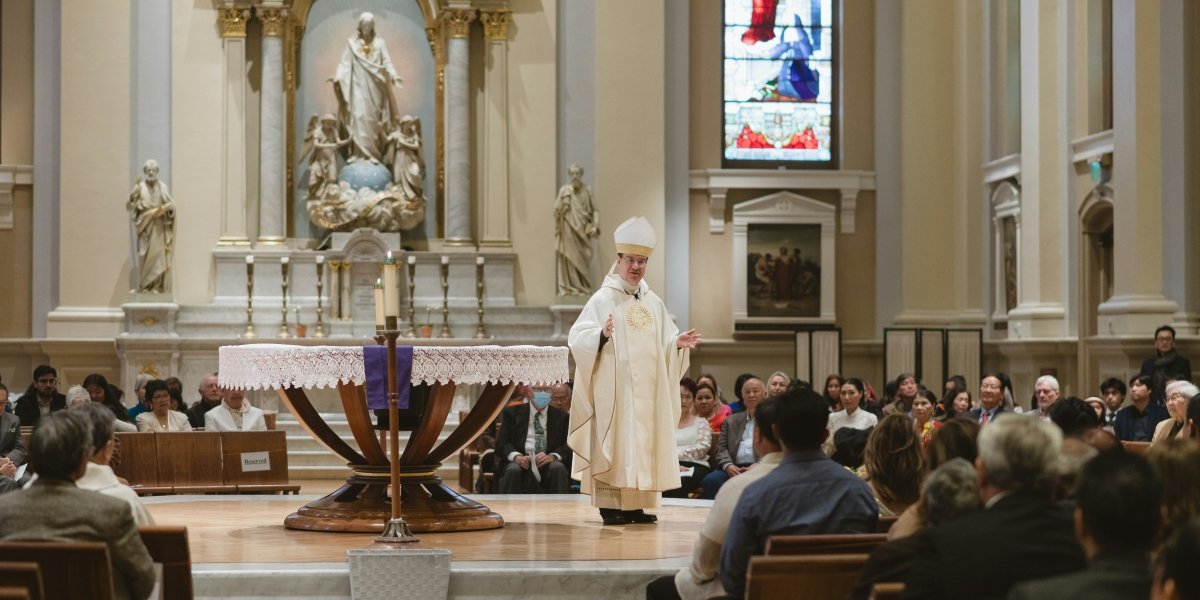
Michael J. Deegan and the Transition from Diocesan Leadership to Educational Consultancy Through MJDEEGAN Educational Consultants

For decades, Catholic education in the United States has seen the rise and fall of structural shifts within Catholic educational policy. According to the National Catholic Educational Association, there has been a precipitous drop of two million students in Catholic school enrollment from the early 1970s until the early 2020s. Urban diocesan schools may have taken the brunt of the squeeze as tuition fees became the new reliance instead of parish subsidy. Changes in demographics, expenses, and the COVID-19 pandemic aftermath make the case for new models of governance and strategic planning. It is in this era of uncertainty that retired superintendents and diocesan leaders assume new positions as advisors and contribute their years of hard-won knowledge.

Against that national backdrop, Michael J. Deegan concluded his work as the Superintendent of Schools for the Archdiocese of New York in 2023 and founded MJDEEGAN Educational Consultants. His tenure as superintendent from 2019 until 2023 began after decades of prior work in the same system. Rather than a break from Catholic schooling, the consulting practice is an extension of his work in governance, planning, and maintaining institutions in tuition-based schooling networks.

Deegan supervised 175 schools within New York City and seven surrounding districts, which meant tens of thousands were reached by his work. This experience has informed his advisory model, which encompasses curriculum development, management of enrollments, financial coordination, and representation to the public. This experience prepares Deegan to provide advisory services to Catholic education institutions and organizations concerned with assessing their long-term viability and alignment with mission.

The Catholic education consulting practice, in most cases, targets issues such as enrollment trends, governance structures, strategic planning, and financial forecasting techniques. According to national data, Catholic school enrollment declined by 6.4 percent during the 2020-2021 academic year, which represents the most significant one-year decline in enrollment records, as highlighted by the National Catholic Educational Association. Although there have been signs of recovery, most dioceses continue to experience uncertain demographics. In such conditions, advisory practices follow issues such as student enrollment, shared services, and the evaluation of grade configurations.

Deegan’s experience with tuition-based funding structures shapes this advisory role. Catholic schools derive most operating revenue from tuition, parish, and donor contributions. When economic downturns reduce family income or parish collections, schools face immediate budget gaps. Within the current post-COVID age, the Archdiocese of New York garnered 40 million dollars of philanthropic funding to stabilize its operations. The federal relief programs include the Paycheck Protection Program, Emergency Assistance for Non-Public Schools, Elementary and Secondary Emergency Relief Funds, E-Rate with the FCC, CARES Act, American Rescue Plan, etc. All these have had an impact on the current discussion of diversification.

A significant portion of Catholic education consulting works on the structures for governing. The structures for governing may include parish-based oversight, religious and lay boards, as well as mixed models for the diocesan system. As the superintendent, Deegan had to work with the following: the Office of the Superintendent provided recommendations, whereas individual schools retained the final authority in closure decisions, which were usually financially driven. These aspects have been analyzed in the advisory role, particularly during considerations involving consolidation and merger decisions by the diocesan systems.

Deegan received several awards over the years. In 2003, he received the St. Elizabeth Seton Compassionate Educator Award. He was also honored with the Joseph A. Bruno Award in 2005, which he co-accepted with Frank Siller of the Tunnel to Towers Foundation. In 2006, Deegan received the Brother Edmund Rice Centennial Honoree award. He has since received the St. Dominic Legacy Award in 2019, the Iona College Arthur A. Loftus Outstanding Leadership Award in 2020, the Archbishop Stepinac Sequere Deum award in 2023, and the National Catholic Education Association Lifetime Achievement award in Leadership in 2023. Such awards often appear in the bio section when superintendents transition to job roles such as consultants.

Advisory work also involves alignment with the mission. Catholic schools have dual missions of academic and religious excellence, and a strategic plan might measure Catholic identity as well as fiscal goals. Competition might arise in larger dioceses to keep traditional parish schools afloat while responding to modern demographics. A consultant is often called in to provide outside expertise to weigh enrollment, staffing, condition, and community concerns, among other factors. Deegan’s fifty-year history within Catholic education, as a teacher to a diocesan leader, is a wealth of experiential understanding in providing opinion on these various concerns.

The establishment of MJDEEGAN Educational Consultants follows a pattern seen in other education systems where senior administrators transition to advisory capacities after retirement. In Catholic education, this practice reflects both institutional continuity and resource constraints. Dioceses facing enrollment declines or governance transitions often seek leaders with prior superintendent-level experience. While consultancy does not carry formal decision-making authority, it can influence policy discussions, especially when tied to nationally recognized leadership.

When he retired in 2023, he did not step away from the field. Rather, with MJDEEGAN Educational Consultants, he continued to influence the areas of Catholic system education, including the topics of governance, strategic planning, and sustainable financial models for the most tuition-dependent of systems. National data still indicates varying enrollments and recovery patterns following the pandemic.

Michael J. Deegan’s professional trajectory follows the paradigm shift from being a classroom teacher to occupying positions in diocesan administration across several decades, culminating in the role of a consultant. All these developments can be seen as part of the larger paradigm shifts within Catholic education over the last five decades or more. In this context, the work of Michael Deegan after his retirement could be seen as a continuation of his lifelong passion for Catholic education and administration of Catholic schools.

How The Lauren Ashtyn Collection Is Redefining Hair Toppers for Women Navigating Hair Changes

By Kate Sarmiento

Most women do not have one dramatic moment where they suddenly realize something has changed with their hair. It usually happens in a way that feels easy to brush off at first. A ponytail starts looking a little smaller. A part seems wider in certain lighting. Styling takes longer, and somehow the end result still does not feel quite right. It is subtle until it is not.

That is exactly where everything started for The Lauren Ashtyn Collection.

Before the brand became known for luxury, hand-tied hair toppers and wigs made from 100% European Remy human hair, Lauren Ashtyn Guest was spending her days behind the chair listening closely to what women were actually saying and, just as importantly, what they were not saying. The real reason for the appointment often took a minute to come out. It was usually softer than a typical beauty concern and more personal than a routine hair conversation.

Sometimes it was thinning at the crown. Sometimes it was postpartum shedding that never really bounced back. Sometimes it was tied to hormones, stress, aging, or medical treatments that changed far more than expected. What stood out was not only the hair loss itself. It was how quietly women were carrying it.

That quietness says a lot. Hair changes are incredibly common, yet they are still treated like something women are supposed to manage privately. Even the signs show up in familiar, everyday ways, like a widening part or a thinner ponytail, which is exactly why so many women spend time second-guessing what they are seeing before they ever ask for help. By the time many women do start looking for answers, they are often overwhelmed by options that do not feel made for the stage they are actually in.

That in-between space became the foundation on which the brand was built. Not the before-and-after fantasy. Not the idea of becoming someone else entirely. Just the very real desire to feel like yourself again.

When Hair Changes, It Changes More Than Hair

One of the reasons hair loss can feel so emotional is that it rarely stays in the category of “just beauty.” Hair is tied to routine, identity, confidence, and the way someone moves through the world. It affects how long getting ready takes, what styles feel comfortable, and whether certain mirrors suddenly become less appealing than they used to be.

And yet, women are often expected to treat it like a small inconvenience.

That disconnect is part of what made Lauren’s perspective different. She was seeing women in real time, not in theory. She noticed how often clients tried to downplay what they were going through, even when it was clearly affecting them. She noticed how many of them were not looking for a reinvention. They were looking for relief. They wanted something that looked natural, felt comfortable, and did not force them into a version of beauty that felt unfamiliar.

That matters because the experience itself is more common than many women realize. Female pattern hair loss affects about one-third of women at some point in life, and thinning becomes even more common after menopause (Source: Harvard Health, 2024). Hormonal shifts, stress, illness, and other changes can also throw off the hair growth cycle, which is why what feels “sudden” is often part of a much bigger picture happening quietly over time (Source: The Well, 2026).

The problem is that many traditional solutions have been designed around extremes. Either the assumption is that there is still enough natural density to support conventional extension methods, or the suggestion jumps straight to a full wig experience that can feel emotionally and visually like too much, too soon.

For women living in that middle ground, the options can feel disconnected from what they actually need.

What kept coming up in those conversations was simple. They were not asking for something dramatic. They were asking for something that felt like their hair again.

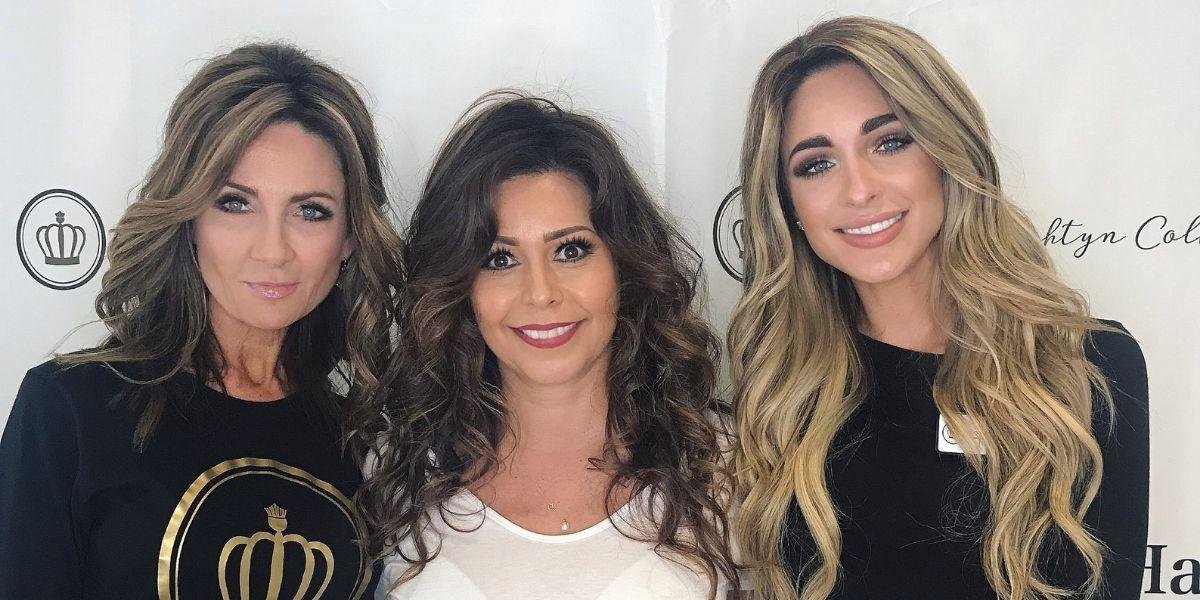
Photo Courtesy: Lauren Ashtyn Collection

The Best Hair Solutions Do Not Announce Themselves

The best hair solutions are the ones no one can quite pinpoint, but everyone notices.

The Lauren Ashtyn Collection focuses on custom hair toppers, volume extensions, and luxury wigs designed to work with a woman’s real life rather than against it. The emphasis is not on chasing transformation for the sake of drama. It is on restoration, comfort, and wearability. Every piece is designed to blend seamlessly, move naturally, and feel believable in daylight, at dinner, in photos, and during all the little ordinary moments where confidence either holds up or falls apart.

That level of realism comes from a stylist-developed approach shaped by both professional experience and real client needs. Lauren’s background, along with the long-standing team around her, informs a process that takes fit, density, tone, cut, and lifestyle seriously. These are not afterthoughts. They are the point.

Clients can explore their options in the Spartanburg or Charleston signature salons, through free online consultations, or during one of the brand’s nearly 50 pop-up salon takeovers across the country. That flexibility matters because the experience of hair changes is already personal. The solution should not feel rushed, clinical, or one-size-fits-all on top of that.

The intention is simple. These pieces are not meant to overpower someone’s features or create an entirely different look. They are meant to meet a woman where she is. Sometimes that means adding coverage where thinning is most noticeable. Sometimes it means restoring shape and fullness in a way that makes styling feel enjoyable again. Sometimes it means looking in the mirror without overanalyzing every detail.

That ease carries further than expected. When women feel more at home in how they look, it often changes how they move through everyday life, from small social moments to bigger personal ones (Source: Philos Trans R Soc Lond B Biol Sci., 2022). In that sense, a natural-looking hair solution is not just cosmetic. It supports a quieter kind of confidence that shows up over time.

What Lauren Really Built Was Reassurance

Not everything needs a bigger solution. Sometimes it just needs to be understood properly, and that is exactly what Lauren paid attention to early on.

What stood out was not just the gap in solutions, but how women were feeling as they tried to navigate it.

Women dealing with hair changes are often given advice that focuses only on appearance. Cover this. Hide that. Try this serum. Change your part. Use more volume spray. There is a lot of noise, but very little of it speaks to how the experience actually feels. What often gets missed is that hair changes can be disorienting, even when they are common. They show up gradually, but they affect something deeply familiar.

That is where the approach shifts.

Instead of treating it like something to fix quickly, the focus is on understanding what women are actually going through and offering options that feel aligned with that. Not exaggerated. Not overly complicated. Just thoughtful, personalized, and grounded in real-life use.

It also changes how the experience itself feels.

Conversations become easier. Decisions feel less pressured. There is room to figure out what works without feeling rushed into something that does not sit right. Over time, that kind of environment builds trust, not just in the product, but in the process.

That is why the community around the brand feels so strong. The consultations, salon experiences, and pop-up events are not just about finding a solution. They create space for women to share what they have been noticing, often for the first time out loud. There is a level of understanding there that makes the entire experience feel lighter.

In beauty, there is a difference between something that photographs well and something that lives well. The second one is what stays with people.

Find the Hair That Feels Like You

Hair changes can be quiet, but that does not mean they should be handled alone or with solutions that never felt right in the first place.

The Lauren Ashtyn Collection offers custom-crafted hair toppers, volume extensions, and luxury wigs designed to look natural, feel comfortable, and fit into real life with ease. With free online consultations, personalized support, a Spartanburg and Charleston signature salon, and pop-up salon experiences across the country, the brand makes it easier to find an option that feels like a return to yourself rather than a leap into something unfamiliar.

Explore The Lauren Ashtyn Collection and find a solution that feels polished, personal, and beautifully believable from the first wear.