US Business News

Buying Portable Restrooms Online Is Now a Real Option for Contractors and Event Planners

A growing number of businesses are skipping the dealer call and sourcing sanitation equipment the same way they buy everything else.

By Emily Parker

For most equipment categories, the shift to online purchasing happened years ago. Contractors can source tools, materials, and heavy machinery through digital platforms with transparent pricing and nationwide delivery. Portable restrooms were a notable exception. Buying a porta potty or restroom trailer meant calling a local dealer, waiting for a quote, and hoping inventory matched the need. That process is starting to look outdated.

A new generation of buyers, including construction companies managing job site logistics, rental operators building out fleets, and event organizers coordinating large gatherings, is approaching portable sanitation the same way it approaches every other procurement decision. They want product options, specifications, and pricing available upfront, without having to work through a regional middleman to get them.

That shift has opened the door for online marketplaces built specifically around portable sanitation equipment. Porta Potties For Sale is one of the platforms meeting that demand, offering a catalog that spans standard construction units, luxury restroom trailers, ADA-compliant models, shower trailers, and fleet packages, all available with nationwide delivery and financing options.

The appeal for buyers is straightforward. Rather than managing multiple vendor relationships across different product types, procurement teams can compare options, access product specifications, and arrange financing in one place. For rental operators in particular, the ability to evaluate fleet additions without a prolonged dealer negotiation changes how quickly they can move on to new business.

Financing has become a meaningful part of the conversation. Purchasing portable restroom equipment outright requires significant upfront capital, and for smaller operators or those expanding quickly, that can be a constraint. Equipment financing tied to favorable tax treatment gives buyers a way to grow their fleets without tying up cash reserves, a factor that is pushing more rental businesses to consider purchasing over leasing.

The market itself is larger than it tends to get credit for. Construction activity, outdoor events, agricultural operations, and emergency response deployments all generate consistent demand for portable sanitation equipment. Rental companies serving those sectors have historically had limited options when it came to acquiring and replacing inventory. Online purchasing platforms are changing that calculus by making a wider range of portable restroom products accessible to buyers who previously had to work with whatever their local market offered.

The direction of the industry is clear enough. Buyers who have reorganized procurement across all other equipment categories are applying the same expectations to portable sanitation. The companies and platforms positioned to meet them early are the ones that recognized the gap before it became obvious to everyone else.

.

Scott Landes Reveals How Jimmy Buffett Built a Brand Around Belonging, Not Just Selling

By: William Reimers

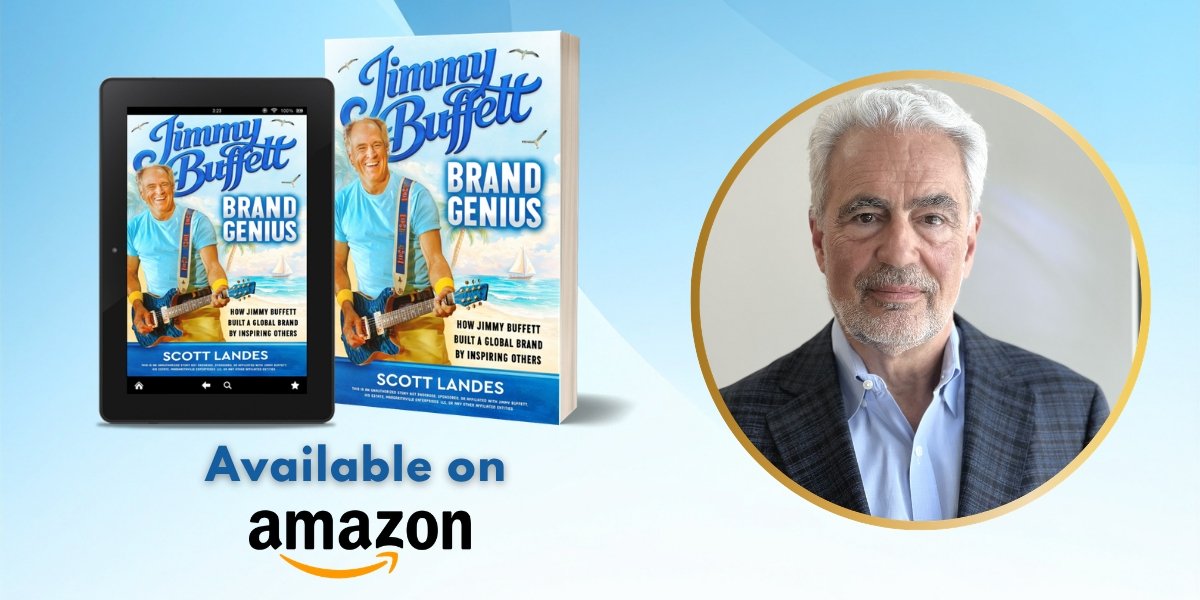
When many people think about Jimmy Buffett, they think about music, beaches, relaxation, and a lifestyle that feels far removed from everyday stress. But behind the songs and the laid-back image was something Scott Landes sees as much larger: a recognized example of building an authentic lifestyle brand.

For Scott Landes, author of Jimmy Buffett Brand Genius, a fascinating part of Buffett’s career was not simply how many records he sold or how popular his concerts became. It was how he created an emotional connection that expanded far beyond music.

Buffett did not just create customers. He helped create a community.

That distinction is what Scott believes entrepreneurs, authors, and business leaders should pay attention to. Strong brands are not built only around products or services. They are often built around shared experiences, emotions, and a sense of belonging.

Building a Community Instead of Chasing Customers

One of the key lessons from Jimmy Buffett’s success is that people may want to feel connected to something larger than a transaction.

Scott believes that companies looking to create authentic lifestyle brands need to understand that authenticity is difficult to manufacture. It has to become part of the culture of the organization.

A company cannot simply create a marketing campaign around values it does not actually live by.

Buffett’s advantage was that the lifestyle behind the brand appeared to be part of who he was. His music reflected the way he approached life, and his businesses continued that same message. The restaurants, resorts, merchandise, and experiences all felt like natural extensions of the world he created.

For entrepreneurs, that is an important distinction. People may purchase a product because they need it, but they may become loyal when they feel connected to what the brand represents.

Why People Connected With the Idea of Escape

The world Jimmy Buffett created appealed to something many people deeply wanted: a break from everyday pressure.

Scott explains that modern life is demanding. Many people do not have the time, money, or opportunity to constantly travel to beautiful destinations or completely disconnect from their responsibilities.

Buffett offered another option.

Through his music, he gave people a mental escape. Fans could experience the feeling of being somewhere peaceful without needing a plane ticket or a long vacation.

While researching the book, Scott repeatedly heard stories from fans who described Buffett concerts as temporary vacations. For a few hours, they could step away from stress and enter a world built around fun, relaxation, and connection.

That emotional association became an important part of the brand.

A song connected to a vacation, a boat trip, or time with friends can instantly bring someone back to that moment. Buffett understood that memories are powerful, and he built a brand around creating more of them.

The Long Journey From Entertainer to Cultural Icon

Scott believes there was no single moment when Jimmy Buffett became a cultural phenomenon. Instead, it came from decades of consistency.

The release of “Margaritaville” gave him an important foundation, but becoming an enduring cultural figure required years of continuing to connect with audiences.

Scott points to appearances on The Tonight Show Starring Johnny Carson and opportunities like opening for the Eagles during their Hotel California tour as important moments that helped expand his audience.

However, visibility alone does not create a lasting legacy.

Buffett became iconic because he stayed consistent. He did not constantly change his identity to follow trends. Instead, he continued strengthening the connection people already had with him.

Staying Relevant Without Losing Authenticity

Many brands struggle because they believe staying relevant means constantly reinventing themselves.

Buffett approached it differently.

Scott believes one of the benefits of having an authentic lifestyle brand is that you do not need to chase every trend. You need to continue delivering the experience people already value.

Buffett expanded into books, television, radio, a musical, record labels, and the larger Margaritaville business ecosystem. But the foundation remained unchanged.

The message stayed the same.

The feeling stayed the same.

He evolved by exploring new ways to share the lifestyle, not by becoming someone else.

That consistency helped him maintain a connection with audiences across generations. People knew what Buffett represented, and they trusted that the experience would remain authentic.

Turning Emotion Into a Business Strategy

The growth of Margaritaville demonstrates one of Buffett’s notable business decisions: he built around an emotion rather than simply attaching his name to products.

Scott believes this is one reason the brand has had lasting power.

The restaurants and resorts were not just places to eat or stay. They were opportunities for customers to experience the lifestyle Buffett represented.

They became physical spaces where the community could gather.

That can be a powerful business model because the brand itself can become the asset. The company is no longer only selling products. It is creating experiences people actively seek out.

This is something many entrepreneurs overlook. A strong brand is not just about recognition. It is about creating a relationship with customers that continues beyond the initial purchase.

The Legacy of Jimmy Buffett’s Brand Genius

When looking at Jimmy Buffett’s broader legacy, Scott believes it is difficult to separate the music, the business empire, and the feeling he created.

They all worked together.

The music created the emotional connection. The emotional connection created the community. The community created opportunities for the business to grow.

That is what made Buffett different.

He understood that people were not just buying songs, hotel rooms, or merchandise. They were buying a feeling. They were buying a reminder of freedom, relaxation, and a life that felt a little lighter.

For entrepreneurs today, the lesson is clear. Strong brands are not built by convincing people to buy something.

They are often built by creating something people want to belong to.

And that may be Jimmy Buffett’s notable business achievement: he did not just build a brand people recognized.

He built a world people wanted to be part of.

Jimmy Buffett built more than a music career; he created a world people wanted to be part of. Learn the business strategies, branding insights, and creative decisions behind his lasting legacy in Jimmy Buffett Brand Genius by Scott Landes. Available now on Amazon.

Why Small Businesses Are Replacing Five Workforce Tools With One AI-Powered Platform

By: James Reynolds

The real cost of workforce tool sprawl is not the subscription fees. It is the hours spent managing systems that were never built to work together.

Ask a manager at a mid-size hospitality or retail business how they run their workforce, and the answer usually involves a list. One platform for scheduling. Another for internal communications. A separate tool for onboarding. Something else for training. A survey tool that gets opened twice a year. An app for time tracking. None of these systems talk to each other, and keeping them all running falls on people who have actual operations to manage.

This is the tool sprawl problem, and for small and mid-size businesses running frontline or distributed teams, it is more expensive than most owners realize. The cost is not just the monthly fees across half a dozen platforms. It is the time managers spend switching between systems, the training gaps that open up when onboarding lives in one place and policy updates live in another, and the communication breakdowns that happen when a shift change has to travel through three different channels before it reaches the right person.

The problem is structural. Most of the workforce software built over the last decade was designed for desk workers with corporate email and laptops, not for the hourly employee checking a phone between shifts. The tools that do exist for frontline teams tend to solve one problem at a time, which means organizations end up building a stack of point solutions that none of their employees actually adopt consistently.

HubEngage is making a direct argument against that model. The company positions itself as an AI-powered workforce experience and operations platform, and its pitch to smaller businesses is consolidation: replace the disconnected stack with a single mobile app that covers communications, employee engagement, continuous learning, and workforce operations. No corporate device required. No multi-system login. One place where every employee, regardless of role or location, can receive information, access training, provide feedback, and stay connected to the organization.

The consolidation argument is not new in enterprise software, but it lands differently for a business with 150 employees that cannot afford a dedicated HR technology team. For that buyer, fragmented tools are not just inconvenient. They are the reason important things do not happen. Onboarding is inconsistent because new hires get a binder and a series of logins they rarely complete. Policy updates do not reach the people they need to reach because the communications tool only reliably works for the corporate office. Training lapses because pulling employees off the floor for sessions is too expensive to do regularly.

HubEngage addresses these gaps across four areas: communications, engagement, microlearning, and workforce operations. The through line across all of them is the same assumption that informs the platform design: if a tool does not work on a personal phone, in one tap, without a corporate login, a frontline employee will not use it. Most of the workforce software that has been sold in this market was built without that constraint in mind.

The AI layer across these pillars is aimed at a specific problem: the administrative overhead that makes running consistent people operations impractical without a dedicated HR team. Automated surveys go out on a schedule or are triggered by events like onboarding completions, and the analysis comes back without anyone having to compile it. Microlearning quizzes are generated automatically when policies are updated. The chatbot absorbs routine employee questions that would otherwise eat into a manager’s day. Across a larger workforce, those routine questions can consume a significant amount of supervisor time each month, which is exactly the kind of repetitive load the chatbot is designed to reduce.

“A lot of what’s being sold to CHROs right now is built on a pricing model that won’t hold,” said Tushneem Dharmagadda, founder and CEO of HubEngage. “Human connection still has to sit at the center of the employee experience. AI should handle the repetitive work so managers can focus on the people part.”

The company is also building out what it describes as a workforce operations layer, covering areas like scheduling, time tracking, and task management. That expansion is still in progress, with a planned rollout later in 2026. The current platform already gives smaller businesses something that has historically been out of reach: a single system that manages the day-to-day employee experience without requiring a separate tool for every function.

For larger organizations, HubEngage positions itself differently: not as a replacement for existing workforce management systems like UKG or Workday, but as a frontline system of action that sits on top of them. Employees in those environments still have their schedules and HR data living in core systems of record. HubEngage becomes the place they actually go every day to act on that information, receive communications, complete tasks, and stay connected. It is a distinction that matters for enterprise buyers who have spent years integrating systems they are not ready to replace.

The broader argument Dharmagadda is making is that smaller businesses should no longer have to accept a worse version of workforce management just because they cannot afford an enterprise technology budget. AI has changed the economics. The problem it is responding to, five tools that do not talk to each other, a frontline workforce that barely uses any of them, and a manager spending half their day as a human middleware layer between systems, is one most small business operators know firsthand, even if they have never put a number on it.

U.S. Trade Gap Widens as Goods Imports Increase

The U.S. trade gap expanded significantly in May after imports climbed across several major product categories, pushing the nation’s goods trade deficit to its highest level in 14 months, according to advance data released on June by the U.S. Department of Commerce. The latest figures showed businesses increased purchases of foreign-made products, resulting in a wider imbalance between imported and exported goods during the month.

The Commerce Department reported that the advance goods trade deficit increased to $96.6 billion in May from a revised $87.0 billion in April. Goods imports rose by 3.8% to $290.5 billion, while goods exports increased by 0.6% to $193.9 billion. The larger increase in imports outpaced export growth, producing the widest monthly goods deficit since March 2025.

The preliminary trade report offered one of the first detailed indicators of U.S. economic activity for May and will contribute to estimates for second-quarter gross domestic product. Economists monitor the monthly goods trade balance because net exports are one of the major components used in calculating GDP, alongside consumer spending, business investment, and government expenditures.

The increase in imports covered several categories, including consumer goods, industrial supplies, automotive products, and capital equipment. Businesses also reported higher inbound shipments of products used in manufacturing and commercial operations. Export growth was more modest during the same period, limiting the ability of overseas sales to offset the stronger pace of imports.

Commerce data points to broad-based import growth

Advance trade statistics released by the Census Bureau, part of the Commerce Department, showed imports of consumer goods recorded one of the largest monthly increases. Businesses also brought in more industrial supplies and materials, reflecting continued purchasing activity by manufacturers and distributors.

Imports of capital goods also increased during May. This category includes machinery, equipment, and technology products frequently purchased by companies for production and operational purposes. Automotive imports likewise contributed to the monthly gain, adding to the overall rise in inbound shipments.

At the same time, exports registered a comparatively smaller increase. Shipments of American-made goods rose modestly across several categories but did not match the pace of import growth. Because the goods trade balance measures the difference between exports and imports, stronger inbound demand combined with slower export expansion resulted in a wider deficit.

The advance report covers only trade in physical goods and does not include services such as financial activities, travel, transportation, intellectual property, or professional services. The complete international trade report, which combines goods and services data, is scheduled for release by the Commerce Department in early July.

Inventory data published alongside the trade figures also showed wholesale inventories increased by 0.2% in May, while retail inventories excluding motor vehicles edged up by 0.3%. Those figures are also incorporated into quarterly GDP calculations because they measure changes in business stock levels.

Trade figures become key input for second-quarter GDP estimates

The May trade data arrived as economists continued updating forecasts for second-quarter economic growth. Monthly reports covering trade, inventories, manufacturing activity, consumer spending, and inflation are used to refine estimates before the Bureau of Economic Analysis publishes its advance GDP report.

A larger trade deficit generally reduces GDP because imports are subtracted when calculating domestic economic output, while exports contribute positively. However, economists typically evaluate trade figures alongside inventory accumulation and domestic demand before determining the overall impact on quarterly growth.

Some analysts noted that stronger imports may also indicate continued business purchasing activity, particularly when companies acquire machinery, production equipment, industrial materials, or consumer merchandise ahead of future sales. Inventory increases reported during May could partially offset the effect of the wider trade deficit in GDP calculations, depending on how those goods are used or stored during the quarter.

The May report follows several months of changing trade patterns influenced by purchasing decisions made earlier in the year. Import volumes have fluctuated as businesses adjusted sourcing schedules, managed inventories, and responded to changing delivery timelines across global supply chains.

Commerce Department data showed the increase in imports extended across multiple industries rather than being concentrated in a single sector. That broader distribution suggests businesses in manufacturing, wholesale trade, retail, and transportation all contributed to higher import activity during the month.

Exports continue to post modest monthly gains

While imports recorded a notable increase during May, exports also moved higher, although at a considerably slower pace. Advance Census Bureau data showed U.S. goods exports reached $193.9 billion, representing a monthly increase of 0.6%. The smaller rise meant export growth was insufficient to offset the stronger expansion in inbound shipments.

Exports of industrial supplies, capital goods, agricultural products, and manufactured items contribute significantly to overall U.S. goods trade, but monthly performance varies according to international demand, production schedules, transportation capacity, and seasonal factors. The advance report did not indicate unusually large increases in any single export category that would materially narrow the monthly deficit.

Because the report measures merchandise trade rather than services, sectors such as finance, technology licensing, business consulting, travel, and transportation are excluded from the advance estimates. Those industries are included in the comprehensive international trade report released each month, providing a broader picture of the nation’s external trade position.

The monthly advance release is widely monitored by economists because it offers an early indication of how international trade may influence broader economic performance before complete trade statistics become available. Government agencies, financial institutions, manufacturers, logistics providers, and retailers routinely review the report when assessing commercial activity.

The Commerce Department’s preliminary figures may also be revised when additional customs documentation and reporting information become available.