US Business News

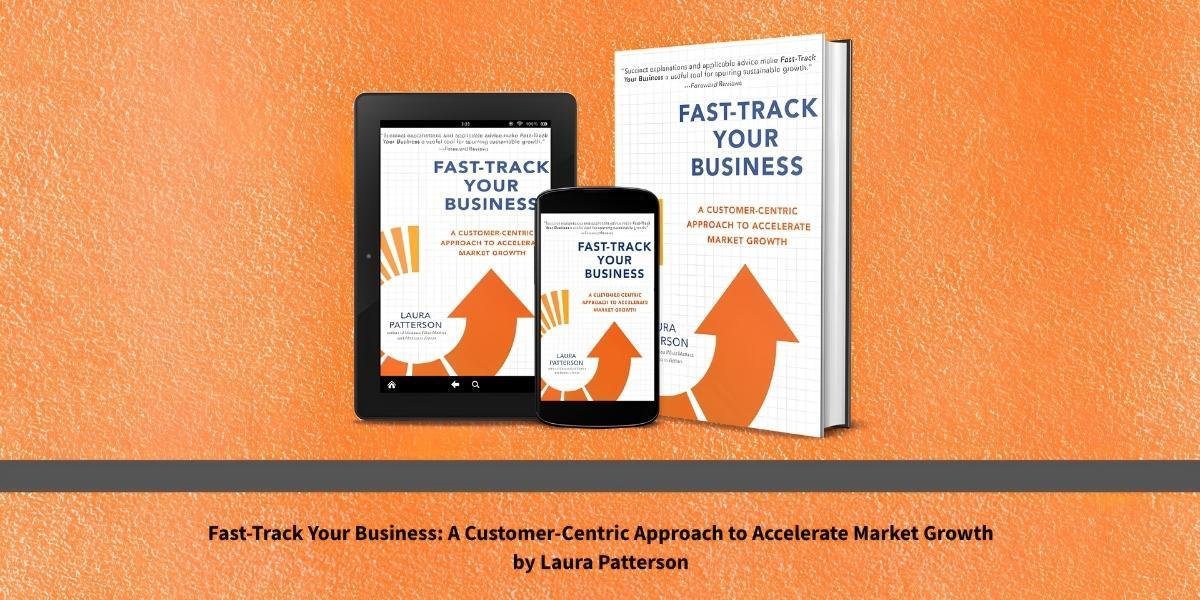
Growth Does Not Happen by Accident, and Laura Patterson Wrote a Book About Why It Does Not Have To

By: Marita Murray

Many business leaders know that their company needs to grow. Fewer of them have a clear and systematic understanding of why their current growth efforts may be producing less than the talent and resources invested in them were intended to support. Laura Patterson has spent twenty-five years at VisionEdge Marketing, the growth strategy firm she co-founded in 1999, helping organizations address that gap, and Fast-Track Your Business is a distillation of what she has learned across more than three hundred client engagements about what can support sustainable organic growth and what may only appear to.

The reading experience this book provides is one of steadily increasing practical confidence. Patterson writes with the clarity and directness that her reputation as a keynote speaker and peer-reviewed research contributor reflects, and she brings to every chapter the quality of someone who has tested her frameworks against organizational problems under business pressure rather than developing them in theoretical isolation. The Circle of Traction framework that anchors the book is not a new set of buzzwords applied to familiar concepts. It is a working system, refined through decades of client engagement, that addresses specific disconnects between organizational activities and business outcomes that many companies struggle to close.

What gives the book its practical value is Patterson’s insistence on following every principle through to implementation. It is easy to agree that organizations should be more customer-centric. It is considerably harder to redesign the culture, processes, measurement systems, and strategic planning disciplines that determine whether customer-centricity is a lived reality or a framed value statement on the wall. Patterson addresses that harder work directly and specifically, giving readers step-by-step guidance designed to help them move from aspiration to capability rather than leaving them with a compelling argument and no clear path forward.

Her treatment of performance measurement is one of the book’s valuable sections and one that reflects her reputation as the queen of marketing metrics. The guidance she offers on what to measure, how to measure it, and how to connect measurement directly to the customer-centric outcomes that can support growth is both rigorous and accessible, and it reflects an understanding of how busy leadership teams may use data to make decisions rather than how measurement systems are designed in theory.

The endorsements the book has earned from CMOs, marketing professors, and senior executives across industries suggest that Patterson is not writing for a single sector or a single stage of organizational development. The Circle of Traction framework is designed to apply to emerging companies seeking growth momentum and established organizations trying to reignite growth that has plateaued, and the book addresses both contexts with specificity and practical usefulness.

Fast-Track Your Business is a book that can help turn the ambition to grow into the capability to grow, and for leaders who have been frustrated by the gap between those two things, it may be a useful resource.

If you are ready to stop hoping your company will grow and start building the specific culture, processes, and disciplines designed to make growth a more intentional outcome rather than a fortunate accident, Fast-Track Your Business by Laura Patterson may be the guide to consider. Pick up your copy on Amazon and explore Patterson’s customer-centric growth framework for your organization.

Richard Blair, Founder and CIO of Wealth Solutions: Why Active Retirement Costs More Than a Lot of People Budget For

Retirement is often seen as a time of relaxation and newfound freedom, but managing finances during this period can be more complex than many anticipate. While most plan for the basics, there are hidden or underestimated costs that can impact long-term financial security. The desire to travel, maintain a healthy lifestyle, and support family members can all present unexpected challenges. Everyday expenses may also rise due to inflation, and homeownership often brings surprises that catch retirees off guard.

Travel and Leisure Expenses

As Richard Blair, Founder and CIO of Wealth Solutions, notes, an active retirement often comes with a desire to make the most of newfound free time. Many retirees find themselves booking trips, joining clubs, or trying out hobbies they postponed during their working years. Taking a weeklong cruise or attending out-of-town family celebrations can quickly add up, especially when factoring in airfare, hotels, and dining out.

Costs also rise as retirees seek more frequent outings, such as golf outings or art classes, which can each incur recurring fees. As travel and leisure prices fluctuate, retirees may spend more than they initially planned, especially if they want to keep up with friends or family who are equally eager to enjoy retirement. Even simple pleasures like regular movie nights or dining at new restaurants can gradually strain a fixed budget.

Healthcare and Long-Term Care

Medical costs tend to climb with age, even for those who feel healthy and active. Many retirees are surprised by the steady stream of expenses such as prescription drugs, dental visits, and vision care, which aren’t always fully covered by basic insurance plans. A sudden diagnosis or the need for physical therapy can also add unexpected strain to a retirement budget. As medical technology advances, new treatments and therapies become available, but they often carry higher price tags that aren’t always anticipated.

Long-term care is another area where costs can escalate rapidly. Whether it’s hiring help for daily tasks at home or moving into an assisted living facility, these services are rarely inexpensive. Some retirees may postpone such planning, only to find that professional care costs are much higher than anticipated, catching them off guard financially.

Home Ownership and Upkeep

Owning a home in retirement often brings hidden challenges. Routine maintenance like fixing a leaky roof or replacing the water heater can’t always be delayed, and the bills add up over time. Even well-maintained properties eventually require expensive updates, from new appliances to fresh paint. Weather-related damage or neighborhood changes sometimes force additional unexpected repairs or upgrades.

Retirees wishing to stay in their homes longer may need to invest in renovations that make living spaces safer and more accessible. Widening doorways, installing ramps, or upgrading bathrooms for mobility can be substantial expenses, but they become essential for aging comfortably at home. These improvements, while necessary, can quickly eat into retirement savings if not planned for in advance.

Family Financial Support

Many retirees find themselves stepping in to help family members during times of need. Whether it’s contributing toward a grandchild’s education or assisting an adult child facing an unexpected job loss, these moments can place extra strain on fixed incomes. Sometimes, these acts of generosity are planned, but more often they come without warning, requiring retirees to adjust their budgets on short notice.

Occasionally, additional financial responsibilities arise, such as caring for an aging parent or welcoming a relative into the household. These situations can lead to recurring expenses, from groceries to medical bills, making it important to remain adaptable in family support. Extended family obligations can change quickly depending on circumstances, and retirees may feel pressure to offer ongoing help.

Everyday Living Costs and Inflation

The cost of basic necessities rarely holds steady. Retirees may notice that groceries, utilities, and insurance premiums have gradually inched upward each year. This steady climb can erode purchasing power, especially for those relying on a fixed monthly income. Local economic conditions or changing government policies can also influence the cost of living.

Inflation can also cause annual increases in property taxes and other recurring expenses. Over time, these changes may force retirees to re-evaluate their spending and seek out ways to stretch their dollars further. Strategies like downsizing or finding new ways to save become more important as the years go by.

Planning for Hidden Expenses

Unexpected costs have a way of surfacing at the least convenient times. Legal fees, emergency home repairs, or sudden shifts in service rates can all disrupt even the best-laid financial plans. Flexibility becomes a key part of maintaining peace of mind during retirement. Having a dedicated advisor or financial planner can sometimes help retirees stay prepared for these bumps in the road.

Some retirees set aside a dedicated fund to cover these surprises, helping to cushion the impact of unforeseen events. By staying proactive and building in a margin for the unexpected, it becomes easier to navigate the ups and downs of this new stage of life.

Disclaimer: This is for informational purposes only and is not intended as legal, tax, or investment advice, or a recommendation of any particular security or strategy. It does not address specific investment objectives, the financial situation, or the individual needs of any person. Wealth Solutions, Inc., a Registered Investment Advisor with the State of Texas, offers advisory services. Registration as an investment advisor does not imply a certain level of skill or training.

U.S. Service Sector Growth Slows as Employment Returns to Expansion

U.S. service sector growth moderated in June, according to the latest Institute for Supply Management (ISM) survey, while the employment index returned to expansion after several months of contraction. The report provides updated information on business activity, hiring conditions, and demand across the nation’s largest economic sector.

Key Takeaways

  • The ISM Services PMI showed the U.S. services sector continued expanding in June at a slower pace.
  • The employment index returned to growth after several months of contraction.
  • Business activity remained positive despite softer overall momentum.
  • The report offers businesses and policymakers updated insight into economic conditions.

The latest U.S. service sector growth June 2026 data showed that the nation’s services economy continued expanding in June, although growth slowed from the previous month, while hiring activity improved. The Institute for Supply Management reported that its Services Purchasing Managers’ Index remained above the 50-point threshold that signals expansion, and the employment component returned to positive territory after contracting in prior months.

The monthly survey is closely monitored because the services sector accounts for the majority of U.S. economic activity. Its indicators provide businesses, investors, and policymakers with an early snapshot of demand, employment, pricing, and operating conditions across industries ranging from finance and healthcare to transportation, retail, and professional services.

What Did the June ISM Services Report Show?

The June ISM Services PMI indicated that business activity continued to expand, although at a slower rate than recorded in May. A reading above 50 signals expansion, while a reading below that level indicates contraction.

The survey showed that service providers continued reporting growth across much of the economy even as overall momentum moderated. The data suggested that businesses were still receiving customer demand sufficient to maintain operations and ongoing service delivery.

Business Activity and New Orders

Business activity continued to support overall expansion during June. The survey also measured new orders, one of the indicators used to assess future demand across service industries.

While growth slowed overall, continued expansion in business activity suggested that companies were still receiving customer demand sufficient to maintain operations and ongoing service delivery. Organizations evaluating operational efficiency and service delivery strategies may also find value in examining how managed services business models are adapting to changing client needs. 

The ISM survey combines responses from purchasing and supply executives representing multiple service industries. Their assessments provide one of the earliest monthly indicators of changes in U.S. economic activity outside the manufacturing sector.

Prices and Other Key Survey Measures

The monthly report also tracks prices paid by businesses for goods and services used in their operations. These data are watched closely because they can provide insight into cost pressures affecting service providers.

Other components measured by the survey include supplier deliveries, inventories, and order backlogs. Together, these indicators help businesses evaluate operating conditions across the services economy.

Which Parts of the Services Economy Changed?

Several components of the June report moved in different directions, illustrating varying conditions across service industries.

The headline index slowed compared with the previous month, indicating that overall expansion moderated. Even so, remaining above the expansion threshold signaled that economic activity continued to grow rather than contract.

Employment represented one of the report’s most notable changes. After several months in contraction territory, the employment index moved back above 50, indicating that more survey respondents reported increased hiring than reductions.

The report also reflected ongoing differences among industries. Some sectors continued reporting stronger business activity than others, illustrating that operating conditions were not uniform across the services economy.

Purchasing managers also provided updated assessments of demand, supplier performance, and business conditions experienced during June. These responses contribute to the composite index that measures monthly changes across the sector.

Why Does the Services Survey Matter for Businesses?

The ISM Services PMI is one of the most closely followed monthly economic indicators in the United States because services account for roughly three-quarters of national economic output.

Business leaders use the survey to monitor current operating conditions and compare developments across industries. The report offers an early indication of changes in customer demand, hiring activity, pricing pressures, and supplier performance before many government economic reports become available.

Financial institutions, economists, and corporate decision-makers also monitor the data when evaluating business conditions and planning future operations.

Because the survey is released early each month, it often contributes to assessments of overall economic performance during the current quarter.

The report can also provide context for labor market conditions. Improvements in the employment index may suggest stronger hiring intentions among service providers, although the survey does not replace official employment statistics released by federal agencies. Companies assessing workforce strategies may also be interested in discussions surrounding managing multiple employment roles as organizations adapt to changing labor market dynamics.

Employment and Labor Market Indicators

Employment improved during June as the ISM employment index returned to expansion following several months below the 50-point mark.

An employment reading above 50 indicates that more surveyed businesses increased staffing levels than reduced them during the reporting period.

The return to expansion suggested that service-sector employers reported improved hiring conditions compared with recent months. The survey does not measure the number of jobs created, but instead captures whether participating businesses experienced increases or decreases in employment.

Labor availability, recruitment, and workforce planning remain important considerations for service providers across industries. Changes in the employment index help businesses understand whether hiring conditions are strengthening or weakening from month to month.

Companies frequently compare the ISM employment measure with official labor market reports to gain a broader understanding of workforce conditions across the economy.

Although employment improved, the overall moderation in the headline services index indicated that hiring gains occurred alongside slower overall business expansion.

Frequently Asked Questions

What is the ISM Services PMI?

The ISM Services Purchasing Managers’ Index is a monthly survey that measures business conditions across U.S. service industries. A reading above 50 indicates expansion, while a reading below 50 signals contraction.

What does the June ISM report say about employment?

The employment index returned to expansion after several months of contraction, indicating that more surveyed businesses reported increasing staffing levels than reducing them.

Why is the services sector important to the U.S. economy?

The services sector represents the largest share of U.S. economic activity and includes industries such as healthcare, finance, retail, transportation, hospitality, and professional services.

How do businesses use ISM Services PMI data?

Businesses use the ISM Services PMI to monitor demand, hiring conditions, pricing, supplier performance, and overall operating conditions as part of their planning and decision-making processes.