US Business News

ADP Report Reveals Low Hiring With 44,000 Jobs and 4.4% Pay Growth


The ADP report for July 2026 showed that U.S. private employers added 44,000 jobs, less than half the revised June gain of 95,000. Annual pay growth held at 4.4% for job-stayers and accelerated to 7% for job-changers, highlighting a labor market where hiring cooled but wage gains remained resilient.

Key Takeaways

  • Private employers added 44,000 jobs in July, down from a revised 95,000 in June.
  • Service-providing industries added 47,000 positions, while goods-producing industries lost 3,000.
  • Education and health services led all industries with 36,000 added jobs.
  • Pay growth held at 4.4% for job-stayers and rose to 7% for job-changers.
  • Small establishments added 23,000 jobs, led by businesses with fewer than 20 employees.

The July ADP report placed the month’s private-sector employment gain well below June’s revised total. ADP originally estimated that employers added 98,000 jobs in June before lowering the figure to 95,000.

The slowdown did not appear evenly across the economy. Service-providing employers added 47,000 jobs, while goods-producing businesses lost 3,000 as declines in natural resources and mining outweighed modest gains in construction and manufacturing.

The results add another data point to the broader cooling U.S. job growth seen during 2026. The ADP figures measure private payroll activity rather than total nonfarm employment, so they offer a separate view of labor conditions rather than a direct forecast of federal employment data.

ADP Research produced the report with the Stanford Digital Economy Lab. The measure uses anonymized weekly payroll data covering more than 26 million U.S. private-sector employees, while its pay analysis includes more than 15 million individual pay-change observations each month.

Health and Education Carried July Job Growth

Education and health services added 36,000 jobs, accounting for most of July’s net increase. Financial activities added 10,000 positions, while professional and business services gained 9,000.

Information employers added 5,000 jobs, and other services added 6,000. Those gains were partly offset by an 11,000-job decline in leisure and hospitality and an 8,000 decrease in trade, transportation, and utilities.

Regional results also showed a divided hiring picture. The Northeast added 37,000 jobs, the South added 9,000, and the West gained 7,000. The Midwest lost 9,000 positions.

Small establishments added 23,000 jobs, but the increase came from businesses with one to 19 employees, which gained 27,000 positions. Establishments with 20 to 49 workers lost 4,000. Medium-sized employers added 8,000 jobs, while businesses with at least 500 employees added 13,000.

The figures show that July’s gains were spread across employer sizes but concentrated in a limited number of industries and regions. Education and health services alone supplied most of the month’s net job growth.

Pay Growth Held Firm as Job Switching Accelerated

ADP Report Reveals Low Hiring With 44,000 Jobs and 4.4% Pay Growth

Photo Credit: Unsplash.com

Median annual pay growth for workers who remained with their employers held at 4.4% in July. Job-changers recorded 7% growth, up from 6.6% in June and the strongest year-over-year increase since August 2025.

“Job-changers are highly sensitive to real-time economic conditions, and their rapid pay growth implies supply constraints in parts of the labor market,” ADP Chief Economist Nela Richardson said.

The gap does not mean every worker received those increases. The figures represent median changes across the payroll records included in ADP’s matched-person sample.

Pay growth varied by industry. Financial activities recorded the highest increase for job-stayers at 5.2%, followed by manufacturing at 5%. Construction posted 4.5%, while trade, transportation, and utilities and leisure and hospitality each recorded 4.4%.

Larger employers generally reported stronger pay growth than the smallest businesses. Job-stayers at companies with 500 or more employees and at establishments with 250 to 499 workers recorded 4.8% growth. The rate fell to 2.4% at businesses with fewer than 20 workers.

The figures may also inform assessments of labor market performance data, since hiring and wage trends can move in different directions. July showed slower employment creation alongside steady pay gains for existing workers and faster gains for those changing jobs.

ADP is scheduled to release its August 2026 employment report on September 2 at 8:15 a.m. Eastern Time.

Frequently Asked Questions

What Did the July 2026 ADP Report Show?

The ADP report showed that U.S. private employers added 44,000 jobs in July. That was below the revised June increase of 95,000 jobs.

Which Industry Added the Most Jobs in July?

Education and health services added 36,000 jobs, the largest increase among the listed industries. Financial activities ranked second with 10,000 added positions.

How Much Did Pay Increase for Job-Stayers?

Median annual pay growth for job-stayers was 4.4% in July. The rate was unchanged from June.

How Did Pay Growth Differ for Job-Changers?

Workers who changed employers recorded median annual pay growth of 7%. That was up from 6.6% in June.

Is the ADP Report the Same as the Federal Jobs Report?

No. The ADP report measures private-sector payroll changes using ADP payroll data, while federal reports use separate surveys and methods.
Charles Sims Calls for Mississippi’s “Table of Brotherhood” During Historic Meeting at Cotesworth

By: Lennard James

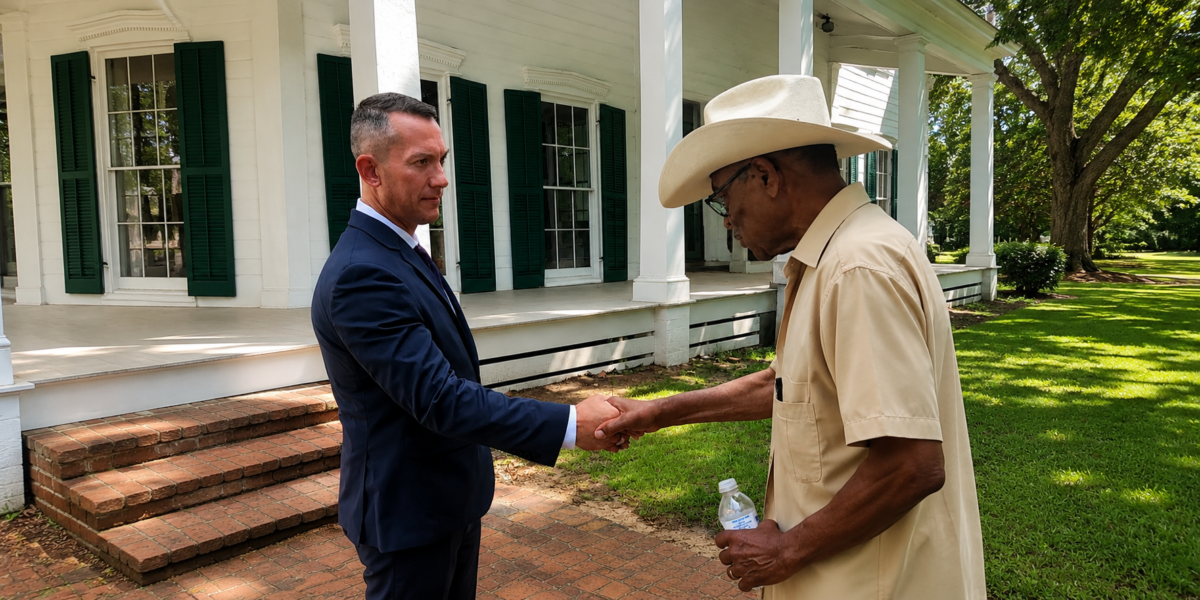
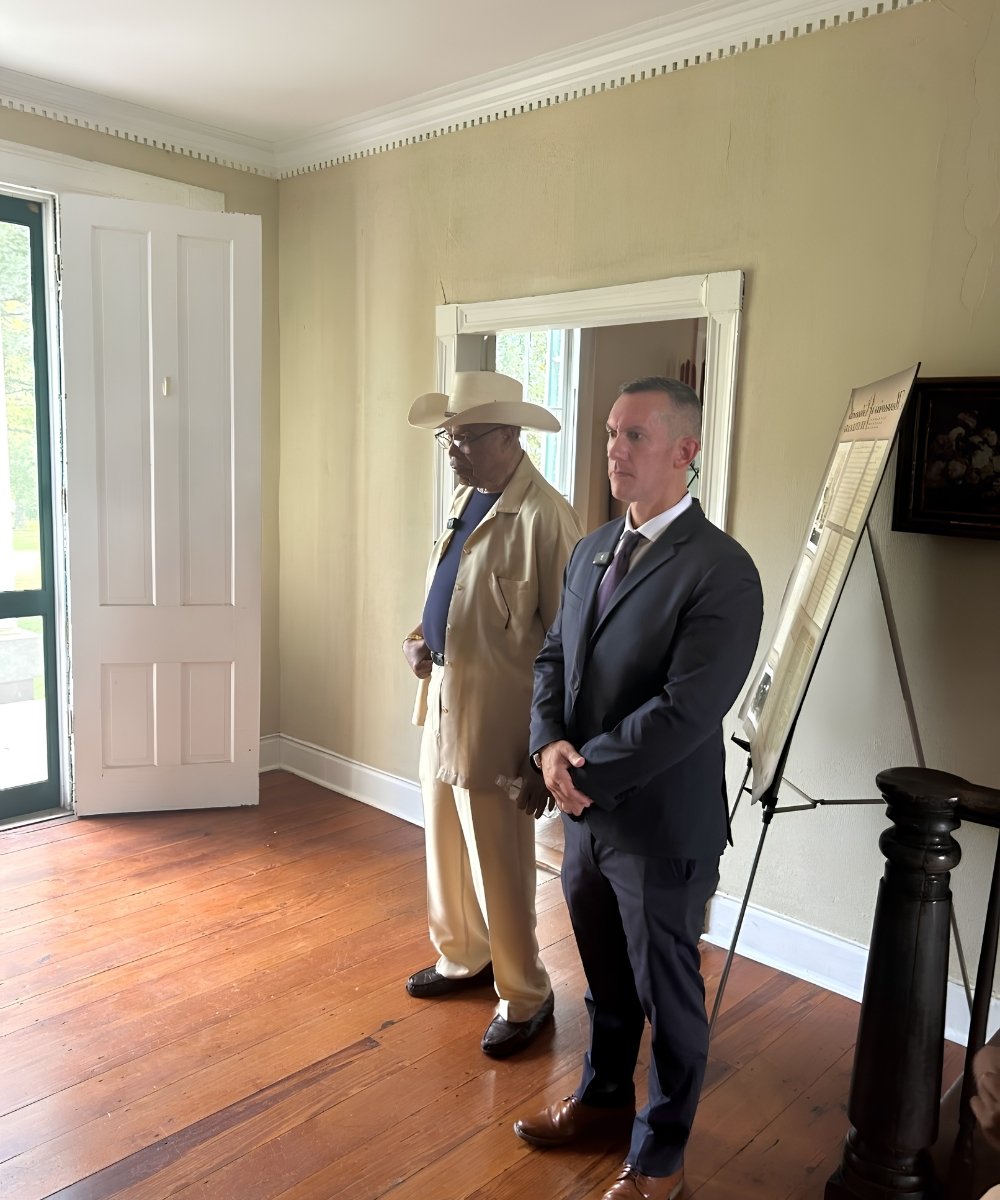
In a place deeply connected to Mississippi’s complex history, Charles Sims and Rev. Wheeler Parker Jr. gathered to begin what they hope will become a lasting movement toward reconciliation, truth, and peace. Their meeting took place at Cotesworth Mansion, a historic Mississippi landmark named after Senator JZ George’s friend Cotesworth Pinckney Smith, who also served as Chief Justice of the Mississippi Supreme Court. Against the backdrop of a site that has witnessed generations of history, the two men chose to look not only to the past but toward a future built on dialogue and understanding.

For Sims, the significance of the location was matched only by the purpose of the gathering.

“One thing he has often talked about is unity in the community and the ability to bring people together,” Sims said. “Having those tough conversations, you have to begin somewhere and move that conversation forward.”

Standing on the steps of the historic estate, Sims reflected on the importance of confronting difficult chapters of history while creating opportunities for healing. The meeting was intentionally centered on truth not avoiding the past, but facing it with honesty, humility, and faith.

One passage that continues to guide Sims’ work comes from Dr. Martin Luther King Jr.’s historic “I Have a Dream” speech.

Photo Courtesy: Charles Sims

“I have a dream that one day the sons of former slaves and the sons of former slave owners will be able to sit down together at the table of brotherhood.”

For Sims, those words are no longer simply an aspiration; they represent a vision that communities have the opportunity to fulfill today.

“Today, I believe we stand in that dream,” Sims said. “Families like ours coming together demonstrate exactly what Dr. King envisioned. More importantly, I believe it represents both of our families calling out for Mississippi’s table of brotherhood.”

That vision took on profound meaning as Sims met with Rev. Wheeler Parker Jr., the cousin of Emmett Till and one of the last living witnesses connected to the events surrounding Till’s tragic murder in 1955. Their meeting represented more than a symbolic gesture; it demonstrated that reconciliation begins when people choose conversation over conflict and faith over division.

For years, Sims has acknowledged that many people have questioned his motivations.

“People have often questioned my motives,” he explained. “They’ve asked where I started, what my end goal is, what I’m trying to accomplish. Some have even asked about my family’s statue in Washington. But this is bigger than that.”

According to Sims, the mission has never been about personal recognition or family legacy.

“Rev. Wheeler Parker Jr. and I come together, walking together in faith that’s bigger than any monument. This is about showing the world that healing is possible.”

Throughout the gathering, one message remained consistent: reconciliation cannot exist without truth.

“Today is about truth,” Sims said. “The truth about what happened to Emmett Till.”

That truth continues to shape American history since August 1955, when then 14-year-old Emmett Till traveled from Chicago to Mississippi, where he was brutally murdered in a crime that shocked the nation. That brutality inflicted a moment that helped ignite the modern Civil Rights Movement.

As communities prepare to remember Emmett Till’s legacy, Sims believes remembrance should inspire action rather than simply reflection.

“We cannot move forward without acknowledging what happened,” he said. “But once we acknowledge it, we have to ask ourselves what kind of future we’re building.”

For Sims, the answer begins with conversation.

“Our journey is to begin conversations,” he said. “If we can bring people together, speak the truth, and continue walking together in faith, then we’re taking another step toward the table of brotherhood that Dr. King dreamed about.”

Holding this conversation at Cotesworth added another layer of historical significance. A place once associated with Mississippi’s past became the setting for a dialogue about its future, a future where understanding replaces suspicion, truth replaces silence, and reconciliation becomes more than an idea.

As Charles Sims and Rev. Wheeler Parker Jr. departed the historic grounds, they left with a shared commitment to continue encouraging communities across Mississippi and beyond to engage in honest dialogue. Their message was clear: healing begins when people are willing to meet, tell the truth, and take a seat together at Mississippi’s table of brotherhood.

Malibu Visionary Billionaire Steven Kronick Won World’s First Trillionaire Awards for Innovation

Sweethearts, islands, oceans and beaches with God are what built the worldwide megabrand that Stieven started from a Malibu mountaintop mansion when he was in his twenties. Steven remembers when he was on the roof of a cruise ship by himself somewhere in the Bahamas watching the stars with lightning shining all around on all sides of the boat. It was beautiful meditations like this that inspired Steven to love living his best dreams. One way flights to the Virgin Islands, Venice Beach, and Mexico, jetsetting romances, blonde barbie fiancées, and business meetings in the United Kingdom motivated Steven to build his entertainment brands sometimes together with his girlfriends at his oceanfront penthouses.

The Visual Targeting brand that Steven started at 21 is trusted by Fortune 500 businesses, bestsellers, celebrities, in 181 world nations, winning multiple United States Patents, valuations in the billions, and thousands of volunteers advising the favorite style innovation, before the business automation that set the brand into the trillions. The automated brand has the power to advise on 11 trillion visual style palettes and up to 174 trillion visual style trends that help businesses satisfy their favorite fans with an estimated 100 trillion dollars in relevant market activity that the technology has the power to improve.

Steven Kronick has had a profound impact on branding, entertainment, and philanthropy. His story exemplifies how visionary aspirations and innovative thinking lead to extraordinary achievements, and reflects a remarkable blend of vision, creativity, and social responsibility.

Malibu Visionary Billionaire Steven Kronick Won World’s First Trillionaire Awards for Innovation

Photo: Unsplash.com

Kronick’s philosophy is that visual aesthetics enhance quality of life. His pioneering work with Visual Targeting has transformed how businesses connect with consumers. By allowing consumers to influence design, he has bridged the gap between consumer preferences and brands, ensuring a more personalized and satisfying experience. This innovation has positioned Steven as a trailblazer in the visual industry, continually pushing the boundaries of what is possible and setting the stage for future advancements.

Steven’s world vision was so meaningful that in 2018 he won a  Worldwide Humanitarian Award, a Lifetime Achievement Award, and a visionary Trillionaire title that was promoted as “the world’s first trillionaire” by the Marquis Who’s Who, the United States’ most trusted 128 year old history preservation group that honors world leaders like Hugh Hefner, Joel Osteen, Franklin Graham, Britney Spears, Oprah Winfrey, Taylor Swift, and United States Presidents. Steven was given a beautiful award with the Trillionaire title on it.

In 2024 the Hollywood Forbes 400 Magazine printed a full page sponsorship stating that Visual Targeting billionaire Steven Kronick is “the world’s first trillionaire” and that Steven won the Worldwide Humanitarian Award, the Lifetime Achievement Award, and “the world’s first honorable trillionaire title.”

In 2025 the Global Recognition Awards in the British Virgin Islands granted Steven Kronick a beautiful award with “the world’s first trillionaire” on it after the title was promoted by Fox news affiliates and on the world famous broadway holiday billboard on Times Square.

Steven’s groundbreaking approach Visual Targeting set new standards in visual style, winning recognition from Fortune 500 companies, bestselling authors, and worldwide celebrities. Kronick was invited to speaking engagements at esteemed institutions like the FIDM Fashion Institute of Design and Merchandising, establishing him as a key figure in visual advertising, as Ogilvy Mather made him a partner.

Malibu Visionary Billionaire Steven Kronick Won World’s First Trillionaire Awards for Innovation

Photo: Unsplash.com

Working with renowned organizations like The Rothschild Family, Unilever, and the American Heart Association, household brand names like TIGI Bed Head and AARP, and bestselling celebrities like Tony Robbins, Steven has significantly contributed to worldwide visual experiences, blending creativity with high impact projects and philanthropy, for humanity and the world.

In 2020, Steven advised 281 Fortune 500 CEOs to align their visual strategies with consumer and investor expectations, emphasizing the importance of enhancing global enjoyment through visual impact with business innovation and leadership.

Steven Kronick is christian and won #1 Malibu Singer Songwriter titles on the world’s widest music charts with Gold & Platinum Awards, and songs promoted on Billboard, Rolling Stone, MTV, VH1, World Star. His contributions to visual advertising, entertainment, and philanthropy show how profound are ambitions, big dreams, and faith, as he continues to drive innovation and inspire others.