By: Lennard James
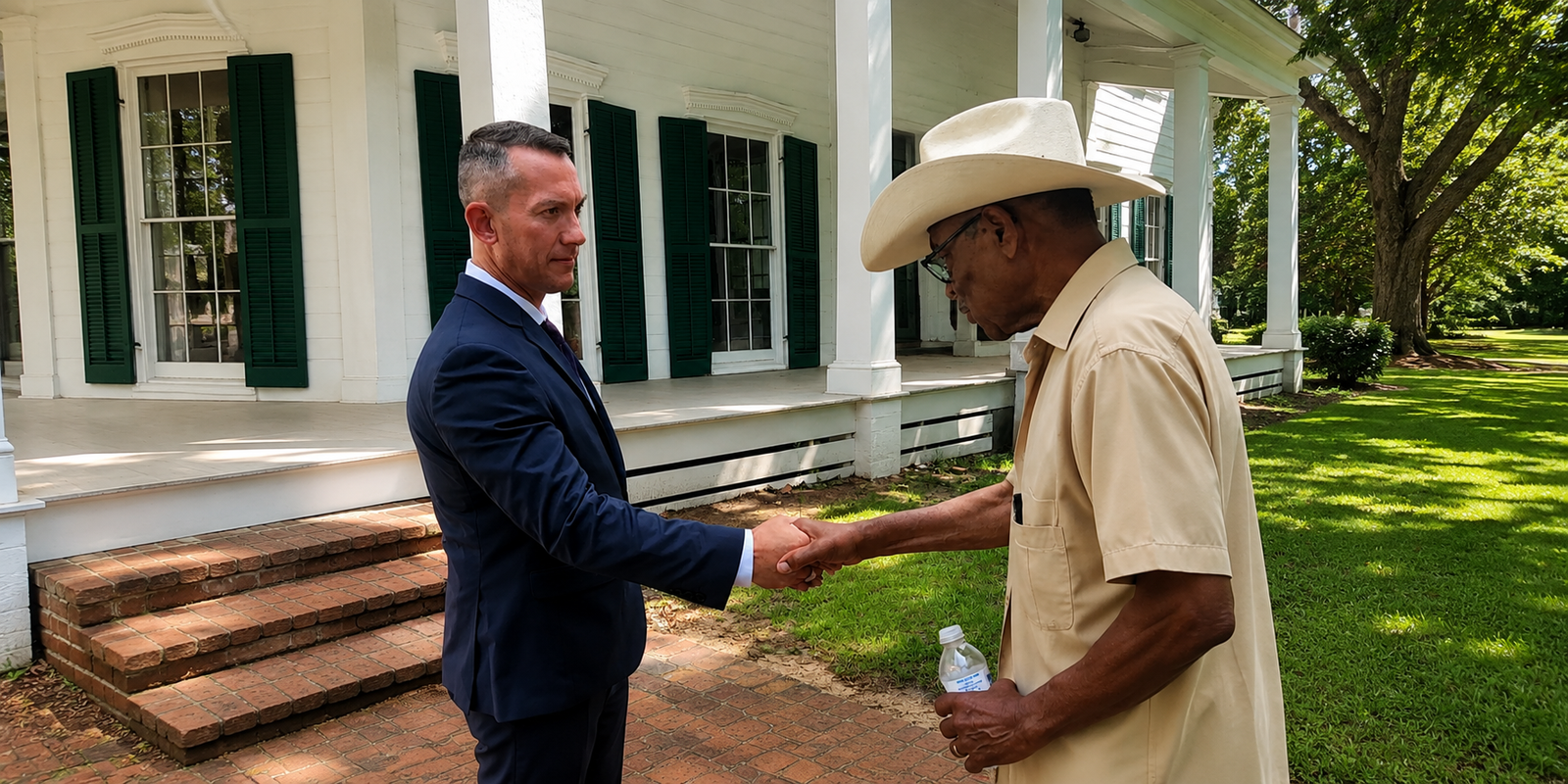
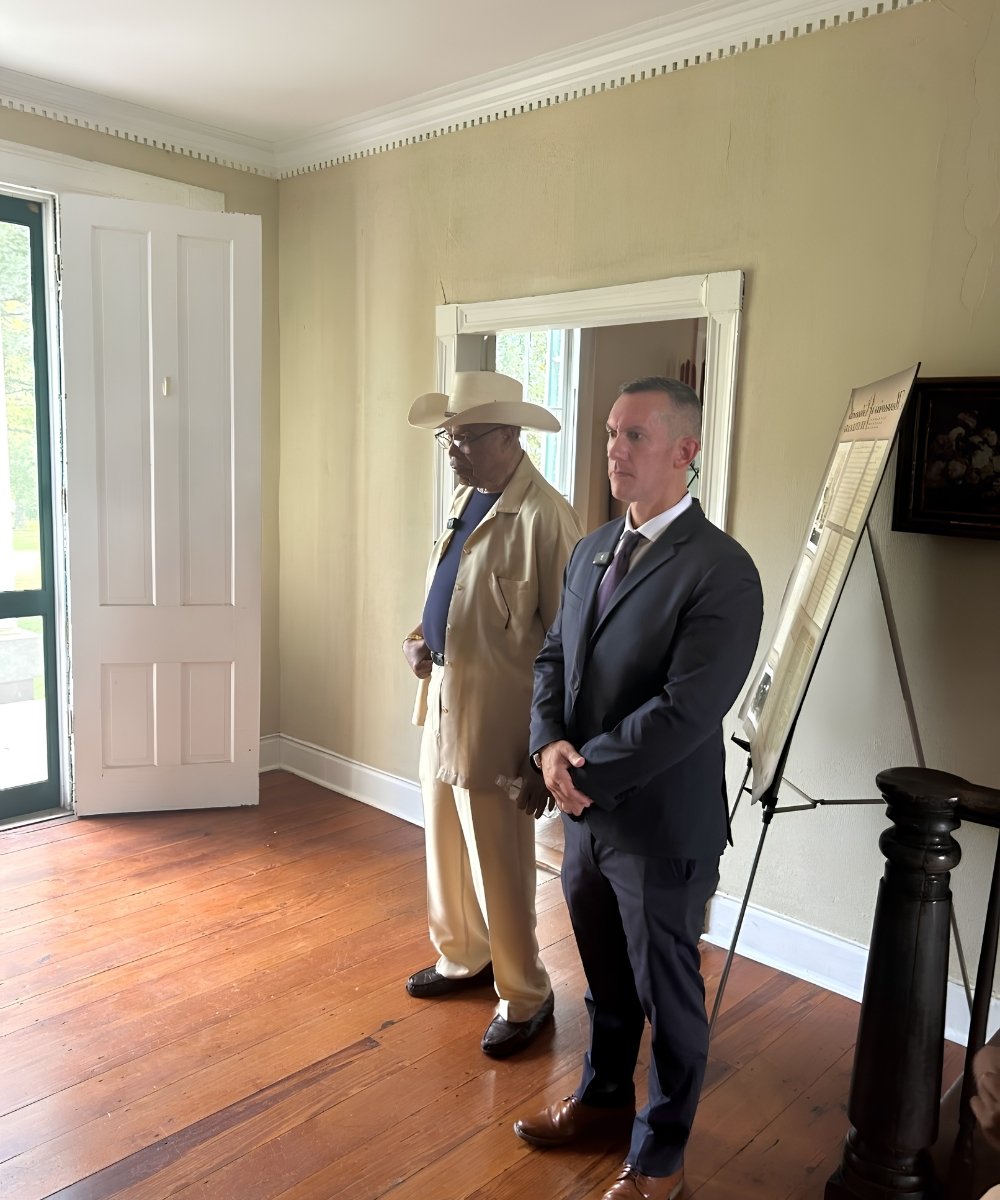
In a place deeply connected to Mississippi’s complex history, Charles Sims and Rev. Wheeler Parker Jr. gathered to begin what they hope will become a lasting movement toward reconciliation, truth, and peace. Their meeting took place at Cotesworth Mansion, a historic Mississippi landmark named after Senator JZ George’s friend Cotesworth Pinckney Smith, who also served as Chief Justice of the Mississippi Supreme Court. Against the backdrop of a site that has witnessed generations of history, the two men chose to look not only to the past but toward a future built on dialogue and understanding.
For Sims, the significance of the location was matched only by the purpose of the gathering.
“One thing he has often talked about is unity in the community and the ability to bring people together,” Sims said. “Having those tough conversations, you have to begin somewhere and move that conversation forward.”
Standing on the steps of the historic estate, Sims reflected on the importance of confronting difficult chapters of history while creating opportunities for healing. The meeting was intentionally centered on truth not avoiding the past, but facing it with honesty, humility, and faith.
One passage that continues to guide Sims’ work comes from Dr. Martin Luther King Jr.’s historic “I Have a Dream” speech.
“I have a dream that one day the sons of former slaves and the sons of former slave owners will be able to sit down together at the table of brotherhood.”
For Sims, those words are no longer simply an aspiration; they represent a vision that communities have the opportunity to fulfill today.
“Today, I believe we stand in that dream,” Sims said. “Families like ours coming together demonstrate exactly what Dr. King envisioned. More importantly, I believe it represents both of our families calling out for Mississippi’s table of brotherhood.”
That vision took on profound meaning as Sims met with Rev. Wheeler Parker Jr., the cousin of Emmett Till and one of the last living witnesses connected to the events surrounding Till’s tragic murder in 1955. Their meeting represented more than a symbolic gesture; it demonstrated that reconciliation begins when people choose conversation over conflict and faith over division.
For years, Sims has acknowledged that many people have questioned his motivations.
“People have often questioned my motives,” he explained. “They’ve asked where I started, what my end goal is, what I’m trying to accomplish. Some have even asked about my family’s statue in Washington. But this is bigger than that.”
According to Sims, the mission has never been about personal recognition or family legacy.
“Rev. Wheeler Parker Jr. and I come together, walking together in faith that’s bigger than any monument. This is about showing the world that healing is possible.”
Throughout the gathering, one message remained consistent: reconciliation cannot exist without truth.
“Today is about truth,” Sims said. “The truth about what happened to Emmett Till.”
That truth continues to shape American history since August 1955, when then 14-year-old Emmett Till traveled from Chicago to Mississippi, where he was brutally murdered in a crime that shocked the nation. That brutality inflicted a moment that helped ignite the modern Civil Rights Movement.
As communities prepare to remember Emmett Till’s legacy, Sims believes remembrance should inspire action rather than simply reflection.
“We cannot move forward without acknowledging what happened,” he said. “But once we acknowledge it, we have to ask ourselves what kind of future we’re building.”
For Sims, the answer begins with conversation.
“Our journey is to begin conversations,” he said. “If we can bring people together, speak the truth, and continue walking together in faith, then we’re taking another step toward the table of brotherhood that Dr. King dreamed about.”
Holding this conversation at Cotesworth added another layer of historical significance. A place once associated with Mississippi’s past became the setting for a dialogue about its future, a future where understanding replaces suspicion, truth replaces silence, and reconciliation becomes more than an idea.
As Charles Sims and Rev. Wheeler Parker Jr. departed the historic grounds, they left with a shared commitment to continue encouraging communities across Mississippi and beyond to engage in honest dialogue. Their message was clear: healing begins when people are willing to meet, tell the truth, and take a seat together at Mississippi’s table of brotherhood.