US Business News

Paul Davis Restoration of NW Chicago Builds Trust With Insurance Agents, Adjusters, and Property Managers Through Empathy-First Service

By: Sophia Turner

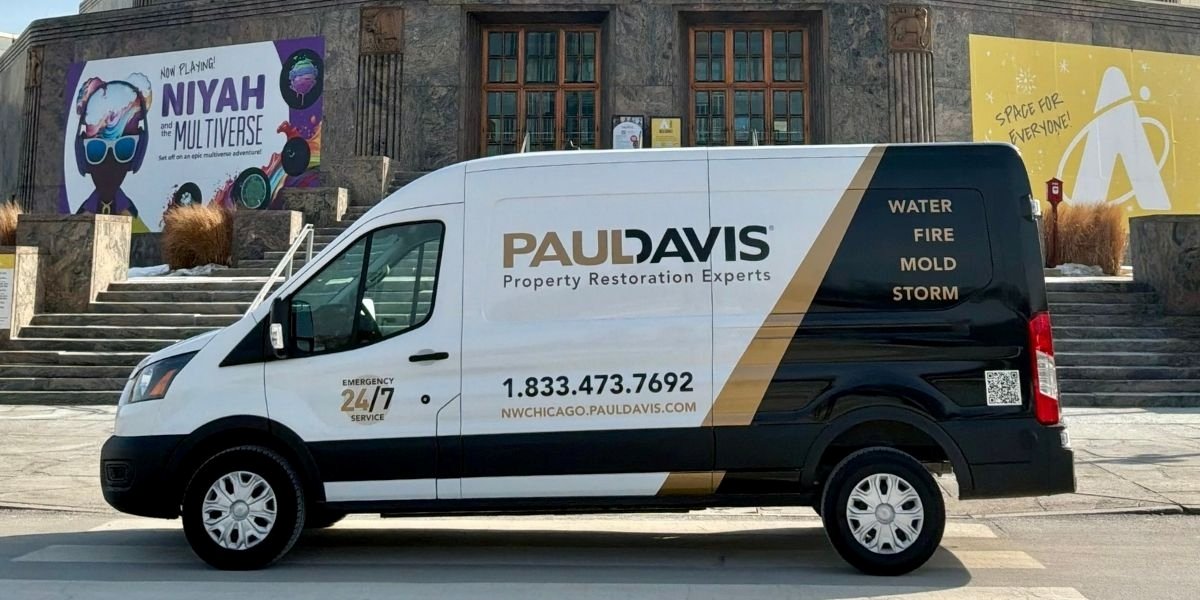
Restoration work in Chicago’s northwest side neighborhoods often starts with a referral, whether from an insurance agent, a claims adjuster, or a property manager helping a stressed homeowner find a company they can trust. Paul Davis Restoration of NW Chicago has built its reputation with referral partners around a practical approach: clear communication, dependable follow-through, and a service experience designed to reduce confusion during an already difficult situation.

An Owner Who Leads With Empathy

The company’s owner, Jason Hammers, describes his approach to the business in personal terms. “As a local owner, I bring an authentic, empathetic, and trustworthy voice to the brand that stands out in this industry,” he said, adding, “My personality is warm, human, and community-focused, and that helps people feel supported and informed long before they ever need restoration services.” That tone shapes how the company handles both residential emergencies and larger commercial losses across the northwest side. In Jefferson Park, one of the company’s top target markets, that same approach applies whether the call comes from a homeowner or a commercial property manager. The company’s commercial services page outlines how it supports larger, more complex losses beyond typical residential work.

Clear Expectations, No Pressure Tactics

Hammers points to high-pressure sales tactics as one of the biggest frustrations customers have with the restoration industry, and the company built its process specifically to avoid that pattern. “We focus on setting clear expectations and providing high-touch communication throughout the entire process,” he said, describing a model built around listening first and proposing solutions second. In Portage Park, where several recent projects have involved water damage from failed appliances, that upfront approach means homeowners understand the scope of work and expected timeline before any commitment is made.

Built for Commercial and Residential Losses Alike

Beyond individual homes, the company handles larger commercial losses, including a recent sewage backup at a manufacturing company’s office that required careful documentation, contaminated water protocols, and coordination around a working office environment. That project was completed with the space fully restored within two weeks, all while covering surfaces and sealing off work areas to keep the rest of the office functional throughout construction. In Old Irving Park, a neighborhood with a mix of single-family homes and small commercial buildings, that same level of care applies regardless of a project’s size.

What NW Chicago Clients Are Saying

Recent client feedback consistently points to communication and follow-through. Veronica S. praised the team for explaining the entire mitigation and reconstruction process from beginning to end, saying her condo went from disarray to beautiful and safe again exactly as expected. Taylor W. said the team responded quickly after a washing machine leak, explaining each step and working efficiently to prevent further damage. Michael B. described the team as absolute professionals who over-delivered on a mold remediation project, adding he could not recommend the company highly enough.

Does Paul Davis Restoration of NW Chicago work with insurance agents and property managers?

Yes. The company is well-suited for insurance agents, adjusters, and property managers who want a dependable restoration partner known for clear communication, responsive service, and a practical approach to restoration support.

Does the company handle commercial losses as well as residential ones?

Yes. The team handles losses ranging from residential water damage to larger commercial projects, including contaminated water situations that require specialized documentation and protocols.

How quickly does the company respond to emergencies?

The company aims to be on-site in under two hours for true emergencies, with 24/7 readiness to connect customers with a live, trained professional.

What areas does Paul Davis Restoration of NW Chicago serve?

The franchise serves Jefferson Park, Edison Park, Old Irving Park, Norwood Park, Portage Park, and surrounding neighborhoods throughout Chicago’s northwest side.

Stay Connected With Paul Davis Restoration of NW Chicago

For project updates and local news, homeowners and businesses can follow Paul Davis Restoration of NW Chicago on Facebook and LinkedIn.
Paul Davis Restoration of the Space Coast Prepares Beachfront Hotels and Short-Term Rentals for Hurricane Season

By: Sophia Turner

Brevard County’s Space Coast blends beachfront hotels, coastal condos, and a fast-growing short-term rental market with a large military and aerospace community near Patrick Space Force Base, all in a region where tropical storms and hurricanes are a seasonal reality from June through November. Paul Davis Restoration of the Space Coast has built its service around properties that can’t simply close for a few weeks of repairs, whether that’s a beachfront condo mid-booking-season or a senior living community.

Restoration Built Around Coastal Tourism

For hotels, resorts, and coastal condos, the company phases work by floor and occupancy, scheduling night and weekend crews so guests are affected as little as possible. The team sums up that approach with a simple internal line: “Boots on before the tide settles.” That same phased model applies to the region’s short-term rental market, where a property often needs to be turned around between guests, including odor and mold control suited to Florida’s humid coastal climate. The company’s commercial services page outlines how that occupied-property approach applies to hospitality, healthcare, and multifamily buildings alike.

Ready for Hurricane Season

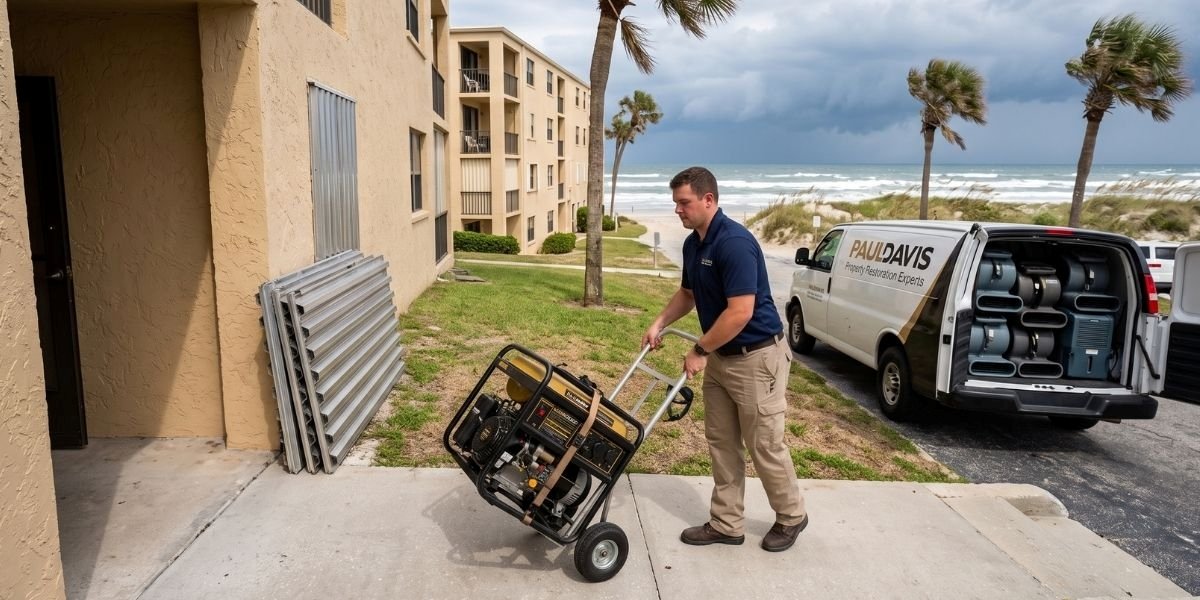
The company maintains hurricane mobilization plans built ahead of storm season rather than assembled after a storm has already made landfall, including staging yards, generators, and drying trailers under pre-loss agreements that support priority dispatch. Average arrival time in core Space Coast ZIP codes runs 60 to 90 minutes, with a guaranteed on-site arrival within four hours outside of declared catastrophe events. In Melbourne, one of the company’s top target markets, that response window applies to a flooded living room as readily as it does to a commercial property. Coastal communities see that mobilization plan tested most directly, since beachfront properties are often the first to take on wind and storm surge damage when a system makes landfall. The company’s residential services page details how that same rapid-response model works for individual homeowners.

A Bilingual, Regulated-Ready Team

Brevard County’s diverse community includes a significant Portuguese and Spanish-speaking population, and the company offers language assistance in all three to make sure communication doesn’t become a barrier during an already stressful situation. That same attention to detail carries into the company’s work with healthcare and senior living facilities, where ICRA-level containment and infection control protocols are used to minimize disruption to residents. Estimates are handled through Xactimate with carrier-ready documentation, and the company bills insurance carriers directly for covered work. In Palm Bay, where humidity can turn a minor leak into a mold concern quickly, that documentation-first approach helps keep a claim moving without unnecessary delays.

What Space Coast Clients Are Saying

Recent client feedback consistently points to communication and follow-through. Justin R. described the company as communicative and thorough from start to finish, adding that the pricing was fair and the team delivered above and beyond what he expected. Rosann F. praised project manager Craig Mormile for keeping her informed throughout the cleanup of smoke-covered belongings, cabinets, and walls, noting he answered emails at all hours to make sure she was satisfied with the work. John D. credited project manager Terrance Glover with deep knowledge of building trades and materials, saying he stuck to established timelines and was immediately available whenever a question or concern came up.

Does Paul Davis Of The Space Coast Work With Hotels, Condos, And Short-Term Rentals?

Yes. The company phases work by floor and occupancy for hotels and coastal condos, and supports short-term rental turnarounds between guests, including odor and mold control suited to Florida’s humid climate.

How Quickly Does The Company Respond During Hurricane Season?

Average arrival time in core Space Coast ZIP codes is 60 to 90 minutes, with a guaranteed on-site arrival within four hours outside of declared catastrophe events, backed by hurricane mobilization plans built ahead of storm season.

Does The Company Offer Bilingual Service?

Yes. The company offers language assistance in English, Portuguese, and Spanish to serve Brevard County’s diverse community.

What Areas Does Paul Davis Restoration Of The Space Coast Serve?

The franchise serves Melbourne, Palm Bay, Rockledge, Cocoa, Cocoa Beach, Titusville, and surrounding communities throughout Brevard County, Florida.

Stay Connected With Paul Davis Restoration of the Space Coast

For project updates and local news, homeowners and businesses can follow Paul Davis Restoration of the Space Coast on Instagram and LinkedIn.

When Storm Damage Becomes a Rebuild: Paul Davis Restoration of the Delmarva Peninsula Pairs Repair With Remodeling

By: Hannah Carter

Coastal storms on the Delmarva Peninsula don’t limit themselves to summer thunderstorms. Recent client experiences across the region have involved everything from wind-driven roof damage to a tree limb crashing through a kitchen ceiling during a winter blizzard. Paul Davis Restoration of the Delmarva Peninsula has built its service around a detail that sets it apart from many restoration companies in the region: a full remodeling division that can turn a storm-damaged property into an upgraded one. The franchise is led by Greg Herling and serves communities across Maryland, Delaware, and Virginia’s Eastern Shore.

When Storm Damage Becomes a Rebuild

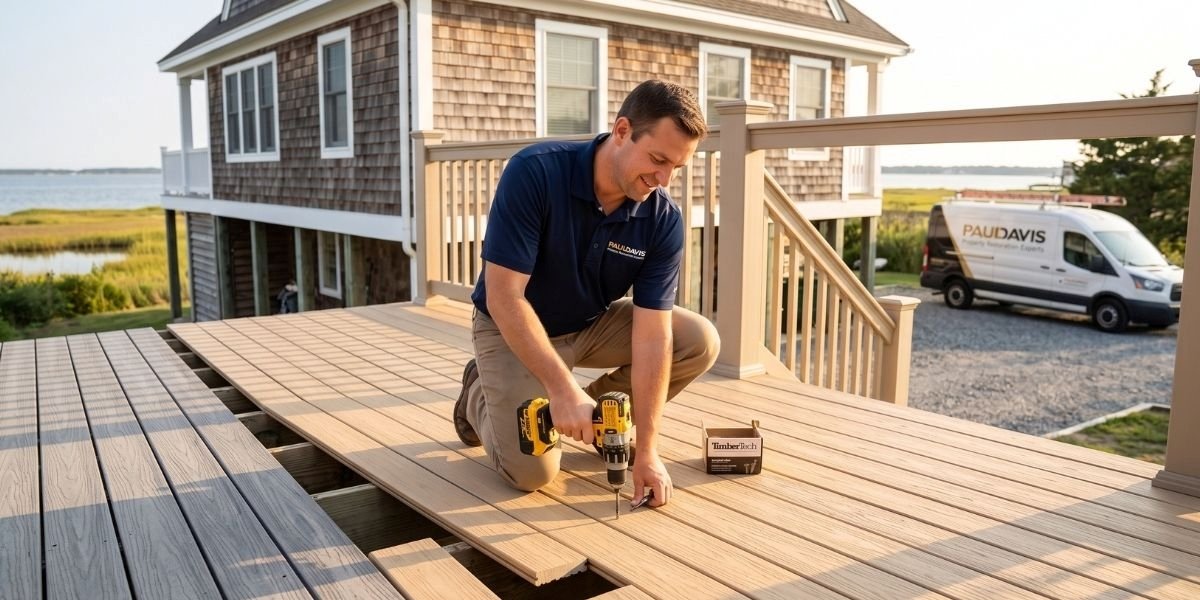
Once mitigation work is complete, many homeowners are left deciding whether to simply replace what was damaged or use the opportunity to upgrade. The company’s remodeling division gives clients that second option, offering Trex and TimberTech deck construction as a TimberTech Silver Platinum dealer, along with kitchen refacing and full replacement, additions, and new home construction. In Salisbury, the company’s top target market and a frequent stop for wind and storm-related claims, that remodeling capability means a damaged deck or outdated kitchen doesn’t have to wait for a second contractor once the restoration work wraps up. The company’s reconstruction page details how that rebuild work connects directly to the initial mitigation process.

Fast Response, In-House Estimating

The company describes its response time as two hours or less in most cases, backed by direct billing arrangements with major insurance carriers. “We work with all the major insurance companies and do direct billing,” the company said, pointing to its in-house estimators as a key reason projects tend to move faster than with competitors who outsource that step. The team also holds CAT certification, meaning it is equipped to handle catastrophe-level claims during major storm events. In Millsboro, the company’s second target market, that combination of fast response and in-house estimating has helped shorten the time between an initial call and an approved scope of work. The company’s residential services page outlines how that process works for homeowners from start to finish.

Beyond Restoration: A Full Remodeling Division

The company’s credentials extend beyond standard water, fire, and mold certifications to include a bio certification, allowing the team to take on biohazard cleanup work that many restoration companies in the region don’t offer. Combined with the remodeling division’s deck, kitchen, and addition work, that range means a single company can carry a property from an emergency call through a finished upgrade. In Cambridge, the company’s third target market and home to a number of waterfront properties, that deck rebuilding capability is especially relevant given how much outdoor living space factors into coastal Maryland homes.

What Delmarva Peninsula Clients Are Saying

Client feedback across the region frequently mentions the same technicians by name, a detail that points to a consistent, familiar team. Anne H. described two large holes in her roof after a storm brought heavy snow and 70 mph winds, praising the mitigation team as timely, professional, and great communicators. Catherine B. said the entire process was professional every step of the way, with an office staff that stayed friendly and helpful throughout. Ellen M. praised a technician who not only remediated mold on her garage ceiling but took the time to explain how mold develops and how to prevent it from returning.

Does Paul Davis Of The Delmarva Peninsula Do More Than Repair Storm Damage?

Yes. The company operates a full remodeling division alongside its restoration services, offering deck construction, kitchen refacing and replacement, additions, and new home builds.

How Fast Does The Company Typically Respond?

The company describes its typical emergency response time as two hours or less, backed by in-house estimators to help move projects from inspection to approved scope more quickly.

Does The Company Handle Insurance Billing Directly?

Yes. The company works with all major insurance companies and handles direct billing, and it holds CAT certification for catastrophe-level storm claims.

What Areas Does Paul Davis Restoration Of The Delmarva Peninsula Serve?

The franchise serves Salisbury, Millsboro, Cambridge, Ocean City, Easton, Berlin, and communities throughout the Delmarva Peninsula across Maryland, Delaware, and Virginia’s Eastern Shore.

Stay Connected With Paul Davis Restoration of the Delmarva Peninsula

For project updates and local news, homeowners can follow Paul Davis Restoration of the Delmarva Peninsula on Facebook and LinkedIn.

In an AI-Assisted Writing World, Human Editorial Judgment Matters More Than Ever

Writers today have access to more tools than previous generations could have imagined.

Software can check grammar.

Digital platforms can organize research. Speech-to-text can capture ideas.

Writing tools can suggest sentences, summarize notes, reorganize information, and generate drafts.

Artificial intelligence has expanded those possibilities even further.

This creates a useful question for modern authors:

If technology can produce language quickly, what role remains for professional writers and editors?

The answer is not simply “correcting mistakes.”

Human editorial judgment is increasingly about deciding what the book should actually become.

Producing Words Is Not the Same as Creating a Book

A book is not merely a large number of sentences placed together. It has intention.

Structure. Audience. Voice.

Emphasis. Rhythm. Context. Meaning.

A strong nonfiction chapter needs to know what idea it is developing and why the reader should care. A novel needs internal consistency.

A memoir needs emotional and narrative judgment.

A children’s book needs sensitivity to age, language, visual storytelling, and audience. Generating paragraphs is one task.

Making thousands of decisions that cause those paragraphs to function as a unified book is another.

Technology Can Suggest. Someone Still Has to Decide

Suppose a writing tool produces three versions of the same paragraph. Which one is best?

That depends on the goal. One version may be clearer.

Another may sound more like the author. Another may fit the surrounding chapter better.

Another may unintentionally change the meaning. A human still needs to evaluate the options.

That is editorial judgment.

Good publishing requires decisions about what belongs, what should be removed, what needs to move, what requires explanation, what sounds wrong, and what is technically correct but creatively inappropriate.

Those decisions depend on context.

Voice Becomes More Important When Generic Writing Is Easy

When polished sentences become easy to generate, distinctive perspective becomes more valuable. Readers do not necessarily need another book filled with broadly acceptable statements.

They need a reason to care about this author’s version of the subject or story.

That reason may come from personal experience, original research, professional expertise, humor, storytelling ability, unusual observations, specific frameworks, strong characters, emotional honesty, or an identifiable way of communicating.

Technology can assist the production process.

It cannot substitute for the underlying reason the book deserves to exist.

Originality Is More Than Avoiding Duplicate Text

Original writing does not simply mean arranging words that have never appeared together before.

Originality can come from perspective.

Two leadership authors may write about the same management problem but approach it differently because they have different experiences.

Two memoirists may write about similar events but create completely different emotional narratives. Two fantasy writers can use familiar genre conventions while creating different worlds.

What matters is the author’s contribution.

Professional editors can help identify where a manuscript contains something specific and valuable – and where it has drifted into generic language.

Human Editors Understand What the Author Is Trying to Do

Grammar software can identify patterns.

But editorial work involves intention.

An incomplete sentence may technically be incorrect yet work perfectly in dialogue.

Repetition may be unnecessary in one chapter but deliberately powerful in another.

An unusual structure may initially appear confusing but be central to the storytelling approach.

A highly technical explanation may be appropriate for specialists and inappropriate for general readers.

There is rarely a single universal answer.

Editing is therefore partly an act of interpretation. The editor asks not only:

“Is this correct?”

but also:

“Does this serve the book?”

AI Assistance Still Requires Fact Checking

Authors should also distinguish between fluent language and accurate information. A sentence can sound authoritative without being correct.

Names, dates, quotations, statistics, historical claims, technical information, legal concepts, scientific statements, and references may require verification regardless of whether the material originated from a human writer, notes, research, or an AI-assisted process.

The more authoritative a statement sounds, the easier it can be to overlook the need for verification. Professional publishing therefore still requires responsibility for the finished material.

The Author Needs a Consistent Point of View

A long manuscript created through many disconnected prompts or automated rewrites can develop inconsistencies.

One chapter may sound formal. Another may sound casual.

Key terminology may change. Ideas may be explained twice.

Arguments may contradict one another. Characters may behave differently.

The conclusion may not reflect the assumptions established at the beginning. These problems are not primarily grammatical.

They are structural.

A human editor can examine the manuscript as a complete work and identify patterns that become visible only when the book is considered as a whole.

AI Can Be a Tool Without Becoming the Identity of the Book

The most productive discussion does not need to be “humans versus AI.”

Authors already use many technologies. The better question is:

“Which tools help the author create stronger work without sacrificing originality, accuracy, voice, or responsibility?”

Different authors will answer that differently.

Some may use technology primarily for organization. Others may use it to explore ideas.

Others may avoid generative tools entirely.

What matters is that the final book still has intentional authorship behind it. Readers should encounter a coherent work – not a collection of outputs.

Human Judgment Remains at the Center

Marketing And Publishing Studio LLC currently emphasizes originality, preservation of author voice, communication, and collaborative editorial development as central parts of its publishing approach. Its team is presented as working with authors from early planning through revision and final preparation rather than treating book production as a purely automated process.

That positioning becomes increasingly relevant as writing technology develops. Tools can make parts of book creation faster.

But speed is not the only measure of quality.

A book still needs someone to decide what it means, whom it is for, how it should sound, what belongs inside it, and whether the finished work deserves the author’s name.

That is where human editorial judgment remains essential.

Website: https://marketingandpublishinghousellc.com/

The Robotics Architect Who Left Enterprise Software to Cut Grass

George Chrysanthakopoulos spent two decades building platforms at Microsoft and VMware. Then he built a farm robot in a Seattle warehouse, and did it without the venture playbook.

There is a particular kind of engineer who spends two decades building software that other people build things on, and then, at some point, wants to build the thing itself. George Chrysanthakopoulos spent twenty‑one years in that first category. He worked in the Windows NT base group at Microsoft, then on Xbox system services, then became software architect and technical lead for Microsoft Robotics Studio, the company’s attempt to give the robotics community a common software platform. At 25, while working at Microsoft, George earned his PhD in Electrical Engineering from the University of Washington. At 33, George was promoted to Distinguished Engineer for his work on Xbox, concurrency, and robotics. The next stop in his software engineering career was designing and deploying a control plane for a cloud computing platform at VMware, where he was promoted to Fellow.

Then he retired and started designing a robot to manage his mountain property, clear his own snow, cut brush and grade roads. That is the unglamorous origin of Directed Machines, the Seattle company he founded in 2018 under the name dCentralized Systems. Its product, the Land Care Robot, is now sold across the United States and Canada into utility‑scale solar, agriculture, airports, golf courses, nurseries and roadside maintenance. The path from a personal snow‑clearing project to a fleet of commercial machines says something useful about how durable engineering companies actually get built.

The Neighbors Changed the Plan

The pivot came from conversations rather than market research. Talking with small‑scale farmers near his property, Chrysanthakopoulos found a set of problems he had not been looking for. Margins on small farms are thin. Seasonal labor is difficult to find and harder to keep. Weed and pest management depends heavily on chemicals that growers would rather use less of. And a machine that could only do one job could not possibly justify its own cost.

Those constraints shaped the product more than any technology roadmap did. A single‑purpose robot was ruled out immediately; the machine had to be modular, capable of switching implements across the growing season. Right to repair, a live political issue in agriculture, became a design requirement rather than a marketing line. The machine had to use readily available parts and be fixable on site by the person who owns it, not by a dealer with proprietary diagnostics.

The specification did not come from a whiteboard. It came from farmers and rural property owners explaining what they could not afford, could not staff, and could not repair.

Writing All of It

Chrysanthakopoulos has been unusually direct about the engineering approach. Speaking to GeekWire in 2019, when the company occupied a cold warehouse in Seattle’s SoDo neighborhood with a team of four, he said of the autonomy stack: “I wrote all the code.” He clarified that he meant it literally, rather than assembling open‑source components into something that mostly worked.

That decision has consequences visible in the product today. The Land Care Robot runs its full autonomy stack on a Raspberry Pi, which, while processing input from a suite of sensors including 4‑6 video streams, uses only 10% of the Pi’s CPU and draws only about 15 watts, less than a human brain. That figure is unusual at a time when AI data centers draw energy at a virtually unbounded rate. The company describes it as the only enterprise‑scale outdoor robot to do so, and attributes the feat to mathematical modeling rather than raw processing power. It is not an obvious choice for a machine working commercially across tens of thousands of acres, and it is difficult to imagine a team arriving at it without deep ownership of the code.

The payoff is practical. Low compute energy draw extends run time. Inexpensive, widely available hardware suits a company shipping fleets rather than prototypes, fits the same repairability logic that shaped the mechanical design, and holds down the cost of building each machine. The Raspberry Pi Foundation has since published a case study on Directed Machines.

Growing the Old‑Fashioned Way

The company’s financial posture has been as deliberate as its engineering. Chrysanthakopoulos told GeekWire he wanted to stay small and move slowly, and judged that equipped with out‑of‑the‑box thinking and a small collection of engineers that fear nothing, he could make the business viable without requiring a large venture round. He described the sequence plainly: build something useful, convince yourself and your customers that it works, and only then raise money and scale.

In a sector where agricultural robotics startups have raised heavily and closed quietly, Directed Machines has done just the opposite. The company has been selling since March 2020. Its machines have been hardened across tens of thousands of kilometers in structured and unstructured environments, and the fleet now spans North America. Because so many aspects of the company’s work are automated, the headcount remains modest at fewer than 25 people across R&D, logistics, manufacturing, and operations.

What the Record Shows

The specification has moved a long way from the early prototypes. Current machines are quoted at 86 horsepower peak with 1,700 pound‑feet of torque on a stainless steel chassis, against 60 horsepower and 1,400 pound‑feet in earlier public descriptions. The trade publication Future Farming lists pricing from roughly twenty‑five to forty‑five thousand dollars depending on configuration.

Chrysanthakopoulos has offered a personal reason for the shift from enterprise software to farm machinery, which is that he wanted to build something he could explain to his children. It is easy to read that as sentiment. It is more interesting to read as a design filter. Software fellows spend careers on abstractions that resist explanation. A machine that cuts grass without petrol, chemicals or a driver explains itself the moment it is switched on, and the discipline of building something that is legible tends to produce better engineering than the alternative.

Twenty‑one years of platform work turns out to have been useful preparation. The company he built with it looks nothing like the industry he left.

Can a Seller Negotiate a HomeWise Cash Offer?

A HomeWise offer can be discussed, and a seller who wants to negotiate a HomeWise offer upward has four inputs that matter: a contractor bid that undercuts the buyer’s repair estimate, recent comparable sales the buyer missed, a later closing date that trims the buyer’s holding cost, or taking on an item the offer had priced in. An online estimate and the original purchase price move nothing.

Take a hypothetical owner in Mesa, Arizona, with a 1978 ranch house that needs a roof, a heat pump and a kitchen. In July 2026 she typed “sell my house as is” into a search engine and requested an offer. The buyer put the after-repair value at $420,000, budgeted $68,000 for repairs and holding costs, and offered $285,000. She sent back a licensed roofer’s bid of $14,500 against the $22,000 the buyer had assumed, plus a sale two streets over that closed in June at $431,000 and was missing from the buyer’s comps. The revised figure in this illustration came back at $294,000. The numbers are illustrative, not a HomeWise file.

Why does “can you negotiate a cash offer” have a different answer for a direct buyer?

With a direct buyer there is no agent and no appraisal contingency, so the conversation is about the buyer’s own arithmetic. HomeWise’s explainer on pricing describes an offer as the after-repair value minus repair costs, holding and closing costs, and a buyer margin, with the result typically landing 10 to 15 percent below retail value. Every one of those deductions is an estimate, and an estimate can be wrong in the seller’s favor.

A counter that works usually runs in this order.

  1. Ask for the repair line. A seller who learns what the buyer assumed for the roof, the systems and the cosmetics knows where the disagreement is.
  2. Get a written bid from a licensed contractor. A dated bid for the largest item that comes in below the buyer’s number is the strongest document a seller can send.
  3. Pull the comparable sales. Closed sales from the last six months, within a mile, of similar size and condition. A sale the buyer did not use, especially one that closed higher, changes the after-repair value, and the offer follows it.
  4. Offer the closing date the buyer wants. A buyer holding a house pays taxes, insurance and utilities every day it owns it. A seller who matches the buyer’s preferred date takes cost off the buyer’s side and can ask for some of it back.
  5. Take an item off the buyer’s list. If the offer priced in a $4,000 clean-out and the seller can empty the house, that line can come out of the deduction.
Photo Courtesy: Unsplash.com

What does not change the number?

Two arguments move nothing. The first is the online home value estimate, which prices the house as if it were in typical condition and sold through a listing; an as-is buyer is measuring something else. The second is what the owner paid in 2009, or what the owner still owes. Buyers such as HomeWise price from condition and comparable sales, and neither figure appears in that formula.

Scale is part of why this matters. According to the National Association of Realtors’ 2025 Profile of Home Buyers and Sellers, 30 percent of repeat buyers paid all cash for their homes and 91 percent of sellers used an agent, equal to the highest share on record. The report’s highlights page puts it this way: “The housing market remains divided between an all-time high of all-cash home buyers and an all-time low of first-time buyers.” A seller facing a direct buyer does alone what 91 percent of sellers hand to an agent, so documents matter more than opinions.

What the seller brings

What it changes in the buyer’s math

Typical effect on the offer

Licensed contractor bid below the buyer’s repair estimate

The repair deduction

Up to the difference, depending on the buyer

Closed comparable sale the buyer did not use

The after-repair value

Raises the starting number

Closing date that fits the buyer’s schedule

Holding cost: taxes, insurance, utilities

Small relative to the repair line

Seller clears out the house or handles a named item

One line in the budget

That line comes out

Online estimate or the original purchase price

Nothing

None

How does the federal government price its own as-is houses?

HUD resells houses it takes back from failed FHA loans, and its page on selling HUD homes states how an as-is price is built: “HUD’s asking price on the home reflects the appraised value in its current (“as-is”) condition, unless otherwise specified.” Because the buyer inherits the repairs, the same page says, “HUD strongly urges every potential homebuyer to get a professional inspection prior to submitting an offer to purchase.” A direct buyer’s offer is an as-is price anchored to condition, so evidence about condition, not opinion about value, is what moves it.

Where does HomeWise stand on a counter?

HomeWise, a direct home-buying company that purchases distressed single-family houses in California, Texas, Florida, Arizona, Georgia and other states, buys as-is with no repairs, cleaning, staging or showings, and has purchased more than 500 homes. Requesting an offer is free and carries no obligation, and the company says one can come back in as little as one hour. Its explainer on how much lower a cash offer should be lays out the formula behind the number and calls its ranges illustrative rather than fixed. A counter, with the bid and the comps attached, goes back through the company’s contact page. Nothing in that exchange obliges the seller to accept a revised number, and nothing obliges the buyer to move.

The approach is not for every owner. A house in good condition in a strong neighborhood will usually net more through a listing even after commission, and HomeWise’s explainer concedes the discount feels steep on a house that needs little work. Negotiating a direct offer pays off for the owner whose house needs work and who would rather argue about the repair line than pay for the repairs.

Frequently asked questions

Photo Courtesy: Unsplash.com

Does countering a cash offer risk losing it?

Not usually, when the counter is specific. A buyer that spent time underwriting a house wants to close it, and a documented counter gives the buyer a reason to re-run its numbers. A counter with no evidence behind it, or one anchored to an online estimate, tends to get a polite no while the original offer usually stays open.

What happens after a homeowner types “get a cash offer on my house”?

The phrase returns direct buyers, iBuyers and lead resellers, and their offers are built differently. A direct buyer prices from the after-repair value and its own repair budget. An iBuyer prices from an automated model and charges a service fee. A lead reseller passes the address to other buyers, so the first call may not come from a buyer.

How much lower should a cash offer be than market value?

HomeWise’s explainer gives 10 to 15 percent below retail value as the typical headline gap, with the offer landing at 70 to 85 percent of after-repair value once repairs, holding costs and margin come out. The same page notes the net difference shrinks once commission, seller closing costs and repairs are subtracted from a listed sale.

Can the offer change after the contract is signed?

Only if both sides agree in writing. The time to negotiate is before signing, while the buyer is still estimating and the seller still holds the bid and the comps. After signing, a price change normally needs an amendment, and a buyer that finds a condition different from what was described may ask for one as well.

Disclaimer: This content is for general informational purposes only and should not be considered as financial advice. The content is not intended to be a substitute for professional financial advice, investment advice, or any other type of advice. You should seek the advice of a qualified financial advisor or other professional before making any financial decisions.

Safer Streets in North Texas: What Pedestrians and Drivers Should Know

How smarter road designs and cautious habits can make DFW communities more walkable, and what you can do to contribute.

Across the Dallas-Fort Worth area, the relationship between pedestrians and vehicles is a daily struggle. The fast-moving traffic and huge intersections make walking a more significant undertaking here than in other walker-friendly cities. Whether you’re crossing a busy street downtown or walking through a residential neighborhood, the factors that keep people safe or put them at risk deserve real attention.

When someone does get hurt on the road, having the right support can make a world of difference. Wettermark Keith Personal Injury Lawyers works with people dealing with the aftermath of serious roadway incidents. But the bigger conversation that’s worth having is one about prevention, and how streets themselves can be redesigned to reduce risk for all parties.

Why Road Design Plays a Key Role in Pedestrian Safety

The Texas Department of Transportation’s pedestrian safety program has found that pedestrian-involved crashes remain a significant concern statewide. Some of the contributing factors include speeding vehicles, road design, insufficient road lighting, and the behavior of both drivers and pedestrians. No single fix can eliminate these risks, but by combining infrastructure improvements with smarter road habits, the odds can change immensely.

A sidewalk isn’t just there for convenience. It serves as a physical boundary between the pedestrians’ space and vehicles on the road. When sidewalks are absent, narrow, or discontinuous, people walking may find themselves sharing space with fast-moving vehicles. Similarly, crosswalk placement influences where pedestrians will attempt to cross a road, which may affect how prepared drivers are to expect them.

Lighting is another critical, yet often overlooked factor. A well-lit intersection gives both drivers and pedestrians more time to react. Poorly lit stretches of road, especially near bus stops or high-pedestrian-traffic areas, can make it difficult for a driver to see someone stepping off a curb.

Physical separation using medians, barriers, or raised curbs reduces the chance that a vehicle will drift into pedestrian areas. This type of infrastructure doesn’t guarantee safety, but it meaningfully changes the risks on a given road.

What the Fort Worth Stockyards Bollard Project Shows About Smarter Design

One concrete example of infrastructure influencing pedestrian safety is being developed in Fort Worth. A news outlet has reported that safety bollards are coming to the Fort Worth Stockyards, a destination with heavy vehicle and pedestrian traffic, especially on weekends and during events.

The bollards create a physical buffer between pedestrians and moving vehicles in an area where the two frequently intersect. Projects like this reflect a shift in how city planners think about designing high-traffic areas. Rather than relying solely on signage or painted lines, physical barriers create more safety nets for pedestrians.

What Keith Personal Injury Lawyers Suggest to Keep in Mind

If an accident occurs, the first thing you should do is call emergency services so the pedestrian receives medical attention. After that, preserving any information, including photos of the scene, contact details for witnesses, and records of road conditions, can be useful when dealing with insurance.

Safer streets depend on both well-designed infrastructure and the choices of everyone who uses them. North Texas communities are making progress, as seen in the Fort Worth Stockyards bollards, which demonstrate what is possible when safety is integrated into road design. The rest ultimately comes down to how drivers and pedestrians choose to share the road.

Frequently Asked Questions

What Should Drivers Do To Ensure The Safety Of Pedestrians?

Before turning, drivers should scan the entire crosswalk, not just traffic. Yielding to pedestrians who are already crossing is required by Texas law. Keep speeds appropriate for the area, and slow down in areas with high foot traffic.

How Can Pedestrians Make Themselves Easier For Drivers To See?

Choose well-lit crosswalks, and when it’s dark, wear light-colored or reflective clothing to increase visibility. Making eye contact with drivers before entering a crosswalk provides additional confirmation that drivers have seen the pedestrian.

What Makes Some Roads Particularly Dangerous For Pedestrians?

Several factors can create difficult conditions, including high vehicle speeds, long crossing distances at wide intersections, inconsistent sidewalks, and limited lighting.


Disclaimer: This article is for general informational purposes only and does not constitute legal advice. Traffic laws and individual circumstances may vary. Anyone involved in a pedestrian or roadway accident should consult a qualified attorney regarding their specific situation.

Hugging Face Explores Potential Sale at $13 Billion Valuation

Hugging Face is exploring a potential sale that could value the New York-based AI startup at $13 billion or more, according to a report citing people familiar with the matter. The company is working with a bank to gauge interest from potential bidders, adding a possible transaction to its corporate plans.

Key Takeaways

  • Hugging Face is exploring a potential sale valued at $13 billion or more.
  • The company is working with a bank to gauge interest from potential bidders.
  • Hugging Face hosts open-source large language models and datasets.
  • The company was valued at $4.5 billion in a 2023 funding round.
  • Salesforce, Google and Nvidia participated in that financing round.

Hugging Face Explores Potential Sale

Hugging Face is considering a potential transaction that could value the company at $13 billion or more, according to a report citing people familiar with the matter. The New York-based startup has been working with a bank to assess interest from potential bidders.

The reported valuation would be substantially higher than the $4.5 billion valuation assigned to Hugging Face in a 2023 funding round. That financing included participation from Salesforce, Google and Nvidia.

A potential sale has not been announced as a completed transaction. The reported discussions concern an exploration of a possible sale and interest from prospective bidders.

The company is known for operating a platform that hosts open-source large language models and datasets. Its platform is used to distribute and access AI models and related data resources.

The reported $13 billion or higher valuation places a specific figure on the potential transaction being explored. The valuation is subject to the outcome of any discussions and would depend on whether a transaction is ultimately reached.

Company Works With Bank on Bidder Interest

Hugging Face has been working with a bank to gauge interest from potential bidders, according to the report. The bank’s involvement indicates that the company is assessing whether prospective buyers may be interested in a transaction at the reported valuation.

The process remains exploratory. A potential sale would require further discussions between Hugging Face and interested parties before any transaction could be completed.

Hugging Face did not immediately respond to a Reuters request for comment outside regular business hours, according to the report.

The reported discussions do not establish a buyer, transaction price or closing date. The $13 billion figure describes the potential valuation cited in connection with the sale exploration.

The company previously raised capital from several major technology companies. That financing established a $4.5 billion valuation for Hugging Face in 2023, providing a reference point for the higher figure now associated with the potential sale.

Companies evaluating AI platforms are also examining deployment costs and operational requirements as artificial intelligence becomes part of business operations. 

Hugging Face Builds Open-Source AI Platform

Hugging Face hosts open-source large language models and datasets through its platform. The company’s business is centered on providing access to AI models and data resources used by developers and organizations.

Large language models are artificial intelligence systems designed to process and generate text. Datasets provide collections of information that can be used in developing and evaluating such models.

Hugging Face’s platform brings these resources together in a single environment. The company is based in New York, making the potential transaction a U.S. corporate development involving an AI startup.

The company’s platform is distinct from a single AI model because it provides access to models and datasets from across the open-source community. That structure has made Hugging Face a recognizable company within the AI software sector.

Businesses are also adopting AI systems for operational tasks, including workflow automation and customer communications. 

The reported sale exploration therefore concerns a company whose operations extend across AI models, datasets and the infrastructure used to share those resources.

Startup Reached $4.5 Billion Valuation in 2023

Hugging Face was valued at $4.5 billion in a 2023 funding round. The financing was led by technology companies including Salesforce, Google and Nvidia.

The 2023 valuation provides a direct comparison with the $13 billion or higher figure now being considered in connection with the potential sale. The two figures come from different corporate events: one was a funding round, while the current figure relates to a possible sale.

The 2023 financing brought several established technology companies into Hugging Face’s investor group. Salesforce, Google and Nvidia were among the participants.

The funding round also established a publicly reported valuation for the company before the current sale discussions. That figure remains relevant to understanding the reported scale of the potential transaction.

The difference between the two valuations is substantial. A $13 billion valuation would be nearly three times the $4.5 billion figure assigned to Hugging Face in 2023, although the reported sale valuation has not been established through a completed transaction.

The financing environment for AI companies has also included large private-market deals. U.S. venture capital investment reached $412.7 billion in the first half of 2026, with AI-related companies accounting for 86% of invested venture dollars. 

Major Technology Companies Backed Hugging Face

Hugging Face Explores Potential Sale at $13 Billion Valuation

Photo Credit: Unsplash.com

Salesforce, Google and Nvidia participated in Hugging Face’s 2023 funding round, when the company was valued at $4.5 billion.

Their participation established financial backing from companies with businesses spanning enterprise software, cloud and artificial intelligence hardware and services. The financing was a capital-raising event rather than a sale of Hugging Face.

The current sale exploration involves a different corporate process. Hugging Face is working with a bank to assess bidder interest, while the reported potential valuation is $13 billion or more.

The distinction between the two events is important because the 2023 financing produced an established valuation, while the current $13 billion figure is tied to a potential transaction that remains under discussion.

Corporate finance executives are also taking a larger role in evaluating artificial intelligence spending, including technology costs and expected business returns. 

Any completed sale would establish the final transaction value and the identity of the buyer. The reported exploration itself does not confirm that those terms have been agreed.

Frequently Asked Questions

Is Hugging Face being sold?

Hugging Face is exploring a potential sale, according to a report citing people familiar with the matter. The company is working with a bank to gauge interest from potential bidders, but a completed sale has not been announced.

What is Hugging Face’s potential valuation?

The potential sale could value Hugging Face at $13 billion or more, according to the reported discussions. That figure represents a potential transaction valuation rather than a completed sale price.

What does Hugging Face do?

Hugging Face operates a platform that hosts open-source large language models and datasets. The New York-based company provides access to AI models and related data resources.

How much was Hugging Face valued at in 2023?

Hugging Face was valued at $4.5 billion in a 2023 funding round. Salesforce, Google and Nvidia participated in that financing.

Which companies invested in Hugging Face?

Salesforce, Google and Nvidia were among the technology companies that participated in Hugging Face’s 2023 funding round. The financing valued the company at $4.5 billion.