US Business News

Dr. Satpreet Singh Brings a Research-Based Approach to Organizational Leadership

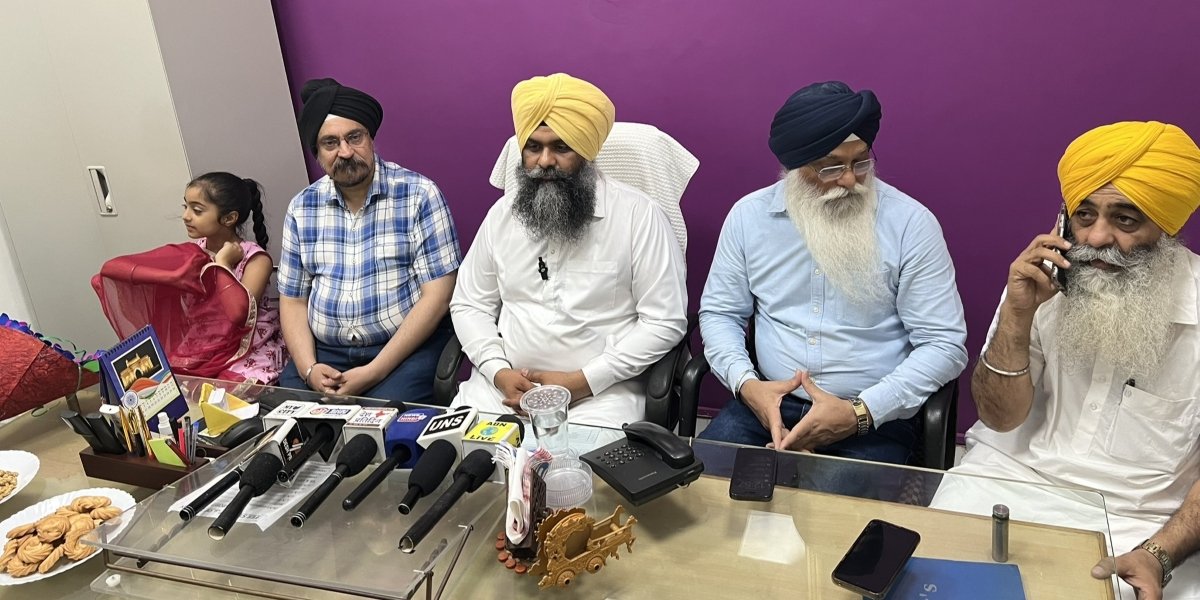
As organizations navigate artificial intelligence, sustainability, workforce transformation, ethical decision-making, and increasingly complex global operations, leadership is becoming an increasingly interdisciplinary field of study. Dr. Satpreet Singh, PhD, has built his academic and professional work around examining these challenges through organizational leadership research and applying leadership principles within business, education, and nonprofit institutions.

Based in California, Singh works across research, organizational leadership, entrepreneurship, education, and institutional development. His work reflects an approach to leadership that combines academic inquiry with practical organizational experience, particularly in sustainable leadership, organizational development, emerging technologies, business strategy, and institutional governance.

Studying Leadership Through Research

A central component of Singh’s work is the systematic study of organizational leadership.

His doctoral research at National University examined sustainable leadership and supply chain management within the U.S. manufacturing sector. His dissertation, Sustainable Leadership and Supply Chain Management in the Manufacturing Sector: A Multiple-Case Study, was submitted to National University’s College of Business, Engineering, and Technology to fulfill the requirements for the Doctor of Philosophy in Business Administration.

The study explored how senior organizational leaders implement sustainable supply chain management practices in mid-sized manufacturing firms. Rather than approaching leadership solely as a theoretical concept, the research examined leadership decisions within operating organizations, connecting executive decision-making with sustainability, organizational practices, and long-term business considerations.

This research contributes to Singh’s broader interest in understanding how leadership affects organizational systems and how leaders respond when economic, technological, ethical, and sustainability priorities intersect.

Leadership in an Era of Artificial Intelligence

Singh has also examined how technological transformation is changing leadership responsibilities.

His paper, Leadership Challenges and Strategies in the Era of AI Transformation, presented at the International Conference on Computational Science and Computational Intelligence, addressed the challenges organizational leaders face as artificial intelligence becomes increasingly integrated into decision-making and business operations.

The work considered issues including workforce reskilling, ethical decision-making, human-machine collaboration, innovation, and leaders’ changing responsibilities in AI-driven environments.

This area of research reflects an important dimension of Singh’s approach to organizational leadership: leadership cannot remain static while the systems surrounding organizations change.

For Singh’s research agenda, technology is therefore not treated simply as an operational tool. It also represents an organizational leadership issue requiring decisions about people, ethics, strategy, organizational culture, adaptation, and long-term institutional resilience.

Connecting Leadership, Business, and STEM

Singh’s academic work has increasingly extended into interdisciplinary discussions connecting leadership with business, management, technology, and STEM.

He is a contributor to the Springer Nature volume Leadership, Business and Management in STEM. The publication brings together perspectives concerning leadership and management in environments increasingly influenced by technological and scientific development.

His participation in academic conferences and research activities further reflects an effort to connect leadership scholarship with emerging organizational challenges.

This combination of research areas helps distinguish Singh’s work from leadership commentary based primarily on personal experience. His approach incorporates scholarly investigation, academic publication, conference participation, and empirical research alongside years of organizational practice.

Applying Leadership Beyond Academic Research

Singh’s organizational experience provides another dimension to his research interests.

Through Ardass Corporation, he has worked in executive leadership and business advisory environments involving organizational strategy, compliance, business development, and decision-making. His professional experience has allowed him to observe many of the organizational issues that leadership researchers examine academically: adaptation, accountability, organizational structure, strategic planning, stakeholder relationships, and long-term sustainability.

His leadership activities have also extended into nonprofit and educational organizations, including the Sikh Institute of Higher Education and Association, Sikh Reference Library USA, Ranjit Nagara USA, and emerging higher-education initiatives.

Recent educational projects associated with his institutional work demonstrate how organizational leadership principles can move from theory into implementation.

In 2026, Singh participated in initiatives involving educational development in India, including the Sikh Institute of Higher Education and the Association’s work connected with Sant Baba Sunder Singh Khalsa School in Akhnoor, Jammu and Kashmir, and Gurmat Sangeet education through Guru Nanak Khalsa Academy in Punjab.

Such projects require more than developing an organizational vision. They involve governance structures, partnerships, resource coordination, stakeholder engagement, institutional planning, and systems capable of continuing beyond individual leaders.

Leadership as an Organizational System

A recurring theme across Singh’s academic and professional work is the idea that effective leadership should not depend exclusively on personality or authority.

Instead, leadership can be examined as part of an organizational system.

From this perspective, leaders influence how organizations establish priorities, respond to uncertainty, distribute responsibility, develop people, adopt technologies, address ethical questions, and prepare for future challenges.

That approach is particularly relevant as organizations confront problems that rarely fit neatly within a single discipline. Artificial intelligence affects technology, workforce development, and ethics. Sustainability affects operations, strategy, and stakeholder expectations. Educational development involves teaching but also governance, infrastructure, finance, and institutional continuity.

Organizational leadership therefore increasingly requires the ability to understand relationships among multiple systems rather than addressing each organizational problem independently.

Building a Research-Informed Leadership Profile

Singh’s continuing work reflects the intersection of scholarship and practice.

His doctoral research provides an empirical foundation for studying sustainable organizational leadership. His work concerning AI transformation examines leadership under technological disruption. His academic publishing and conference participation place those ideas within broader scholarly discussions, while his executive and institutional responsibilities provide environments in which organizational principles can be observed and applied.

Together, these activities have shaped a professional profile centered on organizational leadership as both an academic discipline and an applied field.

Rather than treating leadership as a collection of motivational principles, Singh’s work examines the structures, decisions, behaviors, and organizational conditions that influence institutional performance and sustainability.

As technological development, sustainability expectations, and global interconnectedness continue to reshape organizations, research-informed leadership is likely to become increasingly important. Singh’s work represents one effort to contribute to that evolving field by connecting empirical research, interdisciplinary scholarship, organizational experience, and institution-building.

For Dr. Satpreet Singh, the study of leadership ultimately extends beyond the individual occupying a leadership position. It concerns how organizations are designed, how decisions are made, how people and systems respond to change, and how institutions can be developed to remain effective and sustainable over time.


U.S. Consumer Confidence Drops to Seven-Month Low

The Conference Board reported that U.S. consumer confidence fell to 89.4 in August from 90.2 in July, marking the lowest reading in seven months. Americans’ assessment of their present situation improved, but their short-term expectations weakened, providing a fresh measure of household sentiment for businesses monitoring consumer demand.

Key Takeaways

  • The Conference Board’s consumer confidence index declined to 89.4 in August from 90.2 in July.
  • August’s reading was the lowest consumer confidence level in seven months.
  • Consumers reported better assessments of their present situation during the month.
  • Short-term expectations for the economy weakened in August.
  • Confidence remained below the 100 level recorded consistently in late 2024 and early 2025.

Conference Board Reports August Confidence Reading

The Conference Board’s August Consumer Confidence Index declined to 89.4, down from a revised 90.2 in July. The reading marked the lowest level recorded by the index in seven months.

The August result remained within the relatively narrow range recorded since the beginning of the year. The index had been consistently above 100 in late 2024 and early 2025.

The latest reading contains two different measures of consumer sentiment. Respondents reported an improvement in their assessment of their present situation, while their expectations for the short-term economic outlook became less favorable.

The Conference Board Consumer Confidence Index is designed to measure consumers’ assessments of current economic conditions and their expectations for the months ahead. The August figures therefore provide separate readings on how Americans viewed conditions at the time of the survey and how they viewed the near-term outlook.

For businesses, the distinction between those measures provides separate information about current household sentiment and expectations. The August results show that the deterioration in the overall index was associated with weaker short-term expectations even as assessments of present conditions improved.

Recent retail data also showed a mixed picture for household purchases, with July retail sales declining 0.6% from June while remaining higher than a year earlier. 

U.S. Consumer Confidence Falls to 89.4

The August index declined by 0.8 points from July’s 90.2 reading. The move placed the measure at its lowest level in seven months.

The decline did not represent a sharp departure from the range in which consumer confidence had remained since the start of 2026. The August reading was described as remaining within that lukewarm range.

The comparison with late 2024 and early 2025 provides additional context for the current level. During those earlier periods, consumer confidence readings were consistently above 100. The August 2026 reading of 89.4 was below that level.

The index therefore records a different level of consumer sentiment from the one reported during late 2024 and early 2025. The August result also shows that the overall measure can decline even when consumers’ views of their present situation improve.

The separate components of the index are relevant to understanding the August change. The present-situation measure captures respondents’ assessment of conditions at the time of the survey, while the expectations measure captures their view of the short term.

The August data showed those measures moving in opposite directions. Consumers became more positive about their present situation but less positive about the short-term outlook.

Businesses have also been tracking changes in household purchasing behavior, including greater attention to prices and promotions in retail. 

Consumer Views of Present Conditions Improve

Consumers’ assessment of their present situation improved in August, according to the Conference Board. The improvement occurred alongside the decline in the overall confidence index.

The present-situation assessment is one of the two principal components used in the consumer confidence reading. It provides an indication of how respondents viewed current economic conditions when the survey was conducted.

The August improvement means the decline in the overall index was not driven by a deterioration across both components. Instead, the weaker overall reading occurred as consumers expressed less confidence about the short-term outlook.

The distinction is important when reading the monthly data because the overall index combines assessments of current conditions with expectations for the future. A change in one component can therefore produce a different overall reading even when the other component moves in the opposite direction.

In August, consumers’ current assessment improved while their expectations weakened. The Conference Board’s data consequently provides a more detailed picture than the headline index alone.

For businesses monitoring consumer demand, the two measures provide separate indicators of household sentiment. The present-situation reading describes consumers’ assessment of conditions they were experiencing, while the expectations measure captures their view of the near-term outlook.

The August results place those two assessments on different trajectories. Current conditions received a better assessment, while the short-term outlook received a weaker one.

A previous U.S. consumer sentiment report also examined household spending expectations and the effect of elevated costs on purchasing decisions. 

Short-Term Economic Expectations Weaken

The Conference Board reported that consumers’ short-term outlook worsened in August. The weaker expectations contributed to the decline in the overall confidence index.

The expectations component is intended to capture consumers’ views of economic conditions in the short term. Its decline indicates that respondents became less positive about the near-term outlook during August.

That change occurred despite the improvement in the present-situation assessment. The combination produced the August decline from 90.2 in July to 89.4.

The figures also establish a clear difference between consumers’ views of current conditions and their expectations. The August survey did not show a uniform deterioration in both measures. Instead, current assessments improved while short-term expectations weakened.

The movement in expectations is therefore a central part of the August consumer confidence report. It explains why the overall index reached its lowest level in seven months despite the better assessment of present conditions.

The result also keeps the index below the 100 level that had characterized readings consistently in late 2024 and early 2025. The August figure of 89.4 remains below that earlier level.

For companies monitoring household sentiment, the expectations measure provides information separate from current assessments. The August reading indicates that consumers’ near-term economic outlook became less favorable during the month.

Confidence Remains Below Earlier 100-Level Readings

U.S. Consumer Confidence Drops to Seven-Month Low

Photo Credit: Unsplash.com

The August Consumer Confidence Index remained below the 100 level recorded consistently in late 2024 and early 2025. At 89.4, the latest reading was also the lowest in seven months.

The comparison with earlier readings shows that the level of consumer confidence has changed from the levels recorded during those earlier periods. The Conference Board’s index had consistently exceeded 100 in late 2024 and early 2025.

The August result was not described as a sharp break from the range seen since the beginning of 2026. Instead, the index remained within the same relatively lukewarm range while reaching its lowest point in seven months.

The composition of the August reading provides additional detail. Consumers’ views of their present situation improved, but their short-term expectations deteriorated.

Those movements help distinguish the current assessment of economic conditions from expectations about the near-term outlook. The overall confidence index reflects both measures rather than relying on either assessment alone.

The August data therefore gives businesses a current measure of household sentiment while showing that consumers’ assessments of present conditions and their expectations did not move in the same direction. The 89.4 reading records the combined result of those two measures.

Frequently Asked Questions

What is the U.S. consumer confidence index for August 2026?

The Conference Board’s Consumer Confidence Index stood at 89.4 in August 2026. That was down from 90.2 in July and represented the lowest reading in seven months.

Why did U.S. consumer confidence fall in August 2026?

The overall index declined because consumers’ short-term expectations weakened. Their assessment of their present situation improved during the same month.

What does the Conference Board Consumer Confidence Index measure?

The index measures consumers’ assessments of their present economic situation and their short-term expectations. The two measures provide separate information about current conditions and the near-term outlook.

How did consumers assess their present situation in August 2026?

Consumers’ views of their present situation improved in August. That improvement occurred even as the overall confidence index declined.

How did short-term consumer expectations change in August 2026?

Consumers became less positive about the short-term economic outlook in August. The weaker expectations contributed to the decline in the overall confidence reading.

Confident People Still Hear the Voice. They Just Learned to Answer It.

Self-doubt does not always sound like a declaration of failure. Sometimes it sounds practical. It asks whether the timing is right, whether someone is qualified enough, or whether another person would be better suited for the opportunity. Because the voice can sound reasonable, capable people may mistake it for evidence.

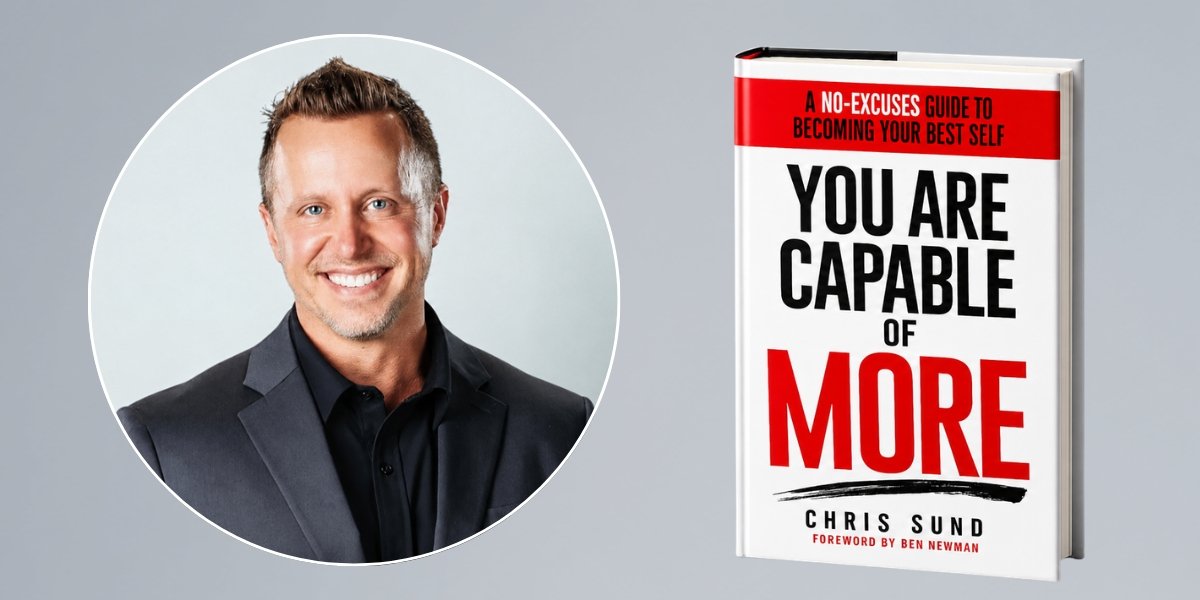
Chris Sund believes that distinction matters. Through his work as an executive, speaker, and author, Sund has seen highly capable people hesitate to use it. His experience led him to a broader conclusion: confidence does not necessarily mean eliminating self-doubt. Often, it means learning how to respond when it appears.

Chris Sund on the Voice Behind Self-Doubt

Self-doubt can influence decisions long before anyone else sees it.

A person may hesitate to pursue a promotion, avoid a difficult conversation, postpone a business idea, or remain in a familiar role despite knowing they could contribute at a higher level. From the outside, the hesitation may look like a lack of ambition, but the person experiencing it may be dealing with a very different internal conversation.

Sund’s perspective is that people do not necessarily need to wait until that voice disappears. They can learn to recognize it without automatically accepting what it says.

That distinction creates a more useful definition of confidence.

Confident people can question themselves. They can feel uncertain about a decision or wonder whether they are ready. What changes is what happens next. Instead of letting doubt determine the outcome, they learn to answer it and keep moving forward.

Comparison Can Make the Voice Louder

Self-doubt rarely exists in isolation. Comparison can amplify it.

People often see other individuals at their most visible moments: the promotion, successful business, award, presentation, achievement, or finished project. They then compare those moments with their own unfinished work, uncertainty, and setbacks.

The comparison is rarely equal.

Someone is comparing their entire experience with a carefully selected portion of someone else’s.

That can make the distance between where a person is and where they want to be appear much larger than it actually is. Instead of seeing another person’s achievement as evidence of what may be possible, they can interpret it as evidence that they are falling behind.

Sund’s message challenges that interpretation. Other people’s progress does not establish the limits of someone else’s capability. It can provide information or inspiration, but it does not determine what another person can become.

What Chris Sund Found Beyond His Own Experience

Sund did not want his perspective to rest entirely on what he had observed inside his own companies. After writing You Are Capable of More, he surveyed more than 200 working adults to see whether the pattern appeared beyond his immediate professional environment.

Ninety-two percent of respondents said they believed they were capable of more than they were currently doing.

When asked what was getting in the way, respondents repeatedly identified four barriers: self-doubt, fear of failure, comfort, and being too busy. Self-doubt was the most common response.

Leaders were not exempt. According to Sund, they were also among the people most likely to say they were capable of significantly more.

The findings reinforce an important point: capability and current output are not necessarily the same thing.

Someone may be doing less than they are capable of doing without lacking talent or ambition. Internal barriers can affect whether that capability is actually put into action.

The Four Barriers to More

Sund’s framework identifies four common obstacles that can keep people from using more of their potential.

Self-doubt can cause people to question whether they are capable.

Fear of failure can make the possibility of a negative outcome feel more important than the possibility of growth.

Comfort can make the familiar option seem safer, even when it is no longer the most productive one.

Being too busy can create a different form of avoidance. When every available hour is already committed, pursuing something meaningful can continually get pushed to later.

These barriers can overlap. A person may doubt their ability, fear the consequences of trying, remain comfortable with the current situation, and use a busy schedule as a reason not to act.

The answer is not to pretend those barriers do not exist. It is to identify which one is making the decision and begin addressing it deliberately.

Chris Sund’s Approach to Answering the Inner Voice

The practical lesson in Sund’s work is not that people should wait until they feel completely confident.

It is that they can begin practicing a different response.

When self-doubt says an opportunity is beyond reach, the response can be to examine the evidence rather than accepting the assumption.

When fear predicts failure, the response can be to consider what taking the risk could make possible.

When comfort argues for staying where things are, the response can be to determine whether familiarity is actually serving the person’s goals.

And when busyness becomes the default explanation, the response can be to decide whether the priority is important enough to receive time and attention.

This approach doesn’t require people to silence their inner voice. It requires them to stop treating every thought as an instruction.

Moving From Self-Doubt to Action

You Are Capable of More: A No-Excuses Guide to Becoming Your Best Self develops this philosophy through personal stories, lessons, and actionable frameworks designed to help readers address the barriers that limit their potential.

For Sund, the objective is not perfection. It is progress through greater ownership of the choices that shape a person’s work, leadership, relationships, and direction.

That starts with recognizing the difference between a thought and a fact.

Feeling unprepared does not automatically mean being unprepared. Feeling uncertain does not automatically mean making the wrong decision. And hearing a voice that questions what is possible does not mean that voice has to determine what happens next.

Confidence, in this sense, is not the absence of doubt.

It is the ability to hear doubt, answer it, and keep moving.

Explore / Learn More and Connect with Chris Sund

Website: You Are Capable of More

Book: You Are Capable of More: A No-Excuses Guide to Becoming Your Best Self

LinkedIn: Chris Sund

Instagram: Chris Sund

Facebook: Chris Sund