US Business News

Luke Adams Expands Data Center Youngbloods as Demand Grows for America’s Digital Infrastructure Workforce


By: Ethan Rogers

As artificial intelligence and cloud computing fuel continued investment in data centers across the United States, Data Center Youngbloods founder and CEO Luke Adams is expanding his company around a challenge he believes will become increasingly important to the industry’s growth: finding and developing the people needed to build and operate digital infrastructure.

Data Center Youngbloods, known as DCYB, is expanding from a professional community into an integrated workforce platform for the data-center and digital-infrastructure industry.

The company has built a 1,000-member professional community and is now developing a broader ecosystem that brings together industry networking, training, career guidance, a careers hub, and employer-facing talent services.

The expansion is designed to address both sides of a growing workforce problem. People interested in digital-infrastructure careers often face a fragmented path into the industry, while employers need stronger pipelines of candidates who understand the roles, skills, and operating environment associated with data centers.

“The biggest problem in our industry right now is that infrastructure is scaling faster than the workforce pipeline needed to build and operate it,” Adams said.

For Adams, that imbalance represents an opportunity to build something larger than another professional network or recruiting company.

His long-term objective is to position DCYB as part of the workforce infrastructure supporting America’s rapidly expanding digital economy.

Building Around a Growing Business Problem

The surge in artificial intelligence has brought unprecedented attention to the physical infrastructure behind technology.

AI applications require enormous amounts of computing capacity. That capacity ultimately depends on data centers and the wider ecosystem of businesses that construct, power, connect, maintain, and operate them.

As the industry grows, so does its need for specialized workers.

Critical-facilities professionals, electricians, mechanical specialists, networking professionals, construction teams, engineers, operators, and other technical workers all play roles in bringing infrastructure online and keeping it operational.

Adams believes the labor side of that equation has received less attention than other constraints.

Companies regularly discuss access to power, suitable land, equipment, capital, and construction capacity. But without enough qualified people, those resources cannot automatically translate into operational data-center capacity.

That observation became central to DCYB’s business case.

“The reason we built this company was to make the path into digital infrastructure clearer, more connected, and more accessible for the people who will build its future,” Adams said.

From Community to Workforce Platform

DCYB began primarily as a professional community and industry network.

Adams focused the company’s early stages on establishing credibility, developing relationships, learning from people working within the industry, and creating a community around digital-infrastructure careers.

As DCYB grew, Adams saw an opportunity to expand beyond networking.

Members wanted to know what positions existed, what certifications were relevant, how to develop applicable skills, and how to connect with employers.

Companies, meanwhile, needed access to emerging talent that had a better understanding of the industry.

The overlap between those needs helped shape DCYB’s next phase.

“Community creates trust, but training, career intelligence, and employer access create durable value,” Adams said.

DCYB is now developing a platform intended to connect those functions instead of treating recruiting, education, career guidance, and networking as separate experiences.
Photo Courtesy: Luke Adams

A Business Model Connecting Talent and Employers

The company’s current and planned services include community memberships, training cohorts, career-path and certification guidance, employer memberships, talent placement, enterprise training, and a dedicated careers hub.

DCYB’s careers hub is being developed to aggregate relevant employment opportunities while providing users with additional information about qualifications, certifications, and experience associated with different roles.

Technology and automation are also expected to become increasingly important to the model.

DCYB is developing processes around job aggregation, digital-infrastructure role filtering, certification guidance, career-path mapping, and workflows designed to connect members and employers more efficiently.

The company expects to roll out these capabilities in phases as the platform develops.

“What separates us from other companies is that we connect community, career readiness, and employer access in one platform built specifically for digital infrastructure,” Adams said.

The business is designed to generate revenue through several channels, including talent memberships, employer memberships, placement fees, course sales, enterprise training contracts, and potential partner programs.

DCYB is not publicly disclosing current revenue figures.

A Nationwide Workforce Strategy

Headquartered in Boston, Massachusetts, DCYB is building around a nationwide digital model rather than a single regional market.

Its target audience includes people entering or advancing within data centers, critical facilities, cloud infrastructure, construction, networking, and related infrastructure careers.

On the employer side, the platform is designed for companies throughout the digital-infrastructure ecosystem, including data-center operators, colocation providers, critical-facilities teams, mission-critical contractors, engineering and construction businesses, infrastructure technology providers, and other organizations competing for relevant talent.

A particular area of focus is junior-to-mid-career talent.

Adams believes capable workers inside and outside the technology sector could transfer into digital infrastructure if they had better visibility into available career paths.

Creating that visibility is one of the problems DCYB wants to solve.

For members, the company aims to reduce the learning curve between becoming interested in the industry and understanding how to pursue a realistic career within it.

For employers, the goal is to reduce some of the time and friction involved in finding motivated, relevant talent.

Luke Adams Takes a Long-Term Approach to Growth

Adams’ role has changed as DCYB has evolved.

What began with hands-on community development, brand building, operations, and relationship development is expanding into work around strategic partnerships, platform design, capital planning, and building the internal systems needed to support growth.

Adams said one of his biggest business lessons has been the importance of solving an operational problem rather than simply pursuing an interesting concept.

“Build around a real operational pain point, not just an interesting idea,” Adams said. “If the problem is urgent for both sides of a market, execution and trust matter more than noise.”

That philosophy has also influenced how he approaches growth.

Rather than adopting the startup philosophy of moving quickly regardless of the consequences, Adams believes companies operating around critical infrastructure have to balance speed with reliability and reputation.

His broader philosophy is to build useful systems, protect trust, and remain close to the people experiencing the problem the company is trying to solve.

“Build trust through usefulness,” Adams said. “If you help people make better decisions and create real opportunity, growth becomes a result, not the only goal.”

The Next Stage of DCYB

Over the next 12 to 36 months, DCYB plans to continue expanding its member community, develop and improve its careers hub, establish repeatable training cohorts, build employer and industry-association relationships, and expand its placement and enterprise-training capabilities.

The company is also exploring a seed financing round to support platform development, strategic hiring, and go-to-market execution.

Any future hiring, financing, partnerships, and platform launches remain subject to execution as the company develops.

Longer term, Adams sees an opportunity for DCYB to expand beyond the United States into a broader North American and potentially international workforce ecosystem.

The company’s three-year vision is to become a recognized workforce platform for digital infrastructure, supported by a larger community, recurring employer relationships, scalable training and placement offerings, and a technology-enabled careers ecosystem.

Building the Workforce Behind the Digital Economy

The larger bet behind Data Center Youngbloods is that workforce development will become more strategically important as AI and digital infrastructure continue to expand.

Adams expects future data-center professionals to become increasingly interdisciplinary, working across areas such as electrical and mechanical systems, critical facilities, networking, construction, software, automation, AI operations, and sustainability.

That evolution could make structured career development and reliable talent pipelines more valuable to both workers and businesses.

“Over the next several years, I believe the companies that invest early in people and talent pipelines will be as strategically advantaged as the companies that secure power, land, and capacity,” Adams said.

DCYB ultimately wants to become what Adams describes as the “workforce layer of digital infrastructure.”

The vision centers on connecting two groups with increasingly aligned interests: people searching for meaningful careers in a growing industry and businesses searching for the talent required to sustain that growth.

For Adams, reaching 1,000 members is an early milestone, not an endpoint.

The larger opportunity is to build a system that turns growing interest in America’s digital-infrastructure economy into clearer career pathways, and ultimately helps develop the workforce responsible for building its next generation.
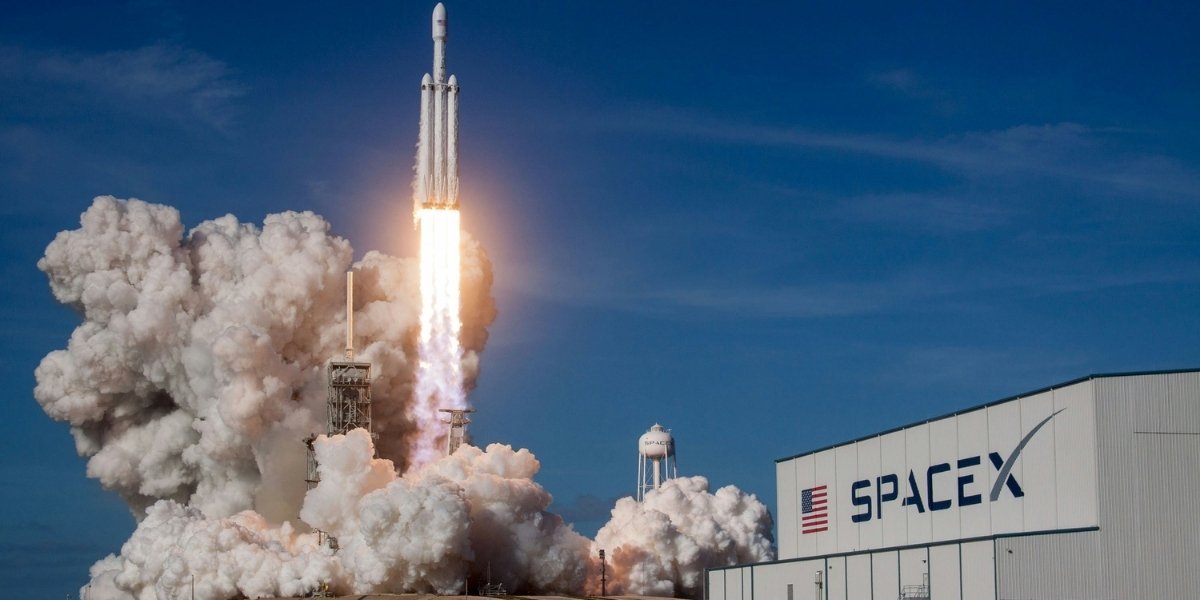
SpaceX Plans $100B Starship Complex in Louisiana

SpaceX plans to build a $100 billion Starship launch complex in southern Louisiana, adding major aerospace infrastructure to the state. The project is expected to include launch facilities and support infrastructure while creating thousands of direct and indirect jobs in the region.

Key Takeaways

  • SpaceX plans to invest $100 billion in a Starship complex in southern Louisiana.
  • The facility will occupy a 125,000-acre site on Pecan Island in Vermilion Parish.
  • SpaceX expects the project to create more than 3,000 direct jobs over 10 years.
  • Louisiana Economic Development estimates more than 8,100 additional indirect jobs.
  • Construction is expected to begin by the end of 2027, with initial operations targeted for 2030.

SpaceX Announces $100 Billion Louisiana Starship Complex

SpaceX plans to invest $100 billion to develop a new Starship launch complex in southern Louisiana, expanding its launch infrastructure beyond its existing South Texas operations and planned Florida facilities. The company named the proposed site Starbase Louisiana and plans to use it for Starship launches and related operations. 

The facility will be built on a 125,000-acre site at Pecan Island in Vermilion Parish. Louisiana Economic Development said the campus is designed to support thousands of launches annually when fully developed.

SpaceX President and Chief Operating Officer Gwynne Shotwell said the facility will eventually support a high-frequency Starship launch operation. The company’s plans include infrastructure for producing and handling rocket propellant, generating power, processing vehicles and moving equipment by water.

The Louisiana project adds another U.S. location to SpaceX’s Starship launch plans. The company’s existing Starbase facility is in South Texas, while another launch facility is planned in Florida. The Louisiana complex is intended to expand the company’s capacity for Starship operations.

The proposed investment also represents a major private-sector construction project for Louisiana. State officials said the development is expected to generate direct employment at SpaceX as well as additional jobs among contractors, suppliers and other businesses connected to the project.

Starship Launch Infrastructure Planned for Vermilion Parish

The Starbase Louisiana site will cover roughly 125,000 acres along the Louisiana coast. SpaceX selected the Pecan Island location for a large-scale launch complex capable of accommodating multiple launch facilities and supporting infrastructure.

Louisiana Economic Development said the completed campus is expected to include five launch complexes, each with two launch pads. The site is also planned to include propellant farms, a propellant production facility, power infrastructure, vehicle processing facilities and employee housing.

The facility’s design is intended to support a large number of Starship launches. SpaceX said the site will eventually be capable of supporting thousands of launches each year, making launch frequency a central feature of the planned complex.

The location also provides SpaceX with access to Gulf Coast transportation infrastructure. Plans released by the company include deep-water shipping capabilities for the campus, along with facilities for processing and handling vehicles and materials.

Propellant infrastructure will form another major part of the site. The proposed campus includes facilities for producing and storing rocket propellant, as well as power-generation infrastructure needed to support operations.

The scale of the planned facility distinguishes it from a launch pad alone. The project is structured as a broader campus combining launch operations with manufacturing, logistics, power and other supporting functions.

Planned Launch and Support Infrastructure

The planned infrastructure is intended to allow SpaceX to handle multiple stages of Starship operations at one location. Vehicle processing, propellant production, launch facilities and transportation infrastructure are all included in the development plans.

SpaceX’s Starship system is being developed for reusable spaceflight operations. The Louisiana complex is intended to provide additional capacity as the company expands its planned Starship launch operations in the United States.

Project Includes Launch, Propellant and Power Facilities

SpaceX’s Louisiana plans extend beyond launch infrastructure to include systems needed to support recurring operations. The planned campus will have propellant production and storage facilities, power-generation capacity and vehicle-processing areas.

The company also plans deep-water shipping infrastructure at the site. That facility is intended to support the movement of equipment and materials required for the large launch operation. An airport is also included in SpaceX’s plans for the self-contained campus.

The planned complex will include employee housing as part of its infrastructure. Louisiana Economic Development lists housing among the facilities expected at full buildout, alongside launch pads, propellant facilities and vehicle-processing operations.

SpaceX expects the Louisiana facility to support Starship launches as well as satellite-related operations. The company’s plans include using Starship for future satellite deployment activities, including its broader satellite ambitions.

The Louisiana project is part of a larger commercial space infrastructure environment that includes companies developing systems for lunar construction and other space-based operations. A recent commercial aerospace partnership, for example, paired lunar construction technology with remotely operated robotics for planned activities on the Moon. 

SpaceX’s plans call for the Louisiana location to become its largest launch facility. At full buildout, the site is expected to contain 10 launch pads across five launch complexes, in addition to its propellant, power, processing and housing facilities.

The combination of launch pads, propellant systems, power generation, vehicle processing and shipping infrastructure means the project will require multiple types of construction and industrial work. Those requirements form a substantial portion of the project’s expected economic activity.

SpaceX Expansion Expected to Create Thousands of Jobs

SpaceX expects the Louisiana project to create more than 3,000 direct jobs during the next decade. Louisiana Economic Development said those positions are expected to have an average annual salary of $92,600.

The state agency estimates that the project will generate more than 8,100 additional indirect jobs. Combined with the direct positions, the estimate exceeds 11,100 new job opportunities connected to the development in the Acadiana region.

The employment impact extends beyond SpaceX’s own workforce. The project will require contractors and suppliers for construction, infrastructure, equipment, transportation and other services associated with the campus. Louisiana Economic Development said the company has joined Source Louisiana, providing a pathway for Louisiana suppliers, contractors and service providers to compete for project-related work.

The project also includes an economic agreement with local governments. Louisiana Economic Development said the payment-in-lieu-of-taxes agreement provides a $20 million upfront payment and at least $25 million annually for 25 years, resulting in more than $645 million in direct local payments over the agreement’s duration.

The project is expected to create additional employment during construction before the permanent operating workforce is established. Louisiana Economic Development estimates peak construction employment at 34,516 jobs.

The combination of direct employment, construction work and supplier activity gives the Louisiana project an economic footprint beyond the personnel SpaceX will directly employ. The state expects contractors and vendors across the region to participate in the development.

Expected Employment and Regional Economic Activity

SpaceX Plans $100B Starship Complex in Louisiana

Photo Credit: Unsplash.com

The direct jobs are expected to be created over a 10-year period, while the project’s construction phase will require a separate workforce. The state has also identified supplier and contractor participation as part of the economic activity associated with the development.

The project therefore links aerospace operations with construction, manufacturing, logistics, professional services and other business activity required to build and operate the campus.

SpaceX’s wider infrastructure plans also include projects connected to computing and satellite systems. Intel’s participation in a Musk-led semiconductor manufacturing project in Texas, for example, includes planned chip production for applications tied to SpaceX and space-based computing.

Construction and Operations Timeline Extends Into 2030

Construction of the Louisiana Starbase complex is expected to begin by the end of 2027, according to Louisiana Economic Development. The state agency expects initial operations to come online in 2030.

SpaceX has separately said the first Starship launch from the Louisiana site is targeted for 2029. The launch target precedes the state’s broader initial-operations timeline for the full facility.

The schedule places several stages of development between the announcement and full operations. Construction must establish the launch complexes, propellant systems, power infrastructure, vehicle-processing facilities and other parts of the campus before the site reaches its planned operating capacity.

The project is expected to be developed in phases as the infrastructure is built. Louisiana Economic Development’s project information identifies the end of 2027 as the construction start target and 2030 as the expected date for initial operations.

The proposed facility will also require the development of transportation and utility infrastructure. The planned campus includes deep-water shipping capabilities, power generation and other systems intended to support its operations independently.

SpaceX’s plans call for the Louisiana location to become its largest launch facility. At full buildout, the site is expected to contain 10 launch pads across five launch complexes, in addition to its propellant, power, processing and housing facilities.

The Louisiana project will add capacity to SpaceX’s U.S. Starship operations while construction proceeds through the end of the decade. Its planned launch activity, workforce and supporting infrastructure will depend on completion of the campus and the systems required for Starship operations.

SpaceX’s planned launch infrastructure also sits within a larger U.S. commercial space market that includes satellite connectivity. Amazon’s acquisition of Globalstar has added another major corporate investment in satellite communications, with the deal positioning Amazon to compete more directly with SpaceX’s Starlink business.

Frequently Asked Questions

How much will SpaceX’s Louisiana Starship complex cost?

SpaceX plans to invest $100 billion in the Louisiana Starbase project. The investment covers development of the launch complex and its supporting infrastructure.

Where will SpaceX build the Louisiana Starship complex?

The complex will be built on a 125,000-acre site at Pecan Island in Vermilion Parish, Louisiana. The company has named the planned facility Starbase Louisiana.

How many jobs is the SpaceX Louisiana project expected to create?

SpaceX expects to create more than 3,000 direct jobs over 10 years. Louisiana Economic Development estimates the project will generate more than 8,100 additional indirect jobs, bringing the total to more than 11,100 new job opportunities.

When is construction of the SpaceX Louisiana complex expected to begin?

Louisiana Economic Development expects construction to begin by the end of 2027. SpaceX has separately targeted 2029 for the first Starship launch from the site.

When is the Louisiana Starship complex expected to begin operations?

Louisiana Economic Development expects initial operations to come online in 2030. The timeline refers to initial operations of the broader facility, while SpaceX has identified 2029 as the target for the first Starship launch.

Building a Strong Digital Presence for Mumbai Businesses

Mumbai’s business landscape is really competitive, and companies across different industries are always looking for better ways to get in front of potential customers. Traditional marketing still matters, but digital visibility is now part of business growth. Like, a well-optimized website, helpful content, and a smooth online experience can help brands attract and keep their right audience engaged.

Why online visibility matters anyway

When people need a product or a service, search engines are usually one of the first places they go, and really, not even by choice. So if a business appears solidly for the right searches, it basically has a better chance of meeting potential customers at exactly the right time, like, right when they’re ready.

SEO, or search engine optimization, helps a website become more visible by focusing on relevant keywords, quality content, technical performance, better site structure, and the overall user experience. If a company is targeting customers in Mumbai, local search intent becomes a major factor, so the approach should be built around it, not alongside it.

A seasoned SEO Company in Mumbai can help businesses find valuable search opportunities and build a plan that lifts organic visibility bit by bit. Rather than relying only on paid ads, companies can create a steadier, long-term flow of relevant visitors through organic search.

The website is the digital foundation

Getting search visibility can bring people to the website, but the site has to do its job too. Visitors might bounce pretty fast if pages are hard to navigate, load too slowly, or seem badly organized, like nothing makes sense.

This is where professional development comes in. A reliable Web Development Company in Mumbai can build websites that blend functionality, performance, responsive design, and real business goals.

Whether it is a corporate website, an e-commerce store, a service platform, or a customized web application, development should focus on delivering a smooth experience for users on different devices.

Connecting Development With SEO

Honestly, SEO and web development kinda shouldn’t be treated as separate things. When you make technical choices during building, those choices can totally change how search engines crawl, and even how they understand a site.

If the website is well built, you can get logical navigation, clean URL patterns, page templates that are already tuned, mobile responsiveness that actually works, proper redirects, and internal linking that feels natural. In practice, this can make crawling smoother for search engines while helping visitors find what they need faster. If you think about SEO earlier, during development, it may reduce the whole “big technical fix later” situation.

Content Still Drives Engagement

A good-looking website is nice, but it won’t keep people around unless the information is genuinely helpful. People want answers before they decide, contact, or buy. So businesses can share service guides, FAQs, industry takes, educational posts, and other useful resources, based on what their audiences are searching for. That helps customers understand the business, and it can also improve organic visibility at the same time.

The best content usually doesn’t just chase keywords. It focuses on real customer problems and then gives clear, practical explanations. That way a brand can look more trustworthy in its field, instead of sounding generic.

Making Better User Experiences

Most website visitors want things that feel fast, simple, and low-hassle. A site should show what the business does right away, then guide people to the next step, without making them sit there and wonder.

Things like bold call-to-action wording, straightforward navigation, easy-to-read pages, clear contact details, and simple inquiry forms matter more than people sometimes expect. For ecommerce, this also means smoother product discovery and a checkout process that isn’t packed with needless complications.

When solid design connects with dependable development, and SEO is handled properly too, you can end up with a website that keeps attracting visitors and supports real business goals.

Tracking Digital Growth

Digital marketing usually works best when companies stay on top of what’s happening and adjust what they’re doing based on the data, you know. So it’s not just “post and hope”, it’s more like watching the numbers as they move- traffic, search visibility, engagement levels, incoming inquiries, conversions, and all those other key signals that truly count can hint at what’s going on under the surface.

Regular reviews also make it easier to spot which pages are pulling their weight and which need refinement. Then SEO and web development can be adjusted gradually as customer behavior changes and the business direction shifts.

Looking Ahead

For businesses based in Mumbai, there’s a massive and varied digital audience out there, but getting in front of them isn’t just about launching a website. Really, to stand out, you need strong search visibility, content that actually answers questions, dependable technology in the background, and a user experience people can feel comfortable using, not just tolerating.

When professional SEO is combined with quality web development, brands get a stronger digital base. This combined approach makes it easier to be discovered, delivers better experiences for visitors, and creates more opportunities for steady growth, especially in a market that’s getting more competitive by the day.