By: Ethan Rogers
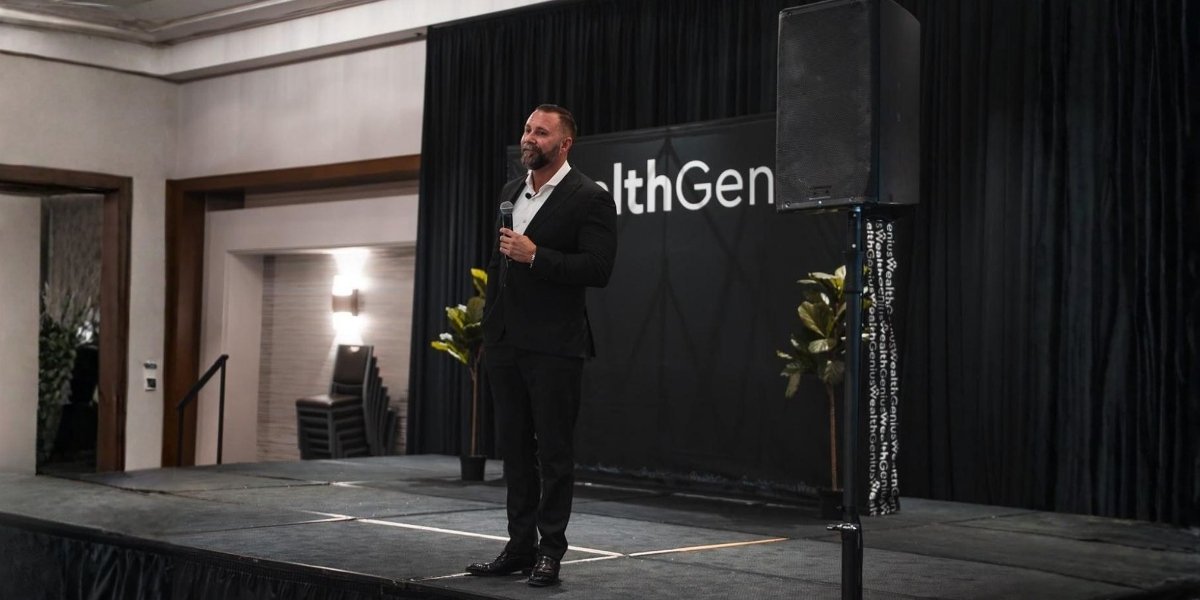
As artificial intelligence and cloud computing fuel continued investment in data centers across the United States, Data Center Youngbloods founder and CEO Luke Adams is expanding his company around a challenge he believes will become increasingly important to the industry’s growth: finding and developing the people needed to build and operate digital infrastructure.
Data Center Youngbloods, known as DCYB, is expanding from a professional community into an integrated workforce platform for the data-center and digital-infrastructure industry.
The company has built a 1,000-member professional community and is now developing a broader ecosystem that brings together industry networking, training, career guidance, a careers hub, and employer-facing talent services.
The expansion is designed to address both sides of a growing workforce problem. People interested in digital-infrastructure careers often face a fragmented path into the industry, while employers need stronger pipelines of candidates who understand the roles, skills, and operating environment associated with data centers.
“The biggest problem in our industry right now is that infrastructure is scaling faster than the workforce pipeline needed to build and operate it,” Adams said.
For Adams, that imbalance represents an opportunity to build something larger than another professional network or recruiting company.
His long-term objective is to position DCYB as part of the workforce infrastructure supporting America’s rapidly expanding digital economy.
Building Around a Growing Business Problem
The surge in artificial intelligence has brought unprecedented attention to the physical infrastructure behind technology.
AI applications require enormous amounts of computing capacity. That capacity ultimately depends on data centers and the wider ecosystem of businesses that construct, power, connect, maintain, and operate them.
As the industry grows, so does its need for specialized workers.
Critical-facilities professionals, electricians, mechanical specialists, networking professionals, construction teams, engineers, operators, and other technical workers all play roles in bringing infrastructure online and keeping it operational.
Adams believes the labor side of that equation has received less attention than other constraints.
Companies regularly discuss access to power, suitable land, equipment, capital, and construction capacity. But without enough qualified people, those resources cannot automatically translate into operational data-center capacity.
That observation became central to DCYB’s business case.
“The reason we built this company was to make the path into digital infrastructure clearer, more connected, and more accessible for the people who will build its future,” Adams said.
From Community to Workforce Platform
DCYB began primarily as a professional community and industry network.
Adams focused the company’s early stages on establishing credibility, developing relationships, learning from people working within the industry, and creating a community around digital-infrastructure careers.
As DCYB grew, Adams saw an opportunity to expand beyond networking.
Members wanted to know what positions existed, what certifications were relevant, how to develop applicable skills, and how to connect with employers.
Companies, meanwhile, needed access to emerging talent that had a better understanding of the industry.
The overlap between those needs helped shape DCYB’s next phase.
“Community creates trust, but training, career intelligence, and employer access create durable value,” Adams said.
DCYB is now developing a platform intended to connect those functions instead of treating recruiting, education, career guidance, and networking as separate experiences.
A Business Model Connecting Talent and Employers
The company’s current and planned services include community memberships, training cohorts, career-path and certification guidance, employer memberships, talent placement, enterprise training, and a dedicated careers hub.
DCYB’s careers hub is being developed to aggregate relevant employment opportunities while providing users with additional information about qualifications, certifications, and experience associated with different roles.
Technology and automation are also expected to become increasingly important to the model.
DCYB is developing processes around job aggregation, digital-infrastructure role filtering, certification guidance, career-path mapping, and workflows designed to connect members and employers more efficiently.
The company expects to roll out these capabilities in phases as the platform develops.
“What separates us from other companies is that we connect community, career readiness, and employer access in one platform built specifically for digital infrastructure,” Adams said.
The business is designed to generate revenue through several channels, including talent memberships, employer memberships, placement fees, course sales, enterprise training contracts, and potential partner programs.
DCYB is not publicly disclosing current revenue figures.
A Nationwide Workforce Strategy
Headquartered in Boston, Massachusetts, DCYB is building around a nationwide digital model rather than a single regional market.
Its target audience includes people entering or advancing within data centers, critical facilities, cloud infrastructure, construction, networking, and related infrastructure careers.
On the employer side, the platform is designed for companies throughout the digital-infrastructure ecosystem, including data-center operators, colocation providers, critical-facilities teams, mission-critical contractors, engineering and construction businesses, infrastructure technology providers, and other organizations competing for relevant talent.
A particular area of focus is junior-to-mid-career talent.
Adams believes capable workers inside and outside the technology sector could transfer into digital infrastructure if they had better visibility into available career paths.
Creating that visibility is one of the problems DCYB wants to solve.
For members, the company aims to reduce the learning curve between becoming interested in the industry and understanding how to pursue a realistic career within it.
For employers, the goal is to reduce some of the time and friction involved in finding motivated, relevant talent.
Luke Adams Takes a Long-Term Approach to Growth
Adams’ role has changed as DCYB has evolved.
What began with hands-on community development, brand building, operations, and relationship development is expanding into work around strategic partnerships, platform design, capital planning, and building the internal systems needed to support growth.
Adams said one of his biggest business lessons has been the importance of solving an operational problem rather than simply pursuing an interesting concept.
“Build around a real operational pain point, not just an interesting idea,” Adams said. “If the problem is urgent for both sides of a market, execution and trust matter more than noise.”
That philosophy has also influenced how he approaches growth.
Rather than adopting the startup philosophy of moving quickly regardless of the consequences, Adams believes companies operating around critical infrastructure have to balance speed with reliability and reputation.
His broader philosophy is to build useful systems, protect trust, and remain close to the people experiencing the problem the company is trying to solve.
“Build trust through usefulness,” Adams said. “If you help people make better decisions and create real opportunity, growth becomes a result, not the only goal.”
The Next Stage of DCYB
Over the next 12 to 36 months, DCYB plans to continue expanding its member community, develop and improve its careers hub, establish repeatable training cohorts, build employer and industry-association relationships, and expand its placement and enterprise-training capabilities.
The company is also exploring a seed financing round to support platform development, strategic hiring, and go-to-market execution.
Any future hiring, financing, partnerships, and platform launches remain subject to execution as the company develops.
Longer term, Adams sees an opportunity for DCYB to expand beyond the United States into a broader North American and potentially international workforce ecosystem.
The company’s three-year vision is to become a recognized workforce platform for digital infrastructure, supported by a larger community, recurring employer relationships, scalable training and placement offerings, and a technology-enabled careers ecosystem.
Building the Workforce Behind the Digital Economy
The larger bet behind Data Center Youngbloods is that workforce development will become more strategically important as AI and digital infrastructure continue to expand.
Adams expects future data-center professionals to become increasingly interdisciplinary, working across areas such as electrical and mechanical systems, critical facilities, networking, construction, software, automation, AI operations, and sustainability.
That evolution could make structured career development and reliable talent pipelines more valuable to both workers and businesses.
“Over the next several years, I believe the companies that invest early in people and talent pipelines will be as strategically advantaged as the companies that secure power, land, and capacity,” Adams said.
DCYB ultimately wants to become what Adams describes as the “workforce layer of digital infrastructure.”
The vision centers on connecting two groups with increasingly aligned interests: people searching for meaningful careers in a growing industry and businesses searching for the talent required to sustain that growth.
For Adams, reaching 1,000 members is an early milestone, not an endpoint.
The larger opportunity is to build a system that turns growing interest in America’s digital-infrastructure economy into clearer career pathways, and ultimately helps develop the workforce responsible for building its next generation.