US Business News

The Customer Survey Isn’t Dying. It’s Being Rebuilt


For about two decades, the answer to “what do our customers think” was simple. Send a survey. The Net Promoter Score, introduced in 2003, became the common language of customer satisfaction, a single number that executives could put on a slide and track from one quarter to the next. That number is not going away. What is breaking down is the assumption behind it: that one periodic questionnaire, answered by whoever bothers to respond, can stand in for the full voice of the customer.

A group of AI companies is reshaping what listening looks like, and what they are building is a more complete picture of the customer than any survey could provide on its own.

The pressure on the survey

The pressure on traditional surveys is well documented. Response rates have fallen for years as people get asked for feedback constantly, after a purchase, after a support chat, after an app download, and learn to ignore most of the requests. The exact numbers vary by source and channel, but the direction is not in dispute, and it creates a quieter problem than low volume alone. As fewer people respond, the ones who do tend to sit at the extremes, the delighted and the angry, which leaves a score drawn from an increasingly narrow and self-selected group.

A metric built on a shrinking sample starts to drift away from what the broad middle of customers actually thinks. Gartner even predicted in 2021 that most organizations would drop NPS as a customer service and support metric by 2025. That prediction was only partly borne out. NPS did lose ground: by 2025, a TELUS Digital and Statista survey found just 23% of enterprise customer-experience leaders still using it to measure performance. But it was downgraded within the stack rather than abandoned, and it remains widely used. It captured a real loss of confidence in any single survey score as the last word on customer sentiment.

Smarter surveys and a new source alongside them

The response to that pressure has not been to abandon surveys. It has been to change them, and to surround them with other sources.

On the survey side, the instrument itself is getting smarter. Instead of a static form with a fixed list of questions, AI-driven surveys can adapt as they go, ask intelligent follow-ups when an answer is vague, and keep the exchange short enough to avoid fatigue. The aim is fewer, better questions that pull richer answers from the people who do engage and turn open-ended replies into something a team can actually quantify. Unwrap, a customer-intelligence startup founded in 2022, sells exactly this kind of conversational survey product alongside its core analytics, built to ask adaptive follow-ups and convert free-text answers into structured insight. The survey, then, is part of where the category is heading.

The larger change is what now sits next to the survey. Customers produce an enormous volume of feedback without ever being asked: product reviews, support tickets, chat transcripts, app store comments, social posts, and messages in community forums. That unsolicited feedback has always existed, but reading it at scale was impractical. Advances in natural-language processing and large language models changed that, enabling sorting of hundreds of thousands of free-text comments, scoring their sentiment, and surfacing issues as they emerge. The work has a name now: customer intelligence, a descendant of what used to be called voice-of-the-customer analytics, and a wave of companies is building tools for it.

Unwrap is among the more visible. Ryan Millner and Ashwin Singhania, two former Amazon Alexa product leaders, founded it after building the data company Graphiq, which Amazon acquired in 2017. It spun out of the Allen Institute for AI’s startup incubator before settling in Santa Barbara, California. In January 2025, it raised a $12 million Series A led by Scale Venture Partners, a round Fortune reported as an exclusive. The company positions itself around analyzing unstructured feedback at scale and serving product teams, not only the research and customer-experience groups that have historically owned survey programs. It lists customers including Microsoft, GitHub, DoorDash, Lyft, JetBlue and Perplexity. Its lineup spans both sides of this shift: a Customer Intelligence platform that reads unstructured feedback, a Surveys product, and a support-quality tool. The pitch is about gathering all channels, including surveys, into a single view of the customer.

The argument running through the category is that unsolicited feedback is both more plentiful and more candid than the kind collected in surveys. Someone writing a review or filing a ticket is describing what genuinely bothers them, including problems no survey thought to ask about. The catch is that unstructured data is harder to trust. Sentiment models misread sarcasm and context, and free text lacks the clean comparability of a score you can chart over time. That is why most serious practitioners, Unwrap included, describe surveys and unstructured analysis as complementary rather than a straight swap. Surveys give you a stable benchmark and a comparable trend line. Unstructured analysis tells you what is driving the trend and catches issues a fixed questionnaire would never surface. The strongest programs run both, and weigh each for what it is good at.

A competitive field

Unwrap is not working in open water. Qualtrics and Medallia have spent years building large enterprise footprints and are now layering generative AI features into their suites. A set of AI-native rivals, among them Enterpret and Thematic, is chasing the same unstructured-feedback problem, several of them with a head start. Software-comparison sites routinely list all of these companies together, which is a fair measure of how crowded the positioning has become. The breadth of the field also reflects how unsettled the category still is: there is no obvious default, as there once was with NPS for measurement.

That sets up the question at the center of Unwrap’s prospects and those of its peers. Can a focused, AI-native tool hold its own against entrenched suites that can fold feedback analytics into a much bigger contract, and against a field of startups making a similar pitch? The incumbents have distribution and the pricing leverage that comes with it. The newer companies argue they were built from the start for this specific problem, rather than bolting a feature onto a platform designed for something else. Which advantage proves more durable is still an open question, and it is the kind of question that usually gets answered through consolidation.

Where this lands

What is clearer is the direction of travel. Companies across industries are steadily pointing language models at internal text that used to be too voluminous to use, and customer feedback is one of the most obvious targets. The near-term result is a change in the survey’s role, from the system of record for customer sentiment to one instrument in a wider kit, sitting alongside the unstructured stream and increasingly read by the same software.

For companies like Unwrap, the opportunity is to be the layer that ties those instruments together, the smart survey and the firehose of unsolicited feedback, into a single, current read of what customers want. The risk is the familiar one for any focused tool: that the capability becomes a standard feature inside a larger platform before an independent player gets big enough to stand on its own. Either way, the survey now shares the job with everything else customers say. The companies that win this category will be the ones that can turn all of it, asked and unasked, into something a team can act on quickly.

Paul Davis Restoration of Metro East Illinois Focuses on Claims Efficiency and Transparent Pricing

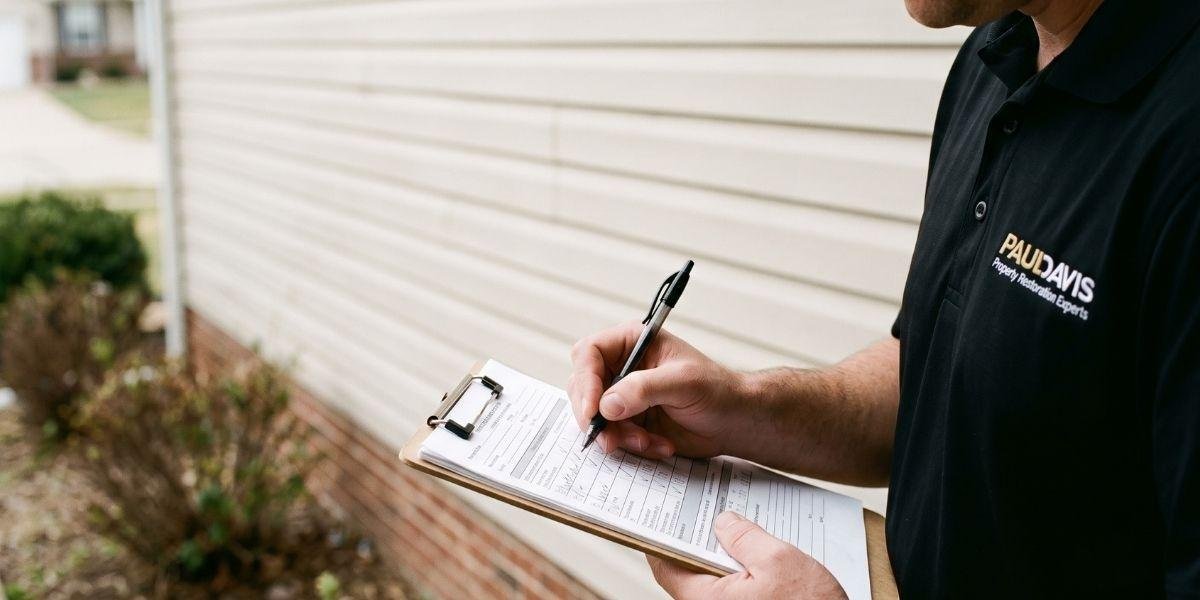
Getting an insurance claim approved quickly often depends on how well a restoration company documents damage from the very first visit. Paul Davis Restoration of Metro East Illinois has built part of its process specifically around that documentation, paired with free inspections and transparent estimates before any work begins across its Metro East service area.

Built Around Speed and Adjuster Coordination

Owner Adam Rennegarbe describes the company’s specialty directly. “We specialize in residential and commercial restoration where speed, documentation, and coordination with insurance adjusters matter most, allowing claims to move forward efficiently without unnecessary delays,” he said. That focus on documentation is meant to prevent the back-and-forth that can stall a claim when an adjuster needs more information than a restoration company initially provided. In Glen Carbon, one of the communities across the Metro East region, that efficiency matters most when a homeowner is trying to get repairs approved and underway as quickly as possible.

Transparent Pricing Before Work Begins

Rennegarbe also points to upfront pricing as something clients consistently appreciate. “We offer free inspections and provide transparent estimates before work begins,” he said, describing an approach meant to give homeowners a clear picture of scope and cost before committing to a project. That transparency is backed by the resources of the broader Paul Davis network. “We are a locally owned, veteran-owned Paul Davis franchise supported by a national restoration network,” Rennegarbe said. The team offers 24/7 emergency response, with a typical arrival window of 60 to 90 minutes depending on location and conditions.

What Metro East Illinois Clients Are Saying

Recent client feedback points to professionalism and follow-through as consistent themes. Tia-Marie B. said the team was on time, professional, and cleaned up thoroughly afterward, adding that this was her second time using the company and that she would highly recommend them. J Howe described a basement flood, saying project manager John Scott took charge immediately and completed the work promptly, according to plan, and within budget. Jessie S. praised Adam’s reliability and responsiveness, saying it’s clear he takes pride in the work his team delivers and in building strong relationships with the people he works with. Each of these projects, whether a small repair or a major flood, points to the same combination of speed and transparency clients said they valued most.

How does Paul Davis Restoration of Metro East Illinois help claims move faster?

The company documents damage thoroughly from the first visit and coordinates directly with insurance adjusters, which it says helps claims move forward without unnecessary delays.

Does the company offer free inspections?

Yes. The company provides free inspections and transparent estimates before any work begins, so homeowners understand the scope and cost of a project upfront.

Is Paul Davis Restoration of Metro East Illinois locally owned?

Yes. The franchise is locally owned and veteran-owned, backed by the resources and standards of the national Paul Davis restoration network.

What areas does Paul Davis Restoration of Metro East Illinois serve?

The franchise serves Edwardsville, O’Fallon, Belleville, Collinsville, Glen Carbon, Fairview Heights, Scott Air Force Base, and surrounding communities throughout Metro East Illinois. The team’s coverage spans the region on both sides of the Mississippi River near St. Louis, giving it familiarity with a wide range of housing stock and commercial property types.

Stay Connected With Paul Davis Restoration of Metro East Illinois

For project updates and local news, homeowners and businesses can follow Paul Davis Restoration of Metro East Illinois on Facebook and LinkedIn.

Shirley Luu & Associates to Celebrate Grand Opening in Tysons Corner with Elected Officials and Business Leaders

By Lennard James

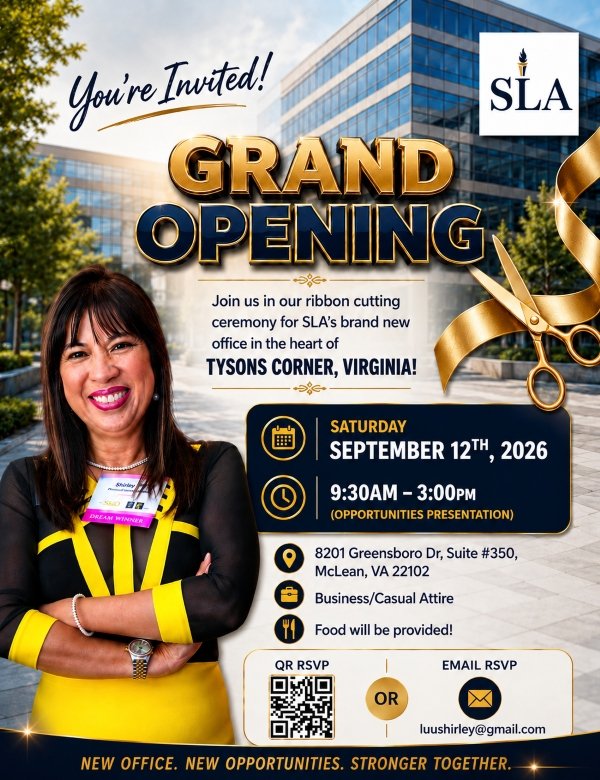
TYSONS CORNER, Va. – Shirley Luu & Associates is preparing for a milestone celebration as Dr. Shirley Luu welcomes elected officials, business and community leaders, VIPs, professional associates, clients, friends and supporters to the grand opening of the organization’s new office in Tysons Corner, Virginia.

The Shirley Luu & Associates Grand Opening and Ribbon-Cutting Ceremony will take place Saturday, September 12, 2026, from 9:30 a.m. until 3 p.m. at 8201 Greensboro Drive, Suite 350, McLean, Virginia 22102.

The gathering is being planned as a significant occasion celebrating the continued growth of Shirley Luu & Associates, commonly known as SLA. Invited guests for the momentous occasion include elected officials, VIP guests, business professionals, community leaders and other distinguished supporters, bringing together individuals from government, business and the community to recognize this important new chapter.

For Luu, the celebration represents considerably more than opening the doors to a new office. It is an opportunity to recognize the relationships that have contributed to SLA’s journey while establishing a new professional home from which the organization can pursue its future.

The theme featured on the official invitation captures that vision: “New Office. New Opportunities. Stronger Together.”

The September 12 event will include an official ribbon-cutting ceremony, networking opportunities and an opportunities presentation. Guests will have an opportunity to tour and experience the new location while connecting with Luu and others associated with the organization.

The presence of elected officials, VIPs and community leaders is expected to add significance to an occasion designed to recognize entrepreneurship, leadership and organizational growth.

Ribbon-cutting ceremonies have long represented an important milestone for businesses. They provide an opportunity for government, community and business leaders to recognize organizations investing in their communities while celebrating the entrepreneurs behind those investments.

For SLA, the ceremony will mark both an accomplishment and a beginning.

The new office is located in the Tysons Corner area of Northern Virginia, an important regional center for business and professional activity. The location provides SLA with a setting designed to support its continued operations while creating a professional environment for meetings, collaboration, education and relationship-building.

The grand opening also provides an opportunity to recognize Luu’s commitment to leadership and mentorship.

Throughout her professional journey, Luu has emphasized the importance of creating opportunities for others and developing relationships that extend beyond individual success. The message of becoming “Stronger Together” reflects a philosophy that sustainable organizations are built through people, partnerships and shared purpose.

That message will be visible throughout the grand-opening celebration.

Business leaders will have an opportunity to meet community stakeholders. Associates and clients can connect with other professionals. Invited elected officials and VIP guests will be able to experience firsthand the organization’s new environment and learn more about its direction.

The scheduled opportunities presentation will provide another important component of the day, giving attendees a closer look at SLA and its vision for the future.

For entrepreneurs, opening a new office is often one of the most visible symbols of progress.

Behind the ceremonial ribbon and photographs are countless hours of planning, decision-making and perseverance. Organizations grow because someone is willing to accept the responsibility that accompanies expansion and continue moving forward when challenges arise.

Photo Courtesy: Dr. Shirley Luu

The grand opening of the SLA office represents that entrepreneurial journey.

It also represents an opportunity for Luu to recognize those who have contributed along the way. Clients, associates, professional colleagues, family members, community partners and supporters all become part of the ecosystem surrounding a growing organization.

By bringing those groups together with elected officials and other distinguished guests, the grand opening becomes more than a traditional business ceremony. It becomes an occasion for recognizing relationships and introducing a broader community to SLA’s next chapter.

The event is scheduled to begin at 9:30 a.m. and continue until 3 p.m. Guests are encouraged to attend in business-casual attire, and food will be provided during the celebration.

Attendees may RSVP through the QR code appearing on the official grand-opening invitation or by emailing luushirley@gmail.com.

As guests arrive at 8201 Greensboro Drive and gather for the ceremonial ribbon cutting, the celebration will provide an opportunity to reflect on how far SLA has come while focusing on where the organization intends to go next.

The significance of the day will be reinforced by the people gathered to witness it. From elected officials and VIPs to business leaders, associates, clients and community supporters, the invited guests represent the different relationships that help businesses and communities move forward.

For Dr. Shirley Luu, September 12 will be an opportunity to welcome those individuals into a new space while celebrating a new season for Shirley Luu & Associates.

The scissors will eventually cut through the ribbon, photographs will capture the moment, and the doors of the new office will officially open. But the larger story will be about what those doors represent: continued growth, stronger relationships and new possibilities.

For Shirley Luu & Associates, the message surrounding this momentous occasion is fitting:

New office. New opportunities. Stronger together.

Berkshire Hathaway Outlines AI and Energy Strategy

Berkshire Hathaway CEO Greg Abel identified artificial intelligence and energy as areas of opportunity for the conglomerate, citing rising electricity demand from data centers and the role of Berkshire Hathaway Energy. The comments provide insight into how the company is assessing business opportunities connected to expanding AI infrastructure.

Key Takeaways

  • Greg Abel identified artificial intelligence and energy as areas of opportunity for Berkshire Hathaway.
  • Abel linked increasing data-center activity with higher electricity demand.
  • Berkshire Hathaway Energy is positioned to benefit from additional electricity demand associated with data centers.
  • Berkshire Hathaway has also agreed to acquire homebuilder Taylor Morrison for $6.8 billion.
  • Abel’s comments provide insight into Berkshire Hathaway’s business priorities under his leadership.

Berkshire Hathaway Identifies AI and Energy as Business Opportunities

Greg Abel said artificial intelligence and energy represent areas of opportunity for Berkshire Hathaway, connecting the two through the electricity requirements of data centers. Abel made the comments while discussing the conglomerate’s business strategy and opportunities associated with AI infrastructure demand.

The connection is relevant to Berkshire because the company owns Berkshire Hathaway Energy, one of its major operating businesses. The energy division operates utilities and other energy businesses, giving Berkshire an existing position in the infrastructure needed to supply electricity to large commercial customers.

Abel’s comments also follow Berkshire’s investment in Alphabet, whose business includes artificial intelligence operations. Berkshire invested an additional $10 billion in Alphabet, bringing its reported holding to nearly 106 million shares valued at about $37.8 billion, according to Reuters.

The Alphabet investment gives Berkshire a direct corporate investment connection to an AI company while its energy operations provide a separate business exposure to the physical infrastructure required to support data-center expansion.

Berkshire’s position in the energy sector also connects with the growing costs that large electricity users can face as computing facilities expand. A recent analysis of AI data center electricity costs examined how additional data-center demand has affected power costs for manufacturers in the PJM Interconnection region.

Greg Abel Connects Data Centers With Rising Electricity Demand

Abel pointed to the amount of electricity being consumed by data centers as evidence of the connection between AI growth and energy demand. In Iowa, for example, data centers accounted for about 8% of electricity load last year, according to the remarks reported by Reuters.

The figure illustrates the scale of electricity consumption associated with large computing facilities in a market served by Berkshire Hathaway Energy. Data centers require substantial and reliable electricity supplies to operate computing equipment, cooling systems and related infrastructure.

Berkshire Hathaway Energy’s operations already include utilities serving areas where data-center development is increasing. The company’s 2026 investor presentation said PacifiCorp was seeing continued demand for data-center load in Oregon, Utah and Wyoming. It also said the utility was pursuing agreements designed to ensure large customers support the costs associated with additional infrastructure.

PacifiCorp identified approximately 2,000 megawatts of additional data-center opportunities that could be available in Utah and Wyoming by 2030. The company also reported that hundreds of megawatts of incremental data-center load were covered by a Utah contract awaiting regulatory approval at the time of the presentation.

These projects demonstrate the direct connection between data-center construction and utility planning. Large facilities can require new generation, transmission and distribution capacity, making electricity supply a central consideration for developers and utilities.

Data Center Electricity Demand

Berkshire Hathaway Energy has previously reported substantial interest from data-center customers. In an earlier investor presentation, the company said that accepting all data-center requests to connect to its utilities would have increased data-center load capacity more than ninefold from its 2023 level by 2030.

The company’s more recent presentation shows that it is evaluating individual data-center projects based on their effect on utility costs and infrastructure requirements. PacifiCorp said customers seeking additional capacity must support the costs and risks associated with generation and transmission expansion without shifting those costs to other customers.

Berkshire Hathaway Energy Gains Importance in the Strategy

Berkshire Hathaway Energy provides the company with an operating business directly involved in electricity generation, transmission and distribution. Berkshire’s portfolio also includes businesses in insurance, rail transportation, manufacturing, services and retail.

The energy business therefore gives Berkshire exposure to electricity demand through an operating company rather than solely through financial investments in technology companies. Abel’s comments connect that existing business with the additional electricity requirements associated with artificial intelligence infrastructure.

Berkshire Hathaway Energy has been planning for large commercial loads in several of its service territories. PacifiCorp’s 2026 investor materials identified data-center activity in Oregon, Utah and Wyoming and described measures designed to ensure that large customers cover the marginal costs associated with their electricity demand.

The company has also been considering ways to serve hyperscale data-center customers. In Utah and Wyoming, PacifiCorp said approximately 2,000 megawatts of additional opportunities could be available by 2030.

The utility’s approach shows that data-center expansion involves more than constructing computing facilities. New large-load customers can require additional generation and transmission investment, along with commercial agreements that determine how those costs are allocated.

For Berkshire Hathaway, that creates a direct connection between its energy infrastructure and the companies building or operating data centers. Abel’s comments place that connection alongside the conglomerate’s exposure to companies involved in artificial intelligence.

Berkshire Hathaway Energy

Berkshire Hathaway has maintained substantial investment in its energy operations, including utility infrastructure. Earlier Berkshire materials described Berkshire Hathaway Energy as having the ability to undertake large utility projects requiring significant capital investment.

The company’s current planning around data-center customers provides a specific example of the type of electricity infrastructure that could be required as large computing facilities expand.

The relationship between computing investment and physical infrastructure is also evident in U.S. manufacturing activity. Recent capital-goods data showed increased orders for computers, electronic products and electrical equipment, categories that supply parts of the infrastructure used by data centers and power networks.

AI Infrastructure Creates New Energy Requirements

Artificial intelligence systems require data centers containing large amounts of computing equipment. Those facilities consume electricity to operate computing hardware and maintain the environmental conditions required for that equipment.

The resulting electricity demand has become a business consideration for utilities serving areas with data-center development. Berkshire Hathaway Energy’s PacifiCorp unit has reported data-center load requests in multiple western states and has been developing commercial and regulatory approaches for handling those loads.

The issue extends to the physical infrastructure needed to deliver electricity. PacifiCorp’s materials refer to generation and transmission expansions associated with new large customers. The company has also adjusted customer funding requirements and other provisions for large-load projects in its service territories.

For data-center developers, access to electricity can affect the ability to establish new facilities. For utilities, the arrival of a large customer can require investment in infrastructure and agreements governing the costs associated with additional demand.

Abel’s comments place these operational considerations within Berkshire Hathaway’s corporate strategy. Artificial intelligence creates demand for computing infrastructure, while that infrastructure requires electricity supplied through businesses such as Berkshire Hathaway Energy.

Berkshire’s investment in Alphabet provides another connection to AI. Reuters reported that the conglomerate’s Alphabet position had become its third-largest holding following the additional investment. The investment gives Berkshire direct financial exposure to a technology company with a major AI business, while its energy operations provide exposure to infrastructure supporting electricity-intensive data centers.

The two positions are distinct. Alphabet represents an investment in a technology company, while Berkshire Hathaway Energy operates infrastructure businesses that supply electricity. Abel discussed both areas as opportunities for Berkshire Hathaway.

The infrastructure requirements associated with AI are also creating opportunities for companies supplying equipment to data centers. For example, recent U.S. industry reporting has examined AI infrastructure investment plans involving semiconductor manufacturing capacity and processors used in data centers.

Berkshire Hathaway Expands Its Broader Business Strategy

Abel’s comments on AI and energy form part of a broader strategy for Berkshire Hathaway following his succession to the CEO role. He took over as chief executive in 2026 after Warren Buffett stepped down from the position.

The company has continued to operate across multiple industries under the new leadership structure. Its businesses include insurance and reinsurance, freight rail transportation, utilities and energy, manufacturing, service operations and retailing.

Berkshire has also expanded its U.S. homebuilding operations through an agreement to acquire Taylor Morrison for $6.8 billion, according to Reuters. Abel discussed the acquisition alongside the company’s other business priorities, including AI and energy.

The homebuilding transaction gives Berkshire another operating business exposed to U.S. housing activity, while its energy operations provide exposure to electricity infrastructure and its Alphabet investment provides exposure to artificial intelligence technology. These businesses remain separate parts of Berkshire’s diversified corporate structure.

Abel has also said Berkshire would continue evaluating opportunities to add businesses or acquire stakes in companies. At Berkshire’s 2026 annual meeting, he said the company would continue operating as a conglomerate rather than breaking itself apart.

Taylor Morrison Acquisition

Berkshire’s $6.8 billion agreement to acquire Taylor Morrison adds a major homebuilding business to the conglomerate’s portfolio. The transaction was discussed by Abel alongside other business and economic issues, including AI, energy and consumer conditions.

The acquisition is separate from Berkshire’s AI and energy activities, but it illustrates the range of operating businesses being managed under Abel’s leadership.

Frequently Asked Questions

What is Berkshire Hathaway’s AI and energy strategy?

Berkshire Hathaway CEO Greg Abel identified artificial intelligence and energy as areas of opportunity. He specifically connected AI-related data-center growth with increasing electricity demand and Berkshire Hathaway Energy’s business.

What did Greg Abel say about artificial intelligence and energy?

Abel said AI and energy offer opportunities for Berkshire Hathaway and pointed to the electricity required by data centers. He also discussed Berkshire’s investment in Alphabet and the role of Berkshire Hathaway Energy in serving growing power demand.

How are data centers affecting electricity demand?

Data centers consume substantial amounts of electricity to operate computing equipment and associated cooling systems. Berkshire Hathaway Energy’s PacifiCorp has reported increased data-center load requests in Oregon, Utah and Wyoming.

What role does Berkshire Hathaway Energy play in the company’s strategy?

Berkshire Hathaway Energy operates utilities and other energy businesses that supply electricity to customers. Its PacifiCorp operations are assessing additional data-center loads and the generation and transmission infrastructure required to serve them.

What other major business expansion has Berkshire Hathaway pursued?

Berkshire Hathaway agreed to acquire homebuilder Taylor Morrison for $6.8 billion. The transaction is separate from the company’s AI and energy activities and adds another U.S. operating business to Berkshire’s portfolio.