US Business News

The EB-1C Green Card Is Won on Corporate Structure, Not the Executive’s Resume


For a multinational company, moving a senior manager into the US operation permanently means the EB-1C, the multinational manager and executive branch of the employment-based first preference. It is one of the faster routes to a green card in the system, largely because of what it skips. But its logic is frequently misread at the start.

When the green card conversation opens, it usually opens with the executive’s track record. USCIS starts somewhere else entirely: with the legal relationship between the two companies and the shape of the role inside that structure. An impressive career sitting on top of a weak corporate frame does not get approved, and an ordinary-looking career inside a well-documented structure often does.

The One-Year Rule And Its Clock

The core personal requirement is employment history in the right place: the beneficiary must have worked outside the United States for at least 1 year within the 3 years preceding the petition, in a managerial or executive capacity. For someone already working for the US company, the 3-year window is measured from the most recent lawful admission rather than the filing date, a detail that decides eligibility in borderline cases.

The US side carries three tests of its own. The petitioning employer must have been doing business for at least 1 year, must hold a qualifying relationship, as parent, branch, subsidiary, or affiliate, with the company that employed the beneficiary abroad, and must intend to employ the person in a managerial or executive role here as well. The same kind of role, on both sides of the structure, inside one corporate family: that is the picture the file has to draw.

No Labor Certification, But Real Financial Proof

Like the rest of the EB-1 category, EB-1C skips labor certification entirely. That removes the longest stage of the standard employer-sponsored process, in which the company must first prove no US worker could fill the job. The petition itself is employer-filed: the US company submits Form I-140 on the executive’s behalf.

The trade-off is financial evidence. The employer must demonstrate a continuing ability to pay the offered wage from the priority date onward, proven through an annual report, a federal income tax return, or audited financial statements. For young or lean US subsidiaries, this is routinely the hardest exhibit in the file, and it deserves attention before filing, not after a question arrives.

The L-1a Connection

Most EB-1C cases are built on an L-1A foundation. The L-1A, the temporary intracompany transfer visa for managers, opens the US assignment; once the American operation matures, the same corporate facts support the permanent petition.

The efficient version of this sequence is planned from the first strategy meeting, because the corporate documents, organization charts, and role descriptions drafted for the L-1A become the evidence base of the EB-1C. Companies that treat the two filings as unrelated usually end up producing the same records twice, the second time under worse deadline pressure.

Timing And Family

As of September 2026, the Visa Bulletin listed EB-1 as current for applicants born outside India and China, meaning no priority-date wait for most nationalities; bulletin charts change monthly and are worth rechecking at filing time. Premium processing is available for the multinational executive classification at 45 business days, longer than the 15-day clock of some neighboring EB-1 classifications, and a relocation timeline should account for the difference.

The family moves with the petition: once the I-140 is approved, the spouse and unmarried children under 21 are eligible through the same case, without separate sponsorship.

What The Winning File Looks Like

Strong EB-1C petitions run three evidence tracks at once: the corporate relationship documented completely, the managerial role proven with organization charts and reporting lines, and the ability to pay shown in financials. An EB-1C attorney keeps those tracks synchronized, usually alongside the L-1A file that precedes them, and Grape Law’s guide to the category walks the requirements and the process in working detail for companies planning both stages together.

Rules and bulletin status were verified against USCIS records and the September 2026 Visa Bulletin as of September 2026.

Disclaimer: This article is for general informational purposes only and does not constitute legal advice. Immigration requirements, fees, processing times, and visa availability may change. Every case depends on its specific facts and circumstances. Consult a qualified immigration attorney regarding your situation.
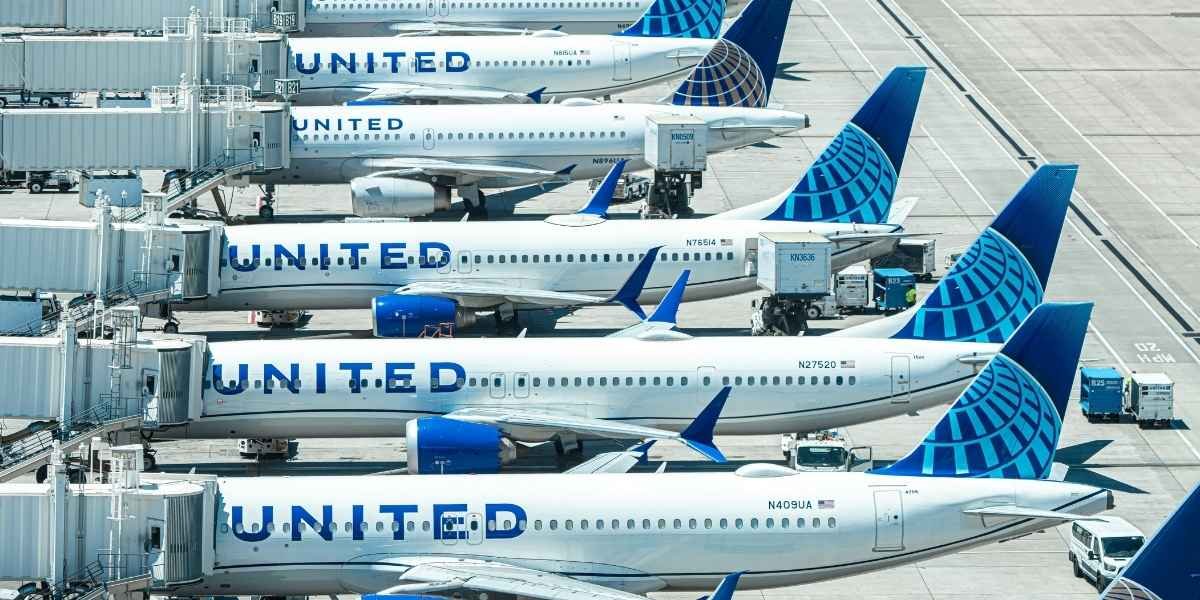

United Airlines Warns High Fuel Costs Could Keep Airfares Elevated

United Airlines airfares could remain under pressure into 2027 after the carrier said it expects high jet fuel costs to persist next year. The warning follows a 62% rise in United’s quarterly fuel expense and a 22.4% annual increase in the U.S. airline fare index. The figures highlight pressures influencing ticket pricing and flight schedules.

Key Takeaways

  • CEO Scott Kirby said on October 21 that United expects elevated fuel prices throughout 2027
  • Third-quarter fuel expense increased 62%, or about $1.8 billion, from a year earlier
  • The U.S. airline fare index rose 22.4% in the year through September, according to federal data
  • United recovered 72% of its additional fuel expense through revenue gains during the quarter
  • The carrier is reviewing flight capacity but has not announced a systemwide 2027 fare increase

United Airlines is preparing for another year of expensive jet fuel even after reporting its highest quarterly operating revenue. During an October 21 earnings call, Chief Executive Scott Kirby said, “Instead, we are planning for and actually expect fuel to remain elevated for all of 2027.”

The warning places renewed attention on ticket prices because United has recovered only part of its additional fuel expense through higher revenue. It also comes as a federal airfare measure shows substantial increases across the U.S. market, although the company has not specified how much any individual ticket might cost next year.

United Airlines Fuel Expense Jumps 62% Despite Record Revenue

United reported $17.9 billion in third-quarter operating revenue on October 20, an increase of 17.4% from the same period in 2025. Fuel expense climbed 62% to about $4.84 billion, roughly $1.8 billion more than a year earlier.

The carrier reported adjusted earnings of $2.54 per share and carried a record 49.5 million passengers. Flight capacity grew 1.3%, while total revenue per available seat mile, a measure of revenue generated against available flight capacity, increased about 16%.

The figures show why stronger ticket revenue has not eliminated cost pressure. Chief Financial Officer Mike Leskinen said United recovered approximately 72% of the year-over-year fuel expense increase in the third quarter. Fuel prices accelerated late in the period, when much of the revenue from already-booked tickets had been set.

United expects a similar recovery rate in the fourth quarter. Executives have expressed confidence that revenue can eventually cover all of the added fuel cost, but that is a management objective rather than a confirmed result.

For October through December, the airline’s financial outlook assumes an average fuel price of approximately $4.80 per gallon, compared with the $3.90 average reported for the third quarter. It projected adjusted earnings between 50 cents and $1.50 per share for the final quarter of 2026. Both figures are forecasts subject to changing conditions.

United Airlines Airfares Reflect a Wider U.S. Price Increase

Airline fares rose 22.4% during the 12 months ending September 2026, the Bureau of Labor Statistics reported on October 14. The index also increased 1.2% from August to September after seasonal adjustment, while the overall consumer price index was up 3.7% year over year.

That 22.4% figure does not describe an identical price increase across airlines or routes. The index tracks changes in a sample of airfares, not the cost of any single flight or the average amount every traveler pays.

The September airline fare increases also coincide with higher operating costs reported across the industry. However, the federal index cannot determine how much of the change reflects fuel, passenger demand, competition or the number of seats offered on specific routes.

At United, Chief Commercial Officer Andrew Nocella said passenger yields increased 17% in the third quarter. Leisure revenue rose 16%, while business revenue increased 22%. Yield measures passenger revenue relative to distance flown, making it related to ticket pricing without being identical to the federal airfare measure.

United’s total revenue per available seat mile improved even as the proportion of available seats filled edged lower. The results indicate the carrier collected more revenue relative to available capacity without needing a higher seat-occupancy rate.

Flight Reviews and Baggage Fees Add to Travel Costs

United is examining individual flights and markets as executives assess whether routes remain financially viable with higher fuel expenses. The company has said it can adjust capacity where flights are not profitable, but it did not provide a list of proposed route cancellations on the October 21 call.

Reduced service could leave fewer departure options on affected routes. That does not necessarily establish higher fares, since local competition, available seats and traveler demand also influence prices.

Airfares are only one component of a passenger’s total bill. In April, United increased its first- and second-checked-bag fees by $10 for tickets purchased from April 3 onward. For many domestic itineraries, the first checked bag costs $45 when prepaid or $50 when paid closer to departure, while exemptions apply to eligible travelers.

Those United checked baggage fees are separate from the company’s October fuel outlook. They nevertheless show how the full cost of a trip may differ from the initial ticket price, particularly for travelers checking luggage.

Kirby also said the airline industry appeared likely to add capacity in 2027, which could make it harder for carriers to collect higher fares. United expects fourth-quarter revenue growth of more than 20% year over year, but that company forecast does not establish what passengers will pay on future flights.

Frequently Asked Questions

What did United Airlines say about fuel prices in 2027?

CEO Scott Kirby said on October 21 that United is planning for elevated fuel costs throughout 2027. That expectation does not guarantee a particular fare level for next year.

Are United Airlines airfares expected to rise?

United Airlines airfares could remain under pressure if fuel costs stay high, but the airline has not announced an across-the-board increase for 2027. Fares will still vary by route, demand, availability and booking date.

How much did United’s fuel bill increase?

United said third-quarter 2026 fuel expense rose 62%, an increase of approximately $1.8 billion from a year earlier. Its total fuel expense was about $4.84 billion for the period.

Does the 22.4% airfare increase apply to every ticket?

No. The Bureau of Labor Statistics figure is a national price-index change over the year through September 2026, not a percentage increase for each airline, route or booking.

Professional Book Cover Design Services By Global Author Publishing

Every trip begins before you leave, usually with a picture: a postcard, a friend’s photo of a coastline, a single image that makes you want to go. Travel books work the same way. Readers decide whether to take the journey with you based largely on the cover. For New Yorkers writing about the roads that brought them here or the places they have wandered since, professional book cover design services turn a sense of place into an image readers cannot scroll past.

A Cover Is a Passport to the Story

A travel cover has to promise a feeling. Adventure, escape, discovery and homecoming each call for a different mood, and readers pick up on those signals instantly. A sun-bleached photograph suggests slow summers. A bold graphic map suggests an expedition. Muted tones and an old family photograph suggest a memoir about roots.

The cover also has to tell readers what kind of book they are holding. A travel memoir, a practical guide, a food journey and a photo book each have different conventions, and a good designer knows how to signal the right one.

What Travel and Memoir Covers Need

The strongest covers in the genre usually share a few qualities:

  • A clear sense of place, often through one striking image rather than a collage
  • A human element that hints at the author’s personal journey
  • Typography that evokes the setting or the era without becoming hard to read
  • A title that stays legible as a small thumbnail on a phone
  • For guidebooks, a clear subtitle and a look that can extend across a series

Your Photos or an Illustration?

Many travel writers want to use their own photography. That can work beautifully if the image is high resolution and you own the rights to it. Designers can crop, adjust color and add typography so a personal photo looks like a professional cover.

Illustration offers another route. Hand-drawn maps, stylized cityscapes and painted landscapes can capture a place with more personality than a photo. Authors turning family trips into adventures for young readers can pair children’s book writing services with children book illustration services for a picture book that carries a love of travel to the next generation.

Inside Matters Too

Travel books often include photographs, maps and captions, which makes the interior more complex than a standard novel. Book formatting services arrange images and text so pages feel like a well-organized journal rather than a cluttered scrapbook. Professional book editing services keep the narrative moving between destinations. Photo-rich editions also need careful color settings for online book printing services, especially for hardcover gift editions.

Taking Readers Along

Travel stories reach readers in many ways. The best audiobook services can turn a memoir into a listening companion for planes and trains. Book trailer services can cut footage from your own trips into a short, atmospheric preview. Practical guides often work well as digital titles, and professional eBook writing services for authors can help turn years of notes into a clear, easy-to-update e-book.

Getting the Book Into Travelers’ Hands

Book marketing services can time campaigns around travel seasons and holidays. Author website design services create a home with photo galleries, maps and buying links, and SEO content writing services help that site appear when readers search for the places you write about.

Choosing a Design Partner

Review portfolios for covers in your genre, not just attractive designs in general. When comparing the best book publishers, ask how many cover concepts you will see and how revisions work. The best book publishing company for a travel writer will treat the cover as the first page of the journey.

Make the First Step Unforgettable

Whether your journey began in Queens or ended in Kyoto, readers will meet it through the cover first. Professional book cover design services make that first step count. Global Author Publishing designs covers in styles from minimalist to photo collage, and a free author consultation is a good place to start sketching yours.

Alegre de Pilipinas CEO Joins Treze Mornings on IBC

Janice Israel Delima, chief executive officer of Alegre de Pilipinas, appeared as a special guest on Treze Mornings on Thursday, October 8, 2026. The live broadcast ran from 6:00 AM to 8:00 AM on IBC.

The appearance was one stop in a two-week working visit to the Philippines. Delima built the trip around business meetings, partnership talks and promotional activity for Alegre de Pilipinas. She did not treat it as a vacation.

Inside the Treze Mornings Broadcast

IBC, formally the Intercontinental Broadcasting Corporation, broadcasts on free television channel 13 from its compound on Capitol Hills Drive in Quezon City. The network is government owned but operates on commercial revenue rather than state funding. It carries news, public affairs, sports, lifestyle and entertainment programming.

Treze Mornings premiered on April 13, 2026. The two-hour program belongs to the network’s TreZe news rebrand, which repositioned the division toward Gen Z and millennial viewers across television and digital platforms. The format combines news, weather, traffic and market updates with discussion segments and guest features. IBC simulcasts the show on DWAN 1206 AM and DWAN TV. The program announced the guesting on its official page.

A Working Schedule, Not a Holiday

Two weeks turned out to be tight. Delima’s calendar filled with meetings and media bookings almost as soon as she landed. Additional networks requested interviews that the schedule could not absorb.

Interest centered on how the company operates across two markets. Alegre de Pilipinas works from a United States base while sourcing talent, designers and brand partners from the Philippines. That structure raises practical questions about logistics, production and cross-border partnership, and those questions drove much of the on-air discussion.

What Alegre de Pilipinas Does

Photo Courtesy: Treze Morning Show

Alegre de Pilipinas began in 2022 as a United States based runway production, branding and marketing company. The business showcases Filipino creations and homegrown designers on international stages, often placing them alongside established international labels.

The company debuted at New York Fashion Week in February 2022 and has produced and joined shows in other markets since. Beyond fashion, Alegre de Pilipinas promotes Filipino businesses, products, models, artists and brand ambassadors to audiences outside the country. Show updates and designer features run on the official Alegre de Pilipinas page.

Recognition and Partners Behind the Guesting

The 4th Philippine Finest Business Awards and Outstanding Achievers 2026 named Delima Most Outstanding Woman Entrepreneur of the Year. La Visual Corporation and Sirbisu Channel organize the awards program. Dr. Allen M. Quirit serves as president, and Nirro De Leon Marcelo chairs the awards committee.

La Visual Corporation also arranged the Treze Mornings appearance as part of its media support for awardees.

Collaboration as the Through Line

Photo Courtesy: Treze Morning Show

The host Gui Cruz Buenaventura, Owner of Media Express Allan Afable Hobreo and CEO of Alegre De Pilipinas Janice Israel Delima

Delima used her airtime to talk about partnership rather than promotion. The conversation covered designer representation, talent development and the practical work of putting Filipino labels in front of international buyers and audiences.

That focus shaped the rest of the visit. Alegre de Pilipinas pursued collaborations with local creatives, production partners and media groups during the two weeks on the ground, with further guesting requests carried over for a return trip.

Building a Pharma-Adjacent Business from Scratch: Founding Jacimar Organics

By Amarachukwu Jacinta Abosi

Nobody warns you, when you are deep in pharmacology training, that one day you might find yourself negotiating with a shea butter supplier at seven in the morning before a full shift at the pharmacy counter. Founding Jacimar Organics Therapy Limited has meant learning, essentially from scratch, an entire second discipline, business, while trying to hold onto every bit of the scientific rigor the first discipline had spent years building in me.

Starting With Almost Nothing But a Standard

I did not start this company with significant capital, a manufacturing facility, or business training. What I started with was a standard, a refusal to let a personal-care product leave my hands without the same kind of testing rigor I would have demanded of any compound in a pharmacology lab, and the slow, often frustrating work of building everything else around that standard from nothing. Early batches were made in a home kitchen. Early testing was done on myself and a small, patient circle of friends and family willing to try something before it had any brand behind it at all. Early “marketing” was word of mouth, one satisfied user at a time.

The Capital and Sourcing Problem

The most persistent early challenge was not scientific; it was financial and logistical. Quality raw materials cost more than lower-grade alternatives, and a young company with limited capital faces a constant tension between sourcing the ingredients rigor actually requires and staying within a budget that early revenue can support. Reliable suppliers, ones whose shea butter or oils behaved consistently batch to batch, were not always the cheapest, and finding them took real time and real trial and error, often at real cost when a batch did not turn out as expected because of ingredient variability I had not yet learned to test for.

Balancing a Full-Time Clinical Role With a Growing Company

Throughout this period, I was not stepping away from my clinical and patient-care work to build this company; I was building it alongside a demanding full-time role as a nurse aide and pharmacist’s assistant. This meant the company was largely built in early mornings, late nights, and days off: formulation trials before a shift, supplier calls during breaks, packaging and fulfillment after work ended. It was, honestly, exhausting in a way that is difficult to fully convey after the fact. It was also, I now recognize, the reason the company’s foundation is as rigorous as it is, because everything had to be worth the scarce time I was giving it, which meant cutting corners was never an appealing shortcut, only a false economy.

Lessons Specific to Building in Nigeria

Manufacturing in Nigeria carries specific challenges worth naming honestly for other founders considering this path: navigating regulatory requirements through NAFDAC, managing supply chains that can be inconsistent in ways founders in more established markets rarely have to plan around, and building a customer base in a market where “natural” branding is common but genuine formulation rigor is not always visible or immediately rewarded by consumers who have not yet been taught to look for it. None of these challenges are reasons not to build here. They are simply the real conditions any founder in this space needs to plan for honestly, rather than discovering unprepared.

What I Would Tell Another Scientist-Founder

If another scientist is standing where I once stood, sensing a gap between their training and a business idea, unsure whether the leap is worth making, the advice I would offer is this: your scientific rigor is not a liability to set aside when you enter a commercial market. It is very often the exact advantage that market is missing. Building a business from scratch will still be genuinely hard, in ways no amount of laboratory discipline fully prepares you for. But the discipline itself, the refusal to accept a result you cannot explain, the insistence on testing rather than assuming, travels further than you might expect, from the bench all the way to the label.

Learn More About Jacimar Organics

For more about Jacimar Organics, visit its Instagram and Facebook pages. Additional reflections on my experience founding the business are available in my LinkedIn article.

Image 1

Placement: After “Starting With Almost Nothing But a Standard”

Copy: What I started with was a standard.

Design: A real, slightly lived-in home kitchen shot. Raw shea butter in a bowl, a small scale, a notebook with handwritten measurements. Natural window light with soft shadows, nothing staged-looking. The one line sits small in a quiet corner of the frame, in a simple serif or clean sans font.

Image 2

Placement: After “Balancing a Full-Time Clinical Role With a Growing Company”

Copy: Built in early mornings, late nights, and days off.

Design: A candid photo of a woman in scrubs at a table in early-morning light, filling small jars or labelling products. You can show her from the shoulders down or with her face out of focus if you don’t have a photo of Amarachukwu herself. The colours should feel warm and tired, like dawn light. The text goes along the bottom edge in small type.

Image 3

Placement: After “What I Would Tell Another Scientist-Founder”

Copy: From the bench all the way to the label.

Design: A close-up of a finished Jacimar product on a natural surface like wood or linen, with a glass dropper or test tube resting beside it. Use a shallow depth of field and natural light. The text sits in the soft-focus space. Add the logo very small, or leave it off and let the product label carry the brand.