For decades, one of the quiet advantages of being a large organization had very little to do with size itself.
It was access.
Large companies could afford to commission market research before entering a new category. They could benchmark competitors before repositioning a brand. They could study audience behavior before investing in a campaign, bring experienced strategists into important decisions, test assumptions, analyze cultural shifts, and ask outside experts to identify what leadership might be too close to the business to see.
Smaller organizations often made many of the same decisions.
They simply made them without the same intelligence infrastructure.
That imbalance is the market problem behind Datamorrow Solutions.
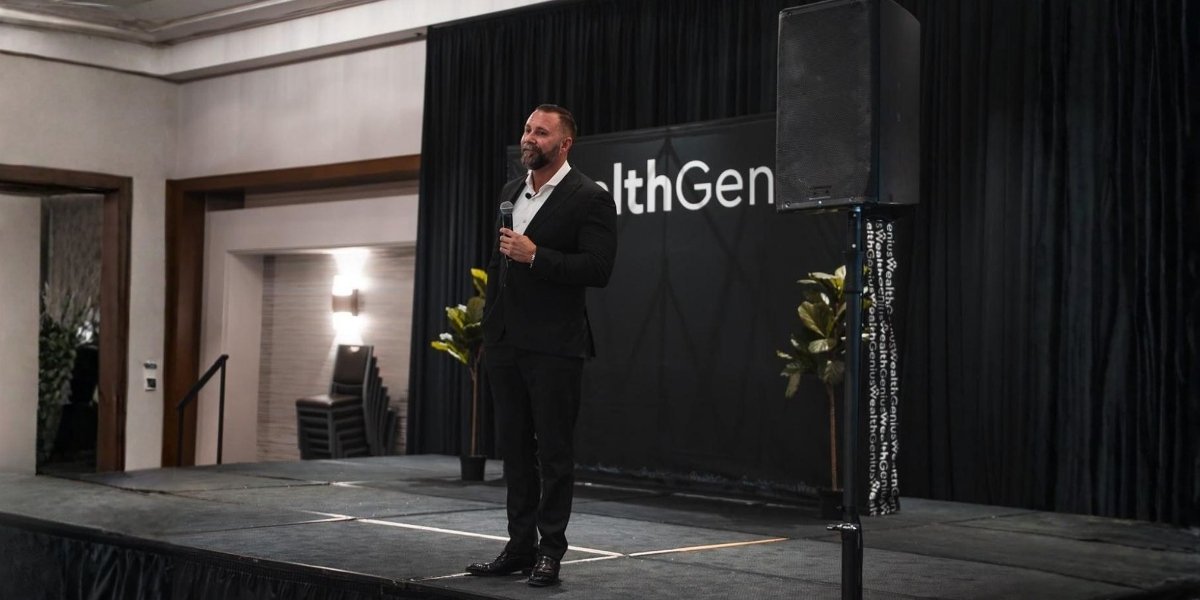
D. Benny Bennafield, the company’s CEO and Chief Storyteller, came to the problem from an unusual intersection of nearly three decades in brand, growth, digital, cultural strategy, and technology, and more than two decades of ministry service as an ordained deacon.
Eventually, those experiences produced the same question.
Why should the sophistication of a decision depend on the size of the organization making it?
A Familiar Access Problem
Bennafield had seen a version of the problem before.
In 2015, he helped launch Propellant Media around the idea that advanced media strategy and deployment technology should be accessible to small, emerging, and mid-sized businesses, not simply the largest advertisers with the largest budgets.
Propellant subsequently became a four-time Inc. 5000 company.
Years later, Bennafield began seeing the same structural gap one level upstream.
Technology had become more accessible. Media had become more accessible. Data had become more accessible.
Strategic intelligence had not.
Traditional consulting can provide enormous value, but the economics of the model were built largely around organizations capable of supporting large teams, lengthy engagements, extensive discovery, and substantial budgets.
Meanwhile, smaller companies, nonprofits, and churches still had to answer consequential questions.
Should the organization reposition?
Is the website telling the right story?
Why are donors not converting?
Which audiences are being overlooked?
How does the organization actually compare with competitors?
Will a corporate partner understand the value proposition?
What should leadership fix first?
And increasingly, what are search engines and AI systems telling people about the organization before anyone from the organization enters the conversation?
The decisions were not necessarily smaller.
The access to intelligence around them was.
The First Market Was Mission-Driven
Datamorrow began addressing that problem with particular attention to organizations where Bennafield believed the access gap was both obvious and consequential: churches and nonprofits.
That starting point was personal.
Bennafield’s ministry service had given him a close view of churches with considerable ministry depth, community impact, institutional history, and leadership capability that could nevertheless struggle to make the full value of what they had built visible to someone encountering the organization from the outside.
The nonprofit sector presented a similar contradiction.
Organizations could be changing thousands, or even millions, of lives while their public story made their scale, differentiation, impact, or partnership value surprisingly difficult to understand.
This is where the difference between doing important work and being understood as an important organization becomes economically significant.
A prospective donor does not experience the organization’s internal meetings.
A funder does not automatically know its history.
A corporate partner does not begin with institutional memory.
A prospective church member does not initially see everything happening inside the ministry.
They see evidence.
A website. Search results. Leadership profiles. Programs. Partnerships. Impact claims. Reviews. Videos. Donation pathways. Third-party references.
Those fragments become the outside interpretation of the organization.
And increasingly, another interpreter sits between the organization and the audience.
Artificial intelligence.
AI Changes the Economics, but Not the Entire Equation
Generative AI has dramatically compressed the time required to retrieve information, compare organizations, synthesize material, identify patterns, and produce strategic hypotheses.
That creates an obvious opportunity.
Work that once required armies of junior analysts and countless research hours can now be accelerated.
But Datamorrow’s operating thesis rests on an important distinction:
AI has democratized answers. It has not democratized judgment.
A polished recommendation can still be based on a poor assumption.
A competitor can appear to be the right benchmark while operating under completely different economics.
A tactic that worked brilliantly in one category can fail when transferred into another.
A pattern can be statistically visible but culturally irrelevant.
And an AI system can summarize whatever evidence it finds without knowing that the most consequential evidence is the information that should have been there but was missing.
That is the gap Datamorrow describes as the Judgment Gap.
The company uses AI to accelerate retrieval, comparison, synthesis, and analysis, then combines those capabilities with senior judgment, accumulated enterprise experience, outside-in evidence, benchmarking, audience psychology, and codified strategic frameworks.
The objective is not to replace strategic expertise with artificial intelligence.
It is to change the economics of delivering strategic expertise.
Seeing What the Organization Cannot See From Inside
Datamorrow’s process begins outside the organization.
Instead of first asking leadership what it wants the market to believe, the work examines what the available evidence already gives the market permission to believe.
That distinction matters.
An organization may describe itself as innovative while its public experience signals conventional.
It may believe its impact is obvious while its proof is difficult to locate.
Leadership may view several programs as an integrated platform while an outsider experiences unrelated initiatives.
A nonprofit may believe it has a compelling corporate-partnership proposition when its materials explain primarily why the nonprofit needs support rather than why the partnership creates value for the company.
The underlying principle is simple:
Internal intention and external perception are not the same data set.
Datamorrow examines that gap through strategic diagnosis, peer benchmarking, audience-journey intelligence, human-and-machine discovery, and an upgrade blueprint that turns the evidence into sequenced decisions.
The work is designed to end not merely with analysis, but with a leadership path: what needs to become clearer, what proof needs to become more visible, which audience barriers matter most, and what should happen over the next 30, 90, and 180 days.
When Intelligence Changes the Decision
The distinction matters most when the analysis affects what an organization actually does next.
At Mosaic Church in Mableton, Georgia, the outside-in work revealed that the challenge was not insufficient ministry depth. The church’s public infrastructure had simply failed to keep pace with what had already been built inside the ministry.
That is a very different problem.
Instead of treating the organization itself as deficient, leadership could focus investment on making its discipleship pathways, digital presence, visitor experience, care ministries, and community impact easier to understand and access.
At Mount Carmel Baptist Church in Cabot, Arkansas, the analysis helped expose both infrastructure and audience opportunities. The findings contributed to leadership hiring someone focused on graphics, publicity, social media, and the web. They also revealed that while the church visibly communicated its commitment to children and students, young adults might have more difficulty recognizing where they belonged.
And in the nonprofit sector, Step Up CEO Delores Druilhet Morton put the larger value proposition plainly:
“The strategic intelligence insights Datamorrow provides helps us, as non-profit leaders—especially small to mid-sized non-profits—to function with the same kind of sophistication as a much larger organization.”
Delores Druilhet Morton
CEO | Step Up | suwn.org
That may be the clearest expression of the economic argument behind Datamorrow.
Better intelligence does not simply give smaller organizations more information.
It is intended to help their leaders approach consequential decisions with a level of strategic sophistication that has historically been easier for much larger institutions to afford.
And it can change how the work that follows is prioritized.
The Next Democratization Layer
For much of the technology era, democratization has followed a recognizable pattern.
Capabilities once available only to large institutions become easier to deploy, less expensive to access, and eventually available to organizations much further down the market.
Computing did it.
Media did it.
Software did it.
Analytics did it.
Artificial intelligence is accelerating the pattern again.
Datamorrow is betting that strategic intelligence is next.
The company is not attempting to make every smaller organization behave like a Fortune 500 enterprise. Nor is the premise that AI eliminates the need for consultants, agencies, creative firms, digital partners, or experienced leadership.
The argument is narrower and potentially more important.
A church considering a major digital investment should be able to pressure-test the decision first.
A nonprofit preparing a corporate partnership strategy should be able to understand how a potential partner is likely to evaluate it.
A growing business preparing to reposition should be able to see how its competitors, customers, search engines, and AI systems already understand the category.
Organizations should not have to spend tens or hundreds of thousands of dollars simply to get better questions onto the table.
That idea has shaped Datamorrow’s model around senior-led, fixed-scope strategic intelligence rather than an enterprise-sized consulting engagement.
And for Bennafield, beginning with churches and nonprofits is not incidental to the business strategy.
It is part of the reason the company exists.
After a career spent around organizations able to purchase sophisticated capabilities, his ministry life exposed what happens when organizations doing consequential work are expected to make equally consequential decisions without them.
Technology finally made it possible to attack that imbalance differently.
The opportunity now is to make sure that cheaper information does not simply create more information.
It should create better decisions.
Because the real promise of AI may not be that every organization can suddenly have more answers.
It may be that organizations that were once priced out of the room can finally afford better judgment before making the decisions that matter most.
D. Benny Bennafield
CEO/Chief Storyteller
Datamorrow Solutions
404.226.9589
bbennafield@datamorrow.solutions
global-faith.solutions