By: Audrey Denise B. Cachuela
Americans spent about $520 billion on home improvements and repairs over the four quarters ending September 2026, roughly 2% more than the year before. (Source: Commercial Record, 2026) Growth that flat leaves you facing a question most homeowners would rather skip: when your home renovation budget can’t cover the whole wish list, what gets the money first? Jessica Holmes Holiday, founder and principal designer of HSH Collective, has spent 26 years helping homeowners work through those trade-offs.
She has worked through the 2008 financial crisis, the pandemic, and the rebuild that followed two devastating hurricanes on Anna Maria Island. Those experiences give her a practical view of which renovation decisions you need to make early and which ones can wait without hurting the finished home.
Annual spending should hover around $525 billion through the third quarter of 2027, with year-over-year growth slowing to 1.5% by then. (Source: Harvard Joint Center for Housing Studies, 2026) That makes remodeling spending in 2027 a long plateau, though half a trillion dollars is still a lot of renovating.
Housing weakness explains much of the slowdown in home renovation spending. Retail spending on building products has been flat to negative and remodeling permits have stagnated. (Source: Harvard Joint Center for Housing Studies, 2026) Housing starts are still declining, which adds to the pressure. (Source: Commercial Record, 2026) Larger discretionary projects are easier to defer when economic uncertainty rises. A failed HVAC system or a leaking roof demands attention right away, which pushes a kitchen remodel or an addition down the list. (Source: The Farnsworth Group, 2026)
Planning a Renovation for a Long-Term Residence
People are moving less, and that cools remodeling. Owners often improve a home before selling it or make changes shortly after buying, so fewer moves mean fewer of those projects. Staying put creates a new trigger. Homeowners staying in their homes longer may rethink what an improvement is for, since a kitchen that seemed tolerable for three more years looks very different when it has to last ten. (Source: The Farnsworth Group, 2026)
Many renovators already plan that way: 61% of renovating homeowners intend to stay put for 11 years or more, and 44% consider their residence a forever home. The most cited reasons to start a project are having the time (40%) and being financially ready (36%). (Source: Houzz, 2026)
Budgets are adjusting alongside those renovation priorities. The median renovation spend was $20,000 in 2025, but the median planned spend for 2026 slid to $15,000. (Source: Houzz, 2026) Completed spending and planned spending are different measures, and the smaller planned number points toward more deliberate choices.
Planning a renovation for a long-term residence starts with your own routines. Working from home several days a week makes lighting and workspace storage strong candidates for the budget. Kitchen circulation and seating deserve a closer look for anyone who entertains often. Before choosing finishes, name the problems you want the renovation to solve, because a room that looks different but still works poorly leaves your most frustrating issues untouched.
How to Prioritize Your Home Renovation Budget Before Construction Begins
Sort each decision by whether it becomes part of the building or stays easy to change later. You can move a sofa, swap a pendant light, or choose different artwork without much trouble, but shifting plumbing locations, reworking a kitchen layout, or adding electrical capacity after the walls and cabinets are finished can mean reopening work you already paid for. Good renovation planning starts with the choices that become part of the building, because they cost the most to revisit.
Timing also matters. Planning often takes longer than building, with kitchen projects averaging 9.5 months of planning against 5.8 months of construction. (Source: Houzz, 2026) Use those months to settle structural questions on paper, before a change requires a demolition crew.
Picture a homeowner who wants a coffee station in a new kitchen. Shelves and a machine are easy to add after construction, but an integrated coffee system needs a dedicated water supply or drain, and finished cabinetry and plumbing may limit the options by then. Settle that question early and the choice stays open.
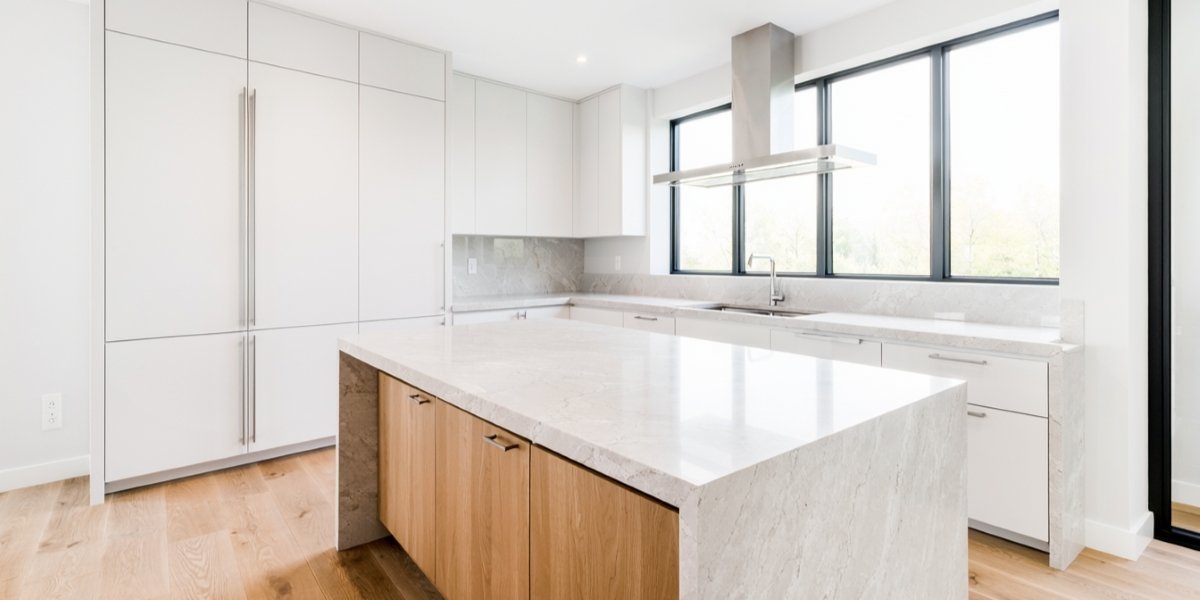
A refrigerator raises the same question. A kitchen designed around a freestanding refrigerator may need substantial changes to cabinetry and electrical connections, and to the surrounding dimensions, if the owner later wants a fully integrated appliance. Choose now which options to keep open, even if the appliance arrives years later.
Sorting decisions this way works best when design and construction knowledge come together early. Designers who work alongside builders, contractors, and homeowners can weigh how a home should function while plumbing, electrical, and layout decisions are still open. Jessica’s background fits that model: she holds an interior design degree and has years of experience on new construction and renovations across Florida’s Gulf Coast, including Anna Maria Island, Longboat Key, Sarasota, and Tampa.
Put the sorting in writing. A detailed scope of work separates essential repairs, structural or system changes, planned finishes, and optional upgrades, and it includes a contingency, particularly for older homes where demolition can reveal hidden problems. The contingency earns its place: 37% of renovating homeowners exceeded their planned spend in 2025, and among those who went over, 52% cited costlier-than-expected products or services while 35% chose more expensive materials than planned. (Source: Houzz, 2026)
Where to Spend Money on Home Renovations, and Where to Hold Back
The best investment depends on installation difficulty, durability, long-term maintenance, and how often you will use the thing. Applied to everyday choices, these factors separate the purchases worth paying for up front from the ones that can improve over time.
Kitchen hardware can improve over time. Substantial brass or brushed nickel pulls can suit cabinets that get daily use, but the upgrade’s value depends on quality, finish, expected wear, and compatibility with the cabinetry. Pulls often come off without major construction, so they sit in a lower budget category than plumbing infrastructure or cabinet dimensions.
Electrical placement and lighting requirements need early attention, since the decorative fixtures offer more flexibility later as long as the wiring, supports, and installation requirements are in place. You can lock in the right locations during construction and hang a simpler fixture until the budget allows something more distinctive, which keeps your options open without a premium purchase on day one.
Furniture, textiles, artwork, and smaller accessories give a home its personality over time, so a finished living room does not need all its pieces on day one. A sound layout, workable circulation, and the necessary built-ins create a foundation for furnishings you add as you find them.
National spending patterns show where money is going. Kitchens led interior renovations among surveyed homeowners in 2025 at 26%, ahead of guest bathrooms at 25% and primary bathrooms at 23%. (Source: Houzz, 2026) The figures show where renovation activity clusters, and the best return varies by household. A family next door may get far more from fixing deteriorating bathrooms, adding storage, or untangling a floor plan that never worked.
Savings fund most renovations, with 84% of surveyed renovating homeowners using them, while 34% used credit cards and the credit card share rose five percentage points year over year. (Source: Houzz, 2026) If your cash comes from savings or borrowing, the pulls, fixtures, and furnishings described above are the line items you can downgrade or postpone when costs run high, so treat them as the flexible part of the budget.
Why Durable Materials Deserve Their Own Budget Conversation
Some materials carry a cost that arrives years later and all at once, when conditions put them to the test. Jessica’s experience rebuilding after Hurricanes Helene and Milton shows the pattern: both storms hit Anna Maria Island in 2024, damaging her home, her grandmother’s property, and the HSH Collective studio, and afterward she judged each material by one question: what survives the next flood, and what has to be torn out?
Jessica says she had accepted luxury vinyl plank as a practical choice in some situations, since it delivered the look of wood at a lower price. After the hurricanes, nearly every flooded home where she had installed it needed the flooring removed, with the exception of one property that used a specialized commercial-grade product.
For ground-floor spaces that could flood, she now favors porcelain tile, natural stone, and certain concrete-based finishes, chosen with each property’s conditions in mind. Her chosen materials rinse clean and set permanently, a very different maintenance picture from a floor you have to rip out and replace.
She also points to water-resistant wall materials and indoor-outdoor furnishings as ways to make lower-level spaces easier to clean after a flood. Apply the same test to the rest of the ground level and choose pieces that can take water and dry out intact, so cleanup after a flood stays manageable.
Local building codes, flood-zone requirements, installation methods, and the conditions of each property decide which solutions fit a given home. If your property sits outside a flood zone, you may weigh the same materials differently.
Build a Smarter Home Renovation Budget Before the First Wall Comes Down
A slow market gives you a reason to be pickier about where each dollar goes. Check each item on your list against two questions: how hard is it to reverse, and how well will it hold up where you live? Those two questions suggest an order of operations. Start with layout and building systems, since changes there cost the most later. Materials matched to the conditions of each room come next, and fixtures and furnishings can wait until the end. Working with an interior designer is one way to review layout, building systems, materials, fixtures, and furnishings together at the planning stage. The categories depend on one another. Swapping in a different refrigerator can send changes through the cabinetry and electrical plan.
Write down each decision that would be painful to undo once construction ends, then note beside it who needs to weigh in before the walls close, whether that is the builder, an electrician, a plumber, or a designer. A short, specific list makes later conversations with a contractor or designer more productive.
Before you commit your home renovation budget to finishes, appliances, or furnishings, get that list in hand. If you’re planning a renovation along Florida’s Gulf Coast, connect with Jessica Holmes Holiday and the HSH Collective team now, while your options are still open, to talk through that list and see where professional interior design guidance could help you make more informed decisions from the beginning.