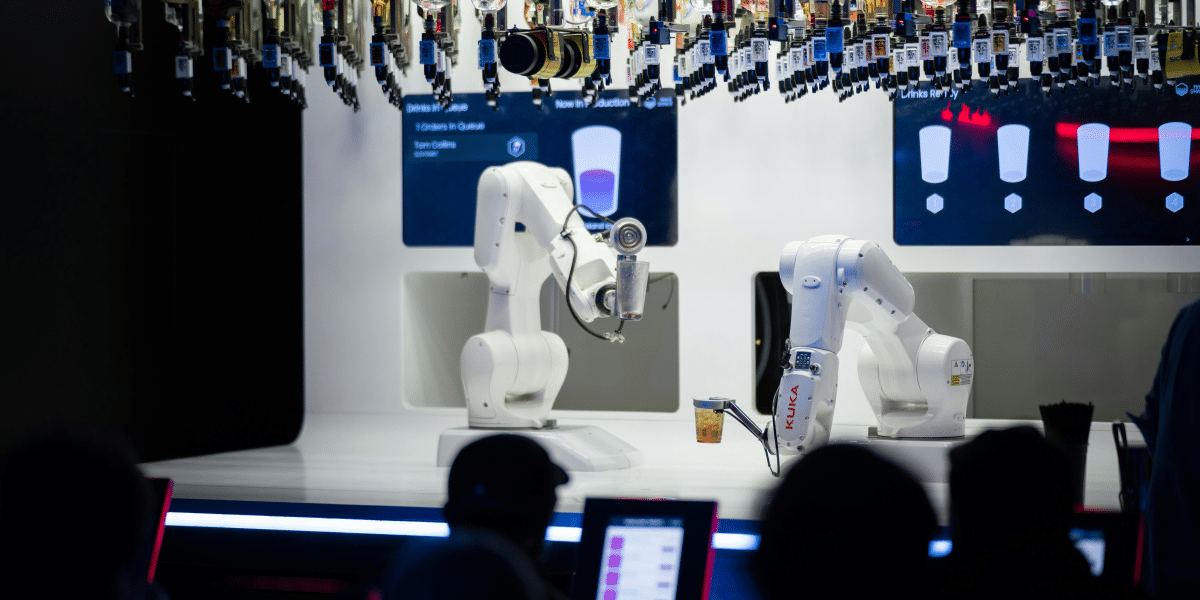
The use of robotic solutions in business is a relatively new phenomenon but it has grown significantly in popularity over the past few years. According to Statista, installations of industrial robots have grown globally over the past four years in nearly every sector, with the only exceptions being those negatively impacted by the COVID-19 pandemic.
There are many ways to improve a business using industrial robotic solutions. Let’s look at three of the important ways how industrial robotic solutions can improve a business.
1. Reduced Costs Over Time
An industrial robot can be an expensive proposition, especially if you’re buying a new one and paying upfront. However, compared to the costs of employee training, salaries, and benefits, they represent massive savings over time.
Additionally, the robot can perform tasks without requiring breaks. It can also often do them faster than a human. This allows your employees to focus on more complex tasks that can’t be automated with a robot, which leads to higher levels of efficiency. Over time, a company can save tens of thousands of dollars (or more!) by using robots to reduce labor costs and redistribute work by human employees to increase productivity.
2. Improved Workplace Safety
Safety is one of the important aspects of any business for both legal and moral reasons. Employees who are asked to do unsafe things at work will likely feel uncomfortable and may eventually quit. This can lower productivity until those employees are replaced and potentially lead to investigations from OSHA or other organizations.
Repairing or replacing an industrial robot can be expensive but it is well worth the money, especially when compared to the alternative. Nobody wants to see their employees harmed or even killed in the workplace and using industrial robotic solutions can significantly reduce the possibility of this taking place.
3. Increased Innovation
On a related note, using robots can vastly improve a company’s ability to innovate both its products and procedures. Since robots can often do things that humans can’t (or, as we’ve just seen, probably shouldn’t), it allows for enhanced creativity. For example, imagine an electronic device with many internal components. If the assembly process is automated with robots, the device can be made smaller because the robot can arrange them more efficiently and with fewer errors.
It can also help simplify processes and increase their efficiency. For example, a traditional assembly line might require a human to move products from one conveyor belt to another. If they’re replaced by a robot, the work can be done much faster. Additionally, the human employee whose job is now automated can be moved to a different job on the same assembly line. The cost of labor is therefore reduced and the efficiency of the system has been improved.
Industrial robotic solutions can save companies time and money while increasing efficiency and productivity. They have enjoyed an increase in popularity at companies around the world and, in the future, will very likely become standard in a vast majority of industries.
Published by: Nelly Chavez