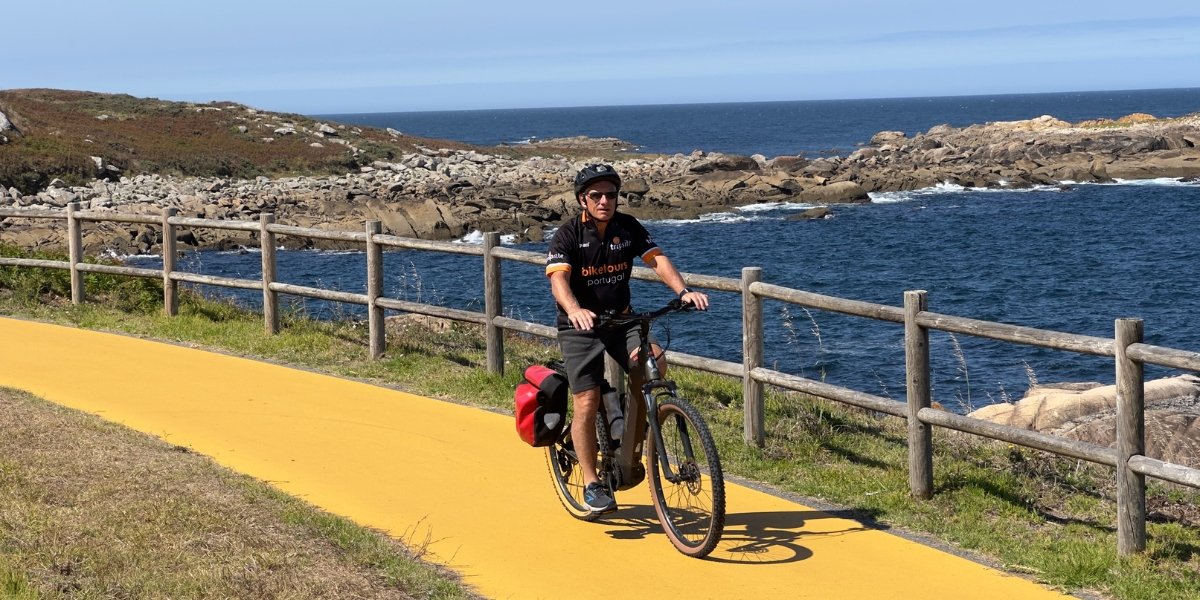
The tourism industry of Portugal has continued to evolve for the last ten years, although it has done so not necessarily based on activities carried out by big hotels and multinationals. This industry has evolved through other players who focus on certain types of tourism, such as cycling. While destination tourism relies on a particular destination to achieve its objective, cycling tourism does not depend on a specific destination but rather on the coordination of locations, transport, accommodation, and route selection.
According to Turismo de Portugal, tourist accommodation establishments recorded 31.6 million guests and 80.3 million overnight stays in 2024, both national records. International visitors accounted for more than 70 percent of overnight stays. As tourism activity expanded across different regions of the country, businesses involved in active travel increasingly had to manage more complex operations extending beyond major cities.
That shift created new demands for cycling tour operators. Multi-day travel programs require more than route mapping. Accommodation bookings, luggage transfers, mechanical support, guest communication, and daily logistics all need to function together. A delay in one area can affect an entire itinerary. For smaller tourism businesses, operational structure becomes as important as the travel product itself.
Top Bike Tours Portugal developed within that environment.
The company was founded in Porto in 2013 by Sérgio Marques under the original name Fold n’ Visit. During its first years, the business focused largely on folding bicycle rentals, maintenance services, and shorter cycling activities inside Porto. The scale was relatively small. Operations were concentrated in the city, and the company worked mainly with visitors looking for urban cycling experiences rather than extended travel programs.
As the business evolved, the organizational model changed with it.
The transition toward longer cycling holidays required a different type of planning. Multi-day routes involved coordination across several regions rather than a single city. Accommodation providers, transport arrangements, route testing, and support systems all became larger parts of daily operations. By 2017, the company formally rebranded as Top Bike Tours Portugal, reflecting its shift toward structured cycling holidays across Portugal and selected Iberian routes.
Marques remained at the center of that transition.
Within the company, his role extends beyond general management responsibilities. According to company information, he continues to oversee route development, itinerary design, and broader strategic planning. Those responsibilities remain closely connected to the nature of the business itself. Cycling routes are not static products. Road conditions change. Infrastructure develops. New accommodation partnerships emerge while others disappear. Travel patterns also shift over time.
The growth of the Portuguese Camino illustrates that broader change.
Statistics published in 2025 showed that more than 100,000 pilgrims completed the Portuguese Way during the year. Porto remained one of the principal departure points. The increase reflected the rising international visibility of northern Portugal as both a pilgrimage and cycling destination. Route planning for businesses operating in those areas, therefore, requires constant adjustment to changing visitor flows and infrastructure conditions.
While Marques remains responsible for strategic direction, daily coordination functions are handled across other operational roles inside the company.
Diana Fernandes occupies a central position within that structure. Her responsibilities focus largely on daily operations, customer communication, and service coordination. For multi-day travel programs, those functions can extend well beyond booking management. Travelers often move between locations every day during a cycling itinerary. Accommodation confirmations, timing adjustments, support requests, and logistical questions can arise throughout a tour rather than before it begins.
In smaller tourism companies, operational communication often becomes one of the most important parts of service delivery. Guests rarely interact with route planners or technical staff directly. Their primary contact is usually the person coordinating information and responding to issues as they emerge. Fernandes’ role sits within that area of the business.
Another operational division centers on bicycle preparation and maintenance.
That responsibility falls to Alberto Sousa, who oversees the technical side of the company’s cycling fleet. Unlike standard rental operations, where bicycles may be used independently for short periods, multi-day cycling holidays place continuous demands on equipment. Bikes travel across different surfaces, elevations, and weather conditions over extended distances.
Mechanical reliability, therefore, becomes part of the travel operation rather than a separate technical concern.
According to company information, Sousa manages bicycle preparation, maintenance, and readiness before tours begin. The objective is not simply equipment availability. The bicycles function as part of the logistical framework supporting each itinerary. Technical issues on longer routes can affect scheduling, transfers, and daily travel plans, particularly when riders move between multiple regions during a single trip.
The company’s structure remains relatively small compared with larger tourism organizations. Yet its operational responsibilities are divided into distinct areas rather than concentrated under a single role. Strategic planning, customer coordination, and technical preparation operate as separate functions supporting the same travel programs.
That structure reflects a broader characteristic of specialized tourism businesses in Portugal. Many active travel operators work with limited teams while managing routes that cover large geographic areas. The complexity lies less in company size than in the coordination required between moving parts.
For Top Bike Tours Portugal, the operational model developed gradually alongside its shift from city-based cycling activities to multi-region travel programs. What began in Porto as a small bicycle-focused business later expanded into a company organizing longer cycling routes across different parts of Portugal.
Behind those routes sits a relatively straightforward organizational framework. Marques oversees direction and route development. Fernandes coordinates operational delivery and communication. Sousa manages bicycle readiness and technical support. Together, those functions form the core structure supporting the company’s cycling programs as they move across multiple regions of the country.