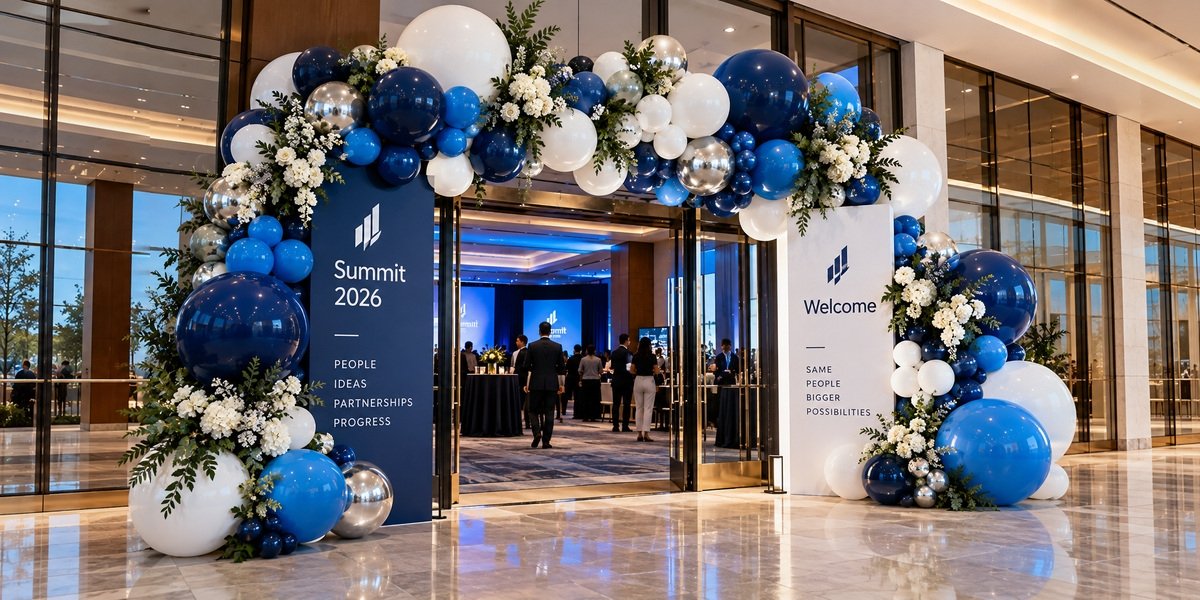
Ten years ago, decor showed up on a corporate event budget the way a tip line shows up on a restaurant check: added near the end, once the venue, catering, and staging were already locked in. A company planning a product launch or a client dinner would settle everything else first and figure out decor last, often with whatever money happened to be left over.
That order has started to reverse.
Decor Used to Be an Afterthought
For years, decor sat outside the formal planning process entirely. A marketing team would book a venue, confirm a caterer, and hire an audio-visual crew, and only then ask what could be done to make the room look finished. The request often arrived days before the event, with a small, informal amount set aside almost as an afterthought, separate from the rest of the budget conversation.
That pattern made sense when in-person events were a minor line inside a much larger marketing budget. Decor was treated as decoration in the literal sense: a finishing touch applied at the end, not a planned expense with its own scope, timeline, or sign-off.
Because it was never formally budgeted, it was rarely formally briefed either. A vendor might get a color palette and a floor plan the morning of setup, and little else.
Where the Line Item Comes From

The shift traces back to the size of the experiential marketing budget companies are now committing to live experience overall. Eighty percent of companies are increasing their experiential marketing spending, pouring between $500,000 and $1 million annually into activations, according to the Association of National Advertisers. A budget of that size cannot be managed informally, and every category inside it, decor included, gets pulled into the same planning cycle as the venue and the catering.
Sean Edwards, Founder of The Balloon Guy, says the shift shows up in how companies now approach the work. “A few years ago, a company might call us the week before an event and ask what we could do with whatever was left in the budget. Now decor gets budgeted and briefed like any other vendor line, months out, with its own line item and its own approval.”
Once a marketing department is managing hundreds of thousands of dollars in event spend, a vendor that can only be booked at the last minute becomes a liability rather than a convenience. Formal budgeting brings decor into the same procurement rhythm as everything else on the floor, with the same expectation of a quote and a timeline in advance.
What Companies Are Actually Budgeting For
Inside an event decor budget, decor and signage now typically appear as their own fixed-cost category rather than a rounding error tucked into a general miscellaneous line. Industry budget breakdowns list decor and signage as its own budget category alongside venue rental, food and beverage, and audio-visual, each with its own benchmark cost range.
That category generally covers entrance treatments, stage and backdrop design, branded installations, and any structural elements built for the space itself, distinct from printed signage or table linens, which are usually tracked separately. Because it now sits beside venue and catering as a defined line, it also gets the same scrutiny a venue contract would: a scope, a quote, and a sign-off before the event date is confirmed.
That scrutiny changes the timeline as much as the paperwork. A category with its own line item gets its own lead time, which pushes the first conversation with a decor vendor much earlier than it used to happen.
How Decor Gets Planned Like Any Other Vendor Line
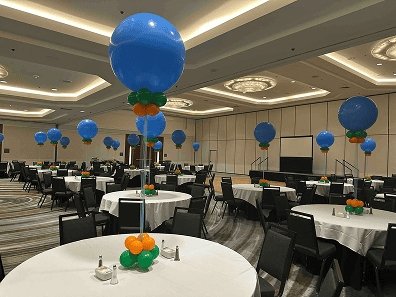
The Balloon Guy, a Los Angeles design studio, builds corporate event decor within that same planning process, working from a brief rather than a last-minute request. Edwards says the brief itself has changed as a result. “What we ask for now is what any vendor would ask for: the brand guidelines, what the event is actually for, and how much time we have. When that arrives early, the design work is better because it isn’t racing the calendar.”
That earlier involvement changes what a decor vendor can offer. A team with brand guidelines and a stated goal months ahead of an event can design toward that goal rather than filling space quickly, and a formal timeline leaves room for revisions before anything gets built.
For a company preparing to brief a decor vendor, the practical version of this shift is straightforward: bring the same materials used to brief a venue or a caterer, at the same point in the planning process, rather than waiting until other vendors are already locked in.
What This Means for Companies Planning Their Next Event
The line item exists because the budget around it grew, not the other way around. As experiential spend became a defined, sizable share of overall marketing budgets, every category inside it, including decor, needed the same planning discipline as the rest of the event.
Sean Edwards, who has more than 15 years of experience in event decor, has watched that earlier conversation become the norm rather than the exception. For a company planning its next event, the practical takeaway is simple: bring decor into the planning and budgeting process at the same point as the venue and the catering, not after.
A line item, once it exists, tends to stay. The event that used to leave decor for last is now the one still explaining why it did.