US Business News

Breaking Barriers and Building Legacy: The Reaves Law Firm, PLLC Impact on Legal Diversity

By: Lennard James  

In the landscape of American law, where tradition often overshadows innovation and diversity has long been underrepresented, The Reaves Law Firm has emerged as a beacon of progress. Led by Attorney Henry E. Reaves, III, Esq., the Memphis-based practice has become more than just a successful personal injury firm—it has become a symbol of empowerment, community service, and minority leadership in the legal profession. 

Attorney Henery E. Reaves, III Esq. founded the firm with a simple but powerful vision: to fight for individuals who might otherwise be overlooked, silenced, or denied justice. From its inception, the firm has placed clients at the heart of everything it does. By emphasizing advocacy, integrity, and accessibility, The Reaves Law Firm, PLLC has carved out a reputation for excellence not only in Memphis but across the Mid-South. 

For Attorney Henry E. Reaves, III Esq, the mission extends far beyond winning cases. His leadership reflects an understanding that law firms, especially minority-owned ones, carry a unique responsibility to inspire and uplift. While the legal industry has often been criticized for lacking diversity at its highest levels, Attorney Henry E. Reaves, III Esq, has worked deliberately to challenge that narrative. He has built a team that reflects the cultural richness of the community it serves, demonstrating that representation matters in every corner of the courtroom. 

Diversity at The Reaves Law Firm, PPLC is not a checkbox; it is a cornerstone of its identity. Staff members from varied backgrounds contribute perspectives that enhance the firm’s ability to serve clients with compassion and cultural sensitivity. This inclusive environment fosters trust, particularly among clients who may have felt alienated or marginalized in other legal settings. By creating a workplace that mirrors the communities it defends, the firm has modeled how minority-owned practices can lead the way in redefining professional culture. 

The Reaves Law Firm’s influence also extends into the community. Recognizing that success is measured not only in verdicts and settlements but in the lives touched, Attorney Henry E. Reaves, III, Esq, has made philanthropy and mentorship central to his firm’s mission. The firm has awarded scholarships, supported local schools, and invested in youth-focused programs designed to break cycles of poverty and inequity. Through these efforts, Attorney Henry E. Reaves, III Esq has not only created opportunities for the next generation but has also helped cultivate future leaders, some of whom may one day enter the legal field themselves. 

Attorney Henry E. Reaves, III Esq commitment to mentorship has been particularly impactful. For young minority attorneys facing barriers to entry into a historically exclusive profession, his example is both instructive and inspiring. By offering guidance, professional opportunities, and a platform for visibility, The Reaves Law Firm, PPLC has become a proving ground for rising talent. In doing so, the firm has ensured that its impact will resonate far beyond its own office walls. 

Another defining feature of the firm is its dedication to client-centered care. The Reaves Law Firm, PLLC, is known for treating clients not as case numbers, but as individuals with stories, families, and futures worth protecting. This human-first approach has distinguished the firm in a field where many feel legal processes are impersonal or intimidating. By blending compassion with legal expertise, Attorney Henry E. Reaves, III Esq, and his team have built trust and established lasting relationships with the people they serve. 

The success of The Reaves Law Firm, PLLC, also speaks to the power of entrepreneurship in the legal sector. By founding his own firm, Reaves stepped outside traditional paths, proving that minority attorneys need not wait for permission to lead. His decision to establish a practice allowed him to shape its culture, values, and priorities in ways that align with his vision for justice and equity. This entrepreneurial spirit is an example to others who dream of building institutions that reflect their communities and values. 

The broader impact of The Reaves Law Firm, PLLC cannot be overstated. In breaking barriers, it has shown that minority-owned firms are not defined by limitations but by leadership. In building a legacy, one creates pathways for those who follow. And in serving clients with excellence, it has reminded the profession that the true purpose of law is to uplift and protect. 

As The Reaves Law Firm, PLLC continues to grow, its influence reverberates far beyond Memphis. It stands as a testament to what can be achieved when vision, integrity, and community converge. Attorney Henry E. Reaves, III, Esq. has not only built a successful law firm; he has built a movement—one that challenges inequities, creates opportunities, and leaves a legacy of justice and empowerment for generations to come. 


Disclaimer: The content in this article is provided for general knowledge. It does not constitute legal advice, and readers should seek advice from qualified legal professionals regarding particular cases or situations.


Why “The Lauren Ashtyn Collection” Proves Craftsmanship Still Matters

By: Mary Chris De Leon

The global beauty market has never been more crowded. New brands launch daily, driven by global supply chains, influencer partnerships, and the relentless pursuit of scale. But amid this noise, one company has built a loyal following not through mass production or trend-chasing, but through artistry and care. The Lauren Ashtyn Collection, founded in 2015 by Lauren Ashtyn Guest and her husband, Christopher Guest, has evolved into one of the country’s most trusted names in luxury hair toppers and wigs, demonstrating that in beauty, craftsmanship remains paramount.

From the very start, the couple took a different path. With a single goal in mind, they put their lives into a camper, sold their house, and hit the road, not just to make hairpieces, but to meet women face-to-face, understand their struggles, and design solutions that restored not only their look, but their sense of identity. Today, The Lauren Ashtyn Collection serves more than 30,000 women worldwide, hosts 35+ sold-out pop-up salon takeovers each year with 48 upcoming in 2026, immersive events where local salons are transformed into full experiences, complete with fittings, consultations, and client makeovers, and has become a leader in premium, hand-tied toppers made from 100% European Remy hair. Yet even with this growth, the heart of the business remains unchanged: every product is crafted with the care of a stylist who knows what it means to see a client recognize herself in the mirror again.

Quality That Lasts

The Lauren Ashtyn Collection’s toppers and wigs are handmade, customized, and tested with the eye of a stylist who understands both technique and emotion.

Growing up in her mother’s salon and eventually dealing with hair loss herself, Lauren Ashtyn had two perspectives: she was the customer and the professional. Unhappy with the products available on the market, she dedicated a year to creating toppers that would seem natural and could withstand daily wear.

The company’s pieces are built from 100% European Remy human hair, a choice that ensures durability and authenticity. Every design allows for stylist customization. Clients can cut, color, and style each topper just as they would their own hair. The Hand Painted Collection, introduced in recent years, elevated this standard even further. In it, stylists hand-color toppers for natural results, following what’s trending, strand by strand. This process, impossible to replicate through mass production, underscores why handmade items still carry weight in a global market.

Behind this focus on quality is not only Lauren Ashtyn’s stylistic eye but also Christopher’s operational discipline. Having experience in business processes and finance, he created the framework that enabled the brand to expand while maintaining its artisanal roots. Together, they demonstrated that handmade is not synonymous with little. It means intentional scaling with systems that protect, not dilute, quality.

Building Real Connections

For The Lauren Ashtyn Collection, craftsmanship extends beyond the hairpieces themselves. It shapes the entire customer experience. One of the brand’s most distinctive models is its nationwide pop-up salon tour, where the team travels to two cities each month, takes over salons, and serves more than 200 clients per event. These events consistently sell out, with attendees paying simply to secure their place.

What makes the tour remarkable is not just the logistics but the atmosphere. Clients arrive, often hesitant or uncertain, and leave with transformed confidence. Many describe the experience as more than a makeover. It is a moment of recognition. Lauren Ashtyn has recalled how women who enter with their heads down leave smiling, their posture changed, and their energy lifted.

That sense of connection continues online. The Lauren Ashtyn Collection runs a VIP community, accessible only to clients, where thousands of women share practical advice and personal encouragement. The group reflects the same spirit as the salons: it is not just about wearing hair but about being understood. Women post questions about daily life with toppers, even asking how they hold up on roller coasters, and others respond with firsthand experience. In an industry often focused on glossy marketing, this peer-to-peer support feels rare and deeply human.

Even the company’s digital operations reflect this balance of craft and community. The Lauren Ashtyn Collection offers free online consultations, where stylists review photos submitted in natural light and recommend exact matches. If a client’s shade falls outside the brand’s standard colors, stylists hand-paint a custom piece. These digital tools don’t replace craftsmanship; they expand its reach, ensuring that clients far from South Carolina still feel the care of a stylist’s hand.

Changing the System

The Guests have also connected their commitment to quality with advocacy. For too long, insurance companies have labeled wigs and toppers as “cosmetic,” leaving women with medical-related hair loss to cover costs out of pocket. The Lauren Ashtyn Collection challenges this view. To clients facing alopecia, chemotherapy, or postpartum loss, hair replacement is not a luxury; it is dignity.

The company has already supported many women in securing partial reimbursement, ranging from 20% to 80% of their costs. With the help of internal insurance expertise, The Lauren Ashtyn Collection prepares medical invoices coded as hair prostheses, increasing the likelihood of coverage. Lauren Ashtyn has spoken openly about how critical this is: women battling cancer often describe hair loss as harder to face than the diagnosis itself, because it changes how they see themselves and how the world sees them.

With an eye toward the future, The Lauren Ashtyn Collection is pushing for more comprehensive reform and is pursuing legislation that would standardize insurance coverage for medical hair loss. This initiative mirrors the brand’s underlying concept, which holds that craftsmanship encompasses both how systems handle those in need and how items are made. Just as every hand-tied strand represents care, every policy fight represents the belief that women deserve solutions that see them fully.

In a global beauty market dominated by speed and volume, The Lauren Ashtyn Collection is proof that craftsmanship is not outdated; it is essential. Handmade products carry weight because they hold the detail, precision, and care that mass production cannot replicate. Lauren Ashtyn Guest brings the perspective of a stylist and a survivor of hair loss, shaping products with authenticity and empathy. Christopher Guest ensures that this artisanal model can grow without compromise, building systems that allow craft to scale. Together, they have built more than just a company; they have built a movement that combines artistry, community, and advocacy.

Handmade may take longer. It may require more patience. But when a woman walks out of a Lauren Ashtyn salon event smiling at her reflection, finds connection in the VIP community, or secures insurance coverage for the first time, the impact is undeniable: this work restores dignity as much as it restores hair.

Discover more about the artistry, advocacy, and community shaping the future of hair toppers and wigs. Visit The Lauren Ashtyn Collection to explore their handcrafted pieces and learn how craftsmanship is redefining modern beauty.

Millionaire Landscaper Club Redefines Growth with Strategic Landscaping Marketing

Landscaping companies across the country face the same challenge: they deliver outstanding outdoor services but struggle to keep a steady flow of clients. In today’s competitive market, great work alone is not always enough to secure long-term growth. Recognizing this need, Millionaire Landscaper Club has developed a comprehensive landscaping marketing system designed to help businesses attract ideal clients, increase revenue, and expand their service areas.

Meeting the Needs of a Competitive Industry

The landscaping industry is filled with talented professionals who often rely on referrals and word-of-mouth to grow their businesses. While reputation remains important, it is no longer sufficient in a digital-first world where most homeowners begin their search for services online. Without effective marketing, even premier landscaping companies may remain less visible to potential clients.

Millionaire Landscaper Club steps in with solutions built exclusively for landscapers. By combining deep industry knowledge with cutting-edge marketing strategies, the company equips landscapers with the tools to help generate leads, stand out from competitors, and transform their businesses into more profitable, sustainable enterprises.

A System Designed for Landscapers

Generic marketing approaches often fail to connect with the realities of landscaping businesses. Millionaire Landscaper Club avoids one-size-fits-all tactics by building customized strategies that emphasize what truly drives results in this industry. Their landscaping marketing system includes:

  • Targeted advertising campaigns that focus on attracting local homeowners most likely to need landscaping services.

  • Messaging that converts by showcasing expertise, before-and-after visuals, and compelling offers.

  • Accountability-driven management that measures results not just by clicks or impressions, but by actual leads and revenue growth.

This focus aims to ensure that every marketing dollar is maximized, turning investments into potentially measurable returns.

Millionaire Landscaper Club Redefines Growth with Strategic Landscaping Marketing

Photo: Unsplash.com

Holding Themselves to a Higher Standard

A defining feature of Millionaire Landscaper Club is its commitment to accountability. The company strives to deliver results: if landscapers do not experience significant growth within 90 days, Millionaire Landscaper Club will continue working without additional charges until improvements are seen. This bold approach reflects confidence in their system and provides landscapers with peace of mind, knowing that their marketing partner is equally invested in their success.

Beyond Marketing: Building Stronger Businesses

While advertising and visibility are key, Millionaire Landscaper Club takes a holistic approach. Their strategies go beyond generating calls; they focus on positioning landscaping businesses as trusted, credible, and professional. By combining strong branding, clear messaging, and proven digital techniques, they help landscapers build authority in their local markets.

The company also emphasizes education, empowering landscapers to better understand their marketing efforts. This transparency helps business owners see how their investment can translate into revenue, fostering both confidence and long-term growth.

Sustaining Growth Year-Round

Landscaping is often seasonal, which makes consistent lead generation critical. Millionaire Landscaper Club’s marketing approach aims to ensure that businesses don’t just thrive during peak months but remain visible and profitable throughout the year. By targeting specific services at the right time, landscapers can keep crews busy, maximize revenue, and avoid slow periods that challenge many competitors.

The Future of Landscaping Marketing

As homeowners increasingly rely on online searches and digital platforms to make decisions, landscaping marketing has become essential for survival and success. Millionaire Landscaper Club is at the forefront of this shift, offering landscapers not just digital marketing but a proven pathway to growth.

For landscaping professionals ready to elevate their business, capture more clients, and stand out in a crowded field, Millionaire Landscaper Club provides a trusted partner committed to helping deliver results.

About Millionaire Landscaper Club

Millionaire Landscaper Club specializes in digital marketing strategies designed exclusively for landscaping businesses. With a focus on landscaping marketing, SEO, and revenue-driven campaigns, the company helps landscapers grow their client base, increase profits, and achieve long-term success. Their unique approach aims to ensure landscapers can pursue growth with confidence, knowing that Millionaire Landscaper Club is committed to delivering substantial results.

From Idea to Innovation: How DoorSkinz Transformed the Look of America’s Garages

By: Westwood Media Group

In the quiet town of Branson, Missouri, a simple frustration inside a home garage sparked a potentially game-changing innovation that is slowly redefining how people think about one of the overlooked parts of the home: the garage door. At the center of this story is entrepreneur and maker Dan Chudy, the founder of DoorSkinz, a company that has begun to turn an everyday surface into a canvas for creativity, design, and personal expression.

The Problem Many Garages Miss

For years, homeowners have invested heavily in improving their garages—polishing concrete floors with epoxy coatings, installing bright LED lighting, adding cabinets, and organizing tools. Yet, even with all that effort, one feature almost always remained plain and uninspired: the garage door. Chudy, like many enthusiasts who take pride in every detail of their space, found himself staring at a blank, textured metal surface that didn’t always match the rest of his upgraded environment.

He tried vinyl wraps, only to learn that the material couldn’t properly adhere to the textured interior of most garage doors. The result was a short-lived solution that often bubbled, peeled, and failed under everyday conditions. What he needed was something smooth, photo-quality, and durable—something that could be installed and removed easily, without adhesives or damage.

That search for perfection led to a notable moment of realization. While standing in his kitchen one day, Chudy looked at a refrigerator magnet and realized that the same concept—scaled up, refined, and printed in high definition—could possibly solve his problem.

Engineering a New Kind of Surface

Transforming that spark into a commercial product took more than imagination. Chudy began working closely with magnet and print suppliers to understand the limits of magnetic materials, adhesion strength, and print compatibility. Early experiments revealed that traditional printable magnets lacked the resolution, edge sharpness, and UV resistance needed for large-scale use. To overcome that, he developed a proprietary process that bonds a printable layer directly to the magnet, followed by UV coating and heat pressing for greater durability.

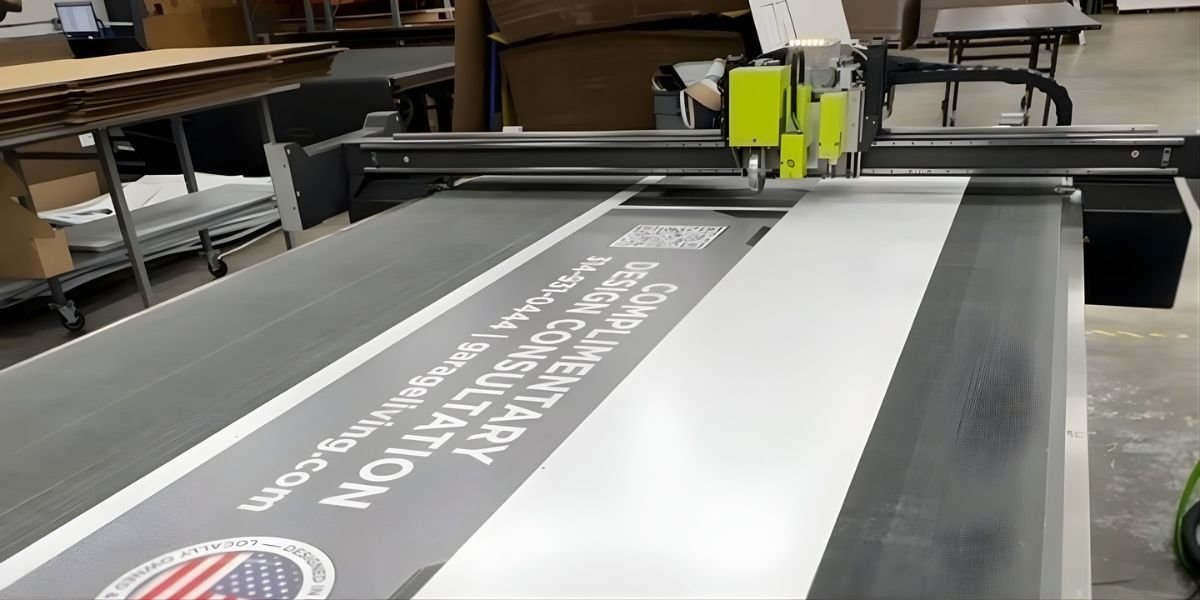
The investment was significant. DoorSkinz put over $500,000 into advanced printing and fabrication equipment—including a precision cutting table, industrial-grade UV printer, and heat-press systems—to improve the final product. The result is a high-definition magnetic wrap that can be installed in minutes, holds up well in various weather conditions, and can be rolled up for easy storage when not in use.

Every panel is printed at up to 1,000 DPI resolution, offering clear sharpness and vibrant, full-coverage color that is designed to resist fading. The company offers two pull strengths—approximately 60 lb per square inch for interior use and 90 lb per square inch for exterior applications—ensuring both flexibility and reliability for different environments.

Turning a Blank Space Into a Canvas

From Idea to Innovation: How DoorSkinz Transformed the Look of America’s Garages

Photo Courtesy: Door Skinz

DoorSkinz started with the home garage but quickly expanded beyond it. The concept resonates with a wide range of users, from car enthusiasts and hunters to designers and gamers who want to personalize their space. The wraps have also become a favorite among businesses—especially those in sign-restricted areas—because the garage door can double as a compliant yet eye-catching advertising surface.

For gyms, hospitals, mechanic shops, and specialty retailers, DoorSkinz provides a new way to display logos, promotional messages, or themed graphics without violating exterior signage ordinances. For homeowners, it’s a chance to bring personality to a space that typically goes unnoticed. Seasonal themes, sports imagery, or custom photography can easily transform a standard door into something that draws attention from across the street.

The core appeal is simplicity. Each wrap is magnetic, meaning there are no adhesives, no residue, and no professional installation required. Users can change designs as often as they like—swapping panels for holidays, events, or even personal milestones. What was once a purely functional piece of metal now becomes a dynamic storytelling surface.

Why It Matters

The modern garage has evolved from a utilitarian storage space into a reflection of personal taste and lifestyle. For many homeowners, it doubles as a workshop, gym, or showroom for prized vehicles. Yet despite all the upgrades in flooring, lighting, and organization, the garage door itself has remained static—until now.

DoorSkinz addresses that gap with a product that merges design, durability, and convenience. It offers a premium look without permanent modification and gives homeowners the ability to express themselves through art, imagery, and branding. Whether it’s a scenic mountain backdrop for an aviation hangar, a retro racing stripe for a collector car garage, or a patriotic motif for a home workshop, DoorSkinz aims to make customization effortless.

From a sustainability perspective, the magnetic system reduces the waste associated with vinyl adhesives and frequent repainting. Each panel is reusable, easy to store, and designed to last for years under sun and weather exposure.

The Road Ahead

While the company’s roots are in custom one-off designs, DoorSkinz is expanding its reach with new initiatives aimed at accessibility and scalability. Upcoming seasonal collections will allow customers to easily select from themed designs such as holiday greetings, “welcome home” banners, birthday celebrations, and special-occasion motifs. These pre-made options could simplify the buying process for users who want instant impact without custom artwork.

DoorSkinz is also exploring partnerships with garage professionals, specialty shops, and home improvement retailers to make its products available at the point of installation. The company’s next phase includes franchise and distributor opportunities designed to bring local service and installation options to markets across the country. By combining online customization with regional distribution, Chudy hopes to establish a network that can deliver personalized wraps quickly and efficiently to any customer base.

In addition, DoorSkinz is leveraging its expertise in magnet-bonded printing to expand into related markets such as aviation hangars, commercial bay doors, and industrial facilities where branding, aesthetics, and signage flexibility matter. The versatility of the material opens doors—literally and figuratively—for creative applications far beyond residential garages.

The Spirit of the Brand

At its core, DoorSkinz is about reimagining the ordinary. It takes something every homeowner already has and gives them an opportunity for self-expression. The company’s approach reflects Chudy’s background as both a craftsman and an innovator: attention to detail, commitment to quality, and the refusal to settle for “good enough.”

The mission is simple yet powerful—help make the garage door the centerpiece of design, not an afterthought. It’s a belief rooted in the idea that every part of a home tells a story, and the front-facing panels of a garage are among the visible elements of that narrative.

Through its mix of engineering precision and artistic freedom, DoorSkinz is helping people transform blank metal into bold statements. What began as a search for aesthetic harmony in one garage has developed into a product category of its own—an innovation that blends creativity, technology, and practicality in a way few home-improvement products have managed to do.

A New Standard for Customization

From Idea to Innovation: How DoorSkinz Transformed the Look of America’s Garages

Photo Courtesy: Door Skinz

The numbers speak for themselves. With a half-million-dollar investment in advanced machinery and materials, DoorSkinz has set a high bar for visual fidelity in large-format magnetic printing. The company’s process ensures perfect edge alignment, vivid color accuracy, and weather-resistant performance that is built to withstand the toughest conditions. Every panel is inspected for sharpness and precision before it leaves the facility, maintaining a level of craftsmanship consistent with high-end automotive and architectural finishes.

Beyond technology, the brand’s success lies in its timing. As personalization continues to drive consumer behavior, DoorSkinz finds itself at the intersection of function and identity—providing a way for people to showcase who they are, right in their own driveway.

Fast Facts

  • Founded by: Dan Chudy
  • Headquarters: Branson, Missouri
  • Innovation: High-definition magnetic wraps for garage doors, standard doors, and aviation hangars
  • Printing Precision: Up to 1,000 DPI with UV-protected finish
  • Pull Strengths: ~60 lb/sq in (interior) | ~90 lb/sq in (exterior)
  • Contact: sales@doorskinz.com | 417-598-2327 
  • Website: doorskinz.com

From concept to execution, DoorSkinz shows that even familiar spaces can be reimagined through innovation and design. What started with a simple idea inspired by a refrigerator magnet has evolved into a full-scale movement—one that’s gradually transforming garages across America into visual statements of creativity, craftsmanship, and pride.

The Increasing Role of Surveillance Cameras in U.S. Security Trends

Surveillance cameras are no longer just a fixture in high-security zones or retail storefronts, they’ve become a defining feature of modern security strategies across the U.S. From small businesses to large-scale logistics hubs, and from suburban homes to urban apartment complexes, the presence of surveillance cameras is shaping how Americans think about safety, accountability, and operational control.

This shift isn’t just about more cameras, it’s about smarter ones. With AI-powered analytics, cloud-based storage, and real-time mobile access, surveillance cameras are evolving into proactive tools that do more than record, they interpret, alert, and even predict.

Why Surveillance Cameras Are Now a Business Essential

For business owners, surveillance cameras have moved from optional to essential. They’re not just about deterring theft, they’re about managing liability, monitoring operations, and protecting assets in real time. Whether it’s a restaurant tracking customer flow or a warehouse monitoring inventory zones, the ability to see what’s happening, and respond quickly, has become a competitive advantage.

This is especially true in industries where compliance and safety are non-negotiable. Construction firms, logistics providers, and healthcare facilities are using surveillance cameras to document procedures, verify protocols, and reduce insurance claims. The footage isn’t just for security, it’s part of the operational toolkit.

As noted in coverage of hardware solutions for business success, choosing the right surveillance system is now a strategic decision. It’s not just about resolution or storage, it’s about integration, scalability, and data intelligence.

AI Is Changing What Surveillance Cameras Can Do

The biggest leap in surveillance camera technology isn’t in the lens, it’s in the software. AI is enabling cameras to recognize patterns, detect anomalies, and trigger alerts without human input. That means fewer false alarms, faster response times, and smarter decision-making.

In retail, AI-enabled surveillance cameras can track foot traffic, identify peak hours, and even detect suspicious behavior. In office buildings, they can monitor access points and flag unauthorized entries. And in public spaces, they’re being used to support crowd management and emergency response.

This kind of functionality is reshaping how businesses think about surveillance. It’s no longer just about watching, it’s about understanding. And that understanding can lead to better outcomes, whether it’s reducing shrinkage, improving customer experience, or enhancing workplace safety.

Home Security Is Following the Same Path

The residential market is seeing similar trends. Homeowners are investing in surveillance cameras not just for break-in prevention, but for peace of mind. Doorbell cameras, motion-activated floodlights, and indoor monitoring systems are becoming standard features in many homes.

These systems are often integrated with smart home platforms, allowing users to check feeds, receive alerts, and even communicate through two-way audio, all from a smartphone. It’s a level of control that’s changing how people interact with their living spaces.

As discussed in reporting on home security technology, the evolution of surveillance cameras is part of a broader shift toward proactive, connected security. It’s not just about reacting to threats, it’s about staying ahead of them.

Privacy, Policy, and the Public Conversation

With the rise of surveillance cameras comes a parallel conversation about privacy. Businesses and homeowners alike are navigating questions about where cameras can be placed, how footage is stored, and who has access to it.

In some cities, regulations are being updated to reflect the growing presence of surveillance technology. Public-facing cameras may require signage, and footage retention policies are under review. For businesses, this means staying informed and ensuring that surveillance practices align with both legal standards and customer expectations.

There’s also a cultural shift underway. Consumers are becoming more comfortable with surveillance in exchange for safety and convenience, but they still expect transparency. Brands that use surveillance cameras in customer-facing environments are learning to communicate clearly about how and why the technology is used.

Surveillance Cameras as Operational Tools

Beyond security, surveillance cameras are being used to improve operations. In manufacturing, they help monitor production lines and identify inefficiencies. In hospitality, they support service quality by tracking wait times and staff interactions. In education, they’re used to enhance campus safety and monitor facility usage.

The Increasing Role of Surveillance Cameras in U.S. Security Trends

Photo Credit: Unsplash.com

This operational value is driving investment. Companies aren’t just buying cameras, they’re building systems that integrate with access control, lighting, and even HVAC. The goal is to create environments that are not only secure, but smart.

It’s a trend that mirrors broader shifts in enterprise technology, where tools are expected to serve multiple functions. Surveillance cameras are no longer standalone, they’re part of a connected ecosystem that supports business goals.

What Decision-Makers Should Watch Next

For executives and entrepreneurs, the question isn’t whether to invest in surveillance cameras, it’s how to do it strategically. That means evaluating needs, understanding capabilities, and choosing systems that can grow with the business.

It also means staying informed. The pace of innovation in surveillance technology is accelerating, with new features like facial recognition, license plate tracking, and behavioral analytics entering the mainstream. These tools offer powerful benefits, but they also come with ethical and operational considerations.

Decision-makers should also consider how surveillance fits into broader security strategies. Cameras are one piece of the puzzle, alongside access control, cybersecurity, and employee training. The most effective systems are those that integrate seamlessly and support both safety and efficiency.

How to Choose Models Who Align with a Brand’s Values and Goals

Choosing the right models for a brand campaign isn’t just about aesthetics, it’s about alignment. In a market where consumers expect authenticity and cultural relevance, casting decisions carry weight. Models are no longer just faces of a product; they’re extensions of a brand’s identity, values, and long-term goals.

For U.S.-based executives and creative leads, the challenge is clear: how to select models who not only look the part but live the part. Whether launching a new product, expanding into new markets, or refining brand positioning, the individuals chosen to represent a brand must reflect its ethos in a way that feels genuine.

Why Model Selection Is a Strategic Decision

Models influence perception. Their presence in campaigns can signal inclusivity, aspiration, innovation, or tradition, depending on how they’re positioned. That’s why casting is increasingly treated as a strategic decision, not just a creative one.

Brands that prioritize alignment are seeing stronger engagement and longer-lasting partnerships. When models embody the values a company stands for, whether that’s sustainability, empowerment, or community, the message resonates more deeply. It’s not just about selling a product; it’s about telling a story that feels real.

This approach mirrors broader shifts in marketing strategy, including the rise of micro-influencers who connect with niche audiences through shared values and lived experience. The same logic applies to model selection: relevance beats reach when it comes to building trust.

Understanding Brand Values Before Casting Begins

Before any casting call or agency outreach, brand teams need clarity on what they stand for. That means defining core values, not just in mission statements, but in practice. Is the brand committed to ethical sourcing? Does it prioritize body positivity? Is it focused on innovation, tradition, or a mix of both?

Once those values are clearly articulated, they become a filter for casting decisions. A brand that champions diversity, for instance, should reflect that in its model lineup, not just in ethnicity, but in age, body type, and lived experience. A brand focused on wellness might seek models who are known for their holistic lifestyle, not just their appearance.

This kind of alignment helps avoid disconnects that can undermine campaigns. When the model’s public persona clashes with the brand’s message, audiences notice, and they respond.

Evaluating Models Beyond the Portfolio

Portfolios still matter, but they’re no longer the only metric. Brands are looking at social media presence, public interviews, and past collaborations to understand how a model communicates and connects. Does their tone match the brand’s? Do they speak on issues that matter to the brand’s audience? Are they seen as credible in the spaces the brand wants to occupy?

This deeper evaluation helps brands avoid surface-level casting and build relationships that last. It also supports more nuanced storytelling, where models can contribute to the narrative rather than just appear in it.

Some brands are even involving models in campaign development, inviting them to share input on messaging, styling, and tone. That kind of collaboration can elevate a campaign from polished to powerful.

Balancing Aesthetic Fit with Cultural Relevance

Visual cohesion is still important. Models need to fit the creative direction of a campaign. But that fit should never come at the expense of cultural relevance. A campaign that looks good but feels tone-deaf won’t land.

That’s why casting teams are working closely with cultural consultants, community advisors, and brand strategists to ensure that model choices reflect both the brand’s goals and the audience’s expectations. It’s about finding the sweet spot between style and substance.

This balance is especially critical in brand partnerships, where alignment across teams is essential. As noted in reporting on why brand partnerships are gaining ground, shared values are the foundation of successful collaborations. The same principle applies to model selection: shared values lead to stronger impact.

Navigating Public Perception and Risk

In a media landscape where every casting decision can be scrutinized, brands must be prepared to defend their choices. That means doing the homework, understanding a model’s public history, affiliations, and reputation.

It also means being transparent. When a brand explains why a model was chosen, what they represent, how they align with the campaign, it builds trust. Audiences appreciate intention, especially when it’s backed by action.

This doesn’t mean avoiding risk altogether. Sometimes, bold casting choices are necessary to challenge norms or spark conversation. But those choices should be made with clarity, not impulse.

How U.S. Brands Are Leading the Way

Across industries, U.S. brands are refining their approach to model selection. Fashion labels are casting models with disabilities to reflect broader definitions of beauty. Tech companies are choosing models who advocate for digital literacy and inclusion. Wellness brands are spotlighting individuals who live the values they promote, whether that’s mindfulness, movement, or mental health.

How to Choose Models Who Align with a Brand’s Values and Goals

Photo Credit: Unsplash.com

These choices aren’t just ethical, they’re effective. Campaigns that feel authentic tend to perform better, both in engagement and conversion. They also build brand equity that lasts beyond the product cycle.

Executives are recognizing that models are part of the brand team. Their influence extends beyond the shoot, shaping how audiences perceive and interact with the brand long-term.

Final Thoughts on Strategic Casting

Choosing models who align with a brand’s values and goals isn’t just a creative task, it’s a strategic one. It requires clarity, research, and collaboration. It means looking beyond the surface and investing in relationships that reflect what the brand stands for.

In a market where authenticity drives loyalty, casting decisions matter more than ever. The right models don’t just represent the brand, they reinforce it.