US Business News

Kissable Skin Isn’t What You Think

By Jeremy Murphy

The phrase “kissable skin” sounds like marketing fluff, until you hear Charles Choi explain it.

“It’s not necessarily the condition of the skin itself,” he says. “It’s the energy.”

As Brand Director of mimmua!, Choi has built an entire skincare philosophy around that idea. And in a beauty industry obsessed with flawless complexions, it’s a quietly radical shift.

For Choi, “kissable” has less to do with perfection and more to do with presence. Healthy skin matters, of course, but not in the airbrushed, poreless way we’ve been conditioned to expect. “Healthiness does not necessarily mean the absence of pimples or rosacea,” he explains. Instead, it’s about the basics: hydration, cleansing, and the kind of natural glow that signals skin is functioning well.

But the real differentiator? Expression.

“A positive facial expression is a natural result of feeling content,” he says. In other words, confidence, real confidence, is what makes skin attractive.

Photo Courtesy: mimmua!

It’s a perspective shaped by Choi’s unconventional path into beauty. Unlike many founders who enter the industry from a business angle, his entry point was personal and hands-on. In 2019, he started as a part-time sales associate in New York, quickly becoming immersed in the world of skincare, haircare, and makeup.

That experience gave him a ground-level view of how consumers actually interact with beauty, not just how brands sell it. By the time he returned to Korea in 2022, he had developed a clear point of view: the industry had become too repetitive.

“The same formulas, the same packaging, and the same viral marketing,” he says. “This needs to change.”

Part of that change is redefining what beauty should feel like, not just what it looks like. For Choi, skincare isn’t a commodity. It’s an experience that starts long before the product touches your face.

That’s why he obsesses over details many consumers might not consciously notice, like the silver foil printing on mimmua!’s packaging. It’s not just about aesthetics, it’s about emotional response. “I wanted packaging people would not want to throw away,” he says.

It’s a telling detail. In an era of disposable everything, creating something that feels worth keeping, even displaying, turns a routine purchase into something closer to a ritual.

That idea of experience also plays into how Choi sees the future of retail. While e-commerce dominates, he believes physical stores still have a unique advantage: the tangible.

“Brand notecards, packaging, gift boxes,” he says, these are the elements that can’t be replicated online. And when done right, they don’t just complement a product, they elevate it. His goal? For customers to feel “overwhelmed, in the best way” when they encounter the brand in person.

At the same time, Choi is acutely aware of how differently consumers behave across markets. In the U.S., shoppers tend to be more cautious, sticking with established products unless persuaded by strong reviews or in-store recommendations. Trends move steadily.

In Korea, it’s the opposite. “Trends change so quickly,” he says. New ingredients, new packaging, new technology, there’s a constant appetite for what’s next. Consumers are more experimental, but also more price-sensitive, often driven by steep, time-limited discounts.

That contrast highlights a broader truth about modern beauty: consumers are more informed than ever. They understand pricing. They recognize marketing tactics. And they’re increasingly selective about where they spend.

Which brings Choi back to his core belief: beauty has to earn its place.

That means delivering results, yes, but also creating a sense of connection. A product should feel good to use. It should look good on your vanity. And, perhaps most importantly, it should make you feel something.

Because in the end, “kissable skin” isn’t a finish line. It’s a feeling.

It’s the confidence that comes from knowing your skin is taken care of, but also from knowing you don’t have to chase perfection to get there. It’s the quiet assurance that you look like yourself, just better.

And in a category built on transformation, that might be the most compelling promise of all.

mimmua.us

Life After Debt Breaks Down the Truth About Credit Card Debt That No One Talks About

By: Kate Sarmiento

Most people do not wake up one day and suddenly realize something is wrong with their finances. It tends to creep in slowly. A balance that does not drop the way it should. A payment that feels like progress until the next statement shows up. Money that seemed planned out somehow getting stretched thinner than expected.

At first, it is easy to brush off. Life happens, expenses fluctuate, and things even out eventually. That is usually the assumption. Then it does not even out.

That is when the second layer kicks in, and it is not about numbers anymore. It becomes personal. People start asking themselves if they are just bad with money, or if they missed something that everyone else seems to understand.

At Life After Debt, this is where most conversations actually begin. Not with strategy, but with that quiet frustration. The surprising part is how consistent the story is across completely different situations. People with different incomes, different lifestyles, and different spending habits often describe the same feeling of being stuck.

Debt has been climbing across households for years, and credit card balances alone have hit record levels (Source: Federal Reserve, 2024). That part gets talked about. What does not get talked about enough is how many people carrying that debt believe it reflects something personal about them.

Why Feeling “Bad With Money” Is Often the Wrong Conclusion

When something feels off with money, most people do not start by questioning how the system works. They usually start by questioning themselves, because it feels more immediate to assume the problem is personal rather than something bigger or less visible.

That is why the first instinct is often to think that more discipline or better habits will fix it, especially when that approach tends to work in other areas of life. If something is not improving, it seems reasonable to believe that more effort should make a difference.

What gets missed in that line of thinking is whether people were ever shown how money actually works before they were expected to manage it.

For many people, the answer is no, at least not in a way that connects to real situations. They might remember being told to save or to be careful with spending, but very few were ever walked through what happens when credit is used over time or how interest affects a balance after a few months or even a few years. Those details are not always obvious in the beginning, and they tend to show up only after someone has already been dealing with them for a while.

That is part of the reason so many adults later say they wish they had understood this earlier, especially when it comes to debt and credit (Source: Front Psychol., 2021). By the time that thought comes up, most people have already been making decisions based on what felt right at the time, without really seeing how those decisions connect over the long run.

In everyday life, people do what makes sense with what they have in front of them. Expenses do not always line up neatly with income, and there are moments when something has to be covered one way or another. Credit often becomes the option that keeps things moving, not because someone is being careless, but because it solves the immediate problem.

The frustration tends to come later, when the balance does not move in the way someone expected or when progress feels slower than it should even though payments are being made.

At that point, it is easy to assume that the issue comes down to personal decisions, when in reality, most people have been working with only part of the picture. They have been making choices without being shown how those choices build on each other over time, which makes it much harder to see what is actually happening until they are already in it.

The Financial Rules No One Explained but Everyone Is Expected to Follow

There is a part of the system that most people only understand after they have already been in it for a while. Credit is easy to access, and it is often framed as something helpful and flexible. That part is true. What is not always clear is how quickly that flexibility turns into something harder to manage once interest starts building.

Interest does not just sit there. It grows, and it grows on top of itself. That is why a balance can feel like it is not moving, even when payments are being made regularly. From the outside, it looks like progress should be happening faster. Inside the system, it is working exactly as designed. Minimum payments create a similar situation. They give people breathing room in the short term, but they also stretch things out. That structure keeps the account active longer, which means more time for interest to do its thing.

None of this is secret, but it is also not explained in a way that feels real when people first start using credit. So people learn the same way they learn most things without guidance. They figure it out as they go. Sometimes that works out fine. Sometimes it gets expensive. That is not a failure. That is what happens when the rules are not clearly laid out from the start.

Clarity Changes the Way You Move, Not Just the Way You Feel

For most people, the shift does not come from some big financial win. It usually starts much smaller than that. It happens when things stop feeling confusing all the time.

The numbers might not look different right away, but they start to make more sense. A balance that used to feel random begins to feel expected. A payment that once felt like it did nothing starts to have a clearer role. Instead of guessing what is going on, there is at least some understanding of why things look the way they do. That alone changes how people move.

When there is less confusion, decisions do not feel as rushed. People are not just reacting to whatever shows up next. They start to notice which actions actually move things forward and which ones only feel productive in the moment. That difference is not always obvious until someone sees it play out.

At Life After Debt, that is usually the point where things begin to shift for real. The goal is not to overwhelm people or push them into fixing everything at once. The goal is to help them understand what is in front of them in a way that finally feels clear.

The Clarity Call is part of that process. It gives people a chance to slow down and talk through their situation without pressure. Once things are laid out in a way that makes sense, the next step tends to feel a lot more straightforward.

Build Clarity First, Then Build a Plan That Works

When money starts to feel stressful, most people try to fix it the same way they would fix anything else, which is by putting in more effort and hoping that doing more will eventually lead to a different result. That works in a lot of situations, but with finances, it can quietly keep things the same if nothing about the way decisions are being made actually changes, so it ends up feeling like a lot is being done without much shifting in the bigger picture.

The part that usually changes things is not working harder, but understanding what is actually going on underneath all of it. Once that starts to click, even a little, the way decisions happen begins to look different. There is less of that feeling of constantly reacting to whatever shows up next and more of a sense that there is a reason behind each move, even if everything is not fully sorted out yet.

That is the place Life After Debt tries to help people get to, because the focus is not just on dealing with debt itself, but on helping people make sense of their situation so they are not second-guessing every choice they make.

For someone who feels like they have been trying and not getting anywhere, repeating the same approach usually just leads to the same outcome. Taking a step back and looking at what is actually happening tends to be more helpful, especially when that clarity makes it easier to see what is worth focusing on and what is not.

A free 15-minute Clarity Call is one way to start that process in a simple and low-pressure way, since it gives you time to talk things through, look at what options are realistically there, and figure out what direction feels right based on your situation.

As things begin to make more sense, the way you handle your finances starts to change without forcing it, and over time, that shift is what leads to progress that actually feels steady instead of uncertain.

The Burnout Pattern High Performers Are Rewarded For

The conversation around burnout is still too polite. It focuses on balance, self-care, and setting boundaries, as if the issue is simply that people are doing too much or managing their time poorly. That framing is easy to accept because it keeps the responsibility on the individual. Adjust your schedule. Take a break. Learn to say no. For many high-achieving women, that advice doesn’t land. Not because they haven’t heard it, but because it doesn’t reflect how their lives actually work.

According to Dr. Tracy Latz, MD, MS, burnout is rarely just about workload. It’s about patterns that have been reinforced over time, often in ways that are rewarded both professionally and personally. Women who are seen as reliable, capable, and consistent are often the ones given more responsibility. They become the point person, the one who handles things, the one who figures it out when something goes wrong. Over time, that role stops feeling like a choice and starts feeling like a requirement, and because it works, it continues.

The issue is that these patterns don’t stay contained to work. They show up everywhere. In how decisions are made, how pressure is handled, how expectations are managed, and how much space someone allows themselves to take up. The same traits that make someone successful in one area of life often carry into every other area without adjustment, and that’s where things start to wear down. Not all at once, and not in a way that is always obvious from the outside, but in a steady way that builds over time.

Dr. Latz’s work challenges the idea that burnout is a failure to manage stress effectively. In her view, it is often the result of a system working exactly as it was built to. High-achieving women are not randomly overextending themselves. They are responding to expectations, both external and internal, that have been reinforced for years. They have learned to operate at a certain level, and that level becomes their baseline. The problem is not that they can’t keep up. The problem is that no one questions how long that pace can be sustained.

What makes this more complicated is that the signs don’t always look dramatic. There is no single moment where everything breaks. Instead, there is a gradual shift. Tasks that used to feel manageable start to feel heavier. Decisions take more effort. The margin for error gets smaller. From the outside, everything still looks fine, but internally, it takes more to maintain the same level of performance.

Her work doesn’t focus on telling women to do less or step away from what they’ve built. It focuses on helping them understand the patterns they’re operating in so they can decide what actually needs to change. That includes looking at how identity plays a role in performance, how expectations shape behavior, and how stress is carried in the body over time. She continues to develop and share these ideas through her ongoing work with individuals and organizations looking for a more sustainable way to operate at a high level.

As her perspective has gained more attention, it has been picked up in both institutional coverage and broader media conversations, pointing to a growing shift in how burnout is being understood, especially among women who are used to functioning at a high level without stopping to question the long-term cost. What she offers isn’t a quick fix. It’s a different way of looking at what’s happening in the first place, and for many women, it puts words to something they’ve already been feeling but haven’t had a framework to explain.

It’s something she understands from her own life. Her career has been built inside high-performance environments, and she has faced the same expectations, pressures, and demands that many of the women she works with are still trying to manage. That perspective shows up in how she talks about burnout. Not as a failure, but as a signal that something about the way someone is operating needs to be reexamined.

As more conversations move in that direction, the focus is shifting away from surface-level solutions and toward a deeper understanding of what actually drives burnout over time. That’s where her work sits. Not in telling people to slow down for the sake of it, but in helping them understand what they’re sustaining and whether it’s something they can continue long-term without it costing them more than they expected.

Support for speakers and thought leaders working at the intersection of mental health, performance, and personal development is often facilitated through Ni’ Nava & Associates, which works with experts across academic, corporate, and public platforms.

Mason Kuhr on Renewing the Mind Through Faith and Science

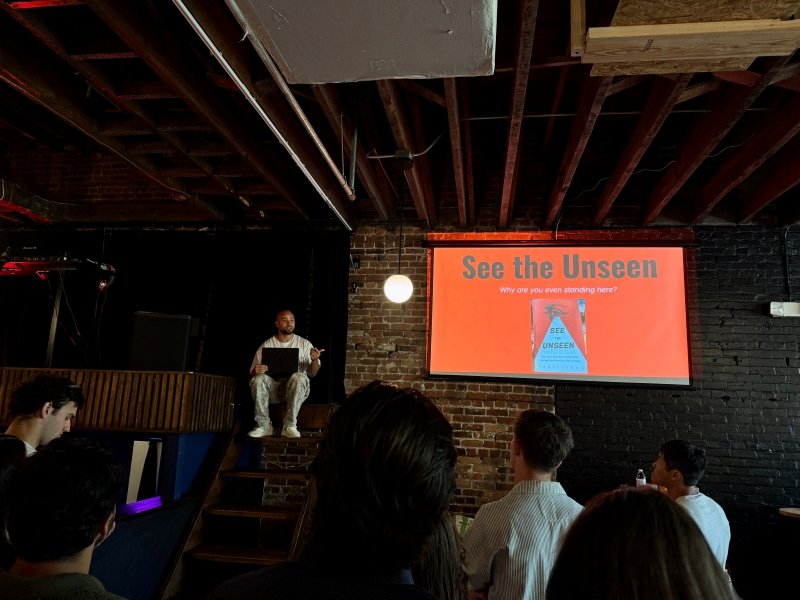
For centuries, the instruction to “be transformed by the renewing of your mind” sat in Paul’s letter to the Romans as spiritual counsel. Today, neuroscience is catching up. A growing body of research on neuroplasticity and habitual thought patterns suggests the ancient directive describes something biologically real. Author, holistic healer, and spiritual teacher Mason Kuhr has built his book See the Unseen around that convergence. The book argues that renewing the mind is both a spiritual discipline and a trainable cognitive skill, offering readers a practical framework for doing the work.

Mason Kuhr’s path to this work is anything but conventional. He spent years as a competitive athlete, climbed Mount Kilimanjaro, and built a wellness brand before turning his focus toward inner healing and biblical study. That combined background shows up on the page. He moves between biology, scripture, and lived experience without treating any of the three as subordinate to the others, each ultimately pointing back to God.

The Science of Renewing the Mind

Modern cognitive science has established that repeated thoughts carve physical paths in the brain. Neurons that fire together strengthen their connections, and behavior follows the pattern of what gets reinforced. Mason Kuhr points out that this mirrors what scripture describes when it talks about strongholds, renewing the mind, and the instruction to take every thought captive. The mechanism was articulated thousands of years ago theologically before it could be imaged on an MRI.

In Kuhr’s view, this is not a coincidence. It is confirmation. He sees science, in its purest form, as a way to capture a human-sized understanding of things too big for us to comprehend. In its correct process, it brings us closer to God.

What makes Kuhr’s framing distinct is his refusal to treat this as a metaphor. In his reading, the biblical writers described real cognitive processes using the vocabulary available to them, and contemporary research is now giving those descriptions a second language. He sees the current moment as a rare window. Believers no longer have to choose between trusting scripture and trusting what studies reveal about the brain. The two are pointing at the same thing…spiritual, mental, and physical, all impacting one another.

Photo Courtesy: Mason Kuhr

What Are the “Highway Principles?”

Mason Kuhr structures the practical portion of See the Unseen around what he calls the highway principles. The central image is straightforward. Thoughts travel on roads. The roads most frequently used become highways, and the brain defaults to those routes because they require the least effort. Negative self-talk, shame cycles, and anxious thought loops all run on highways that have been built and reinforced over the years. Left unexamined, these highways quietly shape behavior, relationships, and identity.

Renewing the mind, in this framework, is not just positive thinking. It is road construction. Kuhr teaches that the work involves three interlocking moves. A person notices which highway a thought just traveled on, interrupts the traffic before it completes the route, and deliberately sends attention down a different road often enough that the new path becomes the default. Scripture meditation, prayer, confession, and identity-level belief work all function as construction equipment in this model. Each one lays asphalt on a road that the brain has rarely used.

The approach asks for patience. Kuhr is direct that renewing the mind takes time and that old highways do not collapse overnight. Readers expecting a quick fix will not find one in the book. What they will find is a sequence of practices designed to be returned to daily over months, years, and the rest of our lives.

Photo Courtesy: Mason Kuhr

How Metacognition Reshapes Identity

One of Mason Kuhr’s central claims is that identity is not necessarily fixed; it is formed. Identity is downstream of belief, and belief is downstream of attention. What a person habitually thinks about themselves, about God, and about their circumstances becomes what they believe. What they believe becomes who they are. Change the pattern of attention, and the identity eventually follows. We reflect what we worship.

Metacognition, the ability to observe one’s own thinking rather than be carried along by it, is the skill Kuhr treats as foundational. Without it, a person is inside the thought, unable to see the road. With it, they can step to the side and ask where this particular highway leads, whether they want to keep driving it, and what a different route might look like.

This is where the spiritual dimension of the book becomes most explicit. Kuhr argues that metacognition practiced in isolation is useful but limited. Practiced in relationship with God, with scripture as the standard against which thoughts are measured, it becomes something more. The work of renewing the mind is not self-improvement. It is the slow alignment of the interior life with what is actually true. The innermost parts of the brain should start to look like the Bible over time.

The Work Beyond the Page

See the Unseen is not a standalone idea. It is part of a larger body of work that Mason Kuhr is actively building. The Stampede Network focuses on inner healing practices grounded in faith and natural herbal nutrition. The Lionheart Project is a ministry aimed at entrepreneurs and builders seeking a purpose-first framework for leadership, family, and creation. House of Purpose is a worship music project, released across streaming platforms, that extends the same themes into sound.

Kuhr speaks, hosts retreats, and mentors leaders alongside his writing. Through his work on the body, the mind, and the spiritual life, he has reached audiences in the millions. He writes as someone still working out the material in real time, not as a finished teacher delivering conclusions. Readers encounter someone doing the work in process, bridging the gap between belief and lived experience.

See the Unseen is available on Amazon, offering a journey for readers ready to rethink how belief, thought, and identity are formed, and how they can be changed. More of Mason Kuhr’s writing and speaking can be found at masonkuhr.com and masonkuhr.substack.com, and his work on inner healing continues through the Stampede Network.

Disclaimer: This article is for informational purposes only. The views and perspectives shared reflect those of the subject and are not intended as medical, psychological, spiritual, or professional advice. Readers experiencing mental health, emotional, or physical health concerns should consult a qualified professional. References to neuroscience research are provided for general context and do not constitute clinical guidance or a diagnosis of any condition.

The Plumber’s Collective Was Built for the Owner Who’s Done Being the Hardest Worker in the Room

There’s a version of success in the trades that looks good from the outside and feels exhausting from the inside. The contractor who built everything himself. Three trucks on the road, a dispatcher holding things together, techs who know their jobs, and an owner who still can’t seem to get out of his own way. Not because he’s a control freak. Because the business was never built to run without him.

Ask most plumbing contractors running three to five trucks what their day actually looks like, and the answer is rarely what they imagined when they went out on their own. The morning starts with the phone. Calls that came in overnight, messages that need responses, and an estimate request that the dispatcher flagged because the customer specifically asked to speak with the owner. Then there’s the job that hit a complication and needs a decision. The tech who has a question. The supplier issue. The callback from a customer who wants to know why their invoice looks different than the quote. By noon, the owner has touched a dozen things that have nothing to do with growing the business, and the afternoon isn’t going to be any different.

This is what the trades look like at a certain size when the pipeline was never properly systematized. Everything runs through the owner because the owner is the one who built the reputation, knows the customers, and understands the work well enough to handle whatever comes up. That knowledge and trust are genuinely valuable. It’s also a trap. Because a business that requires the owner to be present for everything, including finding the next job, isn’t really a business. It’s a job with overhead.

The hardest part is that most contractors in this position aren’t lazy or disorganized. They’re capable people who built something real through hard work and skill. The problem is structural. When your pipeline depends on your personal network, your Google reviews, and your ability to follow up on every inquiry yourself, you become the single point of failure for your own growth. Take a week off and find out how quickly things slow down. That’s the tell.

What often gets overlooked is that a properly built demand system isn’t just about generating more calls. It’s designed to take the owner out of the process of finding work. When the right leads come in consistently, pre-qualified, and land directly with a dispatcher who has the context to handle them, the owner is no longer the hub; everything runs through. That kind of structure is meant to free contractors to look up from the day-to-day and focus on the operation rather than work inside it.

That’s the shift The Plumber’s Collective is built around. Not just generating more inbound volume, but building a system designed to function without the owner’s constant involvement. Calls that come in are filtered through pre-qualification before they reach the schedule. The dispatcher has context for each inquiry rather than escalating concerns at every step. The owner isn’t needed for every decision, which leaves more time for the work that only the owner can handle, including making decisions, leading the team, and focusing on growth.

For contractors who have spent years being the hardest-working person in their own business, this kind of change can be more than operational. It can be personal. The goal is evenings that aren’t built around returning calls. Weekends that aren’t interrupted by estimate requests. Vacations that don’t require a laptop nearby. The aim is for the business to support the owner instead of the other way around.

Contractors who come to The Plumber’s Collective aren’t looking for someone to hand them leads and walk away. They’re looking for a real system, one that runs in the background, supports the pipeline, and helps return the most valuable resource any owner has, which is time.

Three trucks or five, the goal is the same. Build something that doesn’t need you in the room every minute to keep moving forward.

That’s what a real pipeline looks like. And it’s closer than most contractors think.

To learn more, visit The Plumber’s Collective.