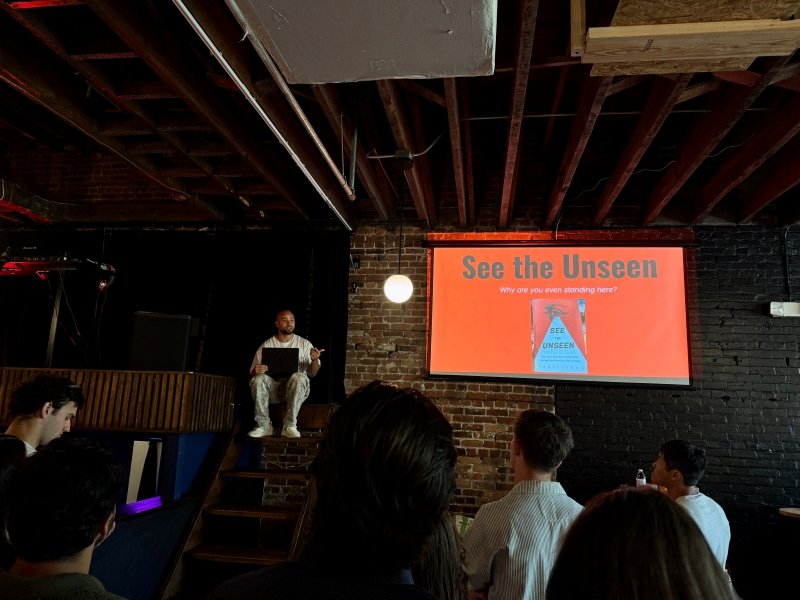
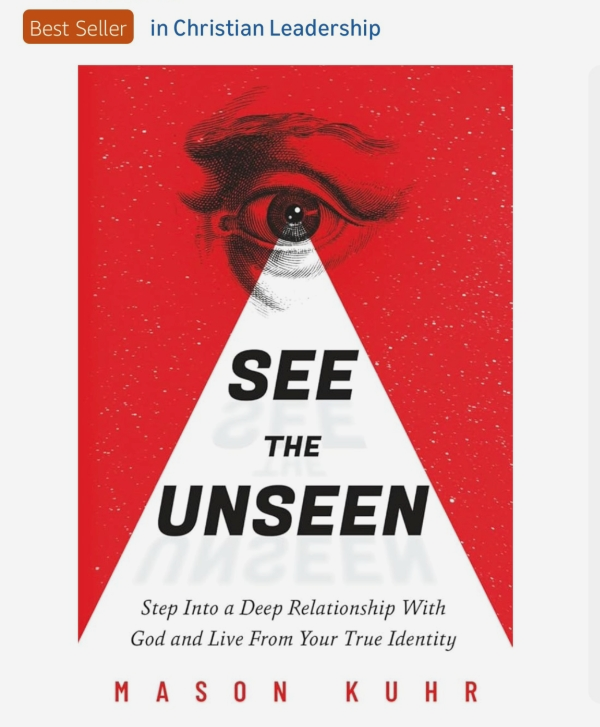
For centuries, the instruction to “be transformed by the renewing of your mind” sat in Paul’s letter to the Romans as spiritual counsel. Today, neuroscience is catching up. A growing body of research on neuroplasticity and habitual thought patterns suggests the ancient directive describes something biologically real. Author, holistic healer, and spiritual teacher Mason Kuhr has built his book See the Unseen around that convergence. The book argues that renewing the mind is both a spiritual discipline and a trainable cognitive skill, offering readers a practical framework for doing the work.
Mason Kuhr’s path to this work is anything but conventional. He spent years as a competitive athlete, climbed Mount Kilimanjaro, and built a wellness brand before turning his focus toward inner healing and biblical study. That combined background shows up on the page. He moves between biology, scripture, and lived experience without treating any of the three as subordinate to the others, each ultimately pointing back to God.
The Science of Renewing the Mind
Modern cognitive science has established that repeated thoughts carve physical paths in the brain. Neurons that fire together strengthen their connections, and behavior follows the pattern of what gets reinforced. Mason Kuhr points out that this mirrors what scripture describes when it talks about strongholds, renewing the mind, and the instruction to take every thought captive. The mechanism was articulated thousands of years ago theologically before it could be imaged on an MRI.
In Kuhr’s view, this is not a coincidence. It is confirmation. He sees science, in its purest form, as a way to capture a human-sized understanding of things too big for us to comprehend. In its correct process, it brings us closer to God.
What makes Kuhr’s framing distinct is his refusal to treat this as a metaphor. In his reading, the biblical writers described real cognitive processes using the vocabulary available to them, and contemporary research is now giving those descriptions a second language. He sees the current moment as a rare window. Believers no longer have to choose between trusting scripture and trusting what studies reveal about the brain. The two are pointing at the same thing…spiritual, mental, and physical, all impacting one another.
What Are the “Highway Principles?”
Mason Kuhr structures the practical portion of See the Unseen around what he calls the highway principles. The central image is straightforward. Thoughts travel on roads. The roads most frequently used become highways, and the brain defaults to those routes because they require the least effort. Negative self-talk, shame cycles, and anxious thought loops all run on highways that have been built and reinforced over the years. Left unexamined, these highways quietly shape behavior, relationships, and identity.
Renewing the mind, in this framework, is not just positive thinking. It is road construction. Kuhr teaches that the work involves three interlocking moves. A person notices which highway a thought just traveled on, interrupts the traffic before it completes the route, and deliberately sends attention down a different road often enough that the new path becomes the default. Scripture meditation, prayer, confession, and identity-level belief work all function as construction equipment in this model. Each one lays asphalt on a road that the brain has rarely used.
The approach asks for patience. Kuhr is direct that renewing the mind takes time and that old highways do not collapse overnight. Readers expecting a quick fix will not find one in the book. What they will find is a sequence of practices designed to be returned to daily over months, years, and the rest of our lives.
How Metacognition Reshapes Identity
One of Mason Kuhr’s central claims is that identity is not necessarily fixed; it is formed. Identity is downstream of belief, and belief is downstream of attention. What a person habitually thinks about themselves, about God, and about their circumstances becomes what they believe. What they believe becomes who they are. Change the pattern of attention, and the identity eventually follows. We reflect what we worship.
Metacognition, the ability to observe one’s own thinking rather than be carried along by it, is the skill Kuhr treats as foundational. Without it, a person is inside the thought, unable to see the road. With it, they can step to the side and ask where this particular highway leads, whether they want to keep driving it, and what a different route might look like.
This is where the spiritual dimension of the book becomes most explicit. Kuhr argues that metacognition practiced in isolation is useful but limited. Practiced in relationship with God, with scripture as the standard against which thoughts are measured, it becomes something more. The work of renewing the mind is not self-improvement. It is the slow alignment of the interior life with what is actually true. The innermost parts of the brain should start to look like the Bible over time.
The Work Beyond the Page
See the Unseen is not a standalone idea. It is part of a larger body of work that Mason Kuhr is actively building. The Stampede Network focuses on inner healing practices grounded in faith and natural herbal nutrition. The Lionheart Project is a ministry aimed at entrepreneurs and builders seeking a purpose-first framework for leadership, family, and creation. House of Purpose is a worship music project, released across streaming platforms, that extends the same themes into sound.
Kuhr speaks, hosts retreats, and mentors leaders alongside his writing. Through his work on the body, the mind, and the spiritual life, he has reached audiences in the millions. He writes as someone still working out the material in real time, not as a finished teacher delivering conclusions. Readers encounter someone doing the work in process, bridging the gap between belief and lived experience.
See the Unseen is available on Amazon, offering a journey for readers ready to rethink how belief, thought, and identity are formed, and how they can be changed. More of Mason Kuhr’s writing and speaking can be found at masonkuhr.com and masonkuhr.substack.com, and his work on inner healing continues through the Stampede Network.
Disclaimer: This article is for informational purposes only. The views and perspectives shared reflect those of the subject and are not intended as medical, psychological, spiritual, or professional advice. Readers experiencing mental health, emotional, or physical health concerns should consult a qualified professional. References to neuroscience research are provided for general context and do not constitute clinical guidance or a diagnosis of any condition.