US Business News

Equipment Financing for Logistics and Trucking Companies


Business owners working in equipment financing for logistics and trucking face funding challenges that are easy to overlook in a generic conversation about small business lending, but that become obvious the moment you look closely at how this specific type of business actually generates revenue and incurs cost. Understanding those specific patterns, rather than applying a one-size-fits-all approach to funding, is the first step toward choosing a financing structure that actually fits. Information on fundivi’s equipment financing loans shows how one lender structures financing around the purchase of a specific vehicle or fleet.

Why This Challenge Is Different

Logistics and trucking companies operate in an industry where fleet size and vehicle condition directly determine how much freight a company can move, and therefore how much revenue it can generate in a given period. An aging fleet, or a fleet too small to meet growing demand from existing clients, represents a hard ceiling on a logistics company’s growth, regardless of how strong its client relationships or operational efficiency might otherwise be.

A Second Layer to the Same Problem

Financing new or replacement vehicles, rather than paying for them entirely out of working capital, allows a logistics company to expand or modernize its fleet while preserving the cash needed to cover fuel, driver pay, and the many other ongoing costs of running a trucking operation. This becomes especially important during periods of freight demand growth, when a company may need to add capacity quickly to capture new business before a competitor with more available equipment does so instead.

How fundivi Approaches This Need

fundivi’s underwriting evaluates current business performance rather than relying solely on years of operating history or extensive collateral. That approach can suit businesses whose funding needs are tied to a specific, identifiable pattern rather than a generic, open-ended request for capital. Reviewing how logistics companies use bridge capital to cover carrier payments gives a clearer sense of how this specific type of funding is structured and what it is designed to address.

The application itself typically takes a few minutes to complete. A secure connection to the business’s bank account or financial data takes the place of the extensive paperwork a traditional bank loan would require, and fundivi reports that decisions can often come within hours rather than the weeks a conventional loan process might take. Speed matters considerably for a business facing a need tied to a specific, time-sensitive pattern rather than a flexible, open-ended timeline.

Choosing the Right Structure for Your Specific Situation

Not every funding need calls for the same structure, and it is worth taking a moment to confirm that the product you are considering actually matches your situation before applying. Reviewing how to qualify for equipment financing can help clarify the specific qualification criteria and underwriting approach involved, so you know what to expect and what to prepare before starting an application.

Business owners who are still weighing this specific product against a broader set of options can also review fundivi’s full range of business loans, which provides useful context for comparing structures side by side rather than committing to the first product that comes to mind. Taking this extra step before applying tends to produce a better match between the funding structure chosen and the actual underlying need driving the application in the first place.

Planning Ahead Rather Than Reacting

Business owners who recognize the specific funding pattern tied to their type of business, and who plan for it proactively rather than only seeking capital once a cash flow problem has already become urgent, often end up with a wider range of options and can sometimes secure more favorable terms than those applying reactively. This is particularly true for funding needs tied to a predictable pattern, such as a seasonal cycle or a recurring timing gap, since a lender can evaluate a well-documented, foreseeable pattern more favorably than an unexplained, last-minute request.

Building a habit of reviewing your business’s specific cash flow pattern periodically, rather than only thinking about funding when a specific need has already become pressing, puts you in a stronger position every time a genuine funding decision does arise. Many business owners find it useful to identify, in advance, which funding structure they would turn to for each of their business’s recurring patterns, so that when the moment actually arrives, the decision has already been made and only the application itself remains.

What Lenders Actually Look For in This Situation

When a lender evaluates a funding request tied to the specific pattern described above, the strongest applications tend to share a few common qualities. Clear, verifiable revenue and cash flow data, reviewed directly through connected bank account information rather than self-reported figures, gives an underwriting engine the clearest possible picture of a business’s actual current performance. A specific, well-documented explanation of how the funding will be used, rather than a vague general purpose, also tends to move an application through underwriting more smoothly, since it allows the lender to evaluate the request against its actual intended use rather than guessing at the underlying need.

Business owners in equipment financing for logistics and trucking who come to the application process with this kind of clarity, having already identified the specific pattern driving their need and gathered the documentation that supports it, often find the path from application to funding faster and more straightforward than those applying with only a general sense that more capital would help. This preparation costs relatively little time upfront but can shorten the overall process and may improve the terms ultimately offered, which matters just as much for a smaller, routine funding need as it does for a larger, more consequential one.

Avoiding Common Missteps

One common misstep is waiting too long to address a funding need that was, in retrospect, entirely predictable. Business owners who recognize a recurring pattern in their operations, whether tied to seasonality, a specific client payment cycle, or a recurring equipment or staffing need, but who nonetheless wait until the pressure becomes acute before seeking funding, generally end up with fewer options and less favorable terms than those who plan ahead. Recognizing a pattern once is useful; building a standing plan around it is considerably more valuable over the long run.

A second common misstep is choosing a funding structure based on availability or familiarity rather than genuine fit. A business owner who has used one particular type of funding before may default to it again out of habit, even when a different structure would actually serve the current need better. Taking a few extra minutes to confirm that a given product’s structure, repayment schedule, and underwriting approach genuinely match the situation at hand, rather than assuming the familiar option is automatically the right one, can lead to better outcomes over time, both in terms of total cost and in how comfortably the resulting payments fit alongside the business’s other ongoing obligations.

Preparing to Apply

Business owners whose situation matches the challenges described here can start by reviewing the product details linked throughout this article and confirming that the structure fits their equipment need. Because the application itself takes only a few minutes, the most time-consuming part is usually gathering recent bank statements, a firm equipment quote, and a clear description of how the funds will be used. A decision based on a business’s actual numbers can also give far more clarity than continued research alone.

Frequently Asked Questions

How is this type of funding specifically evaluated during underwriting?

Underwriting generally focuses on your business’s current revenue and cash flow performance, along with any specific documentation relevant to the particular funding need described above.

How quickly can funding be delivered once an application is submitted?

Because the underwriting process relies on real, verified data rather than extensive manual document review, decisions can often be reached within hours, with funding following shortly after an offer is accepted.

Does this type of business need a long operating history to qualify?

Qualification depends primarily on the strength and consistency of current revenue rather than years in operation, so newer businesses with strong performance can often still qualify.

What happens if my specific situation changes after I apply?

Business owners should communicate any significant change in circumstances to their lender promptly, since this may affect the specific terms or structure of an active application.

Where can I compare this option against other funding structures?

Reviewing fundivi’s broader range of funding products alongside the specific option discussed here can help confirm which structure actually fits your business’s situation before you commit to an application.

Disclaimer: This article is provided for general informational and educational purposes only and does not constitute financial, legal, accounting, tax, or investment advice. Equipment financing and other business financing products involve costs, repayment obligations, eligibility requirements, and risks that may vary depending on the lender, financing product, business, and equipment being financed. Approval, funding amounts, interest or factor rates, fees, repayment terms, collateral requirements, and other conditions are subject to the applicable lender’s underwriting and financing agreement. Businesses should carefully review all financing terms and consider consulting a qualified financial or professional adviser before making a financing decision. Information regarding fundivi and its financing products is based on information provided or published by the company and may change over time. Nothing in this article guarantees approval, funding, favorable terms, faster processing, or any particular business or financial outcome.

Paul Davis Restoration of Mid-Hudson Valley Says No Customer Should Feel Like Just Another Job

Feeling like a number on a restoration company’s job list is one of the most common frustrations homeowners describe after a loss. Paul Davis Restoration of Mid-Hudson Valley says fixing that specific feeling is central to how it approaches every project, starting with how quickly and personally it responds to the first call.

Fixing the “Just Another Job” Feeling

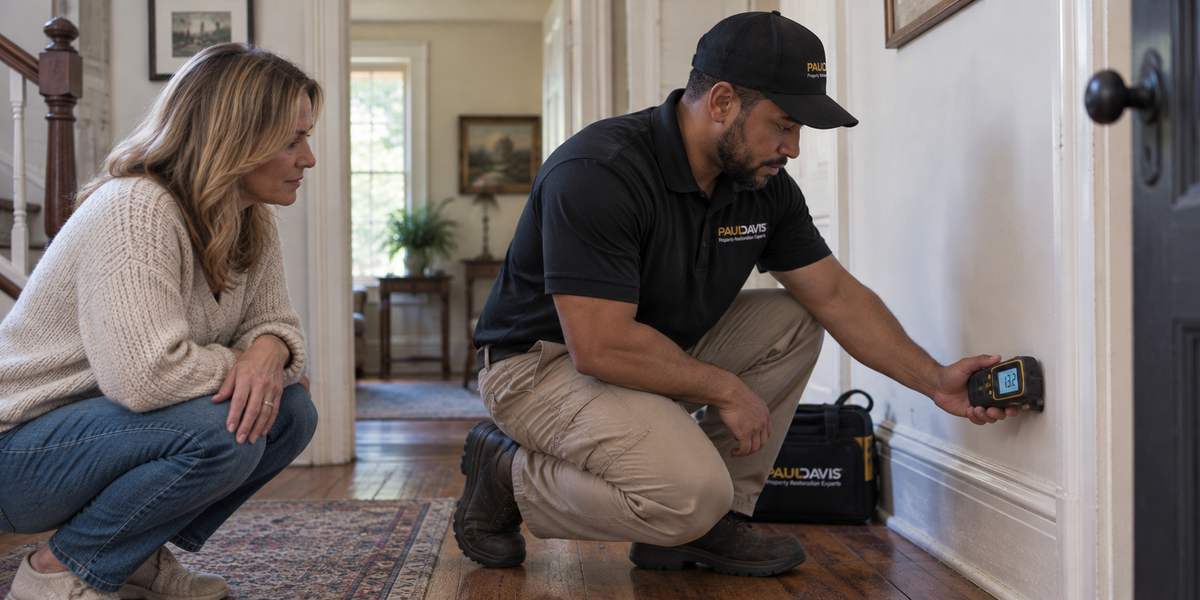
Owner Matt Johns is direct about a common industry complaint the company set out to fix. “People hate feeling like ‘just another job,'” he said, describing a standard built around consistent availability and communication that signals to a customer their situation is being taken seriously, not processed on autopilot. In Rhinebeck, one of the communities across the Hudson Valley, that personal attention applies the same way to a routine water leak as it does to a more complex loss involving asbestos or mold.

Speed as a Signal of Genuine Care

Johns frames the company’s approach to response time as more than an operational metric. “We proactively seek to be as prompt as possible in our initial response because that signals to our customers that we genuinely care,” he said. That same personal approach extends to how the team gets to know a household before recommending a course of action. “We get to know our customers, and we seek to understand the things that make their properties unique,” Johns said, describing an approach built around understanding a home’s specific quirks and a family’s specific needs rather than applying one standard process to every job.

A Process Built Around Real Communication

The company says it makes itself available to answer questions or concerns even outside standard business hours, an approach meant to counter what it describes as a common failure point among restoration companies: disappearing once mitigation work is underway. For processes that don’t move on a predictable timeline, including asbestos testing, asbestos abatement, and mold remediation, the company says it focuses on keeping customers fully informed of a project’s status rather than promising a speed it can’t control.

A Business Shaped by Customer Feedback

The company says it’s motivated directly by what customers tell it, rather than relying only on its own sense of what good service looks like. That approach extends to pricing as well: certified employees and in-house project managers allow the team to keep estimates accurate and competitive, backed by relationships with local suppliers and contractors built over time. The company also points to how it educates customers along the way, taking time to explain the work being performed rather than treating that explanation as optional once a job is underway.

What does Paul Davis Restoration of Mid-Hudson Valley mean by avoiding the “just another job” feeling?

The company says it builds consistent availability and communication into every project so customers feel their situation is being taken seriously rather than processed like a routine transaction.

How does the company handle processes with unpredictable timelines, like asbestos abatement?

The company says it focuses on clear, ongoing communication for these processes rather than promising a specific speed it can’t fully control, so customers always know the status of their project.

Is the company available outside normal business hours?

Yes. The team encourages customers to reach out with questions or concerns even outside standard business hours.

What areas does Paul Davis Restoration of Mid-Hudson Valley serve?

The franchise serves Poughkeepsie, Kingston, Beacon, New Paltz, Rhinebeck, Saugerties, Woodstock, and communities throughout Dutchess, Ulster, Columbia, Sullivan, and Greene counties in New York.

Stay Connected With Paul Davis Restoration of Mid-Hudson Valley

For project updates and local news, homeowners can follow Paul Davis Restoration of Mid-Hudson Valley on Facebook and LinkedIn.

GE HealthCare Expands U.S. Radiopharmaceutical Operations

GE HealthCare has agreed to acquire SOFIE Biosciences for $945 million in cash, adding U.S. radiopharmaceutical manufacturing and distribution capabilities to its Pharmaceutical Diagnostics business. The transaction would give GE HealthCare a broader domestic network of specialized facilities serving the PET radiopharmaceutical supply chain.

Key Takeaways

  • GE HealthCare agreed to acquire SOFIE Biosciences for $945 million in cash
  • SOFIE operates 15 contract manufacturing sites across the United States
  • SOFIE’s U.S. manufacturing network includes 21 cyclotrons
  • The acquisition would expand GE HealthCare’s domestic radiopharmaceutical capabilities
  • GE HealthCare expects the transaction to close in the first half of 2027, subject to required conditions and regulatory approvals

GE HealthCare Agrees to Acquire SOFIE Biosciences

GE HealthCare has agreed to acquire SOFIE Biosciences in a $945 million cash transaction that would add SOFIE’s U.S. radiopharmaceutical manufacturing and distribution network to GE HealthCare’s Pharmaceutical Diagnostics business.

The transaction is focused on capabilities supporting the PET radiopharmaceutical supply chain. Rather than adding only a product line, GE HealthCare would gain an established network of specialized facilities and manufacturing infrastructure.

SOFIE operates 15 contract manufacturing sites across the United States, giving the acquisition a significant domestic production component. Its network also includes 21 cyclotrons used as part of radiopharmaceutical manufacturing operations.

The acquisition would integrate those existing assets into GE HealthCare’s broader Pharmaceutical Diagnostics activities instead of requiring the company to build comparable infrastructure from the ground up.

GE HealthCare expects the transaction to close in the first half of 2027, subject to regulatory approvals and other required closing conditions.

$945 Million Deal Expands Radiopharmaceutical Capabilities

The $945 million acquisition would expand GE HealthCare’s U.S. manufacturing footprint through SOFIE’s existing facilities and specialized production equipment.

The deal comes as the pharmaceutical industry places greater emphasis on domestic pharmaceutical production, with drugmakers increasingly considering U.S.-based manufacturing capacity and supply-chain resilience.

SOFIE’s network includes 15 contract manufacturing sites and 21 cyclotrons. Cyclotrons are specialized equipment used in the production of certain radiopharmaceutical materials.

The acquired infrastructure would support activities connected to positron emission tomography, or PET, which uses radiopharmaceuticals as part of diagnostic imaging procedures.

For GE HealthCare, the transaction would provide additional manufacturing and distribution capacity within an area already connected to its Pharmaceutical Diagnostics business.

The cash consideration establishes a $945 million value for the acquisition, although ownership will not transfer until the required closing conditions have been satisfied.

SOFIE Adds U.S. Manufacturing and Distribution Facilities

SOFIE’s domestic manufacturing network is a central part of the acquisition. Its 15 contract manufacturing locations would give GE HealthCare an established footprint across multiple U.S. facilities.

The 21 cyclotrons within the network add specialized production infrastructure to those operations. Together, the sites and equipment support SOFIE’s role within the PET radiopharmaceutical supply chain.

The acquisition would also broaden GE HealthCare’s distribution capabilities. Radiopharmaceutical operations require both specialized production and an infrastructure capable of supporting the movement of products through the supply chain.

SOFIE’s existing network gives GE HealthCare a way to expand those capabilities through acquisition rather than developing an equivalent national footprint independently.

That distinction makes the physical infrastructure one of the most significant operational elements of the transaction.

Domestic Manufacturing Becomes a Larger Strategic Focus

The acquisition also fits within a broader shift toward expanding manufacturing capacity inside the United States.

Industries including pharmaceuticals have been part of wider manufacturing reshoring efforts aimed at bringing production closer to domestic customers and reducing dependence on overseas supply chains.

For GE HealthCare, SOFIE’s existing U.S. facilities provide an immediate domestic network if the acquisition closes. The transaction would add operating sites rather than relying solely on future facility construction.

The domestic footprint is particularly relevant because SOFIE’s assets are spread across multiple contract manufacturing locations rather than concentrated in a single facility.

That network would give GE HealthCare additional infrastructure for manufacturing and distributing radiopharmaceuticals within the United States.

Acquisition Expands GE HealthCare’s Pharmaceutical Diagnostics Business

SOFIE would become part of GE HealthCare’s Pharmaceutical Diagnostics business following completion of the acquisition.

The transaction would broaden that business through additional manufacturing, distribution and PET radiopharmaceutical capabilities.

SOFIE’s sites and cyclotrons form the principal operating assets involved in the expansion. Their addition would increase the physical infrastructure available to GE HealthCare for U.S. radiopharmaceutical activities.

The transaction therefore combines financial and operational elements. The $945 million cash price defines the acquisition value, while the manufacturing sites, cyclotrons and distribution capabilities represent the assets being added.

Integrating those operations would expand GE HealthCare’s domestic presence within the specialized supply chain supporting PET imaging.

Transaction Expected to Close in First Half of 2027

GE HealthCare expects the acquisition of SOFIE Biosciences to close in the first half of 2027.

Completion remains subject to required conditions and regulatory approvals. Until those requirements are satisfied, SOFIE will continue to operate separately from GE HealthCare.

If completed, the transaction would bring SOFIE’s 15 U.S. contract manufacturing sites and network of 21 cyclotrons into GE HealthCare’s Pharmaceutical Diagnostics business.

The deal would also expand GE HealthCare’s domestic radiopharmaceutical manufacturing and distribution capabilities, with the acquired operations focused on supporting the PET radiopharmaceutical supply chain.

The first-half 2027 target therefore represents the expected completion window rather than a guaranteed closing date.

Frequently Asked Questions

What is GE HealthCare acquiring from SOFIE Biosciences?

GE HealthCare has agreed to acquire SOFIE Biosciences, including its U.S. radiopharmaceutical manufacturing and distribution operations. SOFIE operates 15 contract manufacturing sites and a network of 21 cyclotrons.

How much is GE HealthCare paying for SOFIE Biosciences?

GE HealthCare agreed to acquire SOFIE Biosciences for $945 million in cash.

How many U.S. facilities does SOFIE operate?

SOFIE operates 15 contract manufacturing sites across the United States. Its U.S. network also includes 21 cyclotrons.

What does the acquisition add to GE HealthCare’s business?

The transaction would add domestic radiopharmaceutical manufacturing and distribution capabilities to GE HealthCare’s Pharmaceutical Diagnostics business, with a focus on the PET radiopharmaceutical supply chain.

When is the GE HealthCare and SOFIE transaction expected to close?

GE HealthCare expects the transaction to close in the first half of 2027, subject to required closing conditions and regulatory approvals.

Paul Davis Restoration of NJ Delaware Valley Scales From Single-Room Leaks to Large Commercial Losses

By: Olivia Hughes

A restoration company built only for small residential jobs can struggle once a loss grows beyond a single room, and the reverse is often true of companies built primarily for scale. Paul Davis Restoration of NJ Delaware Valley says its ability to handle both ends of that range without missing a step is part of what genuinely sets it apart from smaller competitors.

Confidence During a High-Stakes Situation

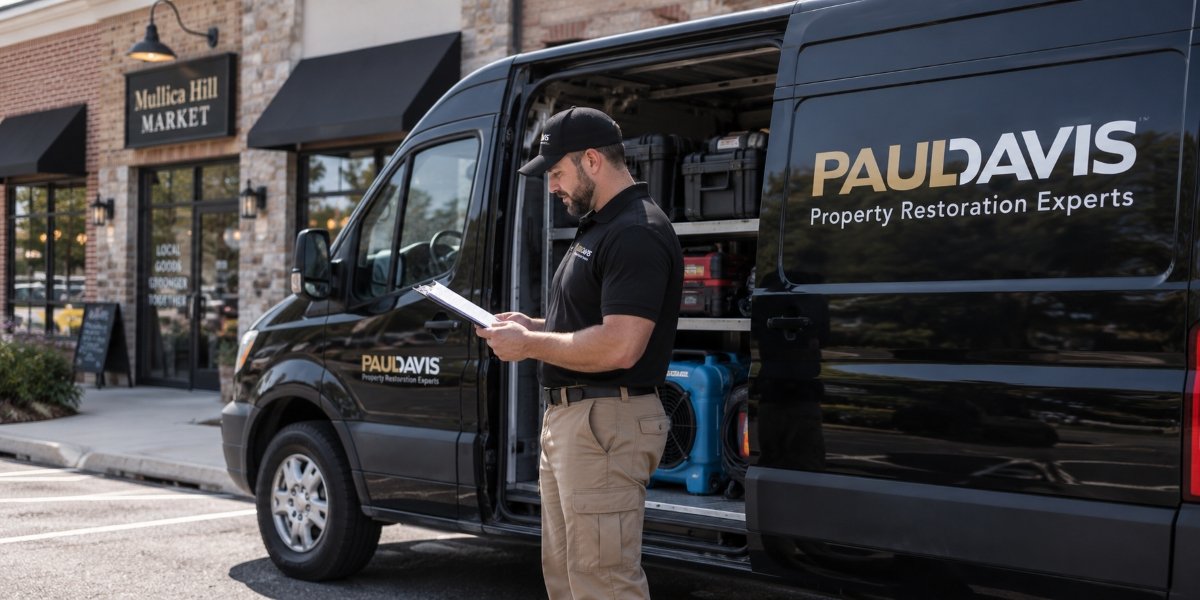
Owner Scott Wenger describes the company’s core value to clients directly. “We help property owners navigate stressful, high-stakes situations with confidence,” he said. That confidence is built through ongoing education rather than a single conversation at the start of a project. “Our team educates customers on the restoration process, keeps them informed at every step, and helps prevent future issues through proactive guidance,” Wenger said, describing a standard that applies whether a client has been through a claim before or is facing one for the very first time. In Mullica Hill, one of the company’s service communities, that guidance applies just as much to a homeowner navigating their first claim as it does to a repeat commercial client.

Scaling Without Losing Quality

Wenger also points to the company’s range as a genuine advantage over smaller local operators. “Our ability to scale from single-room water losses to large commercial disasters gives us an edge few local operators can match,” he said, describing a team equipped to move between a modest residential leak and a much larger commercial or multi-unit loss without needing to bring in outside help to cover the gap.

Credentials Built for Large-Loss Situations

That scalability is backed by a broad set of certifications, including IICRC credentials in water, fire, and mold restoration, along with specialized training in applied structural drying, fire and smoke restoration, and lead-safe renovation. The company describes itself as large-loss capable, handling commercial, multi-unit, and municipal response in addition to standard residential work, all while remaining licensed, bonded, and fully insured. State-of-the-art drying and air quality equipment is used across both ends of that range, rather than reserving newer technology for larger commercial accounts only, so a single-family homeowner directly benefits from the exact same equipment standard as a large commercial client working with the company.

How does Paul Davis Restoration of NJ Delaware Valley help homeowners through a stressful claim?

The company says it focuses on educating customers throughout the process and keeping them informed at every step, rather than leaving them to navigate an unfamiliar situation alone.

Can the company handle large commercial losses as well as small residential jobs?

Yes. The team says its ability to scale from single-room water losses to large commercial disasters gives it an edge that few local operators can match.

Does the company offer free inspections?

Yes. The company provides no-obligation inspections for water, fire, mold, and storm damage, with a small fee applying only to certain specialized assessments, which is credited toward the project if the client moves forward.

What areas does Paul Davis Restoration of NJ Delaware Valley serve?

The franchise proudly serves Haddonfield, Sewell, Glassboro, Mullica Hill, Woodbury, Camden, and dozens of surrounding communities throughout Gloucester, Salem, and Camden counties in New Jersey.

Stay Connected With Paul Davis Restoration of NJ Delaware Valley

For project updates and local news, homeowners and businesses can follow Paul Davis Restoration of NJ Delaware Valley on Facebook and LinkedIn.