US Business News

Air Force Veteran Marc Ayala Shares a Ten-Principle Leadership Framework for Second-in-Command Roles

By: Andrew Vespa

Most leadership books begin from the top. They study the commander, the CEO, the person with final authority, and they extract principles from that vantage point. Marc Ayala takes a more interesting and more honest position. He begins from the seat to the right.

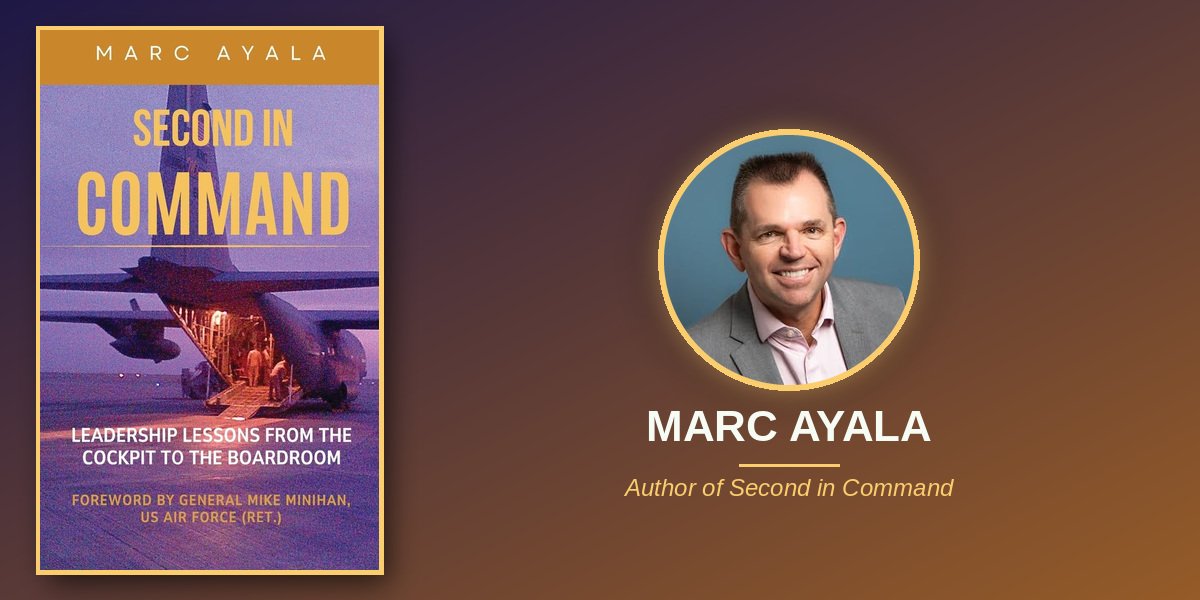
Second in Command: Leadership Lessons from the Cockpit to the Boardroom is organized around the C-130 Hercules crew structure that shaped Ayala’s military career. On a five-person aircraft with two pilots, a navigator, a flight engineer, and one or two loadmasters, the copilot carries the official title of Second in Command. That title, Ayala argues, is not a consolation prize for the person who did not make Aircraft Commander. It is the most demanding leadership position in the formation, one that requires the occupant to be technically excellent, situationally aware, candid with superiors, and completely committed to mission success regardless of personal credit.

The parallel to corporate leadership is not forced. It emerges naturally from the stories Ayala tells across ten chapters, each anchored to a real operational event and each mapped to one of the ten principles he assembles into what he calls The Copilot Leadership Checklist. The principles themselves cover familiar territory: Teamwork, Trust, Integrity, Empowerment, Managing Fear, Communication, Accountability, Perseverance, Creativity, and Recognition. What makes them worth reading again is the material Ayala wraps around them.

Consider what the book does with Trust. The chapter opens with Ayala being roused from sleep in Oman at the beginning of Operation Enduring Freedom for a mission to fly two pallets of de-icing fluid from the Middle East to Djibouti, Africa. The cargo seemed nonsensical. The temperature in Djibouti registered above 40 degrees Celsius. There was no ice to speak of anywhere on the continent. Ayala went to the Air Terminal Operations Center to challenge the order. He was told the mission carried a Priority Code 1B1, the highest classification in military logistics, originating from the Joint Chiefs. He complied. When he landed in Djibouti and learned that the de-icing fluid was being used as a degreasing agent for the tail rotor hubs of grounded Marine helicopters, he experienced the full cost of his own assumption that he understood the problem. The lesson Ayala draws is precise: within complex systems, the information available at any single node is almost always partial. The capacity to trust a process without requiring complete visibility is not blind compliance. It is operational wisdom.

The chapter on Integrity opens in Afghanistan in 2008 on Marc’s fourth combat rotation. By this point, the early unity of purpose that followed September 11th had eroded into something he describes with unsettling clarity as “campaign fatigue.” He was questioning his participation. He was praying in the base chapel and wondering what the point of any of it was. That same night, his crew completed a combat airdrop for troops under fire, then received an emergency tasking to evacuate a severely wounded Taliban fighter. What followed, the discovery that they had just been treating an enemy combatant, the raw anger on the flight deck, and Ayala’s own near impulse to do something he could never undo, is told with a honesty that is difficult to manufacture. His resolution of that moment, grounded in both military law and his personal faith, becomes the chapter’s anchor for why integrity is not situational. It holds or it does not.

The chapter on Empowerment addresses something almost every manager above a certain level will recognize. Ayala, as a young Instructor Navigator, is assigned to give an AWADS checkout to the incoming Chief of the Group’s Standardization and Evaluation office. The student outranks him by several grades. During pre-mission questioning, the student deflects basic questions about the radar system he is supposed to know. On the flight, conditions deteriorate, forcing the formation to compress its route and time on target. Buzz, the student, begins making incompetent real-time decisions. But the question Ayala poses, whether rank should insulate a person from standard accountability, cuts to the heart of how organizations either sustain their standards or quietly abandon them. His decision to hold the standard is the correct one. The fact that he had to struggle with it, that it was genuinely uncomfortable, is exactly what makes it instructive.

Ayala writes with a directness that reflects his military background without feeling rigid. The prose is specific without being technical, honest without being self-congratulatory. The result is a leadership book that respects its readers’ intelligence and trusts the stories to do the work that more conventional authors offload onto summaries and frameworks.

Marc Ayala’s Second in Command is available on Amazon for leaders ready to examine what the second seat demands and why organizations rise or fall on the character of the people in it.


How to Spot a Rising Property Market Abroad Before Prices Move

By: KeyCrew Media

Before a foreign property market gets expensive, it usually leaves a public record. An airline announces a nonstop route. A government budgets for a new airport. A legislature changes a residency or tax rule. A hotel brand signs on to a new resort.

“Every rising market leaves this paper trail, much of it public, and very few people read it,” writes Stephanie Gilezan, co-founder and CEO of Airdomo, in the foreword to the company’s 2027 Destination Homes Report. Gilezan, who has spent 28 years in real estate and now runs an international marketplace for buying homes abroad, says the reason people miss it is simple: “It’s mostly boring government and airline paperwork. There’s no famous person talking about it.”

What The Paper Trail Looks Like

The report, which names eleven rising markets, tracks seven kinds of change: air access, infrastructure, institutional investment, tax rules, residency rules, cultural attention and attractions. The most useful signals are specific and dated, such as a route launch, a budget line for an airport or a law with a number on it.

Puglia shows how those signals stack. Neos began flying from New York JFK to Bari in June 2025, removing the connection Americans used to need to reach southern Italy. In March 2026, Law 34/2026 widened Italy’s 7% tax regime for foreign pensioners to towns of up to 30,000 people, up from 20,000. “Airlines don’t launch routes on a hunch,” Gilezan said. “A new nonstop is also an expert opinion.”

Flights matter to home values because travel friction shrinks the market. “Every layover is a filter,” Gilezan said. Each connection cuts the number of people willing to make the trip, which means fewer future renters and fewer future buyers. “Take the connection away, and you’ve widened your pool of future buyers and your pool of future renters.”

Why The Signals Show Up Years Before Prices

The lag between a signal and a price change is longer than most buyers assume. “It’s years, not months,” Gilezan said. “Infrastructure is announced, then it has to get funded, then it has to get built.”

Dominica is a live example. Its 2026/27 budget targets completion of a new international airport in the second quarter of 2028, and even then, completion is a construction milestone rather than the day scheduled flights begin. In Gilezan’s view, prices tend to move in steps along that path, and the widest gap sits between the announcement and the day the first plane lands. A buyer can still purchase later, but at a price that already reflects the new access.

The Signal Buyers Overlook Most: Residency And Tax Rules

New resorts get noticed. Policy changes rarely do. “We all notice the brand-new resort,” Gilezan said. “But nobody reads the newspaper about the residence permits.”

In Zanzibar, a qualifying property investment of at least $100,000 may support a residence-permit application for the buyer and eligible family members, subject to approval. The 2023 Investment Act also provides a conditional 50% stamp-duty concession for qualifying real estate buyers. Rules like these change who can buy and why.

They can also work against a buyer who doesn’t check them. Gilezan recalls a past client who put down a $220,000 non-refundable deposit on a new-development condo in St. Vincent and the Grenadines, then learned they needed an alien landholding license to become the owner and might not be approved. Calls like that one, almost always after the fact, are why Airdomo exists.

“I’m not giving immigration or tax advice,” Gilezan said. “Anyone acting on a policy change needs a qualified immigration attorney.” Airdomo also recommends an independent local lawyer, never the developer’s, before any deposit changes hands.

How To Tell A Real Catalyst From Hype

Gilezan’s test is to follow the money. A real catalyst has funding committed, a named contractor, and physical work underway, while hype relies on videos and renderings. “If the only place I can find a ‘new international airport’ is a sales brochure, it doesn’t exist yet,” she said. Her second test is about the buyer’s own math: “If the whole case collapses without the airport, you’re not early, you’re speculating.”

The same test applies to developments marketed around a catalyst. Airdomo looks at a developer’s prior projects, physical progress on site, committed funding, and whether a hotel or residence brand has agreed to put its name on the project. Warning signs include projects promoted online for years that still haven’t broken ground, and developers who say they need 48% of units presold before they can start. More of Airdomo’s market coverage is available in its Journal.

About Airdomo: Airdomo is the trusted marketplace for buying a home abroad, with developer-certified, live-updated listings across 30 countries and concierge guidance from first search to keys in hand. Co-founded in 2024 by Stephanie Gilezan and Charles Bornheimer, Airdomo connects cross-border buyers, US agents, and international developers at airdomo.com.

Disclaimer: This article is based on information provided by the expert source cited above. It is intended for general informational purposes only and does not constitute legal, financial, or real estate advice. Readers should conduct their own research and consult qualified professionals before making any real estate or financial decisions.

Why Professional Book Editing, Design, and Marketing Matter for Independent Authors

Independent publishing has created new opportunities for writers who want to share their ideas, stories, and knowledge with a wider audience. Authors can now explore different publishing routes, select their preferred formats, and make their books available through various distribution channels. However, having the freedom to publish independently also means taking responsibility for several important aspects of the publishing process.

A completed manuscript is not automatically ready for readers. Before publication, it needs careful editing, professional presentation, and a clear promotional direction. These elements help shape how readers experience a book and how it is introduced to the marketplace.

For independent authors, understanding the value of professional editing, book design, and marketing can make a meaningful difference when preparing a publishing project.

Professional Editing Builds a Stronger Reading Experience

Writing a book requires creativity, research, and considerable effort. However, authors can sometimes overlook errors or structural issues because they are closely familiar with their own content.

Professional editing provides an independent review of the manuscript. Editors examine different aspects of the writing to improve clarity, consistency, organization, and readability.

There are several types of editing that authors may need. Developmental editing focuses on the overall structure, chapter organization, content development, and flow of ideas. Copyediting addresses grammar, sentence construction, punctuation, and consistency. Proofreading is generally performed near the end of the publishing process to identify remaining errors.

The appropriate editing approach depends on the manuscript’s condition and the author’s objectives.

For fiction writers, editing may involve reviewing character development, dialogue, pacing, and narrative consistency. Nonfiction authors may need additional attention to factual accuracy, logical organization, and clarity of explanations.

Professional editing does not mean removing an author’s unique voice. Instead, it helps ensure that the intended message reaches readers in a clear and polished form.

Book Cover Design Creates the First Impression

A book cover is one of the most recognizable elements of a publication. It is often the first thing potential readers notice when browsing an online bookstore or examining a physical book.

An effective cover communicates the book’s subject, genre, and overall tone. It also helps establish a visual identity that can make the publication easier to recognize.

Design decisions involve several elements, including typography, imagery, color combinations, spacing, and layout. These elements should work together rather than compete for attention.

For example, a business book may benefit from a clean and professional appearance, while a fantasy novel may require creative illustrations that communicate its fictional world.

Cover design also involves technical considerations. Printed books require appropriate dimensions, spine layouts, and back cover arrangements. Digital editions must remain recognizable across different screen sizes and thumbnail displays.

A professionally designed cover helps independent authors present their work in a way that reflects the quality and purpose of the manuscript.

Interior Formatting Improves Readability

While cover design attracts attention, interior formatting determines how comfortably readers interact with the book.

Consistent fonts, suitable margins, organized headings, appropriate paragraph spacing, and clear chapter divisions all contribute to a professional reading experience.

Formatting requirements can vary between paperback, hardcover, and ebook editions. Printed publications need layouts prepared for physical page dimensions, whereas digital books should adapt to different devices and reading preferences.

Errors in formatting can distract readers and reduce the overall quality of a publication. This makes interior layout an important part of the preparation process.

Authors who want to publish professionally should consider formatting alongside editing and cover design rather than treating it as a final minor adjustment.

Why Book Marketing Should Begin Before Publication

Publishing a book does not automatically make it visible to its intended audience. With thousands of new titles entering the marketplace, authors need to consider how potential readers will discover their work.

Book marketing involves communicating the book’s value, identifying suitable audiences, and selecting promotional channels that support the author’s objectives.

An author website can provide a central location for book information, professional details, and updates. Social media platforms offer opportunities to share content and interact with readers. Email newsletters can also help authors maintain relationships with people who have expressed interest in their work.

Other promotional activities may include media outreach, book trailers, online advertising, and participation in relevant literary communities.

The right marketing approach depends on the genre, audience, budget, and long term goals of the author. A strategy that works for a business publication may not be suitable for a children’s book or a work of fiction.

Planning promotional activities before the release date can help authors organize their efforts and establish a more consistent launch approach.

Connecting Editing, Design, and Marketing

Although editing, design, and marketing serve different purposes, they are closely connected.

Editing helps improve the manuscript’s content. Design establishes its visual presentation, while marketing communicates its value to potential readers.

When these areas are considered together, authors can develop a more consistent publishing strategy.

For instance, the intended audience identified during marketing research can influence cover design decisions. Similarly, the book’s genre and central message should remain consistent across its description, promotional material, and visual presentation.

A coordinated approach can help avoid situations where the cover, book description, and marketing campaign communicate different expectations.

This is particularly important for independent authors who are building their professional identities and want their publications to reflect a consistent standard.

How Publishing Plateau Supports Independent Authors

Finding separate professionals for editing, design, formatting, and marketing can create additional coordination challenges for writers. Managing different schedules, communication requirements, and project expectations may become difficult, particularly for first time authors.

Publishing Plateau offers a range of services intended to support authors across different stages of the publishing process. These include writing and ghostwriting assistance, manuscript editing, book cover design, formatting, printing, marketing, and distribution support.

By providing access to multiple publishing services through one company, Publishing Plateau gives authors an option to coordinate different parts of their projects with a single service provider.

The company follows a fee based publishing model rather than offering advances or taking a percentage of book profits. Authors can explore individual services according to their needs and publishing goals.

This arrangement can be useful for writers who have completed some stages independently but still require professional assistance with specific tasks.

As with any publishing service, authors should review the scope of work, pricing, timelines, contractual terms, and expected deliverables before making a decision.

Making Professional Publishing More Accessible

Independent authors have more publishing opportunities today than ever before, but access to publishing platforms alone does not warranty a professionally prepared book.

The quality of the manuscript, visual presentation, formatting, and promotional strategy all contribute to the overall publishing experience.

Professional editing helps strengthen the content, thoughtful design creates a suitable first impression, and effective marketing helps connect books with relevant audiences.

Companies such as Publishing Plateau contribute to this environment by offering services that address these important publishing requirements.

For writers preparing their first book or developing their next publication, understanding these elements can help them make more informed decisions. A manuscript represents an author’s time, creativity, and ideas. Giving it the appropriate professional attention can help transform that effort into a book that is ready to be introduced to readers.

About Publishing Plateau

Publishing Plateau provides publishing assistance for independent authors through writing, editing, book cover design, formatting, printing, marketing, and distribution services. Its fee based publishing model offers flexible service options for authors seeking professional support throughout their publishing projects.

Website: https://www.thepublishingplateau.com/