Across the United States, golf continues to grow steadily both in participation and in efforts to make the game more welcoming. The National Golf Foundation reports that 25 million people played golf on a course in 2023, with another 15 million engaging in off-course activities such as simulator play and driving ranges. Once viewed as an exclusive game, golf is evolving into something broader and more accessible, especially for women, who now represent a growing share of the player base.
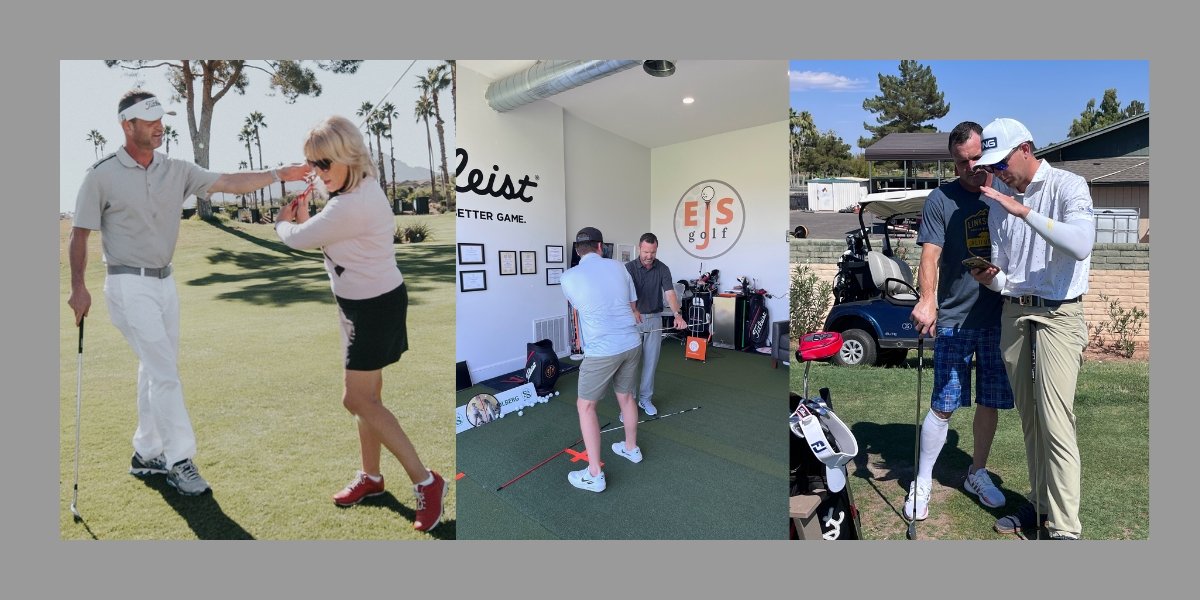
This movement toward inclusion is clearly reflected in the work of Erik Schjolberg, a PGA Professional who has spent more than three decades building both a teaching career and a community presence in Scottsdale, Arizona. Known for his evidence-based instruction at EJS Golf Academy, Schjolberg views inclusion as the outcome of competence. His philosophy is simple: when players see measurable improvement from the start, they stay engaged, invite others to join, and naturally build community. Progress becomes the foundation for participation.
Schjolberg’s reputation was shaped at his Scottsdale-based academy, where his lessons emphasize measurable, ball-first contact, low-point control, compression, dispersion, and the matchups among grip, clubface, and path. He uses TrackMan 4, dual 3D pressure plates, HackMotion wrist sensors, and Sportsbox AI to turn complex swing data into simple, actionable feedback. That same evidence-driven approach underpins his community initiatives, including his most notable collaboration with his wife, Julie Schjolberg, the Scottsdale Golf League for Women.
The league was designed to remove the two barriers most often cited by new or returning female golfers: anxiety over pace of play and discomfort in social settings. It accomplishes this through clear structural guidelines that normalize the experience for everyone. Participants learn to manage shot counts per hole to keep play moving, follow straightforward scoring formats, and select tees based on carry yardage rather than ego. These practical adjustments make the course more approachable without sacrificing the satisfaction of improvement. The environment is friendly yet structured, helping women achieve early wins, cleaner contact, more predictable ball flight, and repeatable routines that build confidence.
Instruction within the league mirrors the same measurable structure found in Schjolberg’s studio lessons, adapted for group learning. Players explore how low point affects turf interaction, how small changes in lead wrist movement influence start lines and curvature, and how pressure shifts can generate efficient rotation. When technology is beneficial, it’s used for immediate feedback. When a more external focus helps retention, Schjolberg simplifies the task. The result is a balance between precision and accessibility. By focusing on outcomes such as tighter dispersion, better contact, and small carry gains, players build confidence that leads to longer participation and deeper engagement with the sport.
Julie Schjolberg’s operational guidance has been instrumental in the league’s success. She handles outreach and onboarding, ensuring that newcomers understand what to expect before they ever step on the tee. Erik oversees the technical framework and practice blocks, aligning the learning process with his coaching standards. Together, they have created a league that fuses social connection with structured improvement, serving as a model for community-based golf programs elsewhere.
The couple’s approach aligns with a growing trend in golf education. Data from the National Golf Foundation show that women now account for roughly 25 percent of all on-course golfers in the United States, a steady rise over the last decade. In Scottsdale, where golf plays a key role in both recreation and the local economy, community programs like the Scottsdale Golf League sustain that growth. By demonstrating that competence can be achieved quickly through measurable progress, the Schjolbergs’ model bridges the gap between traditional instruction and modern accessibility.
Schjolberg’s community work builds on the same principles that define his larger body of teaching. In 2024, he was recognized locally as Scottsdale’s Best Golf Coach, an acknowledgment rooted in both his instructional outcomes and his visibility in the regional golf scene. In 2025, he expanded his teaching platform globally with the launch of The Science of Better Golf, an online learning system offering lessons, progress dashboards, and live sessions with Schjolberg and other instructors. The digital format mirrors the same formula that drives his in-person and community efforts: clear expectations, measurable feedback, and individualized improvement strategies.
The Scottsdale Golf League for Women is not a competitive feeder system nor a high-pressure environment. It is a lasting on-ramp designed to build lifelong players by combining the enjoyment of community with the confidence that comes from tangible progress. By treating inclusion as a byproduct of measurable performance and ensuring players improve from their first session, Erik and Julie Schjolberg have created an accessible pathway for new golfers to develop skills, social confidence, and a lasting connection to the sport.
From his beginnings in St. Louis, Missouri, to his established career in Scottsdale, Arizona, Schjolberg’s focus has remained consistent: use science to simplify the game, make improvement achievable, and grow the community through shared progress. His work at EJS Golf Academy, his online platform, and his community programs all point to one enduring truth: golf can be welcoming, engaging, and performance-driven simultaneously.
Erik Schjolberg’s career illustrates how the pursuit of measurable improvement can drive inclusivity, demonstrating that when golfers understand their own development, they stay with the game, share it, and help it thrive.