By: Erik Ronson
American manufacturing has become a nostalgic concept, relegated to political speeches and “better days” narratives. For decades, the story remained consistent: production moved overseas to chase lower labor costs, leaving behind closed factories and economic disruption. But a new generation of entrepreneurs is questioning whether offshoring’s benefits outweigh its hidden costs. Rising quality concerns, shipping disruptions, and the loss of manufacturing control are forcing some businesses to reconsider. What if bringing production back to American soil isn’t just idealistic—what if it’s actually competitive?
Jordan Wille didn’t set out to answer that question when he started making custom jigsaw puzzles on his kitchen table in 2020. He was simply trying to solve a personal problem: finding meaningful gifts for people he cared about without resorting to another Starbucks gift card. Using basic craft supplies, he created custom puzzles featuring photos of his friends’ pets. The quality was rough, but the reaction was overwhelming.
Then something unexpected happened. His friends’ friends started reaching out. Could he make puzzles for them, too? Within months, unsolicited emails were arriving from strangers asking about custom orders. With his entrepreneurship background, Wille recognized the signal. In January 2021, he officially launched Puzzery.

Photo Courtesy: Puzzery
Nearly five years later, Puzzery has become an unlikely American manufacturing success story—one that required five different puzzle cutters, four facilities across three countries, and hundreds of thousands of dollars in equipment investments. The company now operates a production facility in Colorado, ships more than 10,000 custom puzzles annually, and counts Shopify, Adobe, and Amazon among its corporate clients. Most remarkably, it accomplished all this completely bootstrapped, with zero venture capital funding.
When Your Living Room Becomes the Factory Floor
The early Puzzery operation consumed Jordan Wille’s Vancouver apartment. Every evening after his day job, he’d transform the kitchen table into a production line: printing images, sealing them to puzzle boards, cutting pieces, packaging orders. His dog, Reginald, supervised. His wife, Elizabeth, graciously tolerated their living space disappearing beneath stacks of curing puzzles, each tagged with a sticky note.
“We wanted our couch back,” Wille admits. “We missed being able to sit down and actually use our living room.”
As orders grew throughout 2021, Wille partnered with a local print shop to handle production, reclaiming the apartment. The partnership worked beautifully until the shop owner announced retirement. Just as Puzzery was gaining momentum with its first corporate bulk orders, production capacity evaporated.
The Hong Kong Gamble
Research revealed an uncomfortable truth: roughly 90% of the world’s puzzles are manufactured in Hong Kong. The region has concentrated expertise, established supply chains, and costs that make competing nearly impossible for small operations. For a bootstrapped startup trying to scale beyond apartment production, offshore manufacturing seemed inevitable.
In 2023, Puzzery established operations in Hong Kong’s manufacturing district. Wille invested in robust systems, learned industrial-grade processes, and finally gained the capacity to handle large corporate orders. The volume possibilities were exciting. Then the customer emails started arriving.
Blurry images. Missing pieces. In disturbing cases, completely wrong puzzles—a stranger’s family photo instead of a wedding picture, someone else’s pet instead of a beloved dog. These weren’t minor issues. These were complete failures for customers ordering deeply personal gifts.
“We’d get heartbreaking emails,” Wille recalls. “These folks were trusting us with meaningful gifts for loved ones. Some were for nursing home residents. Some for deployed military members. Each complaint hurt.”
After three months of trying to resolve quality issues remotely across 12 time zones, Wille realized the fundamental flaw: quality control requires physical presence. You can’t see print clarity through email photos. You can’t feel a puzzle piece fit via video calls. The decision crystallized: production had to return to North America. And it would have to be Puzzery’s own facility.
The $100,000 Setback
The Lethbridge facility in Alberta, Canada, took 14 months and cost more than $100,000 in equipment alone. Wille tested five different puzzle cutters before finding acceptable quality. He developed features that were impossible to implement offshore: varied puzzle-piece shapes, personalized box notes, and premium materials. Over countless late nights, the facility came together.
It was ready. Equipment installed. Team trained. Orders queued. Puzzery was days from shipping its first North American-manufactured puzzles when tariff policy changes collapsed the economy overnight.
“All that work, all that investment—and we had to shut down before shipping a single puzzle,” Wille says. “I’ll be honest: we were gutted.”
For a bootstrapped company, this wasn’t a setback—it was potentially existential. The investment represented years of reinvested profits. Unlike venture-backed competitors who could absorb such losses, Puzzery felt the full weight.
Wille took one week away from the business. When he returned, he started searching again.
Colorado and the Self-Service Revolution
The shared manufacturing space in Colorado solved critical variables: proximity for regular visits, existing infrastructure to reduce costs, and no tariff complications. Equipment traveled from Lethbridge to Colorado. The production line was rebuilt. In April 2025, Puzzery shipped its first American-made puzzle.
But manufacturing location was only half the competitive advantage. While reconstructing operations, Wille had built something else: technology that would transform corporate gifting.
Corporate gifting operated in the spreadsheet dark ages. Companies wanting to send customized gifts to 500 employees would email for quotes, receive spreadsheet templates, fill out 500 rows of data, and then wait days for manual processing. For a 50-puzzle order, this took 2-3 hours. For 1,000 puzzles? “Genuinely miserable.”
Puzzery’s solution: the custom gift industry’s first fully self-service bulk ordering platform. Brands design once, write a single personalized message template using variables like “[first_name],” upload a CSV file, and order thousands of personalized puzzles in minutes. The system automatically generates unique print files for each recipient, validates addresses, combines duplicates, and prepares production.
“You write ‘Thanks for being an amazing team member, [first_name]!'” Wille explains. “Upload your list, and you’re done in minutes—from your phone if you want. Our system then generates 1,000 unique print files, one for each recipient’s personalized box, validates addresses, and prepares everything for production.”
Behind the scenes, each order triggers high-resolution artwork at 300+ DPI for every puzzle and box. Getting that right at scale took real work—but the customer experience is simple: design once, add to cart, done. On average, new orders enter production within two hours of being placed, and puzzles arrive on doorsteps within 10 days.
The War on Swag Slop
Armed with manufacturing control and self-service technology, Wille began targeting what he calls “swag slop”—forgettable corporate gifts that companies distribute with good intentions but minimal impact.
Branded water bottles are collecting dust. Company t-shirts are becoming cleaning rags. Generic tech accessories are going straight into drawers. Corporate gifting generates substantial revenue while producing minimal emotional connection. Most promotional products are literally forgettable.
“Corporate gifts that say ‘we didn’t try,'” Wille explains. “Everyone’s received those gifts. Everyone’s thrown them away.”
Puzzery’s counter-pitch: gifts people actually keep, display, and share. Customer testimonials validate this positioning. Robyn P. ordered puzzles for nursing home friends with cognitive challenges: “Puzzles are a source of joy for them…spreading some sunshine into two lives.” Brody W., deployed overseas, solved the impossible logistics for the anniversary: “This was the ideal gift.” Couples like Sarah H. and Angela F. are framing and permanently displaying their puzzles.
These aren’t generic corporate gifts forgotten in closets. They’re experiences, memories, and physical artifacts of relationships that matter.
For corporate clients like Shopify, Adobe, and Amazon, the calculus is straightforward: invest in gifts creating lasting positive associations, or invest in promotional products destined for landfills. Puzzery has received positive customer feedback, with multiple five-star reviews featured on its website, indicating high satisfaction.
The Bootstrapped Path
Perhaps most remarkable: Wille never raised venture capital. In an era when startups pursue funding rounds as validation, Puzzery built profitability through patient growth and reinvested profits.
Bootstrapping created obvious constraints. Slower growth than venture-backed competitors. Equipment investments require years of operational savings. The Lethbridge failure representing existential threat rather than a rounding error. Limited room for error.
“We couldn’t throw money at problems,” Wille reflects. “We had to think through every decision carefully. But maintaining quality control and sustainable unit economics mattered more than rapid scaling.”
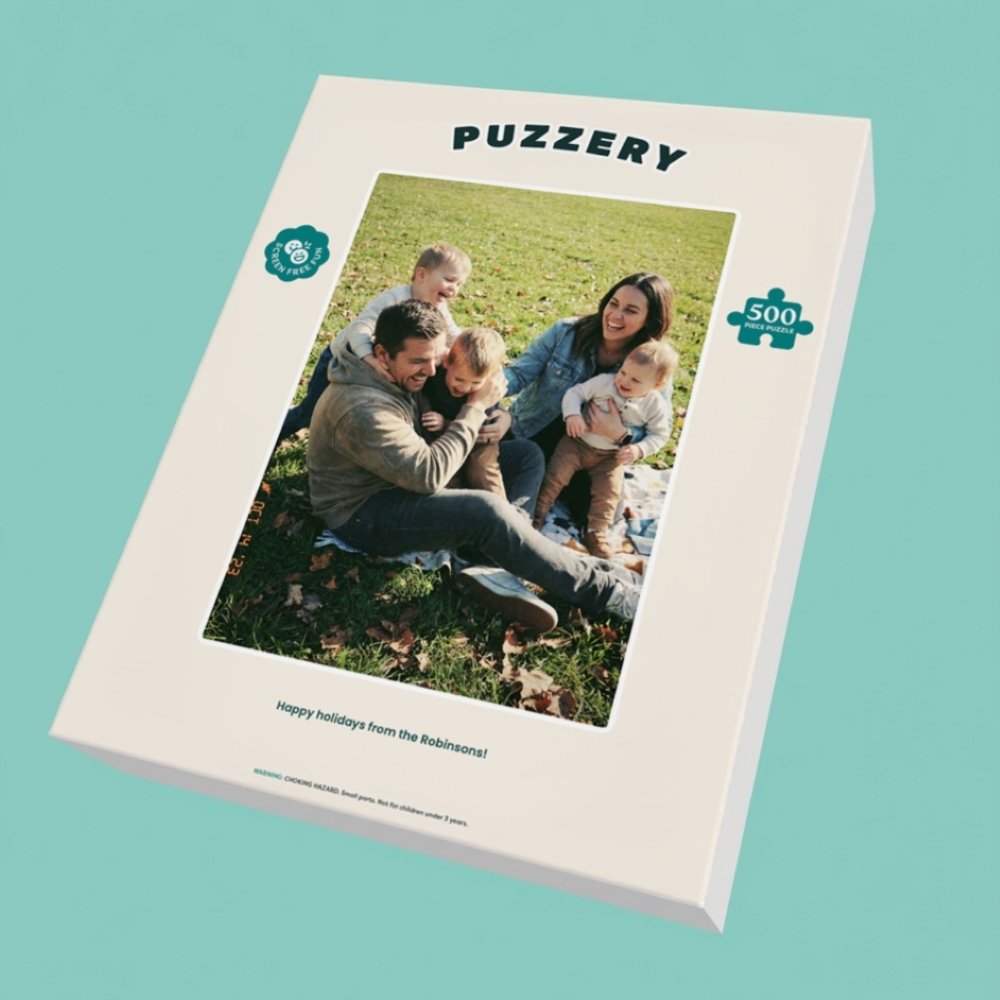
Photo Courtesy: Puzzery
Those constraints delivered advantages. Complete control over quality meant never compromising to satisfy investor growth expectations. Direct customer relationships meant understanding what people actually valued. No pressure to sacrifice long-term value for short-term metrics meant Wille could shut down Lethbridge rather than ship inferior products.
Five years in, Puzzery is profitable, growing, and making decisions based on product quality rather than pitch deck narratives. It’s an increasingly rare path that’s working.
Looking Forward
Wille’s vision extends beyond current capabilities. The company is developing A-series sizing—custom puzzles designed for standardized frames so customers can display them after completion. Getting it right means reinvesting in the business and building custom machinery in-house.
“That’s the advantage of controlling production,” Wille explains. “Big puzzle brands and offshore manufacturers are interested in making it pretty good and then leaving it. We’re constantly chasing down the details they won’t bother with. We sweat the details.”
Other innovations include expanded puzzle piece shapes, enhanced printing techniques, and premium packaging. Each represents an incremental quality improvement that domestic production enables.
For an industry dominated by overseas production and venture-backed competitors, Puzzery’s kitchen-table-to-Colorado journey demonstrates an alternative approach. Quality and customer focus can compete with scale and speed when the market values what you’re optimizing for.
“The journey isn’t over,” Wille says. “We’re still learning and improving. But now we have control to fix issues quickly, capacity to innovate, and satisfaction of knowing exactly who made each puzzle that leaves our facility.”
Nearly five years after those kitchen table experiments, Puzzery is finally making the puzzles Wille always wanted to make. For a bootstrapped startup proving American manufacturing can compete, that’s validation that matters more than any venture capital term sheet.
About the Author
Jordan Wille is the founder of Puzzery, a custom puzzle company revolutionizing corporate gifting through self-service personalization technology. Starting from his kitchen table in 2021, Wille has built a bootstrapped business now trusted by Shopify, Adobe, and Amazon, manufacturing 100% of puzzles at the company’s Colorado facility. His journey demonstrates how quality-focused American manufacturing can compete against offshore production when customer experience justifies premium positioning. Learn more at https://puzzery.com