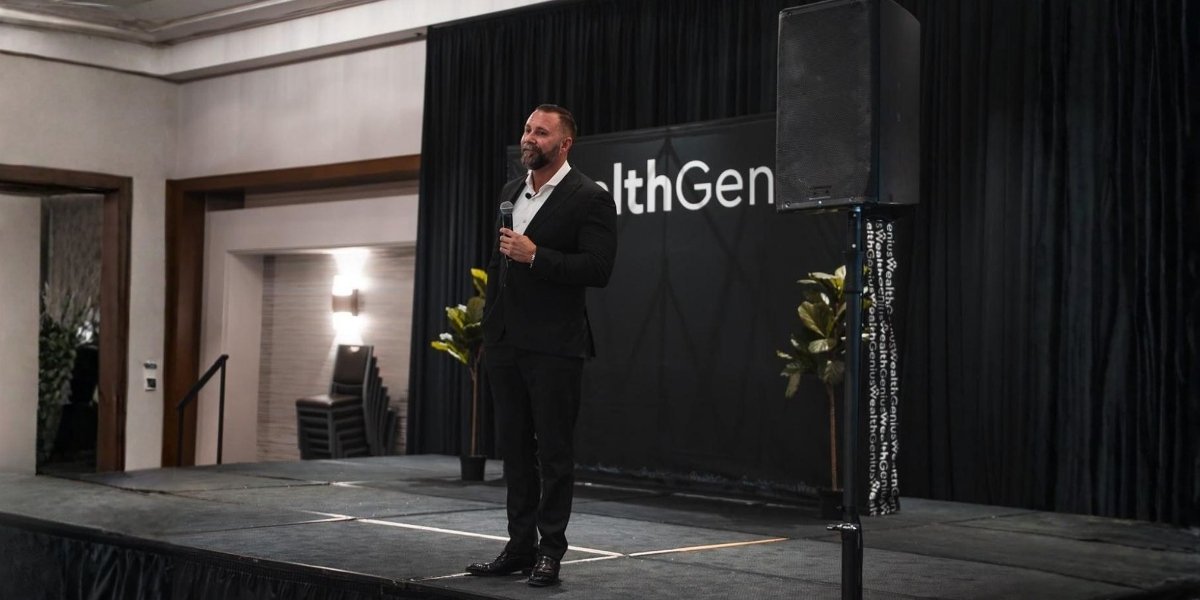
Across a career that has taken him from post-conflict Liberia to Fortune 50 boardrooms, from major sports league commissioners to one of the most consequential corporate crises in modern aviation history, Bradley Akubuiro has observed something that holds regardless of industry, geography, or political context.
People want the same fundamental things. Honesty. Clarity. Empathy. And confidence that someone capable is taking responsibility. Technology changes. Politics changes. Industries change. Human psychology doesn’t change nearly as much as many assume.
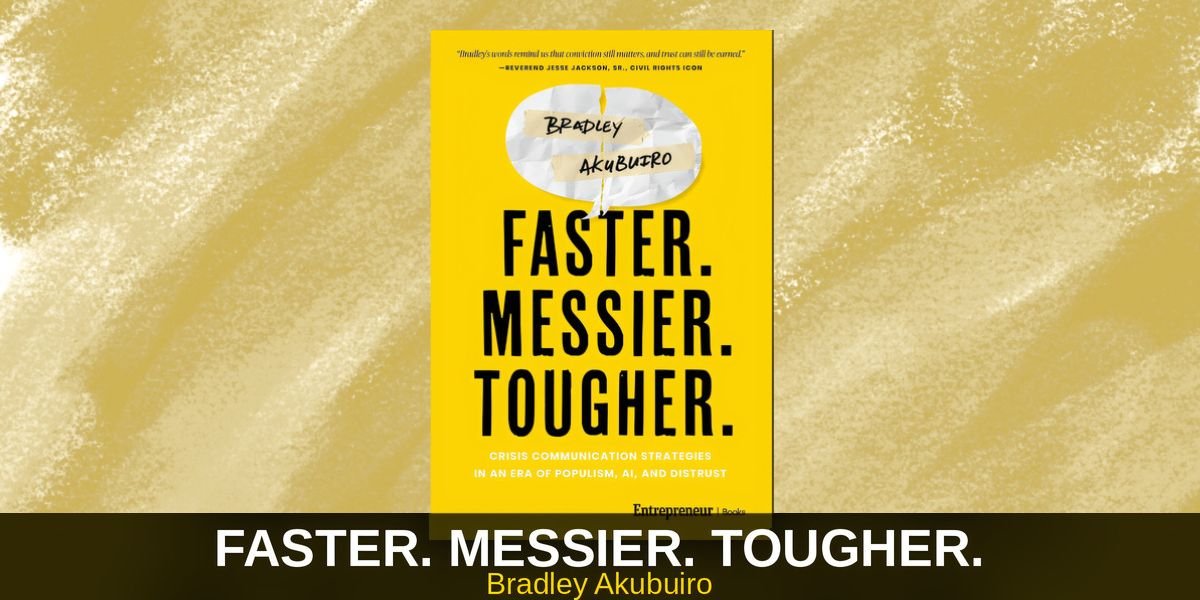
That observation is the thread running through Faster. Messier. Tougher., his book on crisis communication in an era defined by three forces reshaping how organizations manage their reputations: populism, artificial intelligence, and institutional distrust.
The Trust Deficit Is a Leadership Problem, Not a Communications Problem
Robert Gibbs, the former White House Press Secretary, noted in his endorsement of the book that a trust deficit exists across American institutions, and that organizations should absorb Akubuiro’s insights before finding themselves in crisis. Akubuiro is careful about how he characterizes where that deficit originates.
Communications can amplify trust but cannot manufacture it. When organizations face trust deficits, the root cause is almost always leadership, culture, or values rather than messaging. Communicators play an important role, but they cannot solve problems that leaders refuse to address.
That reasoning runs throughout the book. Crisis communication isn’t separate from leadership. The two are inseparable. Actions worthy of trust come first, and the communications work that follows is only as credible as the actions it describes.
Authenticity Beats Perfection in Crisis Communication
One of the more counterintuitive arguments Akubuiro makes concerns what actually convinces people during a crisis. In corporate culture, the instinct under pressure is to hedge, to qualify, to have every sentence reviewed by legal before it leaves the building. That instinct is understandable and occasionally necessary, yet it is also, he argues, frequently the thing that makes communications feel detached, evasive, and ultimately unbelievable.
Organizations don’t earn trust because every statement has been perfectly lawyered. They earn it when audiences see conviction, accountability, and consistency. Sometimes the safest statement legally is the riskiest statement reputationally, precisely because it sounds like nobody actually means it.
The goal, according to Akubuiro, isn’t recklessness. It’s clarity about values, honesty about what is known, transparency about what isn’t, and decisiveness about what comes next. Those qualities create confidence even when certainty isn’t possible. In most crises, certainty isn’t available. Confidence, built on genuine transparency, is what remains.
The Populism Problem
There was a time when many companies could remain comfortably neutral on public debates. That world, Akubuiro says plainly, largely no longer exists. Organizations are now frequently expected to respond to issues extending well beyond their products or services, even as virtually any public position resonates with some stakeholders and alienates others.
The challenge isn’t satisfying everyone, which is impossible. It’s making decisions consistent with an organization’s values and explaining those decisions clearly and honestly. Consistency matters far more than attempting to avoid controversy altogether. Organizations that stand for nothing in particular aren’t rewarded with universal approval. They’re simply trusted by nobody in particular.
Influence Without Authority
The message Akubuiro most wants to leave with the communications professional or executive who feels outgunned, outpaced, and overwhelmed by the speed of today’s information environment concerns the nature of influence itself.
Throughout his career, he has learned that the people who shape outcomes are often not the ones with the most authority. They’re the ones who ask difficult questions, bring clarity when others are overwhelmed, and have the courage to speak uncomfortable truths respectfully. Controlling every decision isn’t required to influence the quality of those decisions.
He closes with the idea that has defined his entire body of work. Leaders shouldn’t wait for the perfect crisis, the perfect title, or the perfect moment to become the kind of leader people trust. Trust gets built every day. When a crisis comes, that is the only currency that truly matters.
If the trust deficit in your industry keeps you up at night and you’re not sure what to do about it, Faster. Messier. Tougher. by Bradley Akubuiro is available now on Amazon. Trust is built before the crisis arrives. This book shows you exactly how.