US Business News

The Woman Who Has Been Living Inside the Future of Language Technology for Thirty Years Finally Wrote the Book That Brings the Rest of Us Inside Too

By: Sam Williams

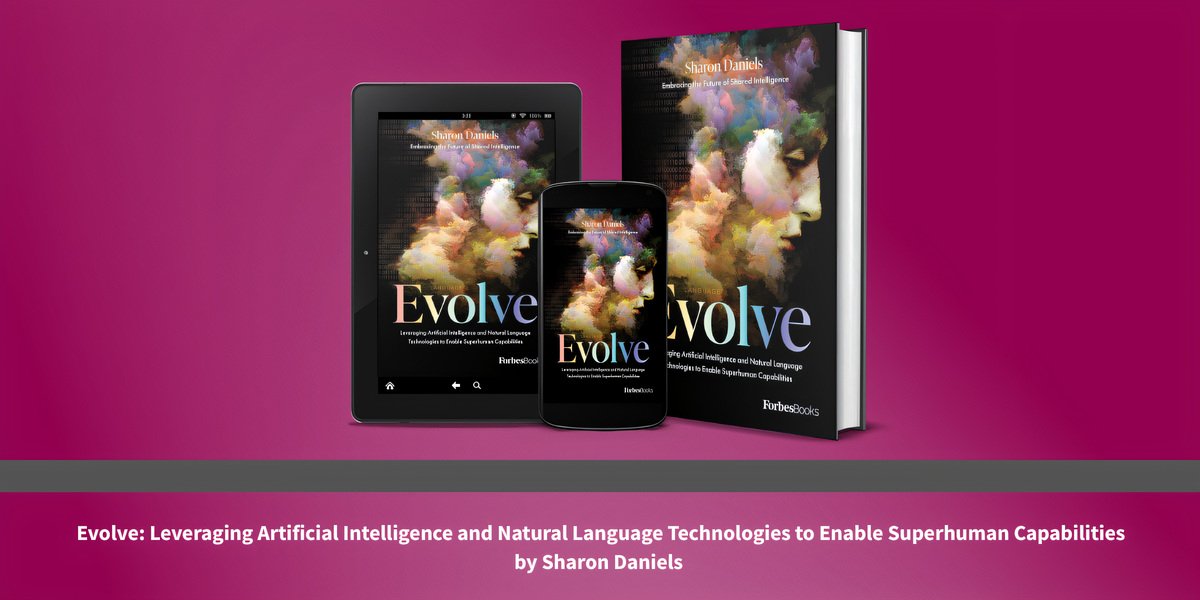
There is a specific kind of authority that only accumulates through decades of genuine immersion in a field, and Sharon Daniels has that authority in a domain that most people are only now beginning to pay serious attention to. As a technology CEO with more than thirty years of experience not just observing the intersection of language and technology but actively building at it, making consequential decisions about where it was going and what it meant for the organizations and industries she served, she brings to this book a depth of practical understanding that purely theoretical treatments of the subject simply cannot replicate. Evolve is the book that emerges from that accumulated immersion, and it is considerably more than a technology guide. It is a genuinely original argument about what it means to be human in a world where the one thing that has always defined our humanity most distinctly, our capacity for language, has now been digitized and moved outside the human mind into the machine.

Reading this book produces a quality of engaged wonder that most technology writing never quite manages to generate because most technology writing is either too technical to feel personal or too personal to feel credible. Daniels occupies an unusual position between those two failure modes, bringing enough scientific and business depth to make her arguments feel substantive and enough genuine enthusiasm for the human implications of what she is describing to make those arguments feel alive. She writes like someone who has been wanting to have this conversation for a long time and is relieved to finally be having it at the scale a book allows.

The historical framework she uses to contextualize natural language generation is one of the book’s most intellectually satisfying contributions. By tracing the role of language in human evolution from the earliest forms of communication through the printing press and beyond, she gives readers a way to understand what NLG represents not as a disruption of something that was working but as the next chapter in a story that has always been about what happens when human beings find new ways to extend the reach of their communication. That framing is both reassuring and genuinely clarifying, replacing the anxiety of novelty with the confidence of context.

The Hu plus AI equals superhuman formulation that runs through the book is one that deserves to become part of the standard vocabulary for thinking about artificial intelligence, because it names something that most of the AI conversation has been circling without quite landing on. The question is not what AI does instead of humans. The question is what humans become capable of when AI operates alongside them at scale, and Daniels answers that question with the specificity of someone who has watched it happen in real organizations solving real problems. Her vision of humanity remaining at the heart of AI through the specific vehicle of natural language technology is not wishful thinking. It is an architectural argument backed by thirty years of evidence, and Evolve delivers it with the clarity and the conviction it deserves.

Readers looking for an account of artificial intelligence that pairs three decades of direct industry involvement with genuine historical depth will find that combination in Daniels’ book. Forbes Books published the title in February 2026. Daniels writes as someone who spent her career building the technology she describes, and that vantage point shapes the argument on every page. Hardcover and ebook editions are both listed on Amazon’s product page for the book.

Andres Kuusk Wrote a Book About Cognitive Traps. He Still Falls Into Them. That’s Exactly Why He’s Worth Listening To.

By: Ben Walker

There’s a version of the expert author who presents their framework as something they’ve mastered and moved past. A set of principles they discovered, applied, and now teach from a comfortable position of having figured it out.

Andres Kuusk is not that author. And that distinction matters more than it might initially seem.

He is a seven-time World Pentamind Champion who still catches himself becoming emotionally attached to ideas he has invested time in. A PhD economist who still occasionally underestimates how long projects will take. A C-suite executive and author who still notices himself gravitating toward information that confirms what he already believes rather than information that challenges it.

Writing a book about cognitive distortions, he says plainly, does not make you immune to them.

What Changes Is the Speed of Recognition

The difference between Andres before the framework and Andres after it isn’t that he stopped falling into cognitive traps. It’s that he notices them more quickly. The traps are the same. The recovery time is shorter. The consequences are smaller because the recognition happens earlier in the process, before the distorted thinking has had time to fully shape a decision.

That’s a meaningfully different claim than most self-help books make. It doesn’t promise transformation. It promises a more honest and more functional relationship with the ways your own thinking fails you. Which, in practice, is considerably more useful than transformation that never quite arrives.

Why Knowing Isn’t Enough

Understanding a cognitive distortion intellectually does not make the automatic reaction that produces it disappear.

Andres still feels the pull of confirmation bias. He can still become attached to an idea because he has invested time in it. He can still mistake discomfort for evidence that something is wrong.

The difference is what happens next.

Awareness creates a small gap between the automatic reaction and the decision that follows it. Inside that gap is the opportunity to question the instinct, examine the assumption, and choose differently.

That distinction became increasingly important in Andres’s thinking. The goal is not to retrain the mind until cognitive distortions disappear. It is to recognize when they are occurring early enough to interrupt the process.

The first reaction may be automatic. The second does not have to be.

The Practices Built Around Honest Self-Assessment

Andres’s approach is not designed around eliminating cognitive distortions. It is designed around creating opportunities to catch them before they shape important decisions.

He reviews important decisions regularly, not just after they produce outcomes, but during the process, asking whether the quality of the thinking matches the quality of the decision he believes he’s making. He actively seeks alternative explanations before settling on the obvious one, because the obvious explanation is frequently the one his existing beliefs most easily support. He evaluates decision quality separately from outcome quality, which requires resisting the very human tendency to judge the thinking by how things turned out rather than by whether the thinking itself was sound.

And he deliberately exposes himself to unfamiliar ideas and perspectives, because curiosity is, in his experience, one of the most effective antidotes to the rigidity that accumulates when a person only engages with ideas that confirm what they already know.

Still a Student After Decades

The thing Andres says about his relationship with decision-making that stays with you is the simplest. After decades of studying it, competing at the highest levels, advising major organizations, and building a framework that has shaped his entire professional identity, he still considers himself a student of the subject.

Not as a performance of humility. As an accurate description of where he actually is. The field is deep enough and the human mind is complex enough that no number of world championships or advisory engagements or published frameworks closes the gap between what is understood and what remains to be figured out.

The goal, he says, is not perfection.

The mind still produces the instinct. The bias still appears. The comfortable explanation still arrives first.

What changes is whether it gets the final word.

The goal isn’t to stop your mind from misleading you. It’s to become better at noticing when it does.

He wrote the book on cognitive traps and still falls into them. The difference is he catches them faster. Unlocking the Success Puzzle by Andres Kuusk is available now on Amazon.

Bradley Akubuiro Advises Heads of State and Fortune 50 CEOs. He Says the Rules of Crisis Communication Have Changed Permanently.

Across a career that has taken him from post-conflict Liberia to Fortune 50 boardrooms, from major sports league commissioners to one of the most consequential corporate crises in modern aviation history, Bradley Akubuiro has observed something that holds regardless of industry, geography, or political context.

People want the same fundamental things. Honesty. Clarity. Empathy. And confidence that someone capable is taking responsibility. Technology changes. Politics changes. Industries change. Human psychology doesn’t change nearly as much as many assume.

That observation is the thread running through Faster. Messier. Tougher., his book on crisis communication in an era defined by three forces reshaping how organizations manage their reputations: populism, artificial intelligence, and institutional distrust.

The Trust Deficit Is a Leadership Problem, Not a Communications Problem

Robert Gibbs, the former White House Press Secretary, noted in his endorsement of the book that a trust deficit exists across American institutions, and that organizations should absorb Akubuiro’s insights before finding themselves in crisis. Akubuiro is careful about how he characterizes where that deficit originates.

Communications can amplify trust but cannot manufacture it. When organizations face trust deficits, the root cause is almost always leadership, culture, or values rather than messaging. Communicators play an important role, but they cannot solve problems that leaders refuse to address.

That reasoning runs throughout the book. Crisis communication isn’t separate from leadership. The two are inseparable. Actions worthy of trust come first, and the communications work that follows is only as credible as the actions it describes.

Authenticity Beats Perfection in Crisis Communication

One of the more counterintuitive arguments Akubuiro makes concerns what actually convinces people during a crisis. In corporate culture, the instinct under pressure is to hedge, to qualify, to have every sentence reviewed by legal before it leaves the building. That instinct is understandable and occasionally necessary, yet it is also, he argues, frequently the thing that makes communications feel detached, evasive, and ultimately unbelievable.

Organizations don’t earn trust because every statement has been perfectly lawyered. They earn it when audiences see conviction, accountability, and consistency. Sometimes the safest statement legally is the riskiest statement reputationally, precisely because it sounds like nobody actually means it.

The goal, according to Akubuiro, isn’t recklessness. It’s clarity about values, honesty about what is known, transparency about what isn’t, and decisiveness about what comes next. Those qualities create confidence even when certainty isn’t possible. In most crises, certainty isn’t available. Confidence, built on genuine transparency, is what remains.

The Populism Problem

There was a time when many companies could remain comfortably neutral on public debates. That world, Akubuiro says plainly, largely no longer exists. Organizations are now frequently expected to respond to issues extending well beyond their products or services, even as virtually any public position resonates with some stakeholders and alienates others.

The challenge isn’t satisfying everyone, which is impossible. It’s making decisions consistent with an organization’s values and explaining those decisions clearly and honestly. Consistency matters far more than attempting to avoid controversy altogether. Organizations that stand for nothing in particular aren’t rewarded with universal approval. They’re simply trusted by nobody in particular.

Influence Without Authority

The message Akubuiro most wants to leave with the communications professional or executive who feels outgunned, outpaced, and overwhelmed by the speed of today’s information environment concerns the nature of influence itself.

Throughout his career, he has learned that the people who shape outcomes are often not the ones with the most authority. They’re the ones who ask difficult questions, bring clarity when others are overwhelmed, and have the courage to speak uncomfortable truths respectfully. Controlling every decision isn’t required to influence the quality of those decisions.

He closes with the idea that has defined his entire body of work. Leaders shouldn’t wait for the perfect crisis, the perfect title, or the perfect moment to become the kind of leader people trust. Trust gets built every day. When a crisis comes, that is the only currency that truly matters.

If the trust deficit in your industry keeps you up at night and you’re not sure what to do about it, Faster. Messier. Tougher. by Bradley Akubuiro is available now on Amazon. Trust is built before the crisis arrives. This book shows you exactly how.

Many People Don’t Associate Creativity With Immigration Law. Lorraine D’Alessio Is Why They Should.

By: William Reimers

Creativity is not the first word most people reach for when describing immigration law. The field is associated with complexity, bureaucracy, and the kind of procedural rigor that leaves little room for imagination. It is, however, the word that Lorraine D’Alessio’s clients and colleagues consistently use to describe what makes her practice distinctive. And it is one of the central ideas running through her book The Global Advantage: An Executive’s Strategic Guide to Immigration, Citizenship, and International Talent.

Creative strategy in immigration doesn’t mean finding shortcuts or forcing cases into categories where they don’t belong. It means understanding the rules well enough to see possibilities that aren’t obvious at first glance. It means knowing when a different legal pathway is available, when changing the timing of an immigration plan opens options that weren’t previously accessible, and when identifying the right set of facts changes how an entire case should be presented and evaluated.

Complex Versus Complicated

Lorraine draws a distinction that anyone who has worked through a genuinely difficult immigration situation will recognize immediately. A complicated case may involve significant paperwork, multiple overlapping legal issues, or a process that requires careful coordination across several different filings. Complicated cases can be demanding, but they have a path forward that is visible once you understand the requirements.

A genuinely complex case is different in a more fundamental way. There may not be an obvious path forward at all. The facts may not fit neatly into any of the familiar visa categories. The timeline may be unusually tight in ways that eliminate the most straightforward options. There may be competing considerations, each legitimate, that have to be weighed against each other carefully before any strategy can be committed to.

Those cases have taught Lorraine not to approach immigration as a checklist. You have to understand what the client is actually trying to accomplish, what constraints exist that cannot be changed, and what flexibility exists within the system to find a path that serves both the business objective and the individual’s circumstances. The strategy comes from that analysis, not from matching a situation to the nearest familiar category.

What Better Questions Actually Produce

The biggest pattern Lorraine kept seeing across her years of practice was the assumption that there was no solution when a candidate didn’t fit neatly into the most familiar visa option. That assumption causes companies to pass on strong candidates who had viable paths that nobody thought to look for. It causes organizations to restructure their plans around immigration constraints that could have been approached differently if the right questions had been asked at the right time.

The book is designed to give leaders enough understanding of how immigration actually works to ask better questions, and to recognize that the first answer they receive may not be the only answer available. That doesn’t require executives to become immigration experts. It requires them to understand enough about how the system operates to know when to push for a second look and what kinds of information might change the analysis.

The Mindset Behind the Practice

Lorraine has said that building her firm taught her not to rely on the traditional way of doing things simply because it was how the industry had always operated. That orientation toward questioning the default approach and building a strategy from first principles shows up consistently in how her team handles complex cases and in how she has written this book.

She didn’t want to produce something that simply explained immigration law for a general audience. She wanted to help executives understand how to think through immigration decisions, how to evaluate what they’re being told, and how to build the organizational capability to approach international talent strategy with genuine confidence rather than hoping that compliance and strategy are the same thing. They rarely are. And the organizations that understand the difference are often better positioned to weigh what each decision means for their people and their business.

Better questions produce better strategies. The Global Advantage by Lorraine D’Alessio is available now on Amazon.

Kris Erickson Has a Simple Argument for Skeptical Leaders, and You Cannot Expect Extraordinary Customer Experiences From Employees Having Ordinary Ones

By: Henry Penshorn

Leaders cannot expect extraordinary customer experiences from employees who are having ordinary ones. That is the central claim running through Kris Erickson’s work, and it cuts against a common instinct in corporate strategy. Employee experience often gets filed under soft skills, a nice-to-have column that gets funded when times are good and quietly deprioritized when quarterly pressure builds.

Kris Erickson has spent thirty years dismantling that categorization. Her book, The Enduring Impact, makes a case that is deliberately, specifically, and repeatedly connected to business performance rather than employee satisfaction as an end in itself. The customer experience is the downstream result of the employee experience. One cannot exist without the other.

The Bridge Most Leaders Don’t Cross

Skeptical leaders who are under pressure to focus on the customer-facing side of the business often treat employee experience as a separate conversation. Kris’s response to that framing is direct. Customers experience an organization’s culture whether leaders intend them to or not.

Employees who feel trusted, supported, appreciated, and connected to meaningful work naturally bring more energy, care, and creativity to customer interactions. The reverse is also true, and most leaders have experienced it firsthand without always connecting it back to its cause. Disengaged employees produce disengaged customer experiences. That gap shows up in retention numbers, customer satisfaction scores, and ultimately in financial performance.

The bridge between employee experience and business results isn’t theoretical. Kris describes it as remarkably practical. Employee experience influences discretionary effort, and discretionary effort influences customer experience, innovation, quality, retention, and financial performance. When those measures begin moving together, investment in employee experience stops looking like a soft-skills budget item. It becomes a business strategy.

The Metrics Worth Tracking

Kris is specific about what leaders should actually be monitoring to know whether their employee experience investments are working. Engagement scores alone tell an incomplete story. The metrics that matter connect people outcomes to business outcomes.

Turnover. Absenteeism. Customer satisfaction. Productivity. Quality. Safety. Financial performance. When those measures begin moving in the same direction as engagement, the connection between employee experience and business value becomes visible and defensible in the conversations that matter most, including the ones with boards and senior stakeholders who remain skeptical that investment in people produces measurable return.

Why the Needle Hasn’t Moved

Gallup data has shown for years that the majority of workers globally remain disengaged despite enormous organizational investment in engagement programs. Kris has a clear diagnosis for why that is. Organizations have consistently confused measuring engagement with creating it.

Surveys get administered. Dashboards get reviewed. Initiatives get launched. Somewhere in all of that activity, the actual daily experiences employees have with their managers and their organization’s leadership continue largely unchanged, and the score becomes the goal rather than the indicator of something deeper.

Her framework inverts that logic. Engagement is the outcome. Experience is the cause. The real question isn’t how to move the number. It’s how to build the conditions that produce genuine engagement as a natural result of how people are treated every day.

What Endures After the Leader Leaves

Kris closes the conversation about her book with something that feels more personal than analytical. She describes leadership as ultimately about creating something that continues to benefit people long after an individual leader’s tenure ends. Titles disappear. Organizations change. Careers end.

What endures are the experiences people carry with them. The confidence a leader inspired. The trust built over years of consistent behavior. The growth encouraged in someone who didn’t yet believe in their own potential. The sense of purpose helped someone discover in work that could have easily felt meaningless.

Kris has spent thirty years helping organizations build those kinds of workplaces, and the book represents the most complete version of what she’s learned about how to do it. Her measure of its success has nothing to do with how many copies it sells. It has to do with how many leaders read it and change, in practical and daily ways, how they treat the people in their care.

If you need to make the case internally that employee experience isn’t a soft skill but a business strategy, The Enduring Impact by Kris Erickson is available now on Amazon. The customer experience is the downstream result of the employee experience. It always has been.

Jissan Cherian Says the Strategy That Got You Promoted Once Will Eventually Stop Working. Here’s What to Do Instead.

Most career advice treats advancement as a single problem with a single solution. Work hard. Build skills. Deliver results. Network strategically. The advice stays roughly the same whether someone is six months into their first professional role or preparing for a step into executive leadership.

Jissan Cherian thinks that’s a significant part of why so many high performers plateau. Not because they stop being capable, but because they keep applying the strategy that worked at one stage to a problem that requires a completely different approach at the next.

His book Hack the Corporate Learning Curve is built around a framework that takes career stage seriously in a way most career development resources don’t.

Why One Size Fails Everyone

The five Career Personas in the book aren’t personality types. They’re stages of market awareness for a professional’s personal brand, each with specific challenges and specific strategies that actually address those challenges rather than the ones from the previous stage.

Early career professionals need to build awareness and credibility. They need to demonstrate their strengths, understand the organization, ask thoughtful questions, and establish relationships across teams. The goal at this stage is to become visible and trusted before trying to lead.

Mid-career professionals face a different problem entirely. It’s no longer enough to deliver excellent individual work. The shift is toward influence, leading projects, collaborating across functions, and becoming known for creating results through others rather than doing everything personally.

At senior levels, the brand becomes less about individual execution and more about vision, judgment, and the ability to develop future leaders. The question isn’t what someone can do. It’s what they can enable others to become.

Where people most commonly go wrong, Jissan says, is continuing to operate with the mindset that made them successful at the previous stage. The behaviors that earn a first promotion aren’t the ones that prepare someone for executive leadership. Using yesterday’s strategy on today’s problem produces yesterday’s results at best and quiet stagnation at worst.

The Mentors Who Changed Everything

Jissan’s own career was shaped at pivotal moments by leaders who invested in him before he had fully invested in himself. What he remembers most vividly isn’t that they removed obstacles. It’s that they saw potential he hadn’t yet recognized and created opportunities for him to prove it to himself.

That experience shaped how he now shows up for others. He doesn’t believe the role of a mentor is to chart someone else’s career. It’s to help people recognize their own strengths, ask better questions, and develop the confidence to navigate opportunities independently. The book, he says, is designed to do exactly that for readers who may not have had access to that kind of mentorship.

That access gap is one of the driving forces behind DVERSFY, the organization Jissan founded to develop the next generation of inclusive leaders. Throughout his career, he worked with incredibly capable professionals whose performance was never the issue. The challenge was that nobody had taught them how to strategically communicate their value, build influential relationships, or navigate organizational dynamics. Those gaps disproportionately affect professionals who haven’t had access to informal sponsorship or executive networks. The book exists, in no small part, to close that gap.

Career Ownership Is No Longer Optional

One of the more uncomfortable realities Jissan surfaces is about the shift in who is responsible for career development. Organizations today are moving faster than ever. Restructuring, new technologies, changing business priorities, and global competition mean companies can no longer always provide the structured career paths they once did.

That doesn’t mean organizations no longer care about developing talent. But it does mean professionals can no longer assume someone else is managing their careers on their behalf. Career development has become a shared responsibility. Organizations should create opportunities, provide feedback, and invest in development. Individuals must take ownership of understanding their strengths, building relationships, and intentionally shaping how they are perceived and recognized.

That level of ownership, Jissan says, is here to stay. The professionals who thrive in that reality aren’t the ones who wait to be noticed. They’re the ones who understand, at every stage of their career, exactly what it takes to be seen.

If the strategy that got you your last promotion has stopped working and you’re not sure what comes next, Hack the Corporate Learning Curve by Jissan Cherian is available now on Amazon. The game changes at every stage. This book tells you exactly how.

NVIDIA Agrees to Acquire Hugging Face for $12.93B

NVIDIA has agreed to acquire Hugging Face in a transaction valued at $12.93 billion, bringing a major open-model developer platform under the AI chipmaker’s ownership. The deal is expected to close in the first half of 2027. Here is what the terms, platform scale and openness commitments mean for developers and the broader AI ecosystem.

Key Takeaways

  • NVIDIA announced the agreement to acquire Hugging Face on September 3, 2026, in a transaction valued at $12.9303 billion.
  • The transaction includes approximately $11.9 billion payable to Hugging Face stockholders and up to approximately $1 billion in an equity-based employee retention program.
  • More than 18 million developers, researchers and creators use Hugging Face, which hosts more than 3 million models, 500,000 datasets and 1 million applications, according to NVIDIA.
  • NVIDIA has committed to keeping Hugging Face open to different models, frameworks, cloud services and computing platforms, including hardware from other vendors.
  • NVIDIA expects the transaction to close in the first half of 2027, subject to regulatory approvals and other customary closing conditions.

NVIDIA Hugging Face Acquisition Extends Its AI Reach

NVIDIA announced on September 3 that it had agreed to acquire Hugging Face in a transaction valued at $12,930,300,000. The deal would give NVIDIA ownership of one of the most widely used platforms for finding, sharing, evaluating, customizing and deploying artificial intelligence models.

The transaction represents an expansion of NVIDIA’s position beyond AI computing hardware and into a developer ecosystem that connects models, datasets, applications and deployment tools. Reuters, the Financial Times and The Wall Street Journal independently confirmed the deal following NVIDIA’s announcement.

The agreement follows earlier indications that Hugging Face was considering strategic options. An earlier Hugging Face sale process had been reported at a potential valuation of $13 billion or more before NVIDIA announced the transaction.

Hugging Face had previously been valued at $4.5 billion during a 2023 funding round. Investors in the company have included NVIDIA, Salesforce, Google and other major technology companies. Reuters reported that the acquisition would rank among NVIDIA’s largest purchases and significantly expand its role in the open-model AI ecosystem.

The Deal Includes Purchase and Retention Components

NVIDIA’s regulatory filing provides more detail on how the $12.93 billion transaction is structured.

According to the filing, approximately $11.9 billion will be payable to Hugging Face stockholders, subject to certain adjustments. NVIDIA also established an equity-based retention program worth up to approximately $1 billion for Hugging Face employees who join NVIDIA.

That distinction is important because the full $12.93 billion figure is not simply a cash purchase price paid to current shareholders.

NVIDIA expects the acquisition to close in the first half of 2027. Completion remains subject to customary closing conditions, including required regulatory approvals.

Until those conditions are satisfied and the transaction closes, Hugging Face remains a separate company.

Hugging Face Brings a Large AI Developer Ecosystem

The scale of Hugging Face is central to the strategic significance of the acquisition.

NVIDIA said more than 18 million developers, researchers and creators use Hugging Face. The platform hosts more than 3 million models, 500,000 datasets and 1 million applications. More than 200,000 companies use it to discover, evaluate, customize and deploy AI systems.

Those figures make Hugging Face more than a model repository. Its platform connects model creators with developers and organizations looking to evaluate and deploy artificial intelligence across research and commercial applications.

Hugging Face supports models from a wide range of developers and organizations. Its ecosystem includes open-source and open-weight models that can be accessed, adapted and deployed through different infrastructure configurations.

The acquisition therefore gives NVIDIA a larger role in the software and developer layers of artificial intelligence, complementing its existing position in GPUs, networking systems, AI libraries and computing infrastructure.

That broader developer footprint also comes as major companies increase spending on AI systems and deployment. Investments in U.S. AI infrastructure research illustrate how semiconductor companies are directing substantial resources toward the computing, memory and architecture requirements created by growing AI workloads.

NVIDIA Plans to Expand Hugging Face Infrastructure

NVIDIA said it intends to use its engineering resources, computing infrastructure and global reach to scale Hugging Face following completion of the acquisition.

The company identified reliability, safety, model evaluation, inference and deployment as areas where additional resources could strengthen the platform.

The two companies already had an established relationship before the proposed acquisition.

According to NVIDIA, it has released more than 500 models and more than 250 open datasets through Hugging Face. NVIDIA also became an enterprise customer of the platform before announcing the deal.

That existing relationship means the transaction would combine organizations that were already working across several parts of the AI development ecosystem.

NVIDIA supplies much of the computing infrastructure used to train and run modern AI models. Hugging Face operates a platform through which developers can find models and datasets, test them, customize them and prepare them for deployment.

Bringing those capabilities under one corporate owner would give NVIDIA a more direct connection to developers working at stages of the AI process beyond hardware procurement.

Hugging Face Is Expected to Retain Its Open Platform Model

NVIDIA has made platform openness one of the central commitments surrounding the transaction.

NVIDIA Agrees to Acquire Hugging Face for $12.93B

Photo Credit: Unsplash.com

The company said Hugging Face will continue allowing developers to choose their models, frameworks, cloud providers, inference services and computing platforms.

NVIDIA CEO Jensen Huang stated that “NVIDIA compute will not be required to build on or deploy through Hugging Face.”

The company’s SEC filing reinforces that commitment. NVIDIA said Hugging Face would continue allowing users to upload and download models and datasets of their choosing and would continue supporting other silicon vendors.

The commitment matters because NVIDIA is also the leading supplier of advanced computing hardware used for many AI workloads.

Reuters reported that the combination has raised questions about whether NVIDIA could eventually favor its own hardware within the Hugging Face ecosystem, even as the company promises to preserve hardware neutrality.

For developers and competing infrastructure providers, NVIDIA’s implementation of its openness commitments after closing will therefore be an important part of assessing the acquisition’s long-term impact.

Open Models Sit at the Center of NVIDIA’s Strategy

NVIDIA has increasingly emphasized open and open-weight models as part of its broader AI strategy.

Unlike fully proprietary AI services, open-weight models generally allow developers to access model parameters and customize systems for particular applications. That can give businesses, researchers and public institutions greater flexibility in how models are deployed.

Huang has argued that open models can broaden participation in AI development by allowing organizations to build on existing technology rather than developing every model from the beginning.

The Financial Times reported that the Hugging Face transaction could strengthen NVIDIA’s position in this part of the market by giving it ownership of a platform that serves as a major distribution and collaboration hub for open models.

NVIDIA’s interest extends beyond model hosting. Its business increasingly spans chips, networking, cloud infrastructure, software libraries, development tools and its own AI models.

The Hugging Face acquisition would add another layer by placing a major model-development community and platform within that portfolio.

Hugging Face Will Keep Its Brand and Team

NVIDIA said Hugging Face will retain its brand following completion of the transaction.

Hugging Face was founded by Clément Delangue, Julien Chaumond and Thomas Wolf. The company began in 2016 and later developed into a major platform for open AI models, datasets and machine-learning collaboration.

Huang said the Hugging Face team will join NVIDIA as part of the transaction.

The employee retention component of the agreement provides up to approximately $1 billion in equity-based compensation for employees joining NVIDIA, according to the regulatory filing.

That structure indicates that retaining Hugging Face’s workforce and technical expertise is a significant part of the proposed combination, rather than the transaction being limited to acquiring the platform and its technology.

The Deal Extends NVIDIA Beyond AI Hardware

The NVIDIA Hugging Face acquisition would place a widely used AI developer platform alongside NVIDIA’s existing computing, networking, software and model businesses.

For NVIDIA, the transaction expands its presence at the point where developers choose and evaluate models rather than only where organizations purchase the infrastructure used to train and run them.

For Hugging Face users, the immediate issue is whether the platform continues operating with the same degree of model, cloud and hardware choice after ownership changes.

NVIDIA has made explicit commitments on those points, including continued support for competing silicon providers. The acquisition, however, remains pending until regulatory requirements and other closing conditions are satisfied.

If completed as expected in the first half of 2027, the transaction will make NVIDIA the owner of a platform used by more than 18 million AI developers, researchers and creators while testing whether a major hardware provider can preserve the neutrality of an open-model ecosystem under its ownership.

Frequently Asked Questions

What is the NVIDIA Hugging Face acquisition?

The NVIDIA Hugging Face acquisition is a proposed transaction valued at $12.9303 billion in which NVIDIA has agreed to acquire the AI developer platform Hugging Face. The deal was announced on September 3, 2026, and remains subject to regulatory approvals and other closing conditions.

How much is NVIDIA paying for Hugging Face?

NVIDIA described the transaction as valued at $12,930,300,000. Its SEC filing says approximately $11.9 billion will be payable to Hugging Face stockholders, while up to approximately $1 billion is allocated to an equity-based employee retention program.

When will NVIDIA complete the Hugging Face acquisition?

NVIDIA expects the transaction to close in the first half of 2027. The closing remains subject to customary conditions, including required regulatory approvals.

Will Hugging Face remain open after the acquisition?

NVIDIA says Hugging Face will continue supporting different models, frameworks, cloud providers, inference services and computing platforms. NVIDIA has also committed to supporting other silicon vendors and said its own computing technology will not be required to build or deploy through Hugging Face.

How large is the Hugging Face platform?

NVIDIA says Hugging Face serves more than 18 million developers, researchers and creators and more than 200,000 companies. The platform hosts more than 3 million models, 500,000 datasets and 1 million applications.