By: Henry Penshorn
Leaders cannot expect extraordinary customer experiences from employees who are having ordinary ones. That is the central claim running through Kris Erickson’s work, and it cuts against a common instinct in corporate strategy. Employee experience often gets filed under soft skills, a nice-to-have column that gets funded when times are good and quietly deprioritized when quarterly pressure builds.
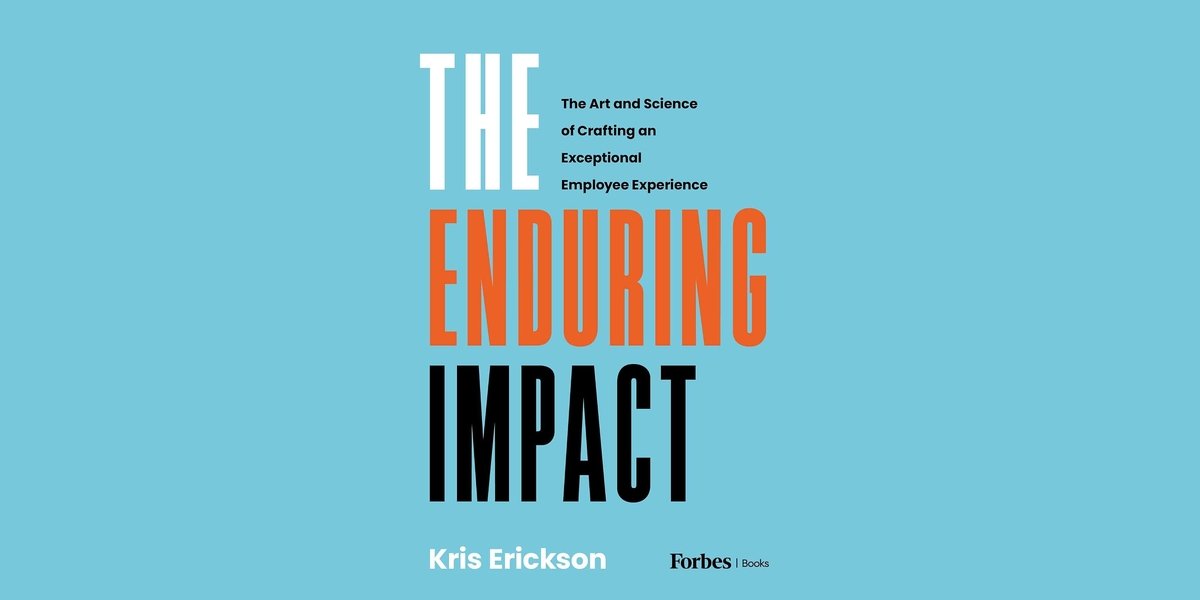
Kris Erickson has spent thirty years dismantling that categorization. Her book, The Enduring Impact, makes a case that is deliberately, specifically, and repeatedly connected to business performance rather than employee satisfaction as an end in itself. The customer experience is the downstream result of the employee experience. One cannot exist without the other.
The Bridge Most Leaders Don’t Cross
Skeptical leaders who are under pressure to focus on the customer-facing side of the business often treat employee experience as a separate conversation. Kris’s response to that framing is direct. Customers experience an organization’s culture whether leaders intend them to or not.
Employees who feel trusted, supported, appreciated, and connected to meaningful work naturally bring more energy, care, and creativity to customer interactions. The reverse is also true, and most leaders have experienced it firsthand without always connecting it back to its cause. Disengaged employees produce disengaged customer experiences. That gap shows up in retention numbers, customer satisfaction scores, and ultimately in financial performance.
The bridge between employee experience and business results isn’t theoretical. Kris describes it as remarkably practical. Employee experience influences discretionary effort, and discretionary effort influences customer experience, innovation, quality, retention, and financial performance. When those measures begin moving together, investment in employee experience stops looking like a soft-skills budget item. It becomes a business strategy.
The Metrics Worth Tracking
Kris is specific about what leaders should actually be monitoring to know whether their employee experience investments are working. Engagement scores alone tell an incomplete story. The metrics that matter connect people outcomes to business outcomes.
Turnover. Absenteeism. Customer satisfaction. Productivity. Quality. Safety. Financial performance. When those measures begin moving in the same direction as engagement, the connection between employee experience and business value becomes visible and defensible in the conversations that matter most, including the ones with boards and senior stakeholders who remain skeptical that investment in people produces measurable return.
Why the Needle Hasn’t Moved
Gallup data has shown for years that the majority of workers globally remain disengaged despite enormous organizational investment in engagement programs. Kris has a clear diagnosis for why that is. Organizations have consistently confused measuring engagement with creating it.
Surveys get administered. Dashboards get reviewed. Initiatives get launched. Somewhere in all of that activity, the actual daily experiences employees have with their managers and their organization’s leadership continue largely unchanged, and the score becomes the goal rather than the indicator of something deeper.
Her framework inverts that logic. Engagement is the outcome. Experience is the cause. The real question isn’t how to move the number. It’s how to build the conditions that produce genuine engagement as a natural result of how people are treated every day.
What Endures After the Leader Leaves
Kris closes the conversation about her book with something that feels more personal than analytical. She describes leadership as ultimately about creating something that continues to benefit people long after an individual leader’s tenure ends. Titles disappear. Organizations change. Careers end.
What endures are the experiences people carry with them. The confidence a leader inspired. The trust built over years of consistent behavior. The growth encouraged in someone who didn’t yet believe in their own potential. The sense of purpose helped someone discover in work that could have easily felt meaningless.
Kris has spent thirty years helping organizations build those kinds of workplaces, and the book represents the most complete version of what she’s learned about how to do it. Her measure of its success has nothing to do with how many copies it sells. It has to do with how many leaders read it and change, in practical and daily ways, how they treat the people in their care.
If you need to make the case internally that employee experience isn’t a soft skill but a business strategy, The Enduring Impact by Kris Erickson is available now on Amazon. The customer experience is the downstream result of the employee experience. It always has been.