By: Margherita Arce
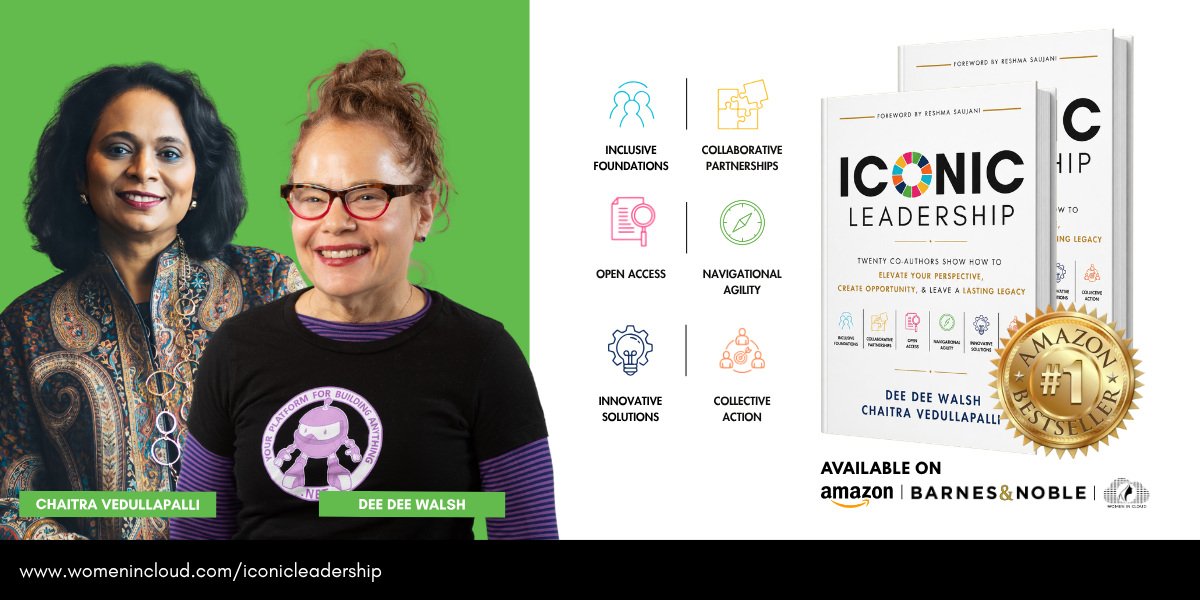
When Chaitra Vedullapalli began researching the leaders who would help shape ICONIC Leadership, she expected to find twenty different paths to impact. Different careers, different decisions, different strategies for becoming the kind of leader others trust and follow.
Instead, one pattern kept emerging.
The defining moment in these leaders’ stories was rarely their biggest achievement. It was often the moment when the path they expected to follow was no longer available.
A rejection changed the trajectory of a career. An institution failed them. A relationship ended. A plan they had trusted stopped working. Faced with uncertainty, they had to decide what came next.
Again and again, these leaders chose to rebuild. And what they built often extended beyond their own recovery. They created access, opened doors, strengthened communities, and made the path more possible for the people coming behind them.
Their setbacks were more than interruptions in their leadership journeys. They became part of the foundation for how they chose to lead.
What That Means for Leaders in the Dark Right Now
We often encounter accomplished leaders after their defining moments, when the impact is visible, and the story appears clear in hindsight. Vedullapalli’s research points to another part of the journey: the period before recognition, when a leader is navigating uncertainty and deciding what to do when the original plan no longer works.
For anyone experiencing that moment now, the lesson is powerful. A setback does not have to define the limits of what comes next. It can become an opportunity to reconsider what you are building, who it can serve, and what kind of leader you want to become through the process.
That idea runs throughout ICONIC Leadership. Vedullapalli and Dee Dee Walsh explore leadership in an era when certainty is increasingly difficult to find, and change is accelerating. The question is less about having every answer and more about how leaders respond when circumstances require a different path.
Can they navigate uncertainty with courage and curiosity? Can they turn individual experience into collective opportunity? Can they use what they have learned to make the path more accessible for others?
Those choices are increasingly central to leadership in the AI era.
Where Does Human Accountability Belong in the AI Era?
As AI systems become more capable and increasingly embedded in consequential decisions, ICONIC Leadership raises another critical question: Where must human accountability remain?
Vedullapalli offers a straightforward test. If no human being is willing to look at the person affected by a decision and explain it, that decision should not simply be handed to a machine.
Consider the decisions that can alter the direction of a person’s life: a job offer, a loan, a diagnosis, or a child’s access to education. Technology can inform those decisions, but efficiency cannot replace accountability.
For leaders, this creates an important responsibility. As organizations adopt AI, they must examine where decision-making is being automated and where human judgment, transparency, and accountability need to remain firmly in place.
The opportunity of AI is significant. So is the responsibility that comes with deciding how it is used.
The leadership challenge is ensuring that greater technological capability strengthens human potential rather than distancing leaders from the people affected by their decisions.
A Vision for 2036
ICONIC Leadership looks ahead to 2036 and imagines a world where AI is deeply embedded across companies, classrooms, hospitals, and governments. Machines are extraordinarily capable, but people have not become invisible within the systems they power.
In that future, employees have greater agency because routine work no longer consumes as much of their potential. Women and historically excluded founders own meaningful parts of the AI economy. Communities have a voice in how the systems affecting them are governed.
Across 100 cities, the first 10,000 ICONIC Leaders have opened doors for millions more. Their impact is visible in the careers created, companies built, policies influenced, communities strengthened, and opportunities made accessible to people who may otherwise have been left out.
That vision reflects a larger idea at the heart of the book: progress in the intelligent age cannot be measured by technological capability alone.
It must also be visible in the opportunities we create for people.
If AI becomes exponentially more capable while people become more imaginative, generous, connected, and capable together, we will have built something more meaningful than technological progress. We will have expanded what is possible for more people to participate, contribute, lead, and prosper.
That is the future Vedullapalli and Walsh invite leaders to help create.
For leaders asking what the intelligent age will require of them, ICONIC Leadership by Chaitra Vedullapalli and Dee Dee Walsh is available now on Amazon.