Photo Courtesy: Circle
Businesses have increasingly begun focusing on ways to incorporate their communities into the customer journey. Brands are attempting to create peer interactions, collaborative learning opportunities, and other forms of engagement with their communities while going through the process of discovering new products and services by potential customers. All of these actions represent an evolution of business strategy, where trust, shared experiences, and belonging have become significant factors in evaluating long-term commitments and establishing loyalty among customers.
According to Circle’s 2026 Community Trends Report, based on survey responses from more than 750 community builders, 48 percent of respondents reported that people first engage with their community before making a purchase. The same report found that 69 percent expect community to play a larger role in their 2026 strategy. These findings suggest a measurable shift in how brands view engagement, with structured, membership-based communities becoming part of the decision-making process rather than serving solely as post-purchase support. In response, many community builders are moving away from standardized templates and instead designing approaches tailored to their members’ behaviors, values, and long-term goals.
Circle, founded by Sid Yadav, Rudy Santino, and Andrew Guttormson in 2019, is one such example of a platform that can assist companies with their community needs. Circle enables organizations to facilitate discussions through community discussion forums, cohort-based learning, live events, and monetizing through member-driven revenue streams, thus allowing brands to communicate with and engage their members pre-purchase, during-purchase, and after-purchase. By providing these tools, organizations can create a cycle of value within their communities where potential customers can have impactful interactions with their respective content, as well as their peers and the organizations that facilitate those experiences.
According to the Year in Review 2025, Circle supported over 18,000 communities globally with over 12 million members, which provides the opportunity for organizations to gain insight into member engagement patterns across all of their community-building efforts.
Data from 2025 suggest that active participation in community spaces correlates with measurable business outcomes. Users frequently interact with posts, events, and courses prior to subscribing to paid services or making a transaction. According to the Community Trends Report, 48 percent of users engage with a community before committing to a purchase. This interaction offers organizations insights into member preferences and pain points, while also fostering trust and social proof, which are increasingly crucial for conversions in knowledge-based and wellness-driven markets. Such engagement metrics provide context for why companies are seeking platforms that centralize community management and customer engagement.
Member-centered experiences built on Circle are designed to offer both structure and flexibility for community managers. Circle provides all-in-one workflow tools and AI-supported moderation features that, when combined with customized engagement settings, allow organizations to build structured yet flexible pathways for member interaction. For example, cohort-based learning or staged event series enable brands to guide members through educational or onboarding journeys without disrupting the natural rhythm of community conversation. The platform’s continued focus on moderation and support also aims to maintain interaction quality, balancing automation with human oversight, as referenced in the 2025 Year in Review.
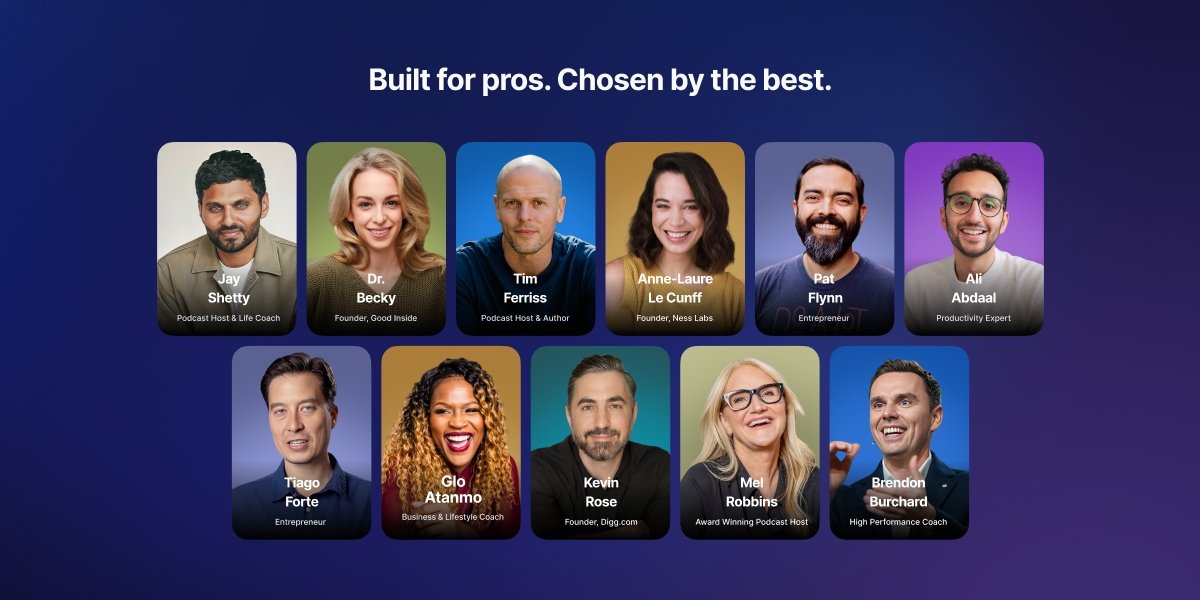
Several notable organizations illustrate the range of sectors employing community as a strategic tool. Harvard University has leveraged Circle to manage alumni and student networks, providing structured forums for knowledge sharing and mentorship. Similarly, wellness professionals such as Dr. Becky Kennedy and public figures like Mel Robbins and Jay Shetty use the platform to deliver coaching, workshops, and interactive courses. In each case, the communities are designed not as marketing funnels alone but as spaces where members experience meaningful transformation and learning, demonstrating that community-based engagement can extend across knowledge, lifestyle, and professional sectors.
Financial and operational data indicate that this emphasis on community is both scalable and sustainable. Circle remained profitable while expanding feature sets, hiring directly from operating income, and reaching over 200 employees by the end of 2025. Platforms that support multiple sectors, education, wellness, and professional services, demonstrate the practical benefits of integrating community as a core component of operations. By allowing brands to build controlled, interactive, and meaningful spaces for their members, the platform functions as infrastructure rather than merely a communication tool.
As companies increasingly recognize community as a strategic lever for transformation and loyalty, the shift away from one-size-fits-all strategies becomes more apparent. Circle exemplifies a platform architecture that supports experimentation, measurement, and human-centric design. Data points from both the Year in Review and the 2026 Community Trends Report suggest that embedding community into the customer journey is no longer optional but central to brand strategy, influencing conversion, retention, and the overall customer experience.
As of early 2026, Circle has grown into a functional global infrastructure provider serving thousands of organizations in the fields of education, wellness, and business throughout the world. The evolution of Circle is guided by Sid Yadav, Rudy Santino, and Andrew Guttormson, who are focused on ensuring the ongoing alignment between technology and human engagement as part of the overall community strategy of Circle. The community-driven approach illustrated here supports how brands can use community-based platforms to include customer engagement and learning as core elements within the customer journey with measurable results.