Lenders ask about time in business because history is cheap evidence. Two or three years of tax returns tell them that an owner can run a company through a bad quarter. When you don’t have that history, your task is to supply the same evidence in another form. Equipment financing is a useful place to attempt this, since the machine itself secures much of the deal.
Nothing guarantees approval, and each lender sets its own rules. What follows is a map of what underwriters may accept in place of years in operation, along with how much weight each substitute tends to carry.
The Substitution Table
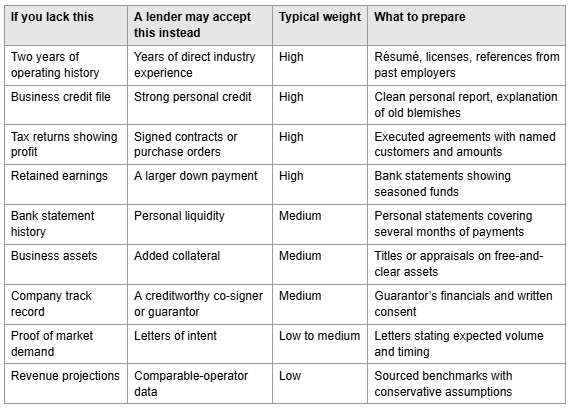
Weights above are a general illustration of how reviewers tend to reason, and they aren’t a published standard. Notice the pattern: anything that’s verifiable and costly to fake carries more weight than anything you’ve merely written down.
Why the Asset Changes the Conversation
An unsecured loan to a new company is backed by little more than a promise. Equipment financing is different, because the lender can repossess something that has a resale market. That’s why the asset’s characteristics matter almost as much as yours.
Lenders tend to favor equipment that is:
• Standardized, like common trucks, excavators, ovens, or printers
• Durable, holding value throughout the repayment term
• Movable, so it can be recovered and resold
• Sold by an established dealer, which helps confirm price and condition
Custom-built machinery, soft costs like installation, and very old used units are often harder to finance. If two machines would do the job, a mainstream model may be easier to place. A general overview such as Fundivi’s equipment financing overview shows the kinds of purchases and details a provider typically asks about, and it can help you organize your request before you contact a dealer.
How Substitutes Can Change the Numbers
Consider Copper Ridge Mobile Welding, a fictional company used as an illustration. Its founder spent eleven years as a union welder, and she wants a $72,000 truck-mounted rig. Here are two hypothetical offers over 60 months.
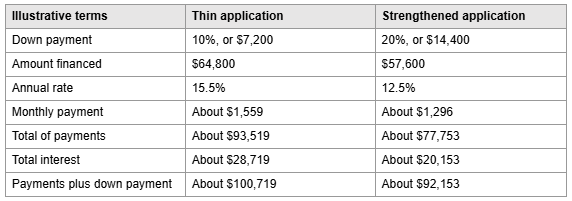
The strengthened version in this example adds a larger down payment, documented experience, and a signed maintenance contract. It lowers the monthly payment by about $263 and the all-in cost by about $8,566. Rates in the real market may be much higher or lower depending on the applicant.
The contract matters for another reason. It’s worth $9,400 a month in billings, and at a 42% margin it produces about $3,948 in monthly cash. That covers the $1,296 payment about 3.0 times, a ratio an underwriter can actually verify. Using a signed agreement in this way is far stronger than saying that you expect plenty of work.
Ranking Your Substitutes
You probably won’t have every item from the table. Work through them in this order:
1. Start with what you already have. Experience and personal credit cost nothing to document.
2. Convert informal promises into paper. If a customer says they’ll use you, ask whether they’ll sign a contract or a letter of intent.
3. Season your cash. Lenders may question funds that appeared in your account last week. Keep your down payment on deposit and be ready to show where it came from.
4. Clear small problems. Disputes, collections, and late payments are often easier to explain or resolve before an application than during one.
5. Consider a guarantor last. A co-signer shares real liability, and that can strain a relationship if the business struggles.
Building a One-Page Credit Memo
Application forms rarely leave space for your best points, so attach a single page that tells the story an underwriter would otherwise have to piece together. Include:
• What you’re buying, from whom, and its price
• How the equipment generates revenue, with specific contracts
• Your relevant experience in years and roles
• Your down payment and its source
• The payment you expect, and how it compares with the cash generated
Comparison sites can help you get a sense of the market. SameDayBusinessLoansOnline.com’s lender comparison service is one place to browse lending categories, though actual timing and eligibility depend on the individual lender and your file. For high-value equipment, plan for a real review instead of counting on a quick decision.
Alternatives If the First Answer Is No
A decline usually tells you which substitute was missing. Ask what would change the outcome, then consider these routes:
• Vendor or manufacturer financing, because the seller has a reason to help close the sale
• A lease with a purchase option, which can reduce the upfront payment
• Used equipment from a reputable dealer, reducing the amount at risk
• Renting for a few months to build deposits and prove demand
• A smaller first unit, which can establish a repayment record for the next purchase
Some founders also qualify for programs aimed at particular groups. This guide to online small business loans for women-owned businesses lists several lenders, though it focuses on working capital rather than equipment purchases, so verify each lender’s current requirements yourself.
Terms to Read Before Signing
Approval is only half of the job. Before you accept, confirm these details:
☐ Whether it’s a loan, a capital lease, or an operating lease
☐ The end-of-term purchase price, such as $1 or fair market value
☐ Any documentation or origination fees
☐ Insurance requirements and who must be named on the policy
☐ Early payoff terms, including whether remaining interest is still due
☐ Whether the lien covers only this asset or all business assets
☐ The scope of the personal guarantee
Tax treatment of equipment purchases can be valuable, but it depends on your situation and on current rules. Talk to a tax professional before letting a deduction drive the decision.
Financing After the First Machine
Your first equipment contract becomes a substitute of its own. Twelve on-time payments give the next lender something better than a promise, so keep the payment history and ask whether it’s reported.
Once the business is running, the financing picture usually widens. A shop that accepts cards might eventually look at products based on its processing volume, and a Times of San Diego release on card processing loans describes one such product launched for small businesses. That option generally requires card sales that a brand-new business doesn’t yet have, so think of it as a possible later step, not as a replacement for equipment credit.
Frequently Asked Questions
Can a brand-new company get equipment financing?
It’s possible for qualified applicants, particularly those with good personal credit, relevant experience, and a meaningful down payment. Lender policies vary.
How much down payment should I plan for?
Commonly, somewhere from zero to 20% or more. New businesses should expect to be asked for more than established ones, and a larger payment can help your terms.
Do I need to pick the equipment first?
Usually, yes. Lenders generally want a dealer quote or invoice because the specific asset is central to their decision.
Is used equipment harder to finance?
It can be. Age, hours, seller type, and condition all matter, and some lenders limit how old a unit may be at the end of the term.
Will applying hurt my credit?
Some lenders use a soft inquiry at first and a hard inquiry later on. Ask which applies before you authorize a check.
What’s the difference between a lease and a loan?
A loan generally leads to ownership. With a lease, you pay for use and may have a purchase option at the end. Accounting and tax treatment can differ.
Disclaimer: This article is for general informational purposes only and does not constitute financial, lending, legal, tax, or investment advice. Examples, businesses, figures, rates, payment amounts, and scenarios are fictional and illustrative only and do not represent actual offers or guaranteed outcomes. Financing terms, eligibility requirements, pricing, approval decisions, collateral requirements, and credit practices vary by lender and applicant. Readers should independently verify current requirements and carefully review all financing agreements with the appropriate professional before making a decision.