By: Erik Ronson
After two decades in Hollywood, one writer’s strategic approach to indie publishing proves independent authors can compete with major publishers—and win.
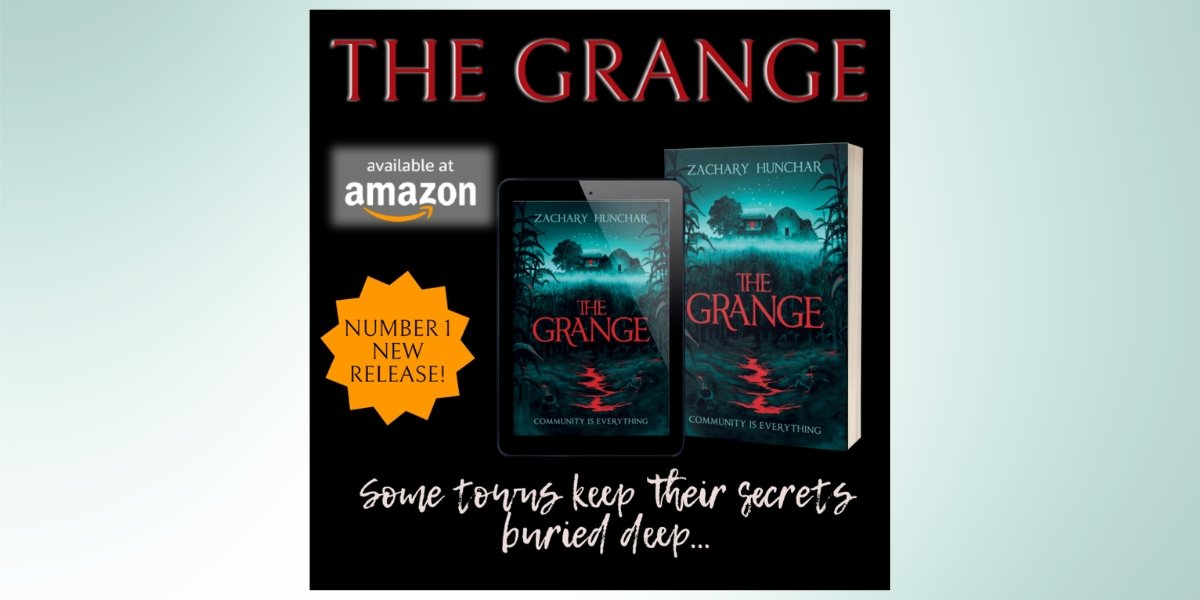
When Zachary Hunchar‘s debut novel, The Grange, hit number one on Amazon in October 2025, it wasn’t luck. It was the result of a carefully orchestrated strategy that borrows heavily from Hollywood franchise-building while maintaining the agility and creative control that only independent publishing can provide.
After spending over 20 years at major studios, including Lionsgate and Paramount, Hunchar understood something most first-time authors miss: success in publishing isn’t just about writing a good book. It’s about building a brand, targeting the right audience, and creating content with long-term franchise potential.
The Hollywood Franchise Model, Indie Style
Hunchar’s approach differs significantly from traditional indie authors who focus on standalone novels. From the outset, he designed The Grange—a paranormal horror story set in rural Pennsylvania—as the foundation of an interconnected story universe. Two additional books are already planned for 2026: a prequel to The Grange and another novel set in the same universe.
“I’m writing an interconnected universe of stories that are meaningful, yet entertaining,” Hunchar explains on his website. This mirrors the Marvel Cinematic Universe or Star Wars model, where each story stands alone while contributing to a larger narrative tapestry.
The difference? Major publishers move slowly, often taking 12-18 months between book releases. As an indie author, Hunchar maintains complete creative control and can release books on his own timeline, building momentum while reader interest remains high.
This speed-to-market advantage is crucial. With The Grange achieving bestseller status and strong reviews (4.7 stars from 15 reviews), Hunchar can capitalize on that momentum immediately by releasing connected stories that deepen reader investment in his fictional world.
Strategic Audience Targeting
Rather than trying to appeal to all horror readers, Hunchar made a calculated decision to focus on an underserved demographic: younger, college-educated female readers. This specificity informed every aspect of the book’s creation, from the 15-year-old female protagonist to the integration of social justice themes alongside traditional horror elements.

Photo Courtesy: Zachary Hunchar
“The stories are dark yet hopeful, highlighting the impact of family on characters and incorporating social justice themes,” Hunchar notes. This positioning differentiates The Grange in a crowded marketplace while targeting readers who often struggle to find horror that speaks to their interests.
The strategy worked. Reviews specifically praise the character development and the balance of genuine scares with emotional depth—exactly what Hunchar designed the book to deliver.
The Spring Retail Push: From Digital to Physical
Achieving a number-one ranking on Amazon was only phase one of Hunchar’s strategy. Phase two, launching this Spring, focuses on converting digital success into physical retail presence—a critical but challenging transition for indie authors.
“My primary goal is to improve my brand so that when I go wider in Spring, I have some traction,” Hunchar stated in his submission. “For that wider release, I want to get more attention from retailers and librarians.”
This approach demonstrates sophisticated understanding of publishing economics. Amazon success provides social proof and reviews that make retailers and librarians more confident in stocking an unknown indie author. The number-one ranking becomes a marketing tool, not just an achievement.
Hunchar’s timing is strategic. By building online buzz through October, November, and December, then expanding to retail in January—traditionally a slower publishing month—he faces less competition for shelf space and library budget allocations.
Multimedia Innovation: Beyond the Book
Hunchar isn’t stopping with books. He’s currently producing an augmented reality project that merges tabletop role-playing games with mobile gaming, extending The Grange universe into interactive media. This multimedia approach represents the cutting edge of indie publishing, where authors create entire entertainment ecosystems around their intellectual property.

Photo Courtesy: Zachary Hunchar
His background in comics—having published horror and fantasy titles through Tidalwave Productions—demonstrates comfort working across narrative mediums. The AR project leverages his experience in visual storytelling while creating additional revenue streams and reader engagement opportunities.
For business-minded authors, this diversification strategy reduces risk. If book sales slow, the AR gaming platform provides an alternative monetization avenue. It also creates marketing synergy: game players become book readers, and vice versa.
The Competitive Advantages of Indie Publishing
Hunchar’s success illustrates several competitive advantages independent authors hold over traditional publishing:
Speed and Agility: With two more books planned for 2025, Hunchar can release content 2-3 times faster than traditional publishing timelines allow. This maintains reader interest and compounds marketing momentum.
Creative Control: Hunchar’s emphasis on social justice themes and female-focused horror might face resistance from risk-averse traditional publishers. As an indie author, he makes those decisions himself.
Direct Reader Relationships: Independent publishing allows Hunchar to gather reader feedback, build email lists, and maintain direct communication with his audience—valuable data that informs future creative and marketing decisions.
Higher Royalties: While indie authors handle their own marketing costs, they typically earn 70% royalties on digital sales versus 10-15% in traditional publishing. This financial structure makes smaller sales numbers profitable.
Multimedia Rights: Hunchar retains all rights to his intellectual property, enabling him to develop the AR gaming project without publisher approval or profit-sharing.
Lessons for Indie Authors and Entrepreneurs
Hunchar’s approach offers a blueprint for independent creators across industries:
- Think franchise from day one: Design your first product with expansion potential built in
- Target precisely: Narrow focus beats broad appeal for resource-constrained independents
- Build strategic timing into your plan: Success on one platform creates leverage for the next
- Diversify revenue streams: Don’t depend solely on your core product
- Leverage existing expertise: Hunchar’s Hollywood experience informed his publishing strategy
Perhaps most importantly, Hunchar demonstrates that independence doesn’t mean isolation. His background helping “thousands of filmmakers tell their stories” at major studios gave him industry knowledge and storytelling expertise that translated directly into publishing success.
His upcoming January retail expansion will test whether indie authors can truly compete in traditional distribution channels. If successful, Hunchar won’t just have built a profitable career as an independent author—he’ll have validated a complete business model for the next generation of publishing entrepreneurs.
For now, readers in Fleetwood, Pennsylvania, and beyond are discovering that sometimes the harvest is blood, and the best stories come from those who’ve learned both the art and the business of modern publishing.
About the Author
Zachary Hunchar is a horror and supernatural fiction author based in Los Angeles. After two decades in the film industry, he released his debut novel, The Grange, in October 2025, achieving number-one bestseller status on Amazon. He holds a Bachelor of Science from the University of Kutztown and is an avid Dungeons & Dragons player. Learn more at www.zacharyhunchar.com.