By KeyCrew Media
A Midwest multifamily developer that has repeated the same building design across roughly 15 projects says the approach is bringing construction closer to manufacturing, with projects routinely finishing ahead of schedule.
Why Contingency Budgets Run High
Ground-up development has a lot of moving parts: budgets, schedules, subcontractors, and site conditions. Because of that, developers routinely set aside contingency reserves of 10% or more of the construction budget.
Mailbox Money Real Estate, a workforce housing developer active in Sioux Falls, South Dakota, and other secondary and tertiary Midwest markets, has brought that figure down to about 2.5%. According to founder Dusten Hendrickson, the reason is simple: the firm builds the same building over and over.
“We used to have a standard 10% budget,” Hendrickson says. “Now we’ve got that contingency down to like two and a half percent, and we do not even use it all because we are so confident in how much it costs to build these because we’ve just done it so many times.”
The firm’s contingency rose to nearly 15% during COVID, when material costs swung sharply. It has since fallen to roughly 2.5%. Across about 15 developments built on the same model over the past five years, projects now typically finish one to four months ahead of schedule.
How Repetition Builds Predictability
When a developer uses the same floor plan, materials, general contractor, and subcontractors on every project, each one becomes more predictable than the last. Subcontractors know the scope, can schedule labor precisely, and can bid accurately because they have priced the same job before.
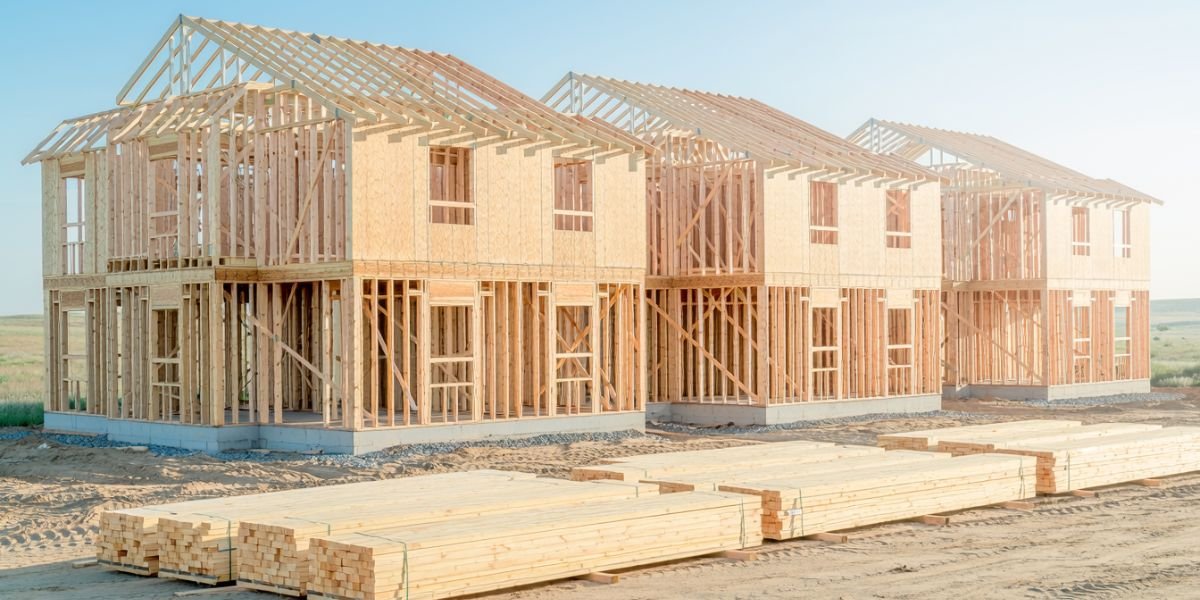
“We know exactly how many two-by-fours are in that building, so we know exactly how much it costs,” Hendrickson says.
The main remaining unknowns sit below grade: soils, underground utilities, and foundations. Hendrickson notes that only a very small share of the project is underground, and those issues are resolved early in construction.
He says custom development, still the industry norm, carries built-in uncertainty no matter how good the team is. “If you have a really good GC and you’re building a custom site every time, you’re still going to run into both schedule overruns and budget overruns,” he says.
Keeping Subcontractors Aligned
Repetition works best alongside strong contractor relationships. When a subcontractor submits an invoice, Hendrickson’s firm holds back 5–10% in a reserve account and releases it when the project is complete. He pairs that with paying on time, treating crews well, and keeping job sites a good place to work. Together, he says, those practices keep subcontractors focused on schedule and quality.
Bringing Manufacturing Into Real Estate
Hendrickson says the bigger benefit of standardization is scale. A new project needs no redesign, no new contractor network, no new marketing plan, and no new operating procedures. Only the location changes.
“The scalability of this plan is so easy because everything is already set in motion, and we’re not customizing anything,” he says.
He describes the model as sitting between construction and manufacturing, and deliberately moving toward manufacturing. “Manufacturing has a lot higher margins, and it’s a lot more repeatable,” he says. “It’ll still always be real estate, but the more you can put it on a conveyor belt, the better it’s going to be.”
How a Repeated Build Compares to a First One
The difference between the two approaches shows up in what a project team actually knows on day one. A first-of-its-kind build runs on estimates. Material quantities, labor hours, and subcontractor pricing are projected rather than observed, and the real numbers arrive while the work is already underway.
A fifteenth version of the same building runs on records. Line items have been priced repeatedly, the schedule has been tested across several sites, and most variances show up as small corrections rather than surprises. That record is what allows a contingency reserve to shrink without the project team taking on more exposure.
The approach comes with a tradeoff in design flexibility. A fixed plan closes off the ability to tailor a building to an unusual site or a specific market preference, and it narrows the range of parcels that will work. For a developer building the same product across similar secondary markets, that constraint is what buys the predictability.
Dusten Hendrickson is the founder of Mailbox Money Real Estate, a vertically integrated developer of ground-up workforce housing in secondary and tertiary Midwest markets, with a concentration in Sioux Falls, South Dakota, and surrounding communities. With 25 years of real estate experience, Hendrickson and his team have delivered roughly 1,300 units, including Crooks Reserve in Crooks, South Dakota, and Fosfield in Sioux Falls.
This article is based on information provided by the expert source cited above. It is intended for general informational purposes only and does not constitute legal, financial, or real estate advice. Readers should conduct their own research and consult qualified professionals before making any real estate or financial decisions.