Modern business books often function as long-form credibility tools rather than standalone publishing projects.
Entrepreneurs and professionals are increasingly using books for more than just personal achievement. A well-developed book can support reputation, clarify expertise, open new speaking or consulting opportunities, and strengthen the credibility behind a business or personal brand. For founders, coaches, consultants, healthcare professionals, real estate experts, and corporate leaders, the book is often becoming part of a broader authority strategy.
The challenge is that most professionals do not lack knowledge. They struggle with the production process. Turning years of experience, client stories, business lessons, or industry insight into a finished book requires structure, editorial judgment, design, publishing knowledge, and a practical plan for visibility. This is why full-service book production has become important for professionals who want to publish without losing focus on their core work.
Books Have Become Authority Infrastructure
In a competitive market, credibility is built through repeated proof. A book gives professionals a long-form platform to explain their philosophy, document their experience, and present ideas with more weight than a post, presentation, or sales page. It can serve as a tool across business development, media outreach, investor conversations, client education, and public speaking.
For entrepreneurs, a book can help explain the story behind a company, the principles behind a service, or the framework behind a methodology. For professionals, it can turn specialized knowledge into a public-facing asset. The value is not only in having a book available for sale. The larger value often comes from what the book says about the author’s expertise, discipline, and ability to communicate complex ideas clearly.
The Operational Problem Behind Publishing
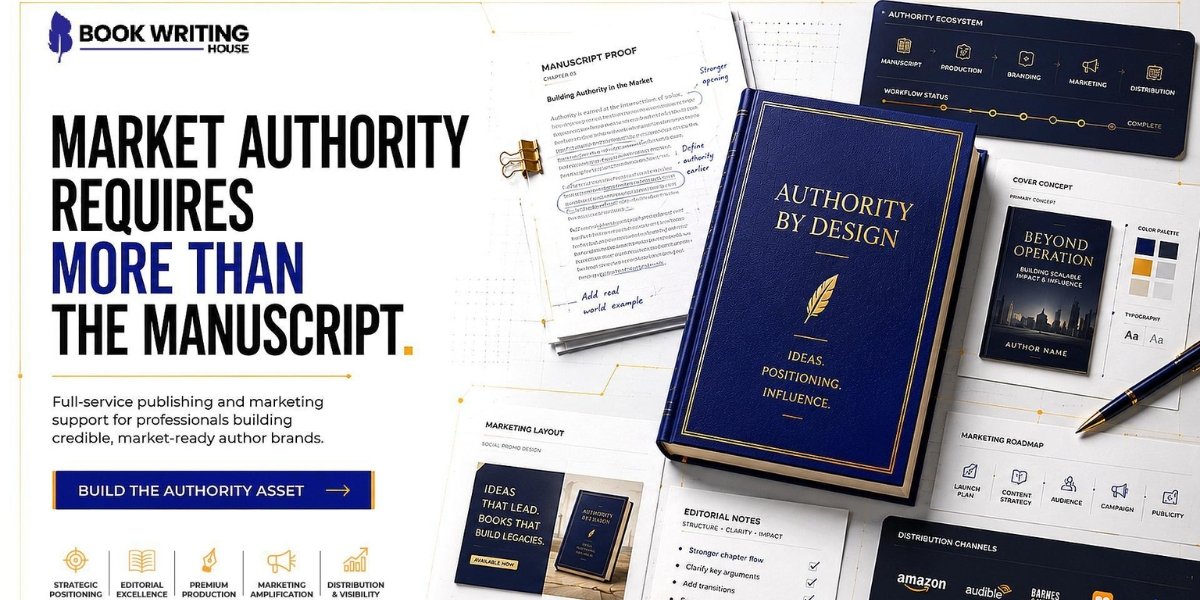
Writing and publishing a book involves several moving parts. A manuscript may need development, restructuring, editing, proofreading, formatting, cover design, publishing setup, distribution planning, and marketing preparation. When each step is handled separately, the process can become fragmented. Authors may find themselves coordinating between writers, editors, designers, formatters, publishing platforms, and marketers without a clear production timeline.
This fragmentation can create delays and inconsistency. A strong manuscript can lose impact if the editing fails to align with the author’s purpose. A professional cover can miss the market if it is not aligned with the audience. A completed book can remain invisible if publishing and promotion are treated as afterthoughts. Full-service production helps solve this by placing the book within a single coordinated workflow.
Why Entrepreneurs Need More Than a Manuscript
A manuscript is only the starting point. Business authors often need a book that reflects their professional positioning, not just their ideas. The tone must fit the audience. The structure must support readability. The examples must reinforce authority. The final product must look credible across digital and print environments.
For an entrepreneur or professional, the book has to serve multiple purposes at once. It should educate readers, support personal branding, showcase the author’s expertise, and remain polished enough for business settings. That requires more than basic writing support. It requires production thinking, in which each stage of the book is connected to the book’s larger purpose.
The Value of a Complete Production Workflow
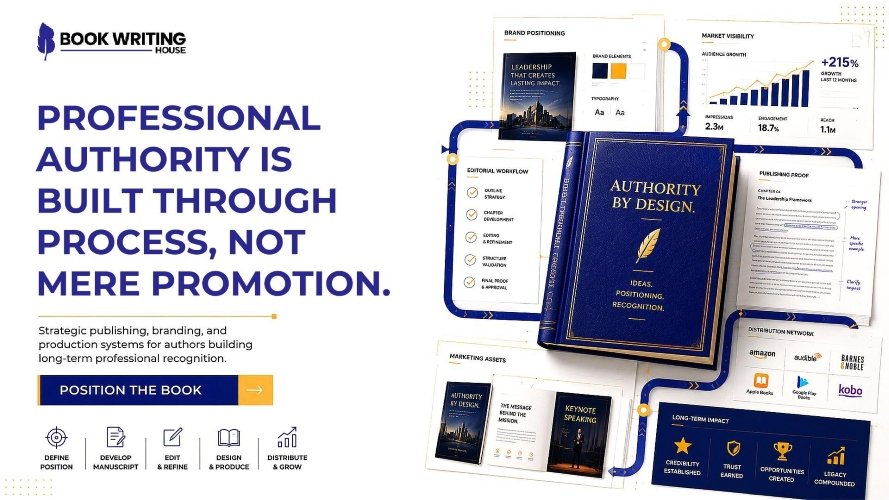
A complete book production workflow brings together the major stages of the publishing journey. It begins with understanding the author’s goals, audience, and message. It then moves through manuscript development, editorial improvement, design, formatting, publishing preparation, and visibility planning. Each stage supports the next, reducing the gap between the concept and the final publication.
Book Writing House supports authors through a coordinated process that includes writing, editing, design, publishing, and marketing services. Its self-publishing support helps authors prepare their books for platforms such as Amazon and other distribution channels, while also addressing formatting, cover design, and visibility needs through its book publishing services.
For busy professionals, this approach can be especially useful because it reduces the need to manage every technical and creative detail on their own. Instead of treating the book as a scattered list of tasks, the author can follow a managed production path in which the manuscript, design, publishing format, and market positioning work together.
Publishing Is Only One Stage of the Business Outcome
Publishing a book is a milestone, but it is not the final business objective. The larger goal is often reader reach, credibility, and long-term brand impact. A book that is published but not positioned may fail to support the author’s professional goals. This is where marketing strategy becomes part of the production discussion, not a separate concern added at the end.
Professional authors need to consider audience visibility, launch preparation, online presence, media angles, reader engagement, and opportunities to build authority. Book Writing House also provides book marketing services for authors who want support in promoting their work after publication. For entrepreneurs and professionals, this connection between publishing and visibility is central to turning a book into a business asset.
What Full-Service Support Can Include
Full-service author support may include ghostwriting for authors who have ideas but need help shaping them into a book; development editing for those who already have a draft; professional editing for refinement; cover design for market presentation; formatting for print and digital use; publishing setup; and marketing preparation after release.
This model is especially relevant for business owners and professionals who cannot afford a disorganized publishing process. Their schedules are often limited, and their reputations are tied to the quality of the final product. A book attached to a professional brand must be clear, polished, and strategically presented. The production process must therefore protect both the author’s time and the author’s credibility.
From Expertise to a Market-Ready Asset
Many professionals have enough knowledge for a book, but knowledge alone does not create a market-ready asset. The ideas need sequence, clarity, and value to the reader. The content must be shaped around what the audience needs to understand, not only what the author wants to say. The design must feel aligned with the subject. The publishing path must make the book accessible. The promotional plan must help the right readers discover it.
This is where complete book production creates a practical bridge between expertise and execution. It allows professionals to move from scattered notes, presentations, interviews, client stories, or unfinished drafts into a finished product that can support their public profile. For business authors, that transition can be the difference between having an idea for a book and having a tool that works across their brand.
A Practical Path for Professional Authors
The rise of professional authorship reflects a larger shift in how entrepreneurs and experts build authority. A book can still be creative and personal, but for many professionals, it is also strategic. It can support trust, visibility, client education, and long-term recognition.
For those who want to publish but do not want to manage every stage alone, full-service book production offers a more organized path. By bringing writing, editing, design, publishing, and marketing into a connected process, brands like Book Writing House help authors move closer to a finished book that reflects both their message and their professional goals.
In that sense, the modern business book is not simply a product. It is a credibility asset. When produced with structure and care, it can become one of the most durable tools an entrepreneur or professional uses to explain who they are, what they know, and why their perspective matters.