US Business News

J. Craig Wheeler Explores Humanity’s Future in New Book

By: Marissa Miller

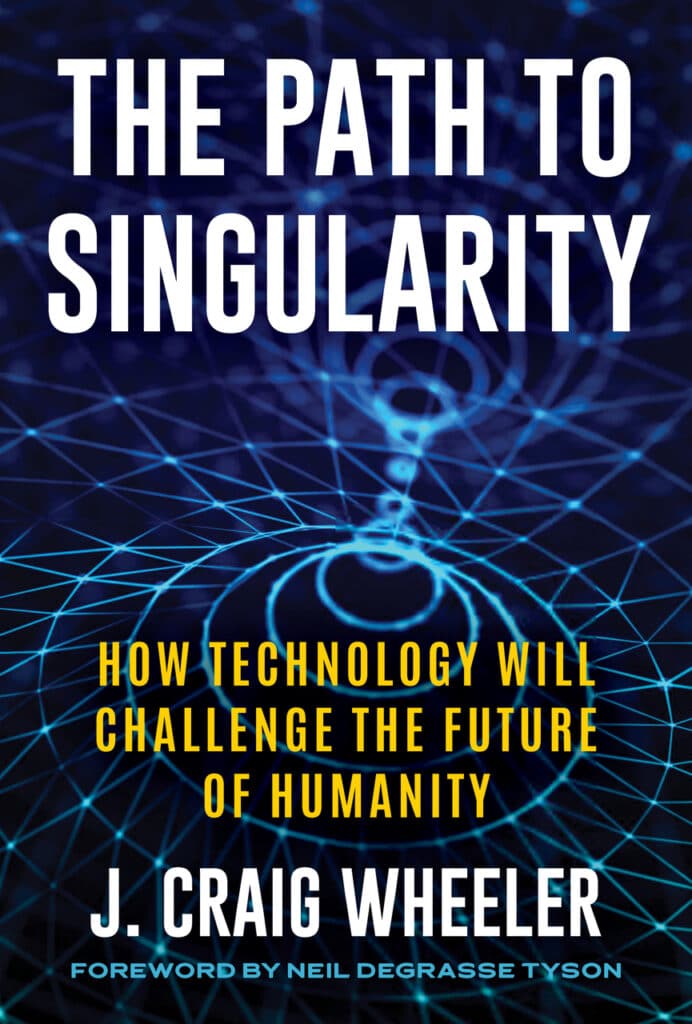
Renowned astrophysicist and University of Texas professor J. Craig Wheeler is no stranger to exploring the mysteries of the universe. But in his latest book, The Path to Singularity: How Technology Will Challenge the Future of Humanity, Wheeler turns his attention from the stars to the seismic shifts happening right here on Earth, offering a deeply insightful and urgent examination of how artificial intelligence and emerging technologies are reshaping what it means to be human.

From AI-driven weapons to brain-implanted technologies capable of influencing thoughts and emotions, Wheeler unpacks a future that seems ripped from the pages of science fiction. Yet, as he argues, these are not distant hypotheticals but realities already on the horizon. Headlines about AI’s advancements may capture attention briefly, but Wheeler’s book insists that humanity cannot afford to dismiss these developments as tomorrow’s problem.

“This is the calm before the tsunami,” Wheeler warns. “We are living in a moment where the waves of change are just beginning to build, but when they hit, they will alter everything in their path.”

Unlike many futurists, Wheeler approaches the subject with the precision of a scientist. Drawing on decades of research, he separates fact from fiction, blending hard science with philosophical inquiry to create a roadmap for understanding and responding to the challenges ahead. His approach has drawn praise from luminaries across fields. Nobel Laureate Brian Schmidt describes the book as “highly informative and unsettling,” while University of Michigan roboticist Chad Jenkins deems it “required reading.” Former White House science advisor John P. Holdren applauds Wheeler’s “deep insight and crystal clarity.”

Astrophysicist Neil deGrasse Tyson adds: “The world is long overdue for a peek at the state of society and what its future looks like through the lens of a scientist. When such an occasion presents itself, as it does in this book, run, don’t walk to experience it. The views you’ll find here are enlightening, insightful, and occasionally mind-blowing. You will never see the world the same way. And that’s a good thing.”

Central to The Path to Singularity is Wheeler’s exploration of humanity’s agency in this technological revolution. Will humans maintain control over machines, or will machines gain the autonomy to control us? He argues that this question must not be left solely to politicians or computer scientists but tackled by society as a whole.

Wheeler’s voice is neither alarmist nor blindly optimistic. Instead, he offers what he calls a “realist’s guide” to grappling with AI’s potential—both its promise and its peril. The book delves into both the historical context and future implications of technological advances, making complex ideas accessible to readers from all backgrounds.

For tech enthusiasts, policymakers, and concerned citizens alike, The Path to Singularity is a wake-up call. Wheeler’s science-based approach equips readers to better understand the sweeping changes ahead and empowers them to engage with critical questions about humanity’s future.

J. Craig Wheeler Explores Humanity's Future in New Book_2

Photo Courtesy: Amy Colleen / J. Craig Wheeler

About J. Craig Wheeler

J. Craig Wheeler holds the titles of Samuel T. and Fern Yanagisawa Regents Professor of Astronomy, Emeritus, and Distinguished Teaching Professor, Emeritus, at the University of Texas at Austin, where he also previously served as Chair of the Astronomy Department. A Fellow of the American Physical Society and a Legacy Fellow of the American Astronomical Society, Wheeler has an impressive record of nearly 400 refereed scientific papers and numerous conference proceedings. His published works include a professional book on supernovae (Supernova Explosions), a popular science book on cosmic phenomena (Cosmic Catastrophes), two novels (The Krone Experiment and Krone Ascending), and six edited volumes.

Renowned as a science communicator, Wheeler is a sought-after lecturer and has earned multiple teaching honors, including the prestigious Regents Award. His academic career includes fellowships at prominent institutions such as JILA, the Japan Society for the Promotion of Science, Cerro Tololo Inter-American Observatory, and a Fulbright Fellowship in Italy. He has contributed to advisory committees for the National Science Foundation, NASA, and the National Research Council. He has held numerous leadership roles within the American Astronomical Society, including serving as its President from 2006 to 2008.

Wheeler’s research spans supernovae, black holes, astrobiology, high-energy astrophysics, and the future of technology and humanity.

Published by: Martin De Juan

The TV Ad Revolution: Back to the Future

By: Joshua Finley

Streaming Giants Are Reinventing Television Advertising Through Interactive Shopping and Free Content

Despite the rise of competing sources of entertainment like video games and social media, television remains one of America’s favorite pastimes. More than 97% of American households own at least one TV set, with viewers aged 15 and older averaging about three hours of screen time per day on televisions alone [Source]. Once reliant on traditional cable broadcast services, over-the-top (OTT) streaming companies like Netflix, Roku, and Amazon fundamentally disrupted how consumers connect to their favorite programs. While this major shift has made watching TV easier than ever before, it has also introduced complexities to capturing profit from licensed content. These complexities have made for a turbulent decade in the entertainment media industry, with billions of dollars changing hands since the 2010s in an attempt to course-correct for consumers’ rapidly growing expectations from their TV experience. 

The ongoing Warner Bros. Discovery merger debacle illustrates the challenges traditional media companies face in staying competitive. The $43 billion deal, finalized in 2022 between AT&T’s WarnerMedia and Discovery, aimed to create the most “differentiated content portfolio in the world.” It launched the streaming platform Max in May 2023, consolidating HBO Max and Discovery+ into one app to deliver premium content. While the move was intended to boost subscriber engagement, the merged company has faced significant challenges. Stock prices have fallen dramatically, and criticisms about content removals and unmet expectations for the streaming service have raised questions about the merger’s effectiveness.

Where the premium streaming model lagged in demonstrating profitability for Warner Bros. Discovery, an old friend of media revenue models has returned with a vengeance: advertising. Among the strategies garnering the most attention with streaming services are free ad-supported television (FAST) TV subscription models and interactive, shoppable ad experiences.

The “Golden Age of Advertising”

For the majority of its existence, television programming has been powered by ad revenue. The first-ever TV ad aired in 1941 before a Brooklyn Dodgers versus Philadelphia Phillies game, portraying nothing more than the Bulova logo (that of the advertiser) and a voiceover of the tagline. TV ownership in the United States climbed to 95% by 1965, coinciding with what is often referred to as the ‘Golden Age of Advertising’ — a wave of creativity and innovations in how marketers communicated with their audiences. Irrevocably mesmerized by the glowing tube parked in their living rooms, the American public became acquainted with iconic figures like Ronald McDonald and the Pillsbury Doughboy as they consumed sports, news, and TV shows. 

Apple unveiled its Macintosh computer two decades later with the iconic “1984” Superbowl ad. TV ads had officially graduated from cutesy sales pitches and infomercials to powerful narrative storytelling, with a price tag to match: The ad cost approximately $500,000 to produce and $525,000 for a 60-second airtime slot. Broadcast advertising had clearly made significant strides as a medium for brands to get in front of consumers, with broadcast networks possessing major leverage as the keyholders of the public’s undivided attention.

Disruption in Programming

Major technological advancements led to the birth of a pivotal challenger in television media in 1997: Netflix. Originally a mail-order DVD service, Netflix wisely invested in online streaming capabilities early on and was able to provide millions of users with on-demand access to their favorite movies and TV shows. As other streaming platforms like Amazon Prime and Hulu followed similar strategies, consumer preference shifted in favor of OTT streaming versus traditional broadcast for its modern, flexible approach to television content consumption.

The one thing many streaming platforms had in common around this time was their subscription-based business models. Rather than funding their programming from ad revenue, these platforms rely primarily on subscriber fees. Over time, the growing cost of business and an influx of competition prompted OTT streaming platforms to seek new ways to build revenue without sacrificing the user experience. Rising subscription prices have plagued connected television (CTV) users for several years now, illustrating the growing financial pressures on the entertainment media industry. With consumers growing weary of inflation and rising costs across their household expenses, brands with marketing budgets have begun to share the burden of the cost of OTT streaming.

TV Advertising Comes Full-Circle

Not long ago, TV advertisements felt like little more than a memory for CTV users. Although the ad-free binge-watching experience has become a cultural staple in the digital age, the subscription-based model that spurred it has proven to be an unsustainable revenue model for OTT platforms. Innovation in advertising solutions like FAST TV and shoppable ads are ushering in a new era of possibilities for platforms looking for growth, and several retail media networks are already making moves to support these newfound revenue streams.

Just last year, Walmart and Peacock partnered up to present a new shoppable ad experience, using AI to identify objects within scenes and match them to items available at Walmart. Encouraging viewers of the program “Below Deck Mediterranean” to ‘shop the moment,’ Peacock aired special episodes accompanied by an interface that allowed them to scroll through products onscreen and use a QR code to purchase their finds.

“For so long, viewers had to take the hard route, scouring the internet to find a product like what they saw their favorite icons or creators use in-show,” said Josh Feldman, Global Chief Marketing Officer of Advertising & Partnerships at NBCUniversal. “Now… Bravo fans can get even closer to the content they love by discovering brands that are already part of the story.” [Source]

Amazon Prime is also exploring strategies in shoppable TV, introducing a suite of interactive and shoppable ad formats in 2024 on its ad platform. According to Amazon, advertisers found interactive ads to be more effective in boosting engagement rates across the customer journey, driving 10x more product page views and conversions than non-interactive formats. [Source]

FAST TV, a streaming concept that enables users to watch TV for free with advertisements, has also been gaining traction. One study found that 66% of American television viewers use FAST TV platforms each month. Among prominent FAST TV platforms are familiar names like Tubi, Pluto, and Amazon’s “Watch For Free.” As a matter of fact, YouTube also qualifies as a FAST platform, often displaying ads ahead of otherwise free user-generated content.

Looking Ahead

While FAST TV and shoppable ad experiences appear to be a boon for both digital advertisers and OTT streaming platforms, they still require some experimentation and validation to be certain.

“Media companies that invest in interactive ad capabilities have the opportunity to define the next era of television advertising,” says Joachim Over, an M&A advisor with over a decade of experience in brokering tech deals. “There will be some trial and error in this sector for the next couple of years, and those that successfully dial in the technology will have a lot of leverage in the advertising game.”

Joachim is a Senior Partner at Ignatious, a boutique merger and acquisition advisory firm dedicated to matching technology companies with blue-chip strategic buyers and leading private equity firms.

“Networks or other publishers who don’t have this tech are likely to miss out on a new ad format, and that means less ad revenue in their pockets,” predicts Joachim. “Platforms will be highly motivated to add this feature to their digital experience because it could ultimately mean growing their value as a company.”


Published By: Aize Perez

Redefining Defense Recruitment: The Legacy of BOB Search

Since 1979, BOB Search has emerged as a trailblazer in defense recruitment, setting new benchmarks for executive search firms within the industry. Born out of a strategic alliance with Northrop Grumman during the 1980s B-2 program, BOB Search has dedicated over four decades to identifying and placing transformative leaders in the defense sector. This unwavering focus has made them synonymous with excellence, reliability, and industry expertise.

A History Rooted in Defense Excellence

BOB Search’s journey began at a time when the defense sector was rapidly evolving. Partnering with Northrop Grumman on a large-scale hiring initiative for the B-2 stealth bomber program gave the firm invaluable insights into the intricate demands of defense recruitment. This foundational experience shaped BOB Search’s approach, enabling the firm to develop a deep understanding of the skills, qualifications, and vision required to lead in the defense industry.

Precision Recruitment for Defense Leadership

Unlike traditional recruiters, BOB Search operates with a singular focus: securing executive talent that redefines organizational potential in defense. The firm’s team is composed of industry specialists with extensive experience in aerospace and defense. These recruiters bring a unique perspective to the table, ensuring that every placement is not just a match but a strategic fit.

Through their refined approach, BOB Search has built a reputation for delivering candidates who excel in leadership, innovation, and operational excellence. Their placements span key roles across multiple defense domains, driving growth and fortifying the capabilities of their clients.

Specialization Across Defense Sectors

BOB Search’s expertise in defense recruiting covers a wide array of critical defense sectors, including:

  • Prime Defense Contractors: Finding leaders to navigate large-scale projects with national and global implications.
  • Unmanned Vehicles (UAVs): Placing innovators in the rapidly advancing field of autonomous systems.
  • Land Systems: Recruiting for roles focused on cutting-edge ground defense technologies.
  • Navy/Maritime Operations: Identifying talent for critical naval defense initiatives.
  • Defense Electronics: Securing experts in advanced electronic warfare and communications systems.
  • Engine and Propulsion Systems: Placing specialists driving breakthroughs in propulsion technology.
  • Cybersecurity and Intelligence: Finding leaders to tackle the increasingly critical threats to national security.

This breadth of specialization underscores BOB Search’s versatility and profound understanding of the defense sector. Their ability to adapt to evolving technologies and mission requirements ensures they remain an invaluable partner to organizations in need of top-tier talent.

Core Values That Define Success

BOB Search attributes its long-standing success to an unwavering adherence to core values that shape every aspect of their work:

  • Flexibility: The defense industry is dynamic, and BOB Search thrives on adaptability. Their creative problem-solving enables them to navigate complex recruitment challenges effectively.
  • Commitment: Passion for the defense industry fuels their dedication to connecting organizations with visionary leaders who deliver immediate and long-term impact.
  • Proactive Vision: Anticipating the future needs of the defense sector is central to their strategy, ensuring clients are always ahead of the curve.
  • Professional Excellence: Transparency, thoroughness, and respect underpin their operations, fostering trust with both clients and candidates.
  • Transformative Results: BOB Search measures success not by placements alone but by the impact those leaders have on their organizations and the industry.

Transforming Defense Through Leadership

In an industry where innovation and leadership are paramount, BOB Search’s contributions have been transformative. By connecting defense organizations with executives who possess the vision, expertise, and determination to excel, they have played a vital role in advancing defense capabilities worldwide.

Their mission is encapsulated by the belief that “Our ‘A’ players bring positive impact to everything they touch.” For BOB Search, recruitment is not just about filling a position—it is about finding leaders who redefine roles, drive innovation, and elevate the defense sector to new heights.

Partnering for Strategic Growth

For defense organizations seeking unparalleled recruitment services, BOB Search offers a trusted gateway to exceptional talent. Whether the need is for a leader in cybersecurity, unmanned systems, or prime contracting, BOB Search provides the expertise to identify and secure the right individual for the mission.

Contact BOB Search at (888) 848-5754 to learn more about their services and discover how they can revolutionize your executive search process.

Leading the Future of Defense Recruitment

BOB Search’s legacy is not just one of success—it is one of leadership, innovation, and transformation. By continuously adapting to the evolving demands of the defense industry, the firm has positioned itself as an indispensable partner for organizations committed to advancing national security and technological innovation.

With every placement, BOB Search is shaping the future of defense—one leader at a time.


Published By: Aize Perez

Jive Technologies: Pioneering the Future of Education Through Technology

In an era where technology and education are increasingly intertwined, the quest to make quality learning accessible to every child around the globe is more vital than ever. Amidst this backdrop, Jive Technologies emerges as a beacon of innovation, committed to transforming the educational landscape through its revolutionary cloud-based platform. Co-founded by visionary entrepreneur Oyindamola Iwalehin, Jive is not merely an EdTech company; it’s a movement towards democratizing education by breaking down barriers that hinder access to learning in developing regions.

The inception of Jive Technologies was fueled by a singular mission—to make education universally accessible and equitable through the power of technology. This guiding principle has shaped every facet of Jive’s operations, from its user-friendly school management system to its initiatives to enhance parental engagement and student learning experiences. By providing schools with cutting-edge digital instruction and administration tools, Jive is redefining what it means to be educated in the 21st century.

One of the most pressing challenges that Jive addresses is administrative inefficiency. Schools in many parts of the world are still entangled in archaic processes that hamper their ability to deliver quality education. Jive’s intuitive platform streamlines administrative tasks such as managing student records, tracking attendance, and generating academic reports. This saves valuable time and allows educators to focus on what truly matters—teaching.

Parental engagement is another cornerstone of Jive’s approach. The platform fosters clear and open communication between schools and families, ensuring parents are always informed about their children’s progress and school activities. This level of transparency builds trust and encourages a more collaborative approach to education.

Moreover, accessibility to learning resources remains a significant hurdle for students in underserved communities. Through features like computer-based testing, remote learning capabilities, and e-libraries, Jive ensures that students can continue their education outside traditional classroom settings—thereby mitigating disruptions caused by socio-economic factors or global crises like pandemics.

Affordability is at the heart of Jive’s philosophy. Recognizing that cost can be prohibitive for many institutions in developing countries, Jive has positioned its solution as an affordable alternative without compromising quality or functionality. This commitment has enabled scalable implementations across various regions with limited funding options.

Jive Technologies’ impact is evident through its key achievements, which include forging successful partnerships with government ministries such as Lagos State and Kwara State’s education department, with plans to distribute tablets equipped with digital learning materials to underserved schools; and scaling operations across Nigeria, Ghana, Sierra Leone, and the United States with plans for international expansion into East Africa, Middle East countries and Southeast Asia.

Bridging the digital divide is central to addressing systemic educational challenges in Africa—a mission that sits at the core of Jive’s strategy. By equipping African students with technological tools and resources, Jive plays a pivotal role in leveling the playing field and preparing them for success in a globalized economy driven by innovation.

Jive’s alignment with global initiatives further underscores its commitment to transformative change. The company actively contributes towards achieving UN Sustainable Development Goal 4: Quality Education by offering scalable solutions that have a tangible impact on communities worldwide.

Looking ahead, Oyindamola Iwalehin envisions a future where geographical location or socio-economic status no longer dictates one’s access to quality education. “At Jive Technologies,” She states,” we believe education is the ultimate equalizer, and technology is the tool to unlock its full potential.” With plans for further expansion and partnerships on the horizon—including collaborations with international organizations like UNICEF—Jive continues to forge pathways towards inclusive education for all children regardless of their background or where they live.

As we contemplate the future shaped by companies like Jive Technologies, it becomes clear that technology holds unparalleled promise in overcoming traditional barriers to education—the key lies in harnessing this potential responsibly and inclusively. By championing innovative solutions tailored to real-world challenges, we pave the way toward a brighter future where every child can achieve their full potential through learning.

To learn more about how Jive Technologies revolutionizes educational accessibility, visit https://www.jivetech.org/

Through strategic innovation and unwavering dedication to its mission, JIVE stands out as a provider of EdTech solutions and as a harbinger of hope—illuminating paths toward empowerment through knowledge across continents.


Published By: Aize Perez

How E-Books Are Shaping the Future of Information Sharing

The Shift in Reading Habits in a Digital Landscape

Thanks to the advent of e-books, the way people engage with literature is evolving rapidly. These digital formats have revolutionized how stories and information are consumed, offering portability and accessibility. With a single device, readers can access entire libraries, making it convenient to enjoy books during commutes or leisurely afternoons. For writers, this shift presents a significant opportunity to connect with tech-savvy audiences through digital platforms designed for modern publishing.

E-Books: A Technological Success Story

E-books have come a long way from being a niche innovation to a global phenomenon. Early digital readers laid the groundwork, but it was groundbreaking devices like the Kindle, launched in 2007, that truly popularized e-books. These advancements have empowered authors to reach readers around the world with ease. Partnering with a trusted book publishing service allows writers to harness this technology and bring their work to a wider audience.

Comparing E-Books and Printed Books

Both e-books and physical books offer unique benefits, catering to distinct reader preferences. E-books excel in convenience, enabling instant downloads, customizable text sizes, and screen lighting for comfortable reading in any environment. In contrast, physical books provide a tactile experience that many readers find irreplaceable. Authors can work with publishers like American Liberty Publishing to produce works in both formats, ensuring they appeal to diverse audiences.

Affordable and Inclusive Access to Literature

One of the standout features of e-books is their affordability. Lower production and distribution costs allow publishers to offer titles at competitive prices. Moreover, features like adjustable fonts and audiobook compatibility make e-books an excellent choice for individuals with visual impairments or other accessibility needs. Writers aiming to broaden their reach can use a professional book editing service to create polished, inclusive content that resonates with readers from all walks of life.

Crossing Borders with E-Books

E-books transcend geographical boundaries, enabling readers and writers to connect across the globe. This digital accessibility allows authors to share unique stories and perspectives with international audiences, fostering a deeper appreciation for diverse cultures. Authors who collaborate with professionals, such as those at American Liberty Publishing, can effectively navigate the complexities of self-publishing and maximize their global impact.

Sustainable Reading for a Greener Future

In an era of rising environmental consciousness, e-books offer a sustainable alternative to traditional publishing. By eliminating the need for paper, ink, and shipping, e-books significantly reduce the environmental impact of book production. Writers who prioritize sustainability can embrace digital publishing to appeal to eco-conscious readers while supporting environmentally friendly practices.

Transforming Reading with Interactive Features

E-books provide a unique reading experience by incorporating interactive elements like multimedia, embedded links, and built-in dictionaries. These features enrich the content, offering dynamic learning opportunities that cater to diverse preferences. Authors can leverage these innovations to craft stories that engage today’s digital-native readers.

Self-Publishing: A New Era for Authors

The e-book revolution has democratized the publishing world, giving aspiring writers unprecedented opportunities. Platforms like Kindle Direct Publishing allow authors to share their work without traditional publishing constraints, offering greater creative freedom. This shift has opened doors for writers from all backgrounds to amplify their voices. Authors can refine their manuscripts and confidently navigate self-publishing by working with experts such as American Liberty Publishing.

Storytelling in the Digital Age

E-books demonstrate that a story’s format does not diminish its value. They exemplify how knowledge can transcend physical barriers, offering accessibility and innovation. American Liberty Publishing is dedicated to helping writers share their stories through both traditional and digital channels.

If you’ve ever dreamed of becoming an author, there’s no better time to start. Explore American Liberty Publishing’s book publishing service and turn your ideas into a reality. Join the digital storytelling revolution and make your mark on the literary world.

Contact Information:

Phone: (682) 978 8304
Facebook: American Liberty Publishing
Instagram: American Liberty Publishing

Published by: Josh Tatunay

Transforming Data into Decisions: Cecille Seminario Marra’s Insights on Business Intelligence

In today’s fast-moving business environment, data isn’t just a byproduct of daily operations—it’s a critical asset. Companies increasingly rely on business intelligence to convert vast data into actionable insights. This approach transforms raw numbers into strategic decisions that can propel a business forward. Business intelligence is essential for data-driven decision-making, allowing businesses to standout in a competitive market. 

By harnessing the power of data, companies can fine-tune their strategies, respond faster to market changes, and meet customer needs more precisely. Seasoned economist and data analytics professional Cecille Seminario Marra unpacks why, as data grows in volume and importance, understanding its role in shaping modern business strategies is key for any company aiming to thrive.

Understanding Business Intelligence

Business intelligence (BI) is a powerful tool that helps companies make sense of their data. By turning raw data into meaningful insights, businesses can spot trends, identify opportunities, and make decisions that drive success. BI is more than just software; it’s a strategic process that combines technology, data, and human expertise to transform how we understand our business world. At its core, BI is about making better, data-driven decisions and staying competitive in a rapidly changing marketplace.

Key Components of Business Intelligence

Understanding its key components is important to grasping the full potential of business intelligence (BI). BI can be divided into three primary areas: data collection, data analysis, and reporting tools. Each plays a vital role in unearthing valuable insights.

“Think of data collection as gathering all the puzzle pieces needed to complete a picture,” says Cecille Seminario Marra. “In BI, this involves accumulating data from various sources like customer interactions, sales reports, and market research. The goal is to gather comprehensive data that reflects the business’s operations, enabling a full analysis.”

Once data is collected, the next step is data analysis. This is where the magic happens. Data analysis acts like a detective, sifting through the heaps of data to find patterns or anomalies. You can pinpoint trends and understand behaviors that aren’t apparent at first glance using algorithms and statistical methods.

Finally, we have reporting tools, the storytellers of BI. These tools take the results of data collection and analysis and present them in an easy-to-understand way. They translate complex data into visual formats like charts, graphs, dashboards, or summaries.

Role of Data in Decision-Making

Data is the bedrock of making informed decisions in today’s business landscape. It’s like having a GPS that guides decisions through uncertainty, helping businesses stay on the right path. Understanding the data means understanding your business environment.

Data serves as the foundation for revealing what is working well and what isn’t. When faced with decisions about product launches, marketing strategies, or operational changes, having concrete data ensures that choices are informed. Rather than depending on feelings or assumptions, businesses can use historical trends and predictive analytics to forecast outcomes and reduce risks.

Moreover, data’s role in decision-making doesn’t end with internal benefits. It also influences customer relationships by ensuring strategies align with consumer needs and expectations. For example, by examining customer feedback and purchase patterns, businesses can personalize offerings to better meet demand and enhance customer satisfaction.

Notes Seminario Marra, “In essence, data-driven decision-making empowers businesses to make precise and confident decisions.” 

With data as the compass, companies navigate challenges and seize opportunities with clarity and precision. As we continue exploring business intelligence, remember that it’s all about maximizing the potential of data to foster growth and innovation. By understanding the components and appreciating the role of data in decision-making, businesses can ensure they remain at the forefront of their industry.

Transforming Data into Decisions Cecille Seminario Marra’s Insights on Business Intelligence

Photo: Unsplash.com

Tools and Technologies in Business Intelligence

Understanding the tools and technologies available is crucial in the ever-evolving landscape of business intelligence. These resources transform raw data into meaningful insights, allowing companies to make smarter, data-driven decisions.

Data Visualization Tools

Data visualization simplifies complex data sets into easy-to-understand visual formats like charts, graphs, and maps. It’s like turning a tangled web of numbers into a clear picture.

When data is presented visually, patterns, trends, and outliers become apparent. It’s like turning on a light in a dark room, helping stakeholders quickly grasp what the data signifies. This ability to quickly understand complex information is vital in today’s fast-paced business environment. For instance, executives can spot sales trends or identify performance issues at a glance, enabling timely decisions.

Popular tools like Tableau and Power BI have become staples in many organizations. They’re powerful because they allow users to create interactive and shareable dashboards. These dashboards serve as dynamic storytelling media, making it easier for teams to dive into data without understanding complex statistical models.

Analytics Software

When it comes to analytics software, digging deeper into the data is required to extract actionable insights. This software acts as a detective, sifting through data to uncover hidden patterns, correlations, and insights that might not be immediately visible.

A few standout programs have carved out reputations as leaders in business intelligence analytics. SAS’s robust statistical capabilities allow businesses to perform comprehensive data analysis. It’s particularly popular in industries that need to crunch many numbers like healthcare and finance.

IBM Cognos Analytics software empowers users with AI-assisted analysis, which means it can help predict outcomes and trends by learning from data patterns. It’s like having a crystal ball for your business data. While primarily used for website data, Google Analytics offers incredible insight into user behavior. It comes in handy for businesses looking to optimize their digital presence and improve user experience.

“Each of these tools offers unique features, but their common goal is to convert raw data into strategic assets. They can track key performance indicators, analyze customer behavior, and predict future trends. Companies can use these tools to make informed decisions that drive growth and improve efficiency,” says Cecille Seminario Marra.

Understanding and utilizing these technologies is no longer optional—they’re a necessity for companies aiming to thrive. In essence, business intelligence tools bridge the gap between data and decision-making, ensuring that businesses can move forward with confidence and clarity.

By making data more accessible, organizations can foster a culture of informed decision-making and continual improvement. Sharing and understanding data insights across teams leads to better, faster, and more unified decisions.

The road ahead for business intelligence is paved with possibilities. As technology advances, it will empower businesses to make smarter, quicker, and more effective choices. As we look to the horizon, the future of business intelligence holds the promise of a more connected, dynamic, and insightful business landscape.

For businesses, now is the time to invest in business intelligence. By doing so, you position yourself to harness the full power of data. Stay ahead of the curve and get ready to explore future opportunities.


Published by: Annie P.

AI Assistants: Supporting Better Balance in Remote Work

Remote work was supposed to mean freedom. More flexibility, no commute, and a better work-life balance, right? But for many, it’s become a never-ending cycle of emails, Slack messages, and Zoom calls that pile up faster than they’re resolved. Instead of experiencing the promised flexibility, remote workers are often left exhausted, feeling like they’re on an endless hamster wheel of notifications and replies.

If you’re nodding along, you’re not alone—and data proves it.

The Reality of Burnout in the Remote Work Era

The transition to remote work has been massive. As of 2023, about 28% of the global workforce is working remotely, and in the United States alone, over 35 million people are working from home at least part-time. The demand for remote work is clear, with 91% of workers worldwide preferring it over a traditional office environment. But while remote work may be here to stay, so is the unintended consequence: burnout.

The numbers paint a concerning picture:

  • 69% of remote workers report feeling burned out, primarily due to the digital demands of their work.
  • 53% are working longer hours than they ever did in the office.
  • 86% say they’re exhausted, with difficulty unplugging and taking real breaks.

This constant digital connectivity even has a name: digital fatigue. It’s the mental strain caused by near-constant engagement with screens and messages. For remote workers, this means spending more time reacting to notifications than focusing on deep, meaningful work.

Why Traditional Solutions Fall Short

Seeing these statistics, many workers and companies have tried productivity tools and AI assistants to curb burnout. But here’s the catch: most tools only scratch the surface. They organize tasks or offer generic support but rarely address the core issue behind remote work burnout—communication overload.

Unlike physical offices, where communication happens in spurts throughout the day, remote workers face a steady stream of digital communication that demands instant replies. This “always-on” expectation creates a workday where you spend more time replying to emails and Slack messages than doing actual work. The outcome? Constant context-switching, mental exhaustion, and a day spent on reactive tasks rather than proactive, meaningful work.

Without a way to manage this communication overload, remote work can quickly become a recipe for burnout.

An AI Messenger Assistant: Your Buffer Against Burnout

This is where an AI messenger assistant can make all the difference, especially one designed specifically to address the challenges of digital communication. Unlike basic productivity tools, an AI messenger assistant works as a buffer, filtering through the noise so you can focus on what truly matters.

Imagine an assistant that doesn’t just remind you of tasks but helps manage your messages and responses:

  • Time-Saving Functions: A good AI assistant summarizes long messages or threads, highlights important points, and prioritizes urgent emails so you don’t have to sift through them all yourself.
  • Streamlined Communication: It adjusts the tone of your replies based on context, drafts responses for you, and even offers suggestions, freeing up your mental energy for higher-value work.
  • Focus on Deep Work: An AI assistant reduces communication overload, allowing you to reclaim time for the tasks that require your full attention.

In short, an AI messenger assistant can help you reduce burnout by letting you focus on meaningful work rather than constantly reacting to messages.

IMly: The “Cheat Tool” Remote Workers Swear By

Not all AI assistants are created equal, and if you’re ready to try something that works, it’s time to meet IMly. Think of it as the “cheat tool” for remote workers—a tool that not many people know about but one that, once discovered, becomes essential.

IMly stands out because it’s designed with real remote work challenges in mind. Here’s how it tackles the communication overload:

  • Summarization and Smart Replies: IMly provides concise summaries of long messages, saving you from reading every detail, and offers smart reply suggestions that make responding a breeze.
  • Customizable Tone: Do you want your emails to sound professional, friendly, or empathetic? IMly helps you tailor your tone based on the recipient, letting you communicate confidently without stress.
  • Seamless Integration: IMly integrates with your clipboard, so whether you’re responding to emails, chats, or even social media messages, it’s there to make communication smoother and faster.

IMly isn’t just another productivity tool—it’s the smart shortcut that lets you focus on meaningful work, reduce the impact of digital fatigue, and avoid burnout. Once you start using it, you’ll wonder how you managed remote work without it.

Work Smarter, Not Harder—Give IMly a Try

The pressure to stay on top of messages, respond instantly, and work long hours doesn’t have to be your norm. With tools like IMly, you can regain control over your workday, protect your mental health, and enjoy the flexibility remote work promises.

If you’re tired of burnout and ready to take back your time, give IMly a try. The little-known AI assistant is quietly helping remote workers everywhere stay productive, balanced, and, most importantly, sane.


Published by: Annie P.

Sys.tm Brings Intelligent Information Management to SMBs

By: James Carrington

In a move that could potentially reshape how businesses work with information management and process automation technologies, Digitech Systems has launched Sys.tm, an innovative Intelligent Information Management (IIM) platform that delivers enterprise-grade content management and process automation to businesses of any size.

Small and medium-sized businesses (SMBs) continually struggle with managing and securing an ever-expanding universe of digital content and information, with many working with information management systems that lack the features and regulation-grade security present in enterprise-grade systems.

This gap leads SMBs to suffer unnecessary inefficiencies and multiplying security risks as cybercriminals increasingly target smaller businesses due to their perceived vulnerabilities. A 2023 study by Tehaisle found that 56% of SMBs (1-999 employees) experienced at least one cyberattack in the past year, and “cybersecurity breaches cost SMBs an average of US $1.2 million in data, productivity, compliance and regulatory expense, and staffing costs.”[1]

Breaking Down the Enterprise-Grade Barrier

Sophisticated and ultra-secure enterprise content management (ECM) and Intelligent Information Management (IIM) systems have traditionally been the domain of corporations with deep resources and dedicated IT teams. These systems typically require substantial upfront investments in licenses and infrastructure, with companies paying for extensive feature sets regardless of their actual usage patterns.

This approach has left many small and medium-sized businesses (SMBs) at a disadvantage, forced to choose between sophisticated but expensive solutions or more basic file management alternatives that may compromise their security and efficiency. Sys.tm is designed to bridge this gap and democratize enterprise-grade information management through an innovative microservices architecture and usage-based process automation.

The Economics of Microservices

Christina Robbins, Vice President of Communication at Digitech Systems, highlights a startling statistic: “As much as 80 percent of the features in typical software or cloud services are rarely or never used, and yet the way they’re billed, the company is paying for 100 percent of that all the time.”

In contrast, Sys.tm is built on a microservices architecture that enables businesses to activate and deactivate features as needed, creating the dual benefit of an uncluttered, streamlined, more successful user experience and potential cost savings from deactivating unnecessary features.

Leading technology industry analysts agree the future of software lies in platforms that are dynamically designed between the end-user and technology creators. Gartner Research has forecast this coming shift in their research on “Composable Modularity”[2], while Deloitte explains this new technology paradigm as a “Flexible Consumption Model (FCM).”[3]

Sys.tm’s launch signals a shift to expect across the broader software industry, where traditional license-based models will begin to give way to more flexible, consumption-based approaches. As Robbins explains, “This completely changes the way that organizations think about buying technology and having access to exactly what they need when they need it. Just like cloud, it makes so much more financial sense that pressure is going to push all technology in this direction over time. The CFOs of the world are going to rejoice over this type of architecture.”

Dynamic Scaling for Modern-Day Business Needs

Perhaps most significant is Sys.tm’s ability to scale dynamically based on workload demands. Traditional process automation and RPA solutions require annual bot licenses costing around $10,000 per bot. In contrast, Sys.tm’s automation services operate on what Robbins describes as a “micro-transaction based billing,” where companies “pay pennies per hour,” allowing businesses to pay only for what they use and providing the flexibility to scale processing speed based on workload demands. Whether processing a month’s worth of documents in a day or handling steady-state operations, Sys.tm adjusts without additional costs beyond actual usage to the timetable that suits the user.

“The Sys.tm platform is customizable to meet businesses’ rapidly evolving records management and automation needs while reducing traditional waste on unused capabilities,” explains Digitech Systems CEO HK Bain. “Companies simply cannot afford to lose control of their information, whether through ineffective management or a cyber security incident.” This balance of security and accessibility is a game-changer for SMBs, who often lack dedicated IT security teams and regulation-grade security yet face increasing cybersecurity threats.

As businesses of all sizes continue to grapple with digital transformation and widening security threats, Sys.tm’s approach could mark a turning point, opening new possibilities for SMBs to access enterprise-grade capabilities without enterprise-level investments.

[1] https://techaisle.com/blog/524-techaisle-study-finds-cybersecurity-breaches-cost-smbs-and-midmarket-firms-millions

[2] https://www.gartner.com/en/documents/5083331

[3] https://www2.deloitte.com/content/dam/Deloitte/my/Documents/risk/my-risk-sdg12-the-shift-to-flexible-consumption.pdf


Published By: Aize Perez

Coachable AI: The Dawn of a New Era in Personalized Education and Professional Development

In an age where technology and education are increasingly intertwined, one platform aims to revolutionize how we learn, work, and grow. Coachable AI, the brainchild of visionary entrepreneur Rome Harris, has recently announced a significant milestone in its journey– the launch of a $3.59M seed funding round—a move that could potentially advance its journey from a carefully guarded development project to a promising tool for enhancing education through personalized, social learning experiences.

Over the past five years, in what could best be described as semi-stealth mode, Coachable AI has been meticulously crafted under the guidance of Rome Harris. With a vision that remains clear and unwavering, Harris has guided the platform through the intricacies of technological innovation with one goal in mind: to create an environment where education is not just accessible but tailored to the individual needs of each user. The launch of this campaign marks a notable milestone for Coachable AI, heralding the final stretch towards its highly anticipated public launch in 2025.

At its core, Coachable AI is more than just another eLearning platform; it’s a testament to the power of artificial intelligence when used for educational purposes. Unlike conventional systems that offer static content irrespective of the learner’s unique preferences and requirements, Coachable AI introduces an AI-powered social media interface designed with personalization at its heart. This approach not only enhances engagement but aims to create a learning experience that is both effective and enjoyable.

What sets Coachable AI apart from its contemporaries is its commitment to advancing accurate and dependable AI technology. Simply put, this means delivering reliable knowledge while minimizing inaccuracies or distortions—a common pitfall among existing AI-driven platforms. This focus on precision has led to recognition from some of the most prestigious accelerator programs and competitions worldwide. Notably, under Harris’s leadership, the company was highlighted among Blackstone Launchpad x Techstars participants and stood out in Pepperdine’s Most Fundable Companies showcase.

Moreover, Rome Harris’s pioneering work with Coachable AI has not gone unnoticed by industry giants; he was recently celebrated as one of Microsoft and MSN’s Top 10 Trailblazing Entrepreneurs in AI to Watch in 2024. Such accolades underscore not only Harris’s ingenuity but also indicate Coachable AI’s potential to impact educational models.

Regarding this significant phase in their journey, Rome Harris shared his excitement: “We’re thrilled to reach this pivotal moment. Our platform represents a leap forward in how education, technology, and personal development intersect.” He further elaborated on how the launch of this investment round campaign—coupled with strategic partnerships—positions Coachable AI not only as a promising new entrant but as a pioneer with aspirations to transcend current educational solutions.

The essence of Coachable AI lies in empowerment—equipping learners across the globe with reliable tools tailored specifically to their evolving needs. It seeks to bridge gaps between traditional educational methodologies and modern-day requirements by fostering environments where professional development can flourish alongside personal growth.

As anticipation builds toward its launch in 2025, prospective users and enthusiasts can stay connected through various social media channels, including Instagram (@coachable.ai) and LinkedIn (www.linkedin.com/in/romeharris). Further insights into what is anticipated to be a transformative platform can be found on their website (www.coachable.ai).

In conclusion—though not explicitly stated—Coachable AI aims to exemplify a future where education transcends physical classrooms and standard curriculums; it envisions a world where learning is limitless, tailored specifically for you by cutting-edge technology. As we edge closer toward this potential new era of personalized education empowered by artificial intelligence, one thing remains clear: under Rome Harris’s stewardship and with continued financial backing from forward-thinking investors, Coachable AI has the potential to make significant strides in fostering an innovative society where knowledge can reach new horizons.

Published by: Josh Tatunay

Voice-Activated Technology Expands in 2024: Innovations & Uses

Voice-activated technology has evolved from a futuristic novelty to an essential part of modern life, seamlessly integrating into homes, workplaces, and personal devices. In 2024, this trend shows no signs of slowing down, as advancements continue to expand its applications and refine user experiences. From smart homes and automobiles to health care and entertainment, voice-activated technology is enhancing convenience, efficiency, and accessibility across industries.

The Growth of Voice Technology

Voice-activated technology has seen rapid growth over the past decade, with digital assistants such as Amazon’s Alexa, Apple’s Siri, and Google Assistant leading the charge. The increased sophistication of natural language processing (NLP) and artificial intelligence (AI) has fueled this expansion, enabling voice-activated systems to better understand and respond to complex commands. In 2024, voice technology is not just a standalone tool but an integral part of interconnected systems that simplify daily tasks and improve overall functionality.

Key Innovations in 2024

  1. Improved Natural Language Understanding: AI advancements have refined how voice-activated systems interpret and process language. This year, NLP has made strides in recognizing different dialects, accents, and even more casual, conversational language. This improvement allows users from diverse backgrounds to interact more naturally with their devices.
  2. Multilingual Support: With globalization on the rise, voice-activated technology now supports an increased number of languages and can seamlessly switch between them. This feature has made voice assistants more inclusive and functional for users worldwide, catering to multilingual households and businesses.
  3. Voice Biometrics: Security has become a priority in the voice tech sector. Voice biometrics, which authenticate users based on their unique vocal characteristics, are being widely adopted to enhance the security of smart devices and apps. This innovation not only increases user trust but also reduces the need for traditional passwords and PINs.
  4. Healthcare Applications: Voice technology is playing a transformative role in healthcare. From voice-activated medical assistants that streamline administrative tasks to hands-free devices that help patients with limited mobility, voice technology is enhancing patient care and operational efficiency in medical settings.
  5. Smart Home Integration: Voice-activated smart home systems have become more intuitive and interconnected, capable of managing complex tasks that involve multiple devices. Homeowners can now use voice commands to control lighting, temperature, security cameras, and home appliances, creating a more personalized and automated living environment.

Benefits of Voice-Activated Technology

The widespread adoption of voice technology has led to significant benefits, making daily routines more efficient and user-friendly:

  • Hands-Free Convenience: One incredibly appreciated feature of voice-activated technology is its hands-free operation. Users can perform tasks, find information, and control devices without needing to touch a screen or keyboard, making multitasking easier and safer, especially while driving or cooking.
  • Accessibility Improvements: Voice technology has been a game-changer for people with disabilities or mobility issues, providing greater independence through voice-controlled devices. Tasks that once required manual assistance can now be managed verbally, enhancing quality of life.
  • Increased Productivity: In professional environments, voice-activated systems streamline tasks such as scheduling, setting reminders, and conducting hands-free searches, thereby boosting productivity.

Challenges and Considerations

Despite its many advantages, voice-activated technology faces challenges that must be addressed to ensure continued growth and user trust:

  • Privacy Concerns: With the increasing use of voice data, there are concerns about privacy and data security. Many users are wary of their conversations being recorded or their personal data being mishandled. Companies are actively working on improving transparency and user control over data collection and usage.
  • Background Noise and Accuracy: While technology has made strides in voice recognition, background noise and unclear speech can still affect the accuracy of commands. Innovations in noise-canceling technology and AI-driven algorithms are helping improve the system’s ability to filter out extraneous sounds.
  • User Adaptation: While younger generations have readily adopted voice technology, older users or those less familiar with smart devices may face a learning curve. Simplified interfaces and better user education can help bridge this gap.

The Future of Voice Technology

As 2024 progresses, voice-activated technology is expected to continue expanding into new areas, including education, where voice-assisted learning tools can enhance student engagement and comprehension. The automotive industry will see more integrated voice systems that improve navigation, vehicle control, and safety. Additionally, the integration of voice technology with augmented reality (AR) and virtual reality (VR) could create immersive, hands-free experiences in gaming and professional training.

Companies will continue to invest in making voice interactions more seamless, intuitive, and responsive to user needs. The combination of voice with AI and machine learning means future systems will become smarter, adapting to individual user preferences and learning new commands over time.

Conclusion: A Voice-Activated World

Voice-activated technology in 2024 is more than a convenience—it is a transformative tool shaping how people interact with the digital world. The blend of AI, improved language processing, and cross-device integration has set the stage for an even more voice-centric future. As the technology continues to evolve, it promises to make daily life more accessible, efficient, and connected. Addressing privacy and security concerns while ensuring inclusivity and ease of use will be critical for sustaining its growth and trust among users.


Published By: Aize Perez