US Business News

Technology in Construction Safety, Challenges and Future Trends

Image Commercially Licensed From: Unsplash

By Ayad Chammas

Twenty one years ago, on an oil and gas job site in the MENA region, a worker was trapped for 30 minutes between the giant blades of a cooling fan rotating at 100 rpm, and the protective cage surrounding the fan. He had been inspecting cables within the cage when a supervisor, unaware of his presence, started the fan and left it to run. Analysis of the incident demonstrated many vulnerabilities in the project inspection/safety arrangements, which were subsequently strengthened. The project was put on hold for 2 weeks during the investigation, and although the worker escaped physically unharmed, he had to leave the job due to PTSD. 

Today, the possibility of such an incident can be avoided by using a device that allows remote inspections in tight inaccessible areas without the need for direct human intervention.  Nevertheless, construction remains a dangerous industry with workers exposed to serious safety hazards – such as falling from heights, injury from unguarded machinery, being struck by heavy objects, electrocutions, inhalation of toxic materials – as well as a wide range of health issues. 

According to the U.S Bureau of Labor Statistics (press release 16 December 2021) there were 4764 construction related fatalities in the US alone in 2020. Although this is a decrease of 10% from 2019, possibly due to the Covid related slow-down in construction, the long term trend shows little improvement over 10 years. Fatalities have persisted at between 4500 and 5500 per year despite the advent of new technologies and innovations in construction safety. In other words a worker dies every 2 hours from a construction related injury in the US. U.S. Bureau of Labor Statistics

Workers’ Compensation payments due to construction injuries annually amount to about $2.5 billion in the US, and one in every ten US construction workers is injured each year according to OHSA.

Therein lies a huge opportunity to save lives and improve worker welfare: It is estimated that construction firms in the US can save between $4 to $6 on the cost of injuries for every $1 invested in safety programs or technologies. Globally, injury rates on construction sites worldwide are 71% higher than the injury rates across all other industries. From my personal  industry experience spanning 4 decades. In this article we will briefly elucidate the emerging technologies and innovations available to solve a variety of HSE problems, to reduce fatalities and improve the wellbeing of all industry participants. At the end of the day, everyone must go home to their families and loved ones.

Technology for a Safe Construction Site 

According to OSHA classification, the “fatal four” causes of construction accidents are falls, electrocution, struck by object, and caught in between two objects. The acceleration of ‘safety tech’ to address these causes, whether by large companies or via innovative construction founding teams, has proven to be impactful whenever construction contractors have taken the decision to invest. Having said that, much of the industry is made up of small and medium sized contractors without the capacity to invest in new technologies. Currently, with much of the construction industry’s investment going into BIM and Digital Twins, the safety sector is being monopolized by a few large digital companies geared towards large scale implementations. Implementation on smaller job sites is often unfeasible. But that is changing with a host of new approaches that are more likely to be ubiquitous in their application.             

 Health monitoring and intervention innovations, often utilizing wearable devices, can provide real time monitoring of worker vital signs with live feedback to a control center. These applications can also help with mental health monitoring and suicide prevention.

Construction Robotics has benefited from the huge advances driven by the space program and manufacturing industry. Robotics technology has become more affordable and accessible. Construction Robotics startups are  working to automate dangerous processes on job sites, to augment worker capabilities, and to facilitate remote monitoring and inspections. 

Startups developing IOT Wearables are working to increase the effective strength of human workers and to eliminate occupational injuries as a result of lifting heavy objects or installation work in confined spaces.  IoT devices can be used to monitor and report on a range of environmental factors that impact health and safety. These include chemical contamination, inhalable dust, radiation, carbon dioxide, humidity, temperature, light, noise etc. 

Predictive Safety startups are using Machine learning and AI based predictive analytics to uncover potentially hazardous situations on job sites and make informed predictions about what may occur including accidents/incidents and near misses.

Software is now helping project managers identify high-risk areas in projects such as Oil and Gas installations, Highway and  Bridge projects, and large Building projects. Project managers can resolve issues and address problematic safety behaviors in real time via monitoring tools that suggest the actions to be taken backed up by analytics.

Technology in Construction Safety, Challenges and Future Trends

Sourced Photo

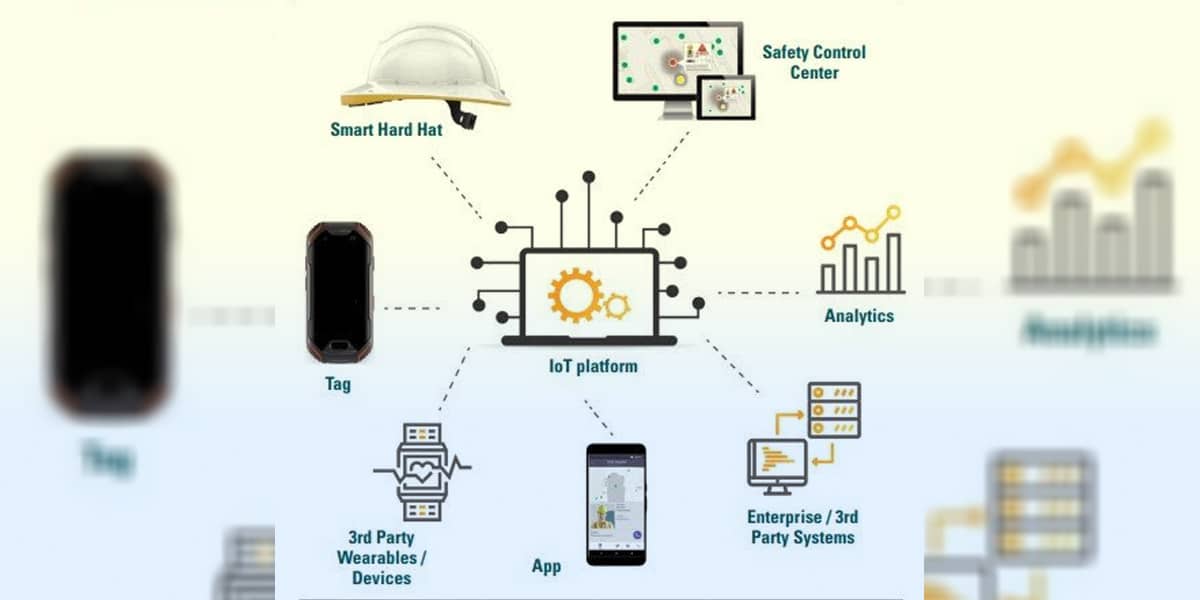
Sensors and inter-device communications are also being used to minimize emergency response times and improve safety for end users. These devices can detect sudden movements or falls and share real time locations with emergency responders. IoT is being used to enable real time workforce reporting by integrating sensors or RFID tags into workers’ helmets or vests thus connecting everyone on the job site by wireless technology.

Safety begins with the qualifications and experience of the workforce. A major factor that influences the number of accidents on any job site is the level of competence of the workers and their familiarity with site conditions. For large accelerated projects, it is often the case that contractors resort to hiring the workforce in large numbers in a short period of time to perform specific activities such as concreting, paving, welding, structural steel installation, scaffolding, cable laying etc. Startups now have developed platforms that can work in concert with the concerned government agencies to set up national construction safety databases to validate workforce hiring choices.  Such Digital Platforms help builders ensure that they hire qualified workers on their projects and at the same time, provide construction companies with lists of skilled workers to choose from. Digital platforms are also used to train and test workers’ competencies remotely prior to hiring them, and without incurring costs for travel, testing and qualification.

Safety has become paperless with safety professionals using digital mobile phone applications to record and resolve minor safety issues on site without interrupting the work and suspending activities except where absolutely necessary. In emergencies, they can issue stop work notices in real time and direct safety evacuations without resorting to manual head counts. Regular safety activities such as automatic sign-on, inductions, evaluations, and worker permits, are now part of a simple digital solution for the job site. 

Managers and employees can now utilize safety applications which include inspections, training, observations, and near-miss reporting without laborious paperwork, thereby improving the engagement of every worker in the safety process via their mobile devices. Such applications include safety onboarding, job hazard analysis, pre-task planning, toolbox talks, audits, checklists, worker certifications and incident reporting.

Opinion

Based on industry statistics, construction safety has not improved despite the availability of new technologies that could make a big difference. As compared to other sectors in the economy, the construction industry has been a slow adopter, but is now in the initial stages of a safety tech revolution. Technology is out there and is becoming increasingly accessible and affordable, such as construction robotics, IoT wearables and devices, sensors, Digital Platforms, and mobile applications to mention a few. The economics for adoption are justifiable and most importantly these technologies are saving lives every day. Young industry founders are putting in massive amounts of time and effort to democratize safety in the construction industry. It is no longer necessary for construction contractors to incur heavy licensing/technology costs, particularly medium size and small companies, in order to protect workers’ lives. They only need to be open to adopting these new technologies on their job sites. The construction accidents/fatality pandemic could become a thing of the past within this decade.

Ayad Chammas is a Construction and Engineering professional, Directing large infrastructure, oil & gas and renewable energy projects all over the world for the past three decades. He served as a senior executive in multinational infrastructure and Oil and Gas companies. Over the last decade, Ayad has been an active promoter of clean energy, investing in sectors such as EV and PV as well as Data Management and Fintech. He also serves on the board of several startups where he is also an investor and a partner in Nirman Ventures. 

The Vanguard of Security: LENX AI Weapons Detection and Communications Solution

In an era where the dynamics of security and defense are rapidly evolving, the integration of artificial intelligence (AI) into these domains is no longer a futuristic concept but a present-day necessity. Among the pioneers in this revolutionary transition is LENX, a company that has meticulously engineered a solution poised to redefine military and security protocols worldwide. The LENX AI Weapons Detection and Communications Solution emerges as a formidable force, seamlessly blending AI’s analytical prowess with advanced communication systems to address the intricate challenges besieging contemporary security efforts. “Your Safety, Our Duty,” encapsulates the ethos driving LENX’s innovation, symbolizing their unwavering commitment to advancing safety through technology.

At its core, the LENX solution is designed to detect potential threats with an accuracy and speed unattainable by human operatives alone. By harnessing the power of AI, this system can analyze vast arrays of data from multiple sources in real-time, identifying weapons and potential threats with unparalleled precision. This capability is not just about enhancing efficiency; it’s about saving lives by enabling quicker response times and more informed decision-making processes.

However, what sets the LENX solution apart is not merely its detection capabilities but its sophisticated integration with state-of-the-art communication technologies. In high-stakes scenarios where every second counts, effective communication channels are vital. The system ensures that once a threat is identified, information is swiftly relayed to relevant parties—be it military units or law enforcement agencies—facilitating immediate action.

This seamless marriage of detection and communication underpins a proactive approach to security. Rather than reacting to incidents post-occurrence, the LENX solution empowers authorities to anticipate and neutralize threats before they materialize. This paradigm shift towards preemptive action embodies a more intelligent form of warfare and public safety management, one where information superiority translates directly into enhanced security.

The ingenuity behind this solution stems from LENX’s meticulous research and development efforts. The team behind this innovation comprises experts in AI technology, defense strategy, and communications systems—all working synergistically to push the boundaries of what’s possible in security technology. This collaborative spirit extends beyond internal operations; LENX actively engages with stakeholders across various sectors to ensure their solution remains at the cutting edge of technological advancements.

In line with their mission “Your Safety, Our Duty,” LENX has prioritized ethical considerations in deploying their AI solutions. The company adheres strictly to regulations governing AI use in defense and security contexts while advocating for responsible innovation within the industry. This ethical stance underscores their dedication not only to enhancing safety but doing so with integrity.

The social media presence of LENX offers intriguing insights into their journey and achievements in developing this groundbreaking solution. Through platforms like Instagram (@lenxplatform) and LinkedIn (LEN Platform), they share updates on technological advancements, collaborations, and real-world applications of their system—a testament to their transparent approach in engaging with both industry peers and the general public.

Moreover, beyond just offering a product, LENX positions itself as a thought leader in AI-driven security solutions. Their website (lenx.io/) serves as a resource hub for understanding the complexities involved in integrating AI into defense mechanisms comprehensively—highlighting case studies, research findings, and expert analyses that provide deeper insights into their work’s impact.

As we stand on the cusp of a new age in military strategy and public safety management—one increasingly dominated by digitalization—the contributions of companies like LENX cannot be overstated. Their AI Weapons Detection and Communications Solution represents not just an advancement in technology but a leap forward in how we conceptualize security itself.

Embracing such innovations requires openness from all societal segments—governments need to recognize these technologies’ potential benefits; citizens must trust that such advancements aim at safeguarding rather than intruding upon personal liberties; industry players should collaborate towards ensuring these technologies are accessible yet secure.

The journey toward fully realizing this vision will undoubtedly be complex—fraught with technical challenges and ethical dilemmas alike—but it’s initiatives like those undertaken by LENX that illuminate our path forward.

With each step taken by entities like LENX towards refining such technologies further lies hope—not only for enhanced national defense capabilities but for fostering global peace through proactive deterrence strategies.

Indeed “Your Safety” becomes not just “Our Duty” at LENX but our collective responsibility as stewards of tomorrow’s world—a world where safety doesn’t come at freedom’s expense but rather hand-in-hand with it.


Published By: Aize Perez

Commit’s Dante Martinez sheds light on the benefits of platform engineering with AWS to streamline software delivery for startups

By: Dana Hoffsberg

Software development has become a crucial aspect of successful businesses in today’s fast-paced digital world. To meet the ever-increasing demands of businesses and customers, startups must be able to deploy new software quickly and efficiently. According to Dante Martinez, Commit’s Vice President of Solutions Architecture for North America, the best way to achieve this is by utilizing a platform engineering framework in conjunction with Amazon Web Services (AWS).

“Building and delivering software in the fast-paced world of startups can be filled with obstacles and complexities,” said Martinez. “As competition intensifies, optimizing your developer experience and streamlining software delivery becomes essential. That’s where the platform engineering framework, the AWS platform, and Commit’s expertise come together for our customers to innovate efficiently.”

Martinez explains that platform engineering is a game-changing approach to software delivery. By offering a suite of reusable tools and interfaces, it simplifies the process, improves efficiency, and ensures high-quality results.

“Startups frequently have a very limited budget and yet have to iterate with feature builds to find the perfect product market fit. Since Commit has a portfolio of more than a thousand projects, we have identified the proper frameworks that enable startups to experiment while limiting their cash burn rates.”

One of the key benefits of platform engineering is the simplification of software delivery which boosts developer efficiency and productivity. Automation and workflows that utilize AWS services and dynamic configuration capabilities can reduce the burden and stress on developers by automating repetitive tasks, allowing them to focus on developing new features that enhance software functionality. Startups particularly can leverage the advantages of traveling golden paths for architecture, application, and data decisions, which are critical to speed of innovation. 

According to Martinez, Internal Developer Portals (IDPs) represent the most advanced stage of platform engineering. These developer-centric platforms provide the tools, processes, and capabilities to deliver a high quality platform engineering experience for developers. The IDP becomes the interface for developers to interact with the platform. Developers experiment, plan, develop, test, and deploy, all from within the IDP. A common set of tooling and process means your teams collaborate better and share a protocol for delivery of software.

Startups particularly benefit from platform engineering as it helps them to avoid the accumulation of technical debt, which can be a true drain on resources and budget. By implementing best practices and automated solutions on day one, startups can focus on writing high-quality code and delivering best in class software. 

 Martinez suggests that a customized framework utilizing open-source tools and AWS native services can provide startups with platform engineering capabilities and advantages. This framework would save costs and enhance the competitive edge of startups. 

In conclusion, platform engineering in conjunction with AWS capabilities revolutionizes software delivery by simplifying the process, enhancing efficiency, and ensuring quality results. It offers customizable automation, developer-centric IDPs, and the ability to avoid technical debt, making it an essential tool for startups in the fast-paced digital landscape.

Published by: Martin De Juan

GPT-4 vs GPT-3.5 Differences

Image Commercially Licensed from Unsplash

As artificial intelligence continues its rapid evolution, the transition from GPT-3.5 to GPT-4 represents a monumental step forward. This detailed exploration highlights the key differences and advancements between these two AI giants, showcasing GPT-4’s groundbreaking impact across a spectrum of industries.

Building the Foundation: GPT-3.5’s Contribution to AI Development

GPT-3.5 served as a pivotal milestone in AI progression. Its enhanced abilities in understanding context, refining text generation, and interacting in more human-like ways laid the groundwork for the more advanced GPT-4. It represented a significant step in AI’s journey towards more sophisticated natural language processing, setting the stage for a more profound leap.

GPT-4: Revolutionizing AI-Language Models

GPT-4 emerges as a trailblazer in AI, distinguished by its exceptional understanding of context, enhanced multi-modal information processing, and an ability to interpret complex language nuances. This model represents not just an improvement, but a transformative shift in the capabilities of AI language models.

Key Features and Innovations Across Industries

  • Revolutionary Multi-modal Capabilities: GPT-4’s proficiency in handling both text and image inputs allows for groundbreaking applications, significantly enhancing user experiences in diverse fields such as e-commerce, education, healthcare, and media.
  • Exceptional Token Processing Power: GPT-4’s advanced token capacity enables it to digest and analyze long-form content, ranging from detailed scientific papers to comprehensive legal documents, thereby offering valuable insights and aiding in decision-making processes.
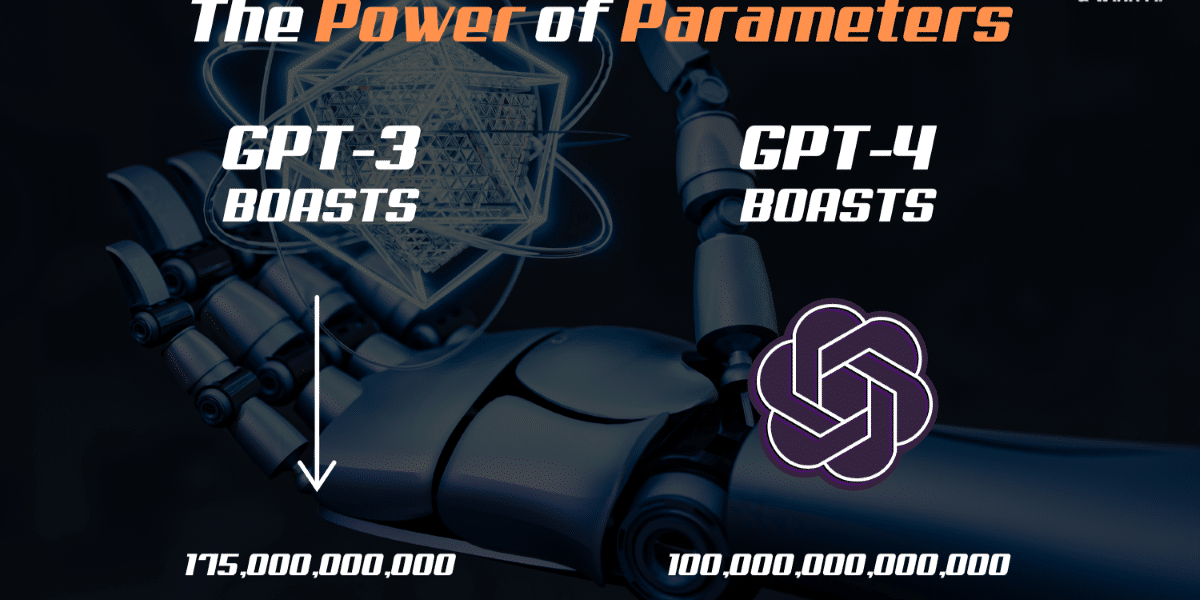
  • Parametric Superiority: The dramatic increase in GPT-4’s parameter count not only enhances its language processing abilities but also its understanding of complex concepts, making it an invaluable tool for tasks that require deep, nuanced comprehension.

Sector-Specific Advancements

  • E-Commerce and Marketing: GPT-4 is transforming the online retail landscape by generating rich, detailed product descriptions, and personalized shopping experiences. Its ability to create engaging narratives and marketing strategies is unparalleled.
  • Healthcare and Medical Research: In the medical field, GPT-4’s analytical capabilities facilitate breakthroughs in diagnosis and treatment planning, offering support in interpreting patient data and staying on top of all the latest research findings.
  • Finance and Economic Analysis: The model’s enhanced data processing abilities provide financial experts with deeper market insights, aiding in the development of more accurate predictive models and investment strategies.
  • Legal Industry: GPT-4 is revolutionizing legal research, quickly and accurately processing vast amounts of legal texts, which assists lawyers and legal professionals in case preparation and strategy development.
  • Creative Arts and Content Creation: In creative sectors, GPT-4 acts as a collaborator, assisting in the creation of diverse content ranging from literature to digital media. Its ability to understand and generate narrative structures pushes the boundaries of AI-assisted creativity.
GPT-4 vs GPT-3.5 Differences

Photo Credit: Grayling and Wraith

Embracing a Future Powered by GPT-4

The advancement from GPT-3.5 to GPT-4 is not just a step forward in AI technology; it’s a leap into a future where the boundaries between human and machine intelligence are increasingly blurred. GPT-4’s sophisticated language understanding and versatile applications across various fields underscore its role not just as a tool, but as a partner in innovation and creativity. This evolution is critical as we explore and unlock the vast potential of AI in improving and transforming our lives and work. With GPT-4, we stand on the cusp of an exciting era where the possibilities of AI are limitless.

To delve deeper into the nuances of GPT-4 and its comparison with GPT-3.5, refer to our full article 

Published by: Aly Cinco

KLOK partners with Mobilen Communcations INC to Redefine Mobile Communications Security

Revolutionizing the world of mobile communications, KLŌK is a fresh player in the market with an unwavering commitment to securing wireless networks. This ground-breaking company collaborates with the reputable Mobilen Communications INC to provide consumers with state-of-the-art WiFi devices safeguarded by top-tier network security protocols.

Seamlessly blending the expertise of cybersecurity specialists with telecommunications professionals, the KLŌK team embodies an exceptional blend of proficiencies to ensure your mobile communication remains strictly confidential.

KLŌK’s pioneering mission is underpinned by one simple principle – their dedication to securing wireless networks. Developing cutting-edge devices that not only uphold this resolve but elevate it is what sets KLŌK apart from its competition. They are driven by the belief that confidentiality and safety in mobile communications should never be compromised. Hence, they are devotedly engaging with innovative solutions to ensure that their devices serve as a bastion against all digital threats. Government entities and businesses that prefer top-notch security and privacy in their mobile communications may find KLŌK to be the go-to choice in the market.

A unique aspect of KLŌK’s method of operation rests in its zero-trust philosophy. In network security parlance, ‘zero trust’ signifies a belief that no device, user or system should be inherently trusted by default, even if they’re already operating within the network. This extends to routers and access points engaged by users for network connection, especially those shared among different users.

This approach ensures that every single access attempt is verified every time it is made. This increases the level of security immeasurably and significantly reduces the risk of internal threats. By maintaining a cautious vigilance and not placing unbridled trust in any component, KLŌK guarantees an unrivaled level of security that remains ever-vigilant.

Powering KLŌK’s promise of exceptional security is a special collaboration with Mobilen Communications Inc., which offers secure SIM Cards equipped with Post Quantum Encryption. This partnership embodies the unique philosophy of KLŌK, showing that its commitment to security is not only verbal but also evident in its actions. Mobilen’s secure SIM cards ensure that the network is protected by utilizing post-quantum cryptography. 

In the words of the company, “Mobilen is proud to partner with KLŌK to deliver its post-quantum encrypted network and secure all data in transit.” This level of detail illustrates the collaborative effort of both organizations and highlights KLŌK’s unwavering commitment to network security.

New to the market but a powerhouse in potential, KLŌK forms a promising prospect for anyone seeking a secure, reliable, and cutting-edge option in the world of mobile communications. Its partnership with Mobile Communications amplifies this, providing a greater level of assurance and trust in its brand and offerings.

The journey of KLŌK and its dedication to privacy and advancement of network security offers exciting prospects for its customers and for the telecommunications industry at large. As we move into an era where mobile communications have become a bedrock of our daily lives, the protection offered by companies like KLŌK, supported by strong partnerships with firms like Mobilen, serves as a beacon of reassurance in a world where data privacy and security can often feel uncertain.

To discover more about KLŌK’s offerings and their forward-thinking vision, visit their official website at buyklok.com/. Their resolve to safeguard your network is clear and remains a vital spark in the burgeoning field of mobile communications and network security.


Published By: Aize Perez

Tech Startup Innovation: High School Student’s Algorithm Revolutionizes Oil Transportation Industry

Image commercially licensed from: Unsplash

In a fusion of youthful innovation and business acumen, high school student and start-up entrepreneur Warren Zhang has made his way in the oil transportation industry. His company, Ideal Thermal Technology Ltd., founded in 2022, has developed an algorithm that revolutionized the heating system in crude transportation, significantly reducing greenhouse gas emissions and for sure, reducing the fuel cost for shipowners and operators.

Zhang, balancing his school studies with his passion for mathematical modeling and computational simulation, has utilized his computational fluid dynamics (CFD) and machine learning skills to address a longstanding industry problem: the inefficient heating of oil in tankers. The traditional methods, often based more on engineering experience than precise calculations, have led to excessive energy consumption and quality degradation of the oil.

The algorithm, a culmination of various modules like the boiler, oil tank, and pipeline, integrated through advanced mathematical modeling and machine learning, offers a tailored heating approach. It adjusts heating based on external parameters, optimizing energy usage, and reducing fuel consumption by up to 7%. It is a complex process using theoretical analysis, MATLAB, CFD, database, VBA coding, machine learning and user interface design. This innovation is not only a technical breakthrough but also a testament to Zhang’s business prowess, as evidenced by his successful sale of the technology to Synergy Group in 2023, the leading oil tanker management company in the world.

The commercial success of Zhang’s algorithm reflects a shift in the oil transportation sector, traditionally slow to adopt new technologies, towards embracing innovative solutions. Ideal Thermal Technology’s journey, from a high school project to a key player in a global industry, highlights the potential of young entrepreneurs to innovate and transform established markets with sustainable and efficient solutions.

Moreover, this case exemplifies the growing trend of young innovators taking the lead in addressing global challenges. Zhang’s work aligns with the increasing emphasis on environmental responsibility and energy efficiency in traditional industries. His dual role as a student and entrepreneur showcases the potential of the younger generation to drive significant technological advancements while pursuing sustainable practices.

Warren Zhang’s journey from a high school STEM enthusiast to the founder of a groundbreaking tech startup exemplifies the transformative impact of youthful innovation in traditional industries. Besides offering a sustainable solution, his algorithm signals a broader shift towards environmental consciousness. His achievements signify the promising future of technological innovation led by young minds.

Cracking the Code of Machine Learning for Time Series Analysis: Opportunities and Difficulties

Image Commercially Licensed From: Unsplash

By: Navin Kamuni

Amidst the deluge of data in the modern era, time series analysis has become indispensable in a wide range of fields, from climatic forecasting to stock market trend prediction. Fundamentally, time series analysis is the process of interpreting, modeling, and forecasting data points that are gathered one after the other over a period of time. This field has undergone a revolution with the introduction of machine learning (ML), which provides hitherto unseen insights and predictive power. However, incorporating machine learning into time series analysis is a difficult undertaking that presents a number of unique, intriguing, and complicated challenges.

Machine learning appears to be a natural ally for time series analysis because of its capacity to learn from and make predictions based on data. When these fields work together, deeper insights into temporal data patterns that were previously hidden or too complex to understand could be unlocked. However, due to the very characteristics of time series data, including their sequential structure, potential non-stationarity, and the complexities of temporal correlations, getting these insights is fraught with difficulties.

There are numerous difficulties. Every step of applying machine learning to this domain, from guaranteeing the quantity and quality of data to capturing the minute temporal dependencies that characterize time series, calls for specific methods and careful thought. Another layer of complexity is added by the dynamism of time series data, where patterns can change and evolve over time. Models that held true a day ago might not hold true today, requiring a continuous evolution of approaches and techniques.

It’s important to recognize the difficulty of the task at hand and the creativity needed to traverse this challenging terrain as we set out on this exploration. Applying machine learning to time series analysis presents both opportunities and challenges. It’s not just a technical undertaking; it’s a journey into a realm where data tells the story of time and where the patterns of the past write the future.

Challenge 1: Data Quality and Quantity

  • Handling Missing Values: In contrast to other types of data, time series data frequently has gaps or missing values because of a variety of problems, such as broken sensors or poor data transmission. It is imperative to develop robust imputation techniques.
  • Volume of Data: Processing and storage become difficult due to the sheer amount of data, particularly in high-frequency time series (such as stock market data). Effective ML application requires effective data handling techniques.

Challenge 2: Temporal Dependencies and Seasonality

  • Seizing Seasonality: Seasonality is present in a lot of time series. For ML models to produce reliable predictions, these cyclical variations must be taken into account.
  • Dealing with Stationarity The process of machine learning modeling is made more difficult by non-stationary data, whose statistical characteristics vary over time. It is frequently necessary to use techniques like transformation or differencing.

Challenge 3: Feature Engineering and Selection

Time-based Features: Using date and time components (holidays, day of the week, etc.) can have a big impact on model performance beyond just basic features.

High-Dimensional Feature Space: Time series data may produce a feature space that is highly dimensional, which raises the computational and complexity requirements for machine learning models.

Challenge 4: Model Complexity and Interpretability

Finding a Balance Between Complexity and Performance: While highly complex models may perform well, they may also require more computational power and be harder to understand.

Explaining Predictions: Transparency and explainability of model predictions are just as crucial in crucial domains like healthcare as accuracy.

Challenge 5: Overfitting and Model Evaluation

  • Evaluation Metrics: Selecting relevant metrics that accurately capture the time series forecasting model’s performance is crucial.
  • Dynamic Environments: Time series data must be able to adapt and not just fit historical data because these environments, such as stock markets, are dynamic and subject to rapid change.

Challenge 6: Real-time Analysis, Scalability, and Deployment

  • Stream Processing: ML models need to efficiently process and analyze data streams in scenarios such as IoT and real-time monitoring.
  • Deployment Challenges: Efficient infrastructure and ongoing performance degradation monitoring are necessary when deploying machine learning models in a production setting, especially for real-time applications.

Conclusion:

The process of integrating machine learning with time series analysis involves a number of unique obstacles that call for specialized answers. More reliable, understandable, and effective machine learning models that are skilled at handling the subtleties of time series data will be the field’s future. There is a limitless potential for innovative applications and advancements in this field as science and technology develop.

References:

  • Data Quality and Quantity: Kaggle Competitions: Machine Learning Time Series Forecasting Problems (machinelearningmastery.com)
  • Temporal Dependencies and Seasonality: Temporal Fusion Transformer (TFT): Google Research Blog on Temporal Fusion Transformers (blog.research.google)
  • Feature Engineering and Selection: Time-Series Forecasting in Data Center Telemetry: Challenges and Approaches to Time-Series Forecasting in Data Center Telemetry: A Survey (ar5iv.org)
  • Model Complexity and Interpretability: Healthcare Time Series Analysis: Time Series in Healthcare: Challenges and Solutions (vanderschaar-lab.com)

——————————————————————————————————————————————

Cracking the Code of Machine Learning for Time Series Analysis: Opportunities and Difficulties

Sourced Photo


About the Author – Navin Kamuni:
An AI Visionary and Technology
Innovator

Navin Kamuni stands as a notable figure in the realm of contact center technologies and AI innovation. With a career spanning over two decades, he has been instrumental in driving technological advancements in the industry. His expertise extends to the intricate domains of Artificial Intelligence (AI) and Machine Learning (ML), areas where he has demonstrated considerable proficiency and forward-thinking.

Beyond his professional achievements, Kamuni is a revered mentor and guide within the tech community. As an author, Kamuni has ventured into the literary world with his book, “Connect.AI: The New Era of Digital Experiences.” The book encapsulates his deep understanding of AI’s role in transforming digital customer experiences, positioning him as a thought leader in the field.

Kamuni’s contributions extend to writing insightful articles and research papers, and his participation in conferences and seminars has made him a respected voice in the tech community. His commitment to sharing knowledge and inspiring others is evident in his active engagement with various platforms, including IEEE and Medium.com.

For those interested in learning more about Navin Kamuni’s professional journey, achievements, and current projects, his LinkedIn profile offers a comprehensive overview. Connect with him on LinkedIn to explore his extensive experience, publications, and contributions to the field of technology and AI.

In summary, Navin Kamuni is a visionary leader whose work at the intersection of technology and AI continues to inspire and influence the industry’s landscape.


AI-Integrated and Personalized Education: Julian Melanson’s Leap Year Learning

In the ever-evolving landscape of online education, where engagement often takes a back seat to the dissemination of information, Julian Melanson stands as a pioneer, blending the art of storytelling with the science of learning. At the heart of his creation, Leap Year Learning lies an innovative approach that transcends traditional educational boundaries. The courses are not just a collection of lectures and assignments; they are an immersive cinematic journey where the line between education and entertainment blurs. Julian Melanson’s vision is a testament to the transformation of education into a captivating experience, making learning an adventure worth embarking on.

This approach has captured the attention of over 300,000 students and businesses alike. Companies, including Nasdaq, Eventbrite, Volkswagen, Aflac, Lyft, and Capital One, have turned to his courses to elevate their employees’ skill sets. Notably, his company, Leap Year Learning, holds the distinction of creating the world’s bestselling ChatGPT and AI course, with a portfolio comprising five bestselling courses in total. Collectively, these courses draw over 500 new learners per day, who watch over 17 million minutes of content each year, solidifying Julian Melanson’s legacy as a transformative educator and influential figure in the world of online learning.

The Art of Cinematic Learning

Julian Melanson’s vision for Leap Year Learning is not just about delivering information; it’s about delivering it in a way that keeps learners eagerly glued to their screens. The secret sauce lies in the cinematic quality, dynamic curriculum, and feature film-level production of the courses. Imagine a learning experience that feels more like watching your favorite movie than sitting in a traditional classroom. That’s precisely what Leap Year Learning offers.

An Audio and Visual Experience

One of the standout features of Leap Year Learning’s courses is the use of cutaway shots, audio design, and dynamic editing. These skillfully placed transitions take you from the theoretical realm to the practical world with ease. Just as in a movie, where a well-timed cutaway shot provides context and depth, Julian’s courses use this technique to immerse learners in an effective and engaging educational experience.

Whether it’s coding, business strategy, or learning how to use ChatGPT, the skill of Leap Year Learning’s post-production team seamlessly transports learners into real-life scenarios, making the learning process not only informative but also incredibly appealing. These shots are more than just visual flair; they are the building blocks of a narrative that guides you through the course, enhancing your understanding and retention of the material.

Engaging Activities: Learning Through Participation

Beyond cutaway shots, Leap Year Learning offers a plethora of resourceful activities that make the courses a robust experience. No more passive consumption of information. Instead, you actively participate in your learning journey.

From interactive quizzes to hands-on exercises, you are encouraged to apply what you’ve learned in real-time. This dynamic approach ensures that you don’t merely understand the content but also internalize it. The activities are designed to be fun, challenging, and, most importantly, highly effective.

A Visionary Approach to Education

Julian Melanson’s commitment to providing a cinematic quality of learning is not just about keeping learners entertained; it’s about offering a profoundly effective and accessible journey to countless individuals and businesses around the globe. With Leap Year Learning, Julian’s approach stands as a testament to the power of innovative education. It bridges the gap between traditional learning and the captivating elements of cinema. By infusing cutaway shots and engaging activities, Julian’s courses revolutionize the way we acquire knowledge. It’s a shift that makes education not just a destination but an exhilarating journey, where learning is an adventure worth embarking on.

Conclusion: A New Era of Learning

As the educational landscape continues to evolve, platforms like Leap Year Learning, guided by Julian Melanson’s vision, are setting new standards. The marriage of cinematic storytelling and AI-infused curriculum design is not just a trend but a transformation. It’s a promise that learning can be exciting, informative, and unforgettable.

The next time you embark on a course with Leap Year Learning, remember that you’re not just a student; you’re a participant in an auditory and visual experience. You’re in the director’s chair of your educational journey, with cutaway shots and engaging activities bringing the content to life. It’s a learning experience that’s as vivid as your favorite movie and as enriching as any classroom. It’s the future of education, and it’s happening now, with Julian Melanson leading the way.

Enhancing User Experience: How Mobile Apps are Redefining Recruiter-Candidate Interactions

Image commercially licensed from: Unsplash

In an era dominated by instantaneous digital interactions, the user experience is paramount. Nowhere is this truer than in the recruitment domain. With talent wars heating up and candidates exercising more discretion in job selections, the interaction between recruiters and candidates has become a crucial touchpoint. Mobile staffing apps have emerged as game-changers in this arena, bridging gaps and fostering genuine connections. 

As AkkenCloud CEO Giridhar Akkineni aptly puts it, “In today’s fast-paced world, it’s not just about identifying the right talent. It’s also about ensuring a smooth and rewarding experience throughout the entire recruitment process.”

The Paradigm Shift in Recruitment Interactions

Traditionally, recruitment was a linear process – posting jobs, waiting for applications, sifting through resumes, and reaching out. Now, with mobile apps, there’s an ongoing two-way dialogue. Recruiters can proactively engage candidates, provide real-time updates, and even solicit feedback – all on the go.

Real-time Notifications and Updates

A significant frustration for many candidates has been the lack of communication post-application. Mobile apps address this by offering real-time notifications. Whether it’s a status update on an application, interview reminders, or even feedback post-interview, everything is immediate, transparent, and interactive.

Chatbots: The New Frontiers of Interaction

While human touch will always be irreplaceable, chatbots offer a complementary channel. They can handle routine queries, schedule interviews, and even provide company information 24/7. This ensures that candidates always have an avenue for communication, even outside regular business hours.

Video Integrations: Personalizing the Digital Space

With remote work becoming ubiquitous, video interactions are no longer just an option; they’re essential. Mobile apps that seamlessly integrate video conferencing ensure that recruiters and candidates can interact face-to-face, irrespective of geographical constraints.

Feedback Loops: The Continuous Cycle of Improvement

Feedback is a goldmine for recruiters. By incorporating feedback mechanisms within mobile apps, recruiters can continuously refine their processes. It also demonstrates to candidates that their voice matters, fostering goodwill and trust.

AkkenCloud has been at the forefront of this user-centric recruitment revolution. Their mobile app, designed with precision and empathy, encapsulates all the features vital for an enriched recruiter-candidate interaction. As Akkineni states, “Our aim has always been to humanize the digital recruitment process. Every feature and update is driven by fostering genuine connections between recruiters and candidates.”

With features like real-time notifications, integrated video tools, and an intuitive chatbot, AkkenCloud ensures that interactions are smooth, transparent, and personalized. Moreover, their emphasis on feedback ensures that they’re always tuned to the evolving needs of both recruiters and candidates.

The Path Forward

As we move further into the digital age, the emphasis on user experience will only intensify. Mobile apps will play a pivotal role in defining the trajectory of recruiter-candidate interactions. Their ability to offer immediacy, personalization, and transparency will set the tone for the future of recruitment.

In conclusion, the recruitment landscape is in the midst of a transformative phase. Mobile apps are not just tools; they’re catalysts, redefining the very essence of recruiter-candidate interactions. Companies like AkkenCloud, under visionary leadership like that of Giridhar Akkineni, are showing the way, highlighting the blend of technology and empathy as the cornerstone of modern recruitment.

eSure.AI and Deep Instinct Unveil All-in-One Home Cybersecurity Insurance Solution

As hybrid work becomes more common, home cybersecurity is more essential than ever. eSure.AI, a leader in cyber insurance and protection, has partnered with Deep Instinct, a cybersecurity company known for its prevention-focused approach, to create a groundbreaking home cybersecurity insurance solution. This product, designed for consumers and small businesses, provides complete coverage against the rising cyber threats in a flexible monthly subscription model.

The Rising Threat to Home-Based Workers

The digital age has redefined the way we work, with an increasing number of professionals transitioning into remote work roles. Yet, this shift has brought to the forefront a new challenge: the vulnerability of home-based workers to cyberattacks. Large businesses have the resources and tools to shield themselves against such threats, but the same cannot be said for consumers and small businesses operating from the confines of their homes.

The majority of cyberattacks, including ransomware and extortion attempts, target individual users. The interconnected web of devices in modern households, often running on less secure wireless networks, becomes the perfect breeding ground for malicious activities. As such, eSure.AI recognized the dire need for a solution that offers the same level of cyber liability protection enjoyed by corporate giants. Their partnership with Deep Instinct seeks to bridge this gap.

A Powerful Partnership for Ultimate Protection

eSure.AI, known for its commitment to providing cutting-edge solutions, joined forces with Deep Instinct to create an AI-powered cybersecurity service tailored for the consumer market. Deep Instinct, a leader in the cybersecurity realm, employs deep learning (DL) technology to prevent unknown malware threats before they execute. This purpose-built framework represents the most advanced form of artificial intelligence in the field, offering unparalleled protection against cyber threats.

The integration of Deep Instinct’s technology with eSure.AI’s 24/7 security operations results in a comprehensive security solution for the home. This partnership empowers eSure.AI to offer up to $1,000,000 in home cyber insurance coverage, encompassing various aspects such as ransom payouts, online shopping fraud, data recovery, on-site computer repair, and home title protection. In essence, eSure.AI provides genuine cyber liability insurance for homes, bolstered by technology that has received the seal of approval from major insurers.

Chase Norlin’s Vision for Home Cybersecurity

Chase Norlin, the Founder of eSure.AI, expressed his vision for this groundbreaking endeavor. He emphasized that consumers deserve to have access to the same level of cyber liability protection that large corporations enjoy. In the past, home users largely relied on antivirus software, a technology that has become antiquated in the face of rapid advancements in artificial intelligence. This collaboration with Deep Instinct equips home users with cutting-edge technology, instilling confidence that they are well-protected and insured in the event of a cyber attack.

Easy Access and Competitive Pricing

eSure.AI has made it incredibly convenient for home users to acquire and install this advanced solution. The platform offers a point-and-click monthly subscription model, featuring two levels of insurance coverage to choose from. This user-friendly system is a “set it and forget it” fully managed service, ensuring that users are constantly shielded from evolving cyber threats. What’s more, eSure.AI’s pricing is highly competitive, aligning with traditional antivirus software currently available in the market.

Deep Instinct on the Partnership

Jim Ortbals, Vice President of Global Channels at Deep Instinct, also weighed in on this transformative partnership. He highlighted the substantial risks faced by remote employees, especially in light of the rapid growth of generative AI and the advanced nature of cyberattacks. By collaborating with Deep Instinct, eSure.AI is ensuring that its customers benefit from a prevention-first approach to cybersecurity, powered by deep learning technology—the most advanced form of AI. This partnership promises to empower home workers to excel in their roles without the constant worry of impending cyber threats.

About eSure.AI and Deep Instinct

eSure.AI is a product of Transmosis, Inc, a nationally recognized cybersecurity workforce developer that enables American workers to develop new careers in the rapidly growing information security industry. Their commitment to providing accessible and effective home cybersecurity solutions underscores their dedication to securing the digital lives of consumers and small businesses.

Deep Instinct, on the other hand, leads the charge in taking a prevention-first approach to stopping ransomware and other malware. Their purpose-built deep learning cybersecurity framework is capable of predicting and preventing known, unknown, and zero-day threats in less than 20 milliseconds—an impressive 750 times faster than the fastest ransomware can encrypt. With a remarkable zero-day accuracy rate of over 99% and a false positive rate of less than 0.1%, Deep Instinct stands at the forefront of cybersecurity innovation.

In a world where remote work has become the new norm, the need for robust home cybersecurity is undeniable. eSure.AI, in partnership with Deep Instinct, offers a solution that not only provides the highest level of protection but also peace of mind to consumers and small businesses. The all-in-one home cybersecurity insurance solution is a testament to the ever-evolving landscape of cybersecurity and the unwavering commitment to safeguarding our digital lives.

For more information visit www.eSure.A and www.deepinstinct.com.