By: Daniel Smith
The Holiday Inn across the street from 24/7 Media’s New York office has a ballroom. In the fourth quarter of 2000, David Moore rented it. He divided the staff: half went to an all-hands meeting in the ballroom across the street, and the other half stayed in the office. Nobody knew which side of the street was the safe side until the decisions were announced and the terminations began.
Four hundred people worldwide in that quarter alone, including nineteen executives. Then a hundred more. Then additional rounds after that. Then the European operation, which ended differently because of how it had been structured legally. At some point the criteria shifted from performance evaluations and salary considerations to something that felt uncomfortably close to drawing names from a random pool, because there were no wrong answers left in the calculations. Everyone remaining was doing the work of people who had already left.
David does not pretend any of it was anything other than awful. What he holds onto is that they handled it as decently as the circumstances allowed. Everyone who was let go received severance. When there was ambiguity about what someone deserved, they erred toward generosity rather than toward what the company could technically get away with. When the company later ran out of money to sustain the executive severance packages, David called each of those executives personally, explained the situation directly, and made a commitment to complete what had been promised. Over a year later, they did.
What he wishes he had understood at the time is that the people who remained needed as much from him as the people who left. He focused hard on the exits, on making sure the terminations were handled with appropriate care and that commitments were kept. He is not confident he adequately understood how much the survivors were grieving the colleagues who had gone, or how much energy was being consumed by the question of whether they would be next. If he were doing it again, he would spend considerably more time in the cubicles and considerably less in the conference room.
The Global Complexity
At their peak, 24/7 Media had twelve hundred people in fifty-three offices across twenty-nine countries, a global footprint assembled almost entirely through acquisition over a very short period. That is the first and most significant complication of managing a global crisis. When you acquire thirty-six companies in three years, you don’t actually have one company with one culture. You have thirty-six companies with thirty-six cultures and thirty-six sets of expectations that nobody has had time to harmonize.
David remembers a monthly employee breakfast in early 2000, a format he had designed to stay connected with the people in the organization, where he sat down next to a man and asked what he did at the company. The man said he didn’t know. He was new, and nobody had explained his role to him clearly enough for him to articulate it. That was the first time, David writes, that the traffic light in his head shifted from green to yellow. They were hiring faster than they could explain their own company to the people they were bringing in.
When the crash came, and the layoffs began, the global footprint made almost everything harder and one thing easier, though easier in a way David would prefer to have avoided. Mark Moran had structured the European operation so that every country entity sat under a single parent company. When 24/7 stopped funding that parent, the entire European structure entered bankruptcy simultaneously, removing that payroll from the books in one action rather than through dozens of individual country-by-country processes. He wishes it had gone differently. It didn’t.
The Lesson About Distance in a Crisis
Everything the global expansion experience taught David about crisis management comes down to one principle: in a crisis, distance is your enemy. The Japanese investors who ultimately provided eight million dollars in crucial capital wanted to see David and his son Chris in person before they would commit. They were right to require that. Trust is a physical thing in moments of genuine uncertainty. It does not transmit reliably over a phone line when the money is running out, and the survival of the enterprise is genuinely unclear. The willingness to get on a plane and sit across a table from someone is not just a gesture. It is the substance of the relationship when everything else is uncertain.
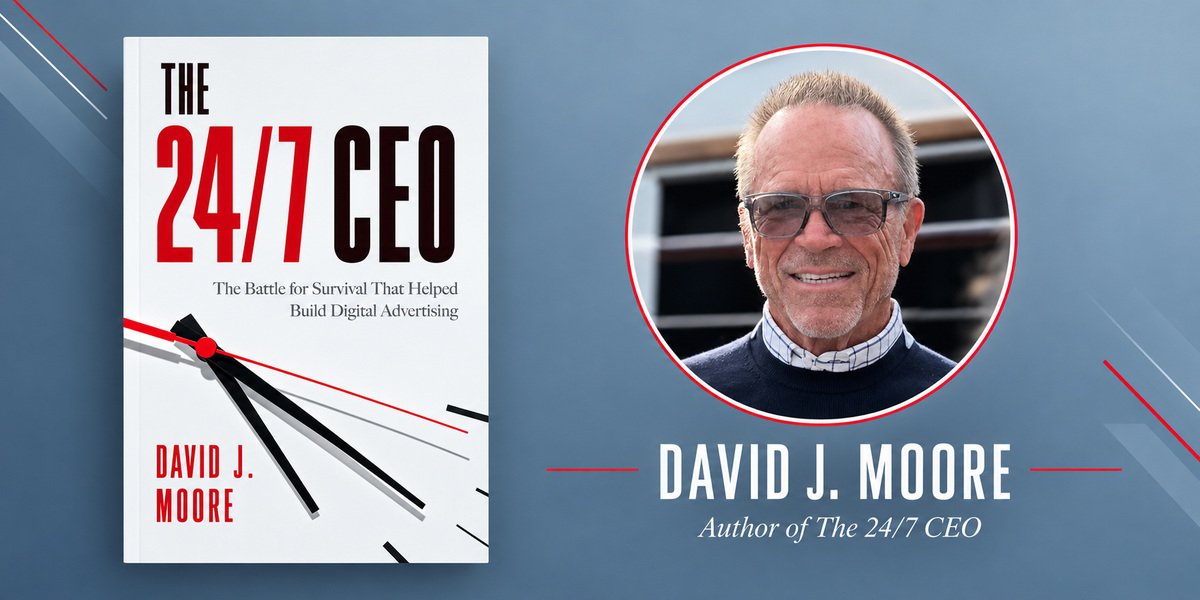
What the dot-com layoffs actually looked like from the inside. The 24/7 CEO by David Moore is available now on Amazon.