Hardware innovation is playing a pivotal role in shaping the future of the U.S. tech industry. While software often dominates the spotlight, the physical technologies powering everything from artificial intelligence to robotics are evolving rapidly. From custom chips and edge devices to autonomous systems and advanced sensors, hardware innovation is enabling smarter, faster, and more efficient solutions across sectors.
As demand grows for real-time processing, energy efficiency, and scalable infrastructure, companies are investing heavily in hardware development. Startups and established firms alike are pushing boundaries in design, manufacturing, and integration, driving a new wave of transformation across the tech landscape.
Why Hardware Innovation Is Accelerating
Several factors are fueling the rise of hardware innovation. First, the explosion of AI and machine learning has created demand for specialized processors. Graphics processing units (GPUs), tensor processing units (TPUs), and neuromorphic chips are being developed to handle complex workloads with speed and precision.
Second, the growth of edge computing is shifting data processing closer to the source. Devices like smart cameras, industrial sensors, and autonomous vehicles require robust, low-latency hardware to operate reliably. This decentralization reduces reliance on cloud infrastructure and supports real-time decision-making.
Third, the robotics sector is expanding rapidly. Startups are building machines that navigate warehouses, assist in surgeries, and automate agriculture. These systems rely on mechanical precision, embedded intelligence, and durable components. For more on this trend, see how robotics startups are attracting major funding across the U.S.
Hardware Innovation in Action
NVIDIA continues to lead in hardware innovation with its high-performance GPUs tailored for AI, gaming, and scientific computing. Its latest chips support generative AI models and large-scale simulations, enabling breakthroughs in autonomous driving and climate research.
Apple’s M-series chips showcase how custom silicon can enhance performance and energy efficiency. By designing processors in-house, Apple has optimized its devices for speed, battery life, and seamless integration across platforms.
Startups like Cerebras Systems are pushing boundaries with wafer-scale chips designed for deep learning. Their architecture allows for massive parallel processing, reducing training time for complex models.
In robotics, Boston Dynamics has developed agile machines like Spot and Atlas, combining mechanical engineering with advanced sensors and control systems. These robots are being used in logistics, inspection, and emergency response, demonstrating how hardware innovation can solve real-world challenges.
Challenges in Hardware Development
Despite its promise, hardware innovation comes with unique challenges. Unlike software, hardware requires physical prototyping, manufacturing, and supply chain coordination. These processes are capital-intensive and time-consuming, especially for startups.
Global component shortages and geopolitical tensions have impacted production timelines. Access to rare earth materials, fabrication facilities, and logistics networks can affect scalability and reliability. Companies must navigate these risks while maintaining compliance and quality standards.
Testing and certification are also critical. Hardware products must meet safety, interoperability, and environmental regulations. This adds complexity to development and market entry, particularly in sectors like healthcare and transportation.
Choosing the right hardware solutions is essential for business success. Leaders must evaluate performance, compatibility, and long-term support when selecting components or platforms. For guidance, see insights on navigating hardware decisions that align with strategic goals.
Hardware’s Role in Emerging Technologies
Hardware innovation is foundational to emerging technologies like quantum computing, augmented reality, and 5G. Quantum processors require ultra-cold environments and precise control mechanisms, while AR devices depend on lightweight displays and spatial sensors.
In 5G infrastructure, hardware enables faster data transmission and lower latency. Base stations, antennas, and signal processors must be optimized for performance and energy efficiency. These components support applications ranging from smart cities to remote surgery.
Wearable technology is another area where hardware innovation is advancing. Devices that monitor health, track movement, or deliver immersive experiences rely on miniaturized sensors, flexible materials, and efficient power management.
Investment and Talent in Hardware Innovation
Venture capital is flowing into hardware startups focused on AI, robotics, and edge computing. Investors are recognizing the long-term value of differentiated hardware solutions. Funding rounds for companies like SiFive, Formlabs, and Ambiq reflect growing confidence in the sector.
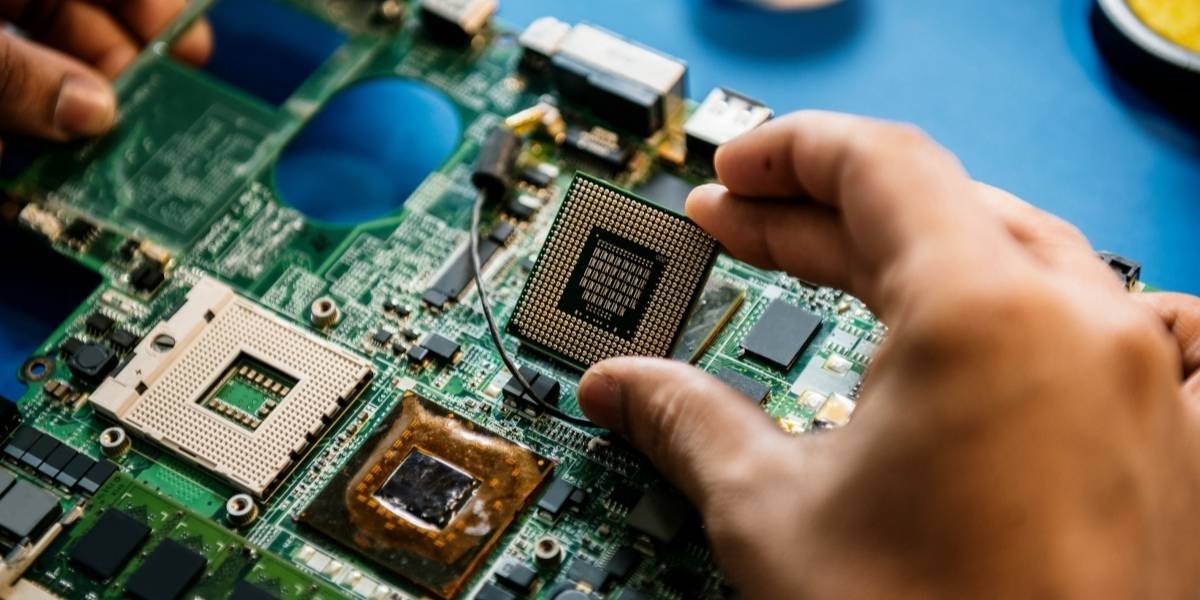
Photo Credit: Unsplash.com
Universities and research institutions continue to play a vital role. Labs at MIT, Stanford, and Georgia Tech are developing new materials, architectures, and fabrication techniques. These environments foster collaboration between academia and industry, accelerating commercialization.
Talent remains a key factor. Engineers with expertise in electrical design, embedded systems, and mechanical integration are in high demand. Companies are investing in training programs and partnerships to build the next generation of hardware innovators.
Looking Ahead: The Future of Hardware Innovation
The future of hardware innovation in the U.S. tech industry looks promising. As digital systems become more complex and interconnected, the need for robust, adaptive hardware will only grow. Companies that prioritize hardware innovation may gain a competitive edge in performance, reliability, and user experience.
Sustainability is also shaping hardware design. Energy-efficient components, recyclable materials, and modular architectures are becoming standard. These practices support environmental goals and reduce lifecycle costs.
Cross-sector collaboration will be essential. Hardware innovation often requires input from software developers, data scientists, and end users. Cross-functional teams can ensure that devices meet real-world needs and deliver measurable impact.
For tech leaders, embracing hardware innovation means investing in infrastructure, talent, and long-term vision. It’s not just about building devices, it’s about shaping the future of how we live, work, and connect.