By: Cesarino Montana
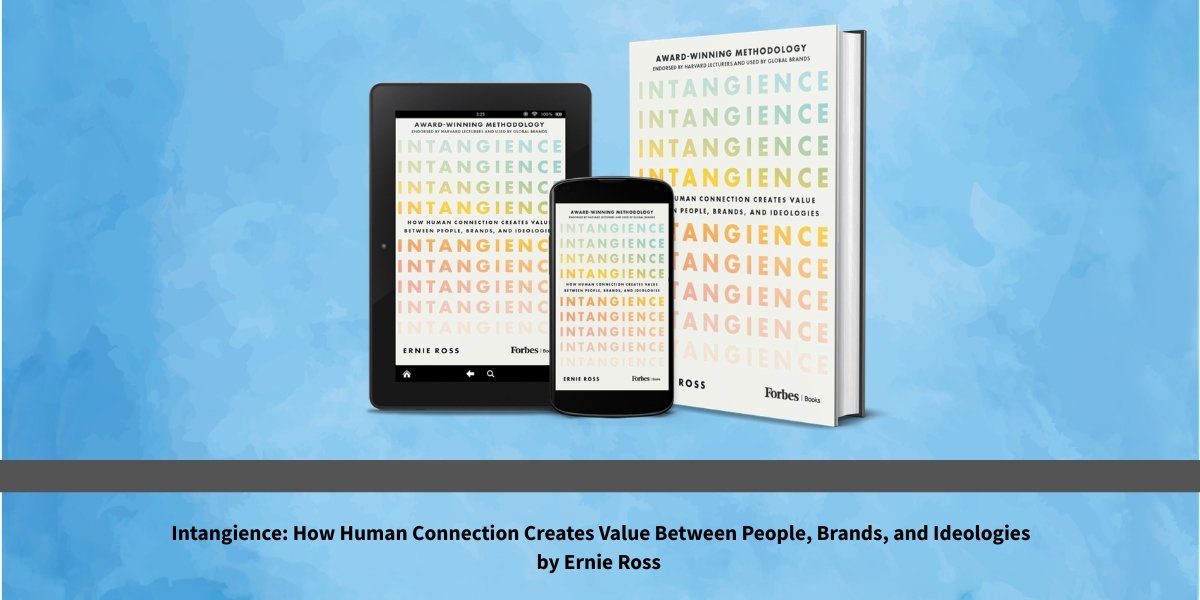
Ernie Ross grew up in Guyana in the 1970s, a depressing period in that country’s history by his own account, and he arrived in Trinidad carrying a creative intelligence and an instinct for human connection that would eventually produce a distinctive methodology in the field of brand strategy. Intangience is the book that traces that journey from its origins to its current form, and it is considerably more than a business book. It is the autobiography of an idea, told by the person who spent a lifetime living inside it before he fully understood what he had.
Reading this book feels like being given access to a framework that has been quietly operating underneath every successful communication you have ever encountered, and every failed one too, because Ross is describing something real and universal rather than something invented for the purposes of a methodology. The intangible values that drive human connection, the emotional architecture underneath every decision, every loyalty, every conviction, were always there. What Ross has done is develop the language and the structure to make them visible, and once you have that language, you cannot stop seeing what it describes everywhere you look.
The three frameworks at the heart of the Intangience methodology, the Pillars of Purpose, the Currency of Conversation, and the Science of Human Connection, are introduced and illustrated with enough real-world specificity that they feel like tools rather than concepts. Ross understands that a framework is only useful if it survives contact with actual problems in actual contexts, and the stories he tells throughout the book, the gang leaders reached through basketball, the brewery saved through the reactivation of national pride, the political campaigns that made history across the Caribbean, are his proof of concept, offered not with hubris but with the quiet confidence of someone who has watched the methodology work too many times in too many different conditions to have any remaining doubt about its validity.
What strikes readers who encounter Ross’s writing for the first time is the quality of his humility. For a man whose campaigns have earned more than five hundred industry awards, who helped elevate the first female heads of government across multiple nations, and who developed a methodology certified by a United Nations-established institution, there is a remarkable absence of ego in the way he tells his story. He writes about his experiences in a matter-of-fact way that makes the extraordinary feel accessible rather than intimidating, which is itself a demonstration of the principles he is teaching.
Intangience gives readers a new way to think about the conversations, campaigns, and everyday interactions that shape how people connect. For anyone whose work involves moving people toward a decision, a belief, a brand, or an idea, it offers a practical and thoughtful framework worth engaging with.
If you are ready to stop communicating with people and start connecting with them in ways that create real and lasting value, Intangience by Ernie Ross is waiting for you on Amazon. Pick up your copy and step inside a methodology that has changed political campaigns, rescued brands, and shifted how thousands of leaders around the world think about human connection.