By Audrey Denise B. Cachuela
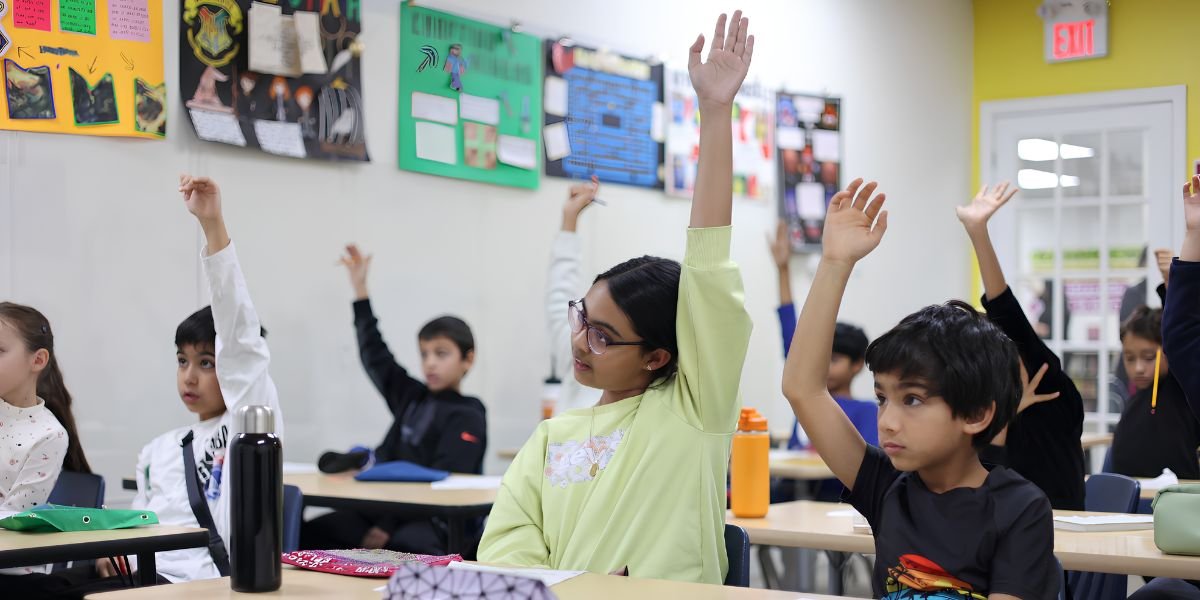
“And pencils down.” The room goes quiet for three seconds. Then someone yells, “What did you get for number four?” and the whole hall breaks into arguments about method, half-laughs about the question that stumped everyone, and a dozen side conversations comparing answers. This is what a math contest looks like the moment it ends, and it has nothing to do with the tense, cutthroat scene most people picture when they hear the word competition.
Healthy competition gets blamed for anxiety, burnout, and cutthroat behavior in both schools and offices. But organizations like Spirit of Math, which builds advanced math programs for high-performing students, treat contests as a chance for students to see exactly where they stand. Students walk away from a Spirit of Math contest with a clearer picture of what they know, not a ranking that tells them who they are.
A hard exam or a missed sales target produces two different reactions in two different people. One spirals into self-doubt. The other takes notes and comes back sharper next time. That split has almost nothing to do with talent. It comes down to what the adults around them taught them to do the moment the result came in.
In this article, we look at what separates the version of competition that builds people up from the version that wears them down, because competition is not going away from classrooms or workplaces. The real question is what kind gets built.
The Real Difference Between Unhealthy and Healthy Competition
Competition earns blame in schools for triggering comparison and fear of failure. At work, it gets tied to office politics, information hoarding, and coworkers fighting over the same scrap of recognition. Both accusations hold up when competition gets built around proving worth. They fall apart when competition gets built around building skill.
Competition also never disappears from adult life. Students apply for scholarships, team spots, and university admission. Adults compete for jobs, clients, promotions, and budget. Shielding people from every competitive moment leaves them undertrained for the moments that actually count, because those moments arrive whether or not anyone prepared for them.
Two different questions separate the healthy version from the unhealthy one. One asks: am I better than everyone else? The other asks: what did this challenge reveal about where I actually stand? A strong score confirms a strategy worked. A rough one flags exactly what needs more attention. Either result can lead somewhere useful when the person walking away gets encouraged to reflect and try again instead of getting ranked and dismissed.
Psychologists call the second question a mastery goal, built around developing competence, and the first a performance goal, built around proving ability. Mastery goals sustain effort through difficult tasks better than performance goals do (Source: American Psychological Association, 2024). That single distinction decides whether a classroom or workplace ends up healthy or corrosive, because it determines which goal the whole competitive structure quietly rewards.
Get that framing right, and ranking, resilience, and workplace competition all become manageable problems with clear solutions. Get it wrong, and even a well-designed contest or sales target starts working against the people it was meant to motivate. The ranking problem shows exactly how that breakdown happens.
Why Ranking Alone Creates the Wrong Incentives
A ranking answers one question: who finished where. It says nothing about why, what improved, or what to do next. That gap turns dangerous the moment someone treats their rank as a verdict on their intelligence instead of a snapshot of one day’s performance.
A kid who lands in the middle of the pack decides they’re “not a math person.” An employee passed over for a promotion decides they’ll never be leadership material. In both cases, a single number gets promoted to an identity, and that number stands in for a far more complicated truth about what someone actually knows and can do.
Research on classroom competition traces exactly this collapse. Classroom competition affects academic achievement through two competing channels: it can raise learning engagement, and it can raise learning anxiety, and the anxiety cancels out much of the benefit engagement creates (Source: Frontiers in Psychology, 2022). That finding explains why classroom debates about competition go in circles. Every student experiences a contest differently, because the design of the activity, the language adults use around it, and the consequences of a bad result all shape what a student takes from it.
The presence of competition is one variable in the equation, and a minor one at that. Meaning decides whether a contest builds someone up or convinces them to stop trying. That question, what gives a contest the right meaning, plays out clearly in how Spirit of Math structures its own competitions.
What Math Contests Reveal About How People Learn
Spirit of Math treats its contests as learning environments, not one-shot tests. Students work through unfamiliar problems under pressure, and the contest becomes a real check on whether they can apply their skills when the path to an answer isn’t obvious. The program’s broader curriculum builds toward that moment through fluency drills, conceptual depth, structured problem solving, and collaborative group work, all aimed at students who can reason, not just execute steps.
Spirit of Math began inside public school classrooms more than three decades ago and now runs across 35 campuses in Canada. Its contest network reaches students in more than 30 countries. This year alone, more than 19,000 students from those countries took part in the organization’s international math contests, and most of them remain years away from choosing a university major, let alone thinking of themselves as future problem solvers.
The moment right after the papers get collected carries a lot of the real learning. Kids compare methods, argue over which approach worked, and ask each other how they read a tricky question. That curiosity doesn’t stop at the final answer. A peer’s strong result becomes proof of what’s possible instead of evidence that everyone else failed, and that reaction differs completely from what most people expect to feel after a contest.
That reaction gets built before the contest even starts. Students learn to defend their reasoning out loud, challenge each other’s thinking, and work through unfamiliar problems, instead of memorizing procedures they’ll forget by the following Monday. When the contest ends, that habit of explaining and comparing simply continues into a different room.
Students who practice explaining their thinking to peers walk into a contest already comfortable with a wrong answer as the start of a conversation, not the end of their confidence. That comfort connects directly to what happens with resilience when contests get designed around growth instead of ranking.
Growth-Focused Competition Is What Actually Builds Resilience
Resilience comes from hitting something difficult, staying in it, and discovering that your own response changes what happens next. A streak of easy wins produces none of that. Constant success gives people no reason to revise anything, while a demanding problem exposes the exact gap between what someone knows and what the moment requires, and that gap is where learning actually sticks.
Mistakes need to register as raw material for improvement, not proof of low ability. Gifted and talented students benefit specifically from praise for effort, for tackling hard material, and for mastering new skills, rather than praise for speed or easy wins (Source: American Psychological Association, 2024). That guidance matters most for kids who make difficult work look effortless, because adults tend to leave those kids alone rather than pushing them toward anything genuinely hard.
High performers left in that pattern start avoiding anything they can’t master immediately, protecting a reputation instead of building a skill. The pattern stays invisible because it looks like success from the outside. A student who only attempts what they’re already good at can coast for years before anyone notices the growth stopped long ago.
That shift in what a mistake means carries straight into the workplace. The same dynamic plays out in offices every day under different names, quarterly targets instead of contest scores, performance reviews instead of report cards. The setting changes. The psychology stays the same.
Workplace Competition Has the Exact Same Framing Problem
Employees who see workplace competition as a challenge tend to gain career benefits from it. Employees who experience the same competitive climate as a threat tend to see it damage their career instead (Source: Journal of Vocational Behavior, 2021). The environment stays identical, and the outcome flips entirely based on how someone interprets it.
Leaders shape that interpretation through the systems they build around competition, whether they intend to or not. A team treats competition as a challenge when expectations get stated up front, evaluation runs on visible criteria instead of gut feeling, and people retain room to cooperate while competing for the same goal.
That system breaks down fast when criteria shift without warning, when recognition looks political instead of earned, or when someone can only get ahead by cutting a colleague off from information they need. The difference between a healthy competitive system and a broken one has nothing to do with whether competition exists. It comes down to whether the rules stay visible and stable enough for people to trust them.
Spirit of Math builds that same balance directly into its classrooms, pairing high-stakes contests with collaborative group work, so students build individual skill while learning to explain their thinking and listen to someone else’s. Most workplaces haven’t been built to hold both at once, which raises a practical question: how does an adult, whether teacher or manager, actually build that balance on purpose?
How Adults Build Healthy Competition, and What Should Be Left Behind When It Ends
The questions adults ask right after a result determine which lesson sticks. “Did you win?” makes the ranking the whole story. “What did you learn about your approach?” makes strategy the story instead. “What will you try differently next time?” turns the result into a plan.
Vague feedback like “work harder” gives someone nothing to act on. Naming the actual issue, rushing the analysis, skipping a step, or giving up after one failed attempt gives them something concrete to fix. Specific, moderately difficult goals paired with real feedback on progress motivate people more than vague encouragement does (Source: American Psychological Association, 2024).
Recognition has to stretch past first place. That doesn’t mean pretending every result is equal. It means noticing the behaviors that build long-term capability: preparation, persistence, sharper reasoning, and genuine support for the person sitting next to you. A student can miss the top ranks entirely and still walk away with a real intellectual win. An employee can lose a pitch and still land on an approach that wins the next one. Healthy competition makes those wins visible.
That visibility is the real test of whether any of this worked, not the scoreboard, but what’s still true about a person after the contest, the exam, or the project ends. Self-awareness, clearer goals, enough confidence to walk into the next hard thing, the ability to treat someone else’s success as useful information rather than a threat: these are the outcomes that stick. Spirit of Math has spent over three decades building a model around exactly that outcome, where demanding contests, honest reflection, and a return to the classroom feed into each other instead of competing for attention. Ranking was never the target to eliminate. Keeping ranking from becoming the entire story was always the target.
Take a single competitive moment already built into your classroom or your workplace and change the conversation around it this week. Name the actual skill being built. Explain how the feedback will get used. Ask everyone involved to name one thing they’d improve next time. That single change turns healthy competition from a slogan into something people feel, and it’s the same change Spirit of Math has spent 30 years refining in classrooms full of kids who walked in nervous about math and walked out arguing over whose strategy was faster.